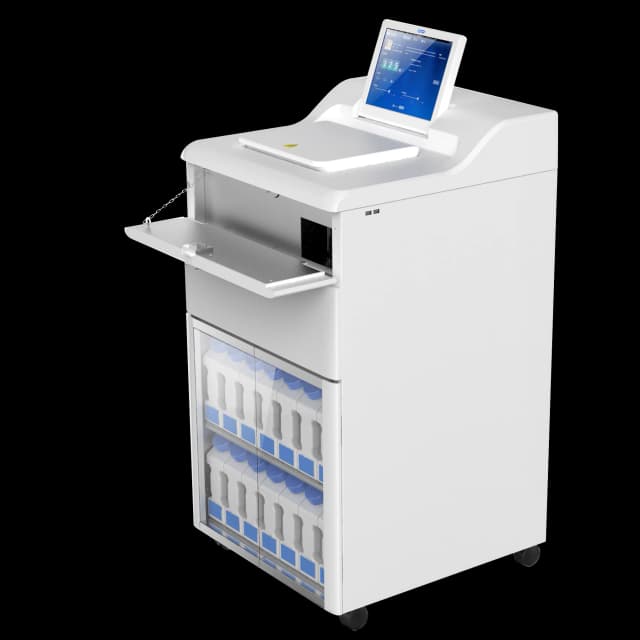
Morgue Freezer
Laboratory-grade morgue freezer with multi-compartment design, maintaining -30°C with ±0.1°C accuracy for biological specimen preservation and cadaveric storage.
| compressor_type | Anti-vibration and anti-overturn |
| control_system | Intelligent control system |
| insulation | Polyurethane overall high pressure and high temperature foaming |
| chamber_control | Individual refrigeration system control for each chamber |
| corpse_tray_mobility | Moveable with small roller wheels |
| Automation Level | semi-automated |
The Morgue Freezer represents a specialized laboratory-grade refrigeration system engineered for the preservation and storage of biological specimens, tissue samples, and cadaveric materials in research and pathology facilities. This multi-compartment freezer maintains precise temperature control down to -30°C with ±0.1°C accuracy, utilizing stainless steel construction throughout and advanced polyurethane insulation for thermal stability.
Available in configurations ranging from single to six-body capacity, each unit incorporates individual refrigeration system controls for each chamber, allowing independent temperature management and specimen isolation. The system employs anti-vibration, anti-overturn compressor technology with intelligent control systems to ensure stable operation in laboratory environments. Direct-cooled evaporators with built-in copper coils eliminate internal solder joints, reducing contamination risk and improving reliability. Specimen storage trays feature roller wheel systems for smooth extraction and positioning, while the enlarged 100mm load-bearing frame provides enhanced structural support for heavy specimens.
How It Works
The morgue freezer operates through a multi-zone refrigeration system that maintains sub-zero temperatures through direct cooling evaporators integrated with copper coil technology. Each chamber utilizes an independent refrigeration circuit with intelligent temperature control, allowing precise thermal management down to -30°C with ±0.1°C accuracy. The polyurethane insulation system undergoes high-pressure, high-temperature foaming to create a uniform thermal barrier that minimizes heat transfer and maintains temperature stability.
Anti-vibration compressor technology prevents mechanical disturbances that could affect temperature uniformity, while the anti-overturn design ensures stable operation in laboratory environments. The direct-cooled evaporator system eliminates internal solder joints, reducing potential contamination sources and improving system reliability. Temperature monitoring and control occur through intelligent systems that continuously adjust cooling parameters to maintain specified conditions.
Specimen storage trays incorporate roller wheel mechanisms that facilitate smooth extraction and positioning of heavy specimens. The enlarged 100mm load-bearing frame distributes weight evenly across the chamber structure, accommodating specimens up to the interior dimensions of 2060×640×440mm per body compartment.
Features & Benefits
Model
- BIO-BK-XG1
- BIO-BK-XG2
- BIO-BK-XG3
- BIO-BK-XG4
- BIO-BK-XG6
compressor_type
- Anti-vibration and anti-overturn
control_system
- Intelligent control system
insulation
- Polyurethane overall high pressure and high temperature foaming
chamber_control
- Individual refrigeration system control for each chamber
corpse_tray_mobility
- Moveable with small roller wheels
Automation Level
- semi-automated
Bodies
- 1
Interior Size
- 2060×640×440mm per body
Lowest Temperature
- -30°C
Material
- Stainless Steel
Research Domain
- Cancer Research
- Clinical Diagnostics
- Developmental Biology
- Histopathology
- Neurodegeneration
- Toxicology
Accuracy
- 0.1°C
Power/Voltage
- 220V, 50/60Hz (Optional: 110V, 60Hz)
Weight
- 200kg
Weight
- 440.92 kg
Dimensions
- L: 81.1 mm
- W: 25.2 mm
- H: 17.32 mm
Comparison Guide
| Feature | This Product | Typical Alternative | Advantage |
|---|---|---|---|
| Temperature Control Range | Down to -30°C with ±0.1°C accuracy | Standard laboratory freezers often provide -20°C to -25°C with ±1°C accuracy | Extended temperature range and precision enable preservation of specimens requiring deeper freezing with minimal temperature variation |
| Chamber Independence | Individual refrigeration system control for each chamber | Single-zone systems require uniform temperature across all storage areas | Allows simultaneous storage of specimens requiring different preservation temperatures within the same unit |
| Specimen Handling | Roller wheel specimen trays with 100mm load-bearing frame | Standard shelving systems without mobility features | Facilitates safe extraction and positioning of heavy specimens while reducing handling stress |
| Vibration Control | Anti-vibration and anti-overturn compressor technology | Conventional compressor systems may introduce mechanical disturbances | Maintains temperature uniformity and prevents specimen disturbance during cooling cycles |
| Construction Material | Stainless steel construction throughout | Mixed materials including painted surfaces or plastic components | Ensures chemical resistance and facilitates thorough decontamination in laboratory environments |
This morgue freezer offers specialized multi-compartment design with individual temperature controls, precision cooling to -30°C, and specimen-specific handling features. The combination of anti-vibration technology, stainless steel construction, and direct-cooled evaporators provides enhanced reliability for critical specimen preservation applications.
Practical Tips
Verify temperature accuracy using calibrated monitoring equipment at multiple points within each chamber monthly.
Why: Ensures maintenance of ±0.1°C accuracy specification across all storage zones.
Clean condenser coils quarterly and inspect door seals for proper closure to maintain thermal efficiency.
Why: Prevents energy loss and temperature fluctuations that could compromise specimen integrity.
Allow 2-4 hours for temperature stabilization after any power interruption before loading temperature-sensitive specimens.
Why: Ensures the intelligent control system has fully equilibrated to prevent thermal shock to preserved materials.
Use proper lifting techniques and mechanical assistance when operating roller wheel specimen trays with heavy loads.
Why: The 100mm load-bearing frame supports substantial weight but requires appropriate handling to prevent injury.
Maintain continuous temperature logging for each chamber to document storage conditions for regulatory compliance.
Why: Provides traceable documentation of specimen storage conditions required for quality assurance protocols.
If temperature variation exceeds ±0.1°C specification, check for door seal integrity and condenser airflow obstruction first.
Why: These are the most common causes of temperature control issues that can be resolved without service calls.
Setup Guide
What’s in the Box
- Morgue freezer main unit
- Specimen storage trays with roller wheel systems
- User manual and operation guide
- Temperature calibration documentation
- Power supply cable
- Installation hardware (typical)
Warranty
ConductScience provides standard manufacturer warranty coverage with technical support for system operation and maintenance guidance.
Compliance
References
Background reading relevant to this product:
What is the temperature stability over extended storage periods?
The system maintains ±0.1°C accuracy through intelligent control systems and anti-vibration compressor technology, with polyurethane insulation providing thermal barrier stability for long-term storage applications.
Can different chambers be set to different temperatures simultaneously?
Yes, each chamber incorporates individual refrigeration system controls, allowing independent temperature management across compartments for specimens requiring different preservation conditions.
What are the specimen loading capacity and dimensions?
Each body compartment provides 2060×640×440mm interior dimensions with enlarged 100mm load-bearing frame capable of supporting full-size specimens on roller wheel tray systems.
How does the direct-cooled evaporator system improve reliability?
Built-in copper coils eliminate internal solder joints, reducing potential contamination sources and mechanical failure points while improving heat transfer efficiency.
What power requirements are needed for installation?
Standard configuration requires 220V 50/60Hz power supply with 850W consumption; optional 110V 60Hz configuration available for North American installations.
How is specimen retrieval accomplished safely?
Roller wheel specimen tray systems allow smooth extraction and positioning of heavy specimens, while stainless steel construction ensures secure specimen handling.
What maintenance protocols are recommended?
Regular temperature calibration verification, condenser cleaning, and door seal inspection maintain optimal performance; consult product documentation for specific maintenance schedules.
Have a question about this product?