HP-Series Automated Tissue Processor, 300 Cassette
Fully automated closed tissue processor with 300-cassette capacity, dual temperature control, and remote monitoring for high-throughput histological specimen preparation.

Louise Corscadden, PhD
Director of Science · ConductScience
Ask Louise about HP-Series Automated Tissue Processor, 300 Cassette fit, setup, configuration, or quote prep.
Already working with us? Sign in to connect this with My Scientist.
Key Specifications
Full details →- Model fit
- 4976
- SKU family
- RF-HP-300
- Sizing
- 620.0 x 640.0 x 1170.0 cm
- Ordering
- Online checkout and quote request available
- Category
- Lab Equipment
- Build notes
- Confirm accessories, station layout, and support needs before purchase
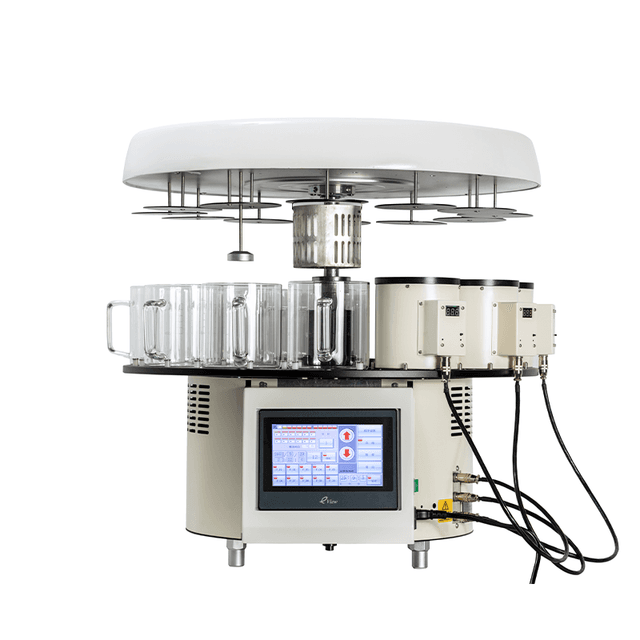
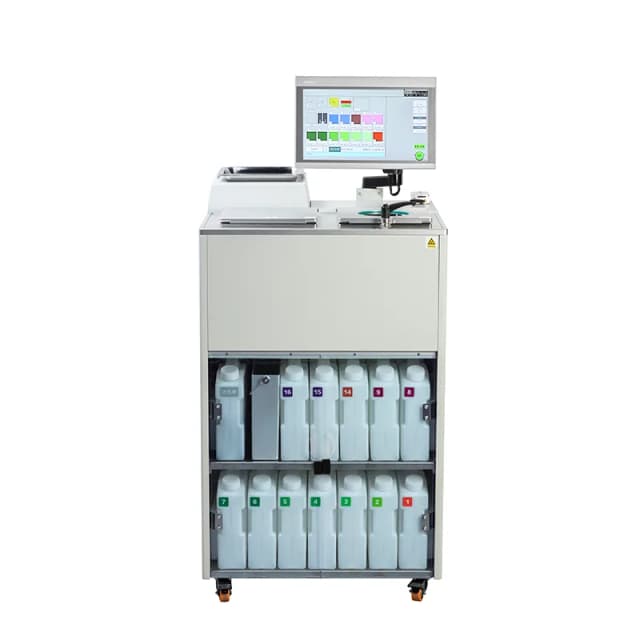
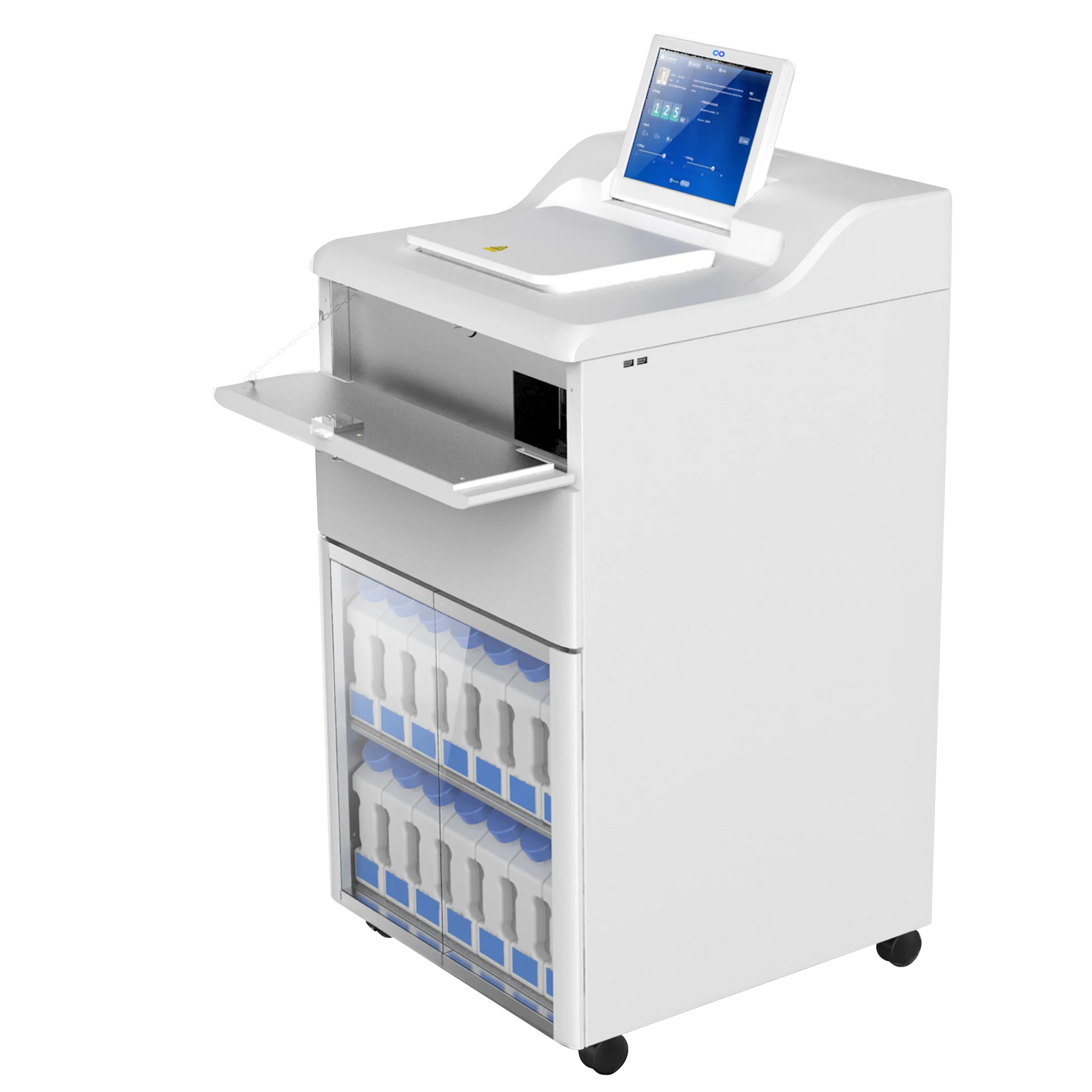
The Closed Automatic Tissue Dehydrator (RF-HP-300) is a fully enclosed histological processing system designed for automated tissue dehydration, clearing, and paraffin infiltration. This high-capacity instrument processes up to 300 tissue cassettes through programmable reagent stations with precise temperature control ranging from ambient to 65°C. The system integrates dual independent temperature control systems, ultrasonic concentration detection, and intelligent reagent management to ensure consistent processing results across large sample batches.
The instrument features a 12.1-inch touchscreen interface with adjustable viewing angle and electronic security locks for safe operation. Remote monitoring capabilities through mobile applications and computer interfaces enable real-time process oversight and data logging. Automated self-inspection protocols monitor key operating parameters before each run, while intelligent reagent replacement and automatic rehydration functions minimize manual intervention and reduce processing variability.
How It Works
The closed tissue dehydrator operates through controlled sequential immersion of tissue cassettes in graded alcohol solutions, clearing agents, and molten paraffin. The system removes water from tissue specimens through osmotic dehydration using increasing concentrations of ethanol, followed by clearing with xylene or alternative solvents that are miscible with both alcohol and paraffin. Temperature-controlled paraffin baths (50-65°C) complete the infiltration process, replacing clearing agents within tissue spaces.
Ultrasonic concentration detection monitors reagent quality throughout processing cycles, while dual temperature control systems independently regulate dehydration reagents (ambient to 65°C) and rinse solutions (60°C for alcohol, 65°C for xylene). The closed chamber design prevents reagent evaporation and maintains consistent processing conditions while reducing fume exposure. Automated reagent rotation and replacement ensure optimal processing conditions across all 10 reagent stations.
Intelligent processing algorithms adjust timing and temperature parameters based on specimen load and reagent condition feedback. The system's risk prediction capabilities analyze operational parameters before each run to identify potential processing issues, while automated rehydration functions can reverse partial dehydration if processing interruptions occur.
Features & Benefits
pa_equipment-type
- 4952
pa_automation-level
- fully-automated
pa_pathology-application
- 4968
pa_reagent-stations
- 5020
pa_specimen-capacity
- 4997
pa_vacuum-capability
- 4993
pa_tissue-compatibility
- 4976
display_size
- 12.1 inch
display_angle_adjustment
- adjustable
lock_type
- Electronic lock switch cover
detection_method
- Ultrasonic concentration detection
self_inspection
- Yes
temperature_control_system
- Dual temperature control systems
remote_monitoring
- Mobile app and computer access
automatic_rehydration
- Yes
intelligent_reagent_replacement
- Yes
automated_parameter_monitoring
- Yes
risk_prediction
- Yes
Supply voltage and frequency
- 110-120VAC,60Hz or 220-240VAC, 50Hz
Operating temperature range
- +10 ℃ to 40 ℃
Temperature (paraffin)
- 50 ℃ ~ 65 ℃
Temperature (dehydration reagent)
- Ambient temperature to 65 ℃
Temperature (rinse reagent)
- 60 ℃ for alcohol; 65 ℃ for xylene
Number of small paraffin cylinders
- 3
Number of large paraffin cylinders
- 1
Capacity of small paraffin cylinders
- 4.2L
Capacity of large paraffin cylinders
- 5.6L
Reagent bottle
- 10
Condensate bottle
- 1
Rinse bottle
- 3
Reagent bottle capacity
- Scale Level 1: 3L
Dimensions unpacked(W D H)
- 620 x 640 x 1170mm
Weight unpacked
- Approx, 180KG
Weight packed
- Approx, 249KG
Display Type
- Touch Screen
Research Domain
- Cancer Research
- Developmental Biology
- Histopathology
- Neuroscience
- Pharmaceutical QC
- Toxicology
Power/Voltage
- 1200VA
Capacity
- Up to 300 cassettes
Weight
- 180.0 kg
Dimensions
- L: 620.0 mm
- W: 640.0 mm
- H: 1170.0 mm
| Feature | This Product | Typical Alternative | Advantage |
|---|---|---|---|
| Processing Capacity | Up to 300 cassettes per run | Entry-level models typically process 50-150 cassettes | Enables large batch processing for high-throughput research studies and clinical laboratories. |
| Temperature Control | Dual independent temperature control systems with ambient to 65°C range | Single temperature control systems with limited range options | Provides redundant safety and allows independent optimization of different processing stages. |
| User Interface | 12.1-inch adjustable touchscreen with remote monitoring | Basic displays with limited remote access capabilities | Facilitates intuitive operation and enables off-site monitoring for improved workflow management. |
| Reagent Monitoring | Ultrasonic concentration detection with intelligent replacement | Manual reagent monitoring and replacement schedules | Automatically maintains optimal reagent quality without manual testing or scheduled changes. |
| Safety Systems | Automated self-inspection, risk prediction, and electronic locks | Basic safety interlocks without predictive monitoring | Prevents processing failures and protects valuable specimens through proactive system monitoring. |
| Reagent Configuration | 10 reagent stations with 3L bottles plus multiple paraffin baths | Fewer reagent stations with smaller capacity bottles | Supports complex multi-step protocols and extended operation between reagent changes. |
The RF-HP-300 offers high-capacity automated processing with advanced monitoring and safety features designed for research and clinical laboratories requiring consistent, high-throughput tissue preparation. The combination of dual temperature control, ultrasonic reagent monitoring, and remote oversight capabilities supports reliable processing of large specimen batches.
Practical Tips
Run the automated self-inspection sequence before each processing batch to verify temperature accuracy and reagent detection systems.
Why: Ensures processing conditions meet protocol specifications and prevents specimen damage from equipment malfunctions.
Monitor reagent bottle levels and ultrasonic sensor readings regularly to maintain optimal processing conditions.
Why: Prevents processing interruptions and maintains consistent specimen quality across batches.
Program processing protocols with gradual temperature transitions and allow adequate infiltration time for dense tissue specimens.
Why: Prevents tissue artifacts and ensures complete reagent penetration for optimal sectioning quality.
Verify electronic lock engagement before leaving extended processing runs unattended.
Why: Prevents unauthorized access to hazardous reagents and maintains processing protocol integrity.
Use the remote monitoring system to check processing status and identify any deviations from programmed parameters.
Why: Enables rapid response to processing issues and prevents batch failure from minor parameter drift.
Document reagent batch numbers and replacement dates to maintain traceability for processed specimens.
Why: Ensures processing consistency and enables troubleshooting if specimen quality issues arise.
Clean paraffin cylinders regularly to prevent contamination buildup that could affect infiltration quality.
Why: Maintains paraffin purity and prevents processing artifacts that could interfere with microscopic analysis.
Allow the system to reach thermal equilibrium before beginning processing runs, especially after reagent changes.
Why: Ensures accurate temperature control throughout the processing cycle and prevents thermal shock to specimens.
Setup Guide
What’s in the Box
- Closed Automatic Tissue Dehydrator main unit
- 10 reagent bottles (3L capacity)
- 3 small paraffin cylinders (4.2L capacity)
- 1 large paraffin cylinder (5.6L capacity)
- Condensate collection bottle
- 3 rinse bottles
- Power cable
- User manual and programming guide (typical)
- Installation qualification documentation (typical)
Warranty
ConductScience provides a comprehensive 1-year manufacturer warranty covering mechanical and electronic components with technical support for installation, calibration, and operational guidance.
Compliance
What is the maximum processing time range for a complete dehydration cycle?
Processing time depends on specimen size and protocol parameters, but the system supports programmable cycles from several hours to overnight processing. Consult product datasheet for specific timing ranges based on tissue type.
Can the system handle both routine and special staining preparation protocols?
Yes, the programmable interface allows custom protocol development for various tissue types and downstream staining requirements, with independent temperature and timing control for each reagent station.
How does the ultrasonic concentration detection system work?
The system uses ultrasonic sensors to monitor reagent density and composition changes that indicate contamination or depletion, alerting operators when reagent replacement is needed.
What safety features protect specimens during extended processing runs?
Dual temperature control systems provide redundancy, automated self-inspection prevents runs with faulty parameters, and automatic rehydration can reverse partial dehydration if processing interruptions occur.
Is the system compatible with alternative clearing agents besides xylene?
The temperature-controlled reagent system (ambient to 65°C) can accommodate various clearing agents, though specific compatibility should be verified based on reagent properties and processing requirements.
How much laboratory space is required for installation?
The unit measures 620 x 640 x 1170mm and weighs 180kg, requiring a reinforced bench with adequate ventilation clearance and access for reagent loading and maintenance.
What data logging and documentation capabilities are available?
The remote monitoring system provides real-time data logging through mobile apps and computer interfaces, though specific data export formats should be confirmed with product specifications.
How frequently does the intelligent reagent replacement system require operator intervention?
The system monitors reagent quality automatically and alerts operators when replacement is needed, though replacement frequency depends on processing volume and reagent degradation rates.
Have a question about this product?
Have a question? Just ask.
Send it over and we'll email you a personalized answer — no call, no scheduling.
Prefer to talk it through?
Accessories
Enhance your setup with compatible accessories