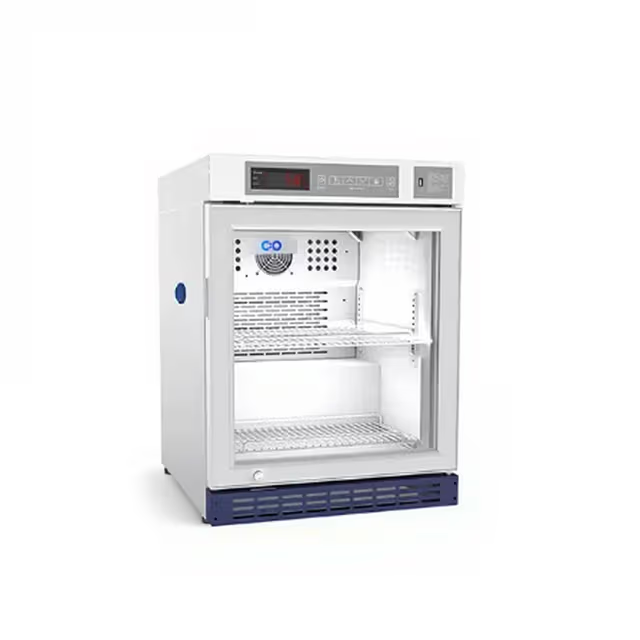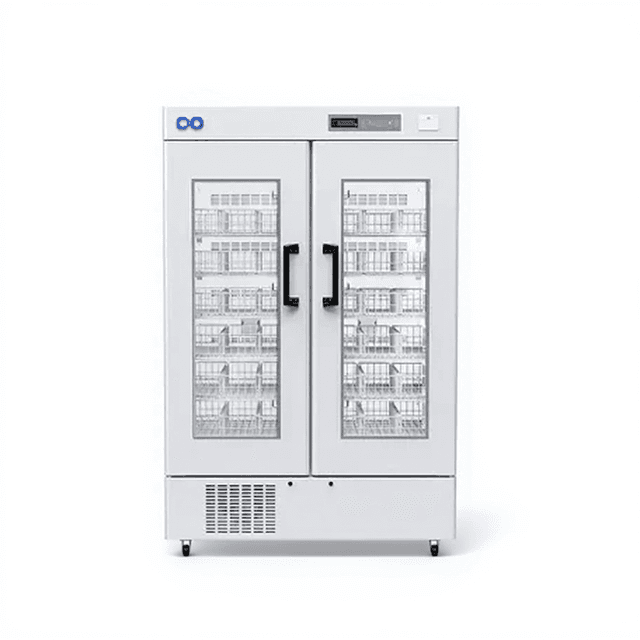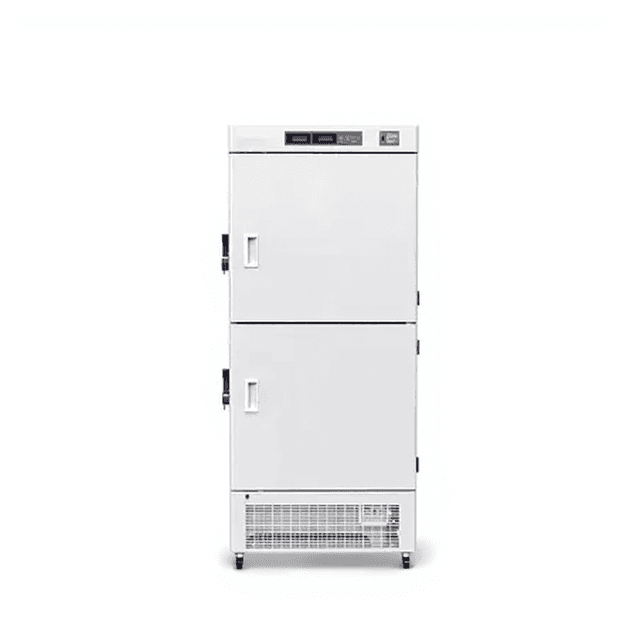
Blood Bank Refrigerator BBR Series
Precision blood bank refrigerators maintaining 2-6°C with ±0.1°C accuracy for safe blood component storage in clinical laboratories.

Louise Corscadden, PhD
Director of Science · ConductScience
Ask Louise about Blood Bank Refrigerator BBR Series fit, setup, configuration, or quote prep.
Already working with us? Sign in to connect this with My Scientist.
Key Specifications
Full details →- Model fit
- 5 selectable configurations
- SKU family
- BIO-BBR-4V86 | BIO-BBR-4V136 | BIO-BBR-4V296 | BIO-BBR-4V356 | BIO-BBR-4V466
- Shipping box
- 19.49 x 18.07 x 16.93 cm
- Ordering
- Online checkout and quote request available
- Category
- Lab Equipment
- Build notes
- Rigid polyurethane
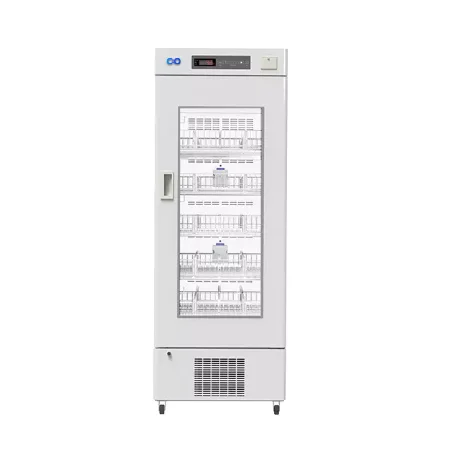
The Blood Bank Refrigerator BBR Series provides precise temperature control for blood component storage in clinical laboratories and blood banks. These refrigerators maintain a stable 2-6°C temperature range with ±0.1°C accuracy and ≤1.5°C uniformity throughout the storage chamber, ensuring optimal preservation of red blood cells, platelets, and other blood products during storage periods.
The series features forced air refrigeration systems with multiple sensor monitoring for consistent temperature distribution. Five capacity models (86L to 466L) accommodate varying blood bag storage requirements, with dedicated blood storage baskets and adjustable shelving for organized inventory management. Individual transparent inner doors minimize cold air loss during access, while comprehensive alarm systems monitor temperature deviations, power failures, and door status to protect valuable blood product inventory.
How It Works
The BBR Series employs forced air refrigeration with multiple temperature sensors positioned throughout the storage chamber to maintain uniform cooling. The microprocessor control system continuously monitors sensor inputs and adjusts compressor operation to maintain the target temperature range of 2-6°C. Rigid polyurethane insulation in a unibody, mono-assembly foamed construction minimizes thermal bridging and provides consistent thermal barrier performance.
The forced air circulation system ensures temperature uniformity by actively moving cooled air throughout the storage volume, preventing thermal stratification that can occur in static cooling systems. Multiple sensors provide redundant temperature monitoring, with the control system calculating average temperatures and detecting localized temperature variations. The transparent inner door design reduces thermal load during door openings by creating a secondary barrier that maintains cold air retention in the main storage chamber.
Features & Benefits
Insulation Material
- Rigid polyurethane
Refrigeration System
- Forced air
Sensor Design
- Multiple sensors
Shelving
- Adjustable shelves
Storage Accessories
- Blood storage baskets
Door Features
- Individual transparent inner door
Automation Level
- semi-automated
Temperature Accuracy
- 0.1°C
Temperature Uniformity
- ≤1.5°C
Temperature Stability
- ≤2°C
Recovery Time
- ≤15min
Internal Size (W×D×H)
- 430×459×495mm
External Size (W×D×H)
- 530×660×1037mm
Blood Bag Capacity (450ml)
- 66
Material
- Rigid polyurethane
- Unibody design, mono-assembly foaming
Research Domain
- Clinical Diagnostics
- Immunology
- Pharmaceutical QC
Capacity
- 86L
Temperature Range
- 2~6°C
Power/Voltage
- 245W
Weight
- 74kg
Shipping weight
- 45.75 lb
Shipping box
- L: 19.49 cm
- W: 18.07 cm
- H: 16.93 cm
| Feature | This Product | Typical Alternative | Advantage |
|---|---|---|---|
| Temperature Accuracy | ±0.1°C accuracy | Many basic models offer ±0.5°C to ±1°C accuracy | Precise temperature control reduces risk of blood product degradation during storage periods. |
| Temperature Uniformity | ≤1.5°C uniformity throughout chamber | Standard refrigerators often show 2-4°C variation | Consistent temperatures across all storage locations ensure uniform blood product preservation. |
| Recovery Time | ≤15 minutes recovery to 6°C | Basic units may require 30-45 minutes for temperature recovery | Rapid recovery minimizes thermal stress during frequent access periods in busy blood banks. |
| Sensor Configuration | Multiple sensor design with redundant monitoring | Single-sensor systems are common in entry-level models | Redundant sensing provides backup monitoring and improved temperature mapping accuracy. |
| Door Design | Individual transparent inner door for cold air retention | Most models use single-door designs | Reduces thermal load during door openings, maintaining stable storage conditions. |
| Alarm System | Comprehensive monitoring of temperature, power, door, and system status | Basic models may only include temperature alarms | Complete monitoring protects valuable blood inventory from multiple failure modes. |
The BBR Series provides specialized blood bank refrigeration with precise temperature control, rapid recovery performance, and comprehensive monitoring systems designed specifically for blood component storage applications. The multiple sensor design and forced air circulation deliver superior temperature uniformity compared to general laboratory refrigerators.
| Model | SKU | Listed price | Status | Shipping box |
|---|---|---|---|---|
| BIO-BBR-4V466 | BIO-BBR-4V466 | $8,900.00 | Available | 19.49 x 18.07 x 16.93 cm |
| BIO-BBR-4V356 | BIO-BBR-4V356 | $7,100.00 | Available | 19.49 x 18.07 x 16.93 cm |
| BIO-BBR-4V296 | BIO-BBR-4V296 | $5,900.00 | Available | 19.49 x 18.07 x 16.93 cm |
| BIO-BBR-4V136 | BIO-BBR-4V136 | $4,200.00 | Available | 19.49 x 18.07 x 16.93 cm |
| BIO-BBR-4V86 | BIO-BBR-4V86 | $3,400.00 | Available | 19.49 x 18.07 x 16.93 cm |
Practical Tips
Verify temperature accuracy quarterly using a calibrated temperature monitoring device placed in the geometric center of the storage chamber.
Why: Regular calibration ensures continued accuracy of the temperature control system for blood product safety.
Clean the forced air circulation fans and interior surfaces monthly to maintain optimal airflow and temperature distribution.
Why: Unobstructed airflow is critical for maintaining temperature uniformity throughout the storage chamber.
Allow blood products to reach room temperature before refrigerated storage to minimize thermal shock to the cooling system.
Why: Gradual temperature transitions reduce compressor load and improve temperature stability.
Position blood bags to avoid blocking airflow paths around circulation fans and sensor locations.
Why: Proper air circulation ensures accurate temperature readings and uniform cooling performance.
If temperature alarms occur, check door seal integrity and ensure adequate ventilation clearance around the unit.
Why: Door seal problems and inadequate ventilation are common causes of temperature control issues.
Test backup power and battery alarm systems monthly to ensure continued monitoring during power outages.
Why: Power failure protection is essential for maintaining blood product integrity during electrical disruptions.
Organize blood storage baskets by product type and expiration date for efficient inventory rotation.
Why: Systematic organization improves inventory management and reduces door-open time.
Setup Guide
What’s in the Box
- Blood bank refrigerator main unit
- Blood storage baskets (typical)
- Adjustable shelving system
- Temperature monitoring sensor cables (typical)
- User manual and technical documentation (typical)
- Power cord (typical)
Warranty
ConductScience provides standard manufacturer warranty coverage with technical support for proper installation and operation guidance.
Compliance
What blood bag capacity can each model accommodate?
The BIO-BBR-4V86 model accommodates 66 standard 450ml blood bags. Larger models provide proportionally increased capacity based on their storage volumes (136L, 296L, 356L, and 466L respectively).
How quickly does the unit recover temperature after door opening?
All models recover to 6°C within 15 minutes after door opening in 32°C ambient conditions, minimizing thermal stress on stored blood products.
What temperature monitoring accuracy can be expected?
The system provides ±0.1°C temperature accuracy with ≤1.5°C uniformity throughout the storage chamber and ≤2°C stability over time.
What alarm functions are included for temperature monitoring?
Comprehensive alarms monitor high and low temperature conditions, sensor failures, system malfunctions, door ajar status, power failures, and battery switch conditions.
How does the forced air system improve temperature uniformity?
The forced air refrigeration actively circulates cooled air throughout the storage volume, preventing thermal stratification and ensuring consistent temperatures at all storage locations.
What are the power requirements and energy consumption?
The BIO-BBR-4V86 model consumes 245W. Power consumption for larger models should be confirmed in the product datasheet as specifications may vary by capacity.
Can the shelving system be customized for different blood bag sizes?
Yes, the adjustable shelving system and dedicated blood storage baskets can be configured to optimize space utilization for various blood bag sizes and inventory management requirements.
Have a question about this product?
Have a question? Just ask.
Send it over and we'll email you a personalized answer — no call, no scheduling.
Prefer to talk it through?
Accessories
Enhance your setup with compatible accessories