Tablet Four-usage Tester
Integrated pharmaceutical testing platform combining dissolution, disintegration, friability, and hardness testing with automated temperature control and digital monitoring for comprehensive tablet characterization.

Louise Corscadden, PhD
Director of Science · ConductScience
Ask Louise about Tablet Four-usage Tester fit, setup, configuration, or quote prep.
Already working with us? Sign in to connect this with My Scientist.
Key Specifications
Full details →- Model fit
- Configured during quote
- SKU family
- BIO-TFUT-3
- Shipping box
- 11259.84 x 1535.43 x 38.0 cm
- Ordering
- Online checkout and quote request available
- Category
- Lab Equipment
- Build notes
- SUS316 stainless steel
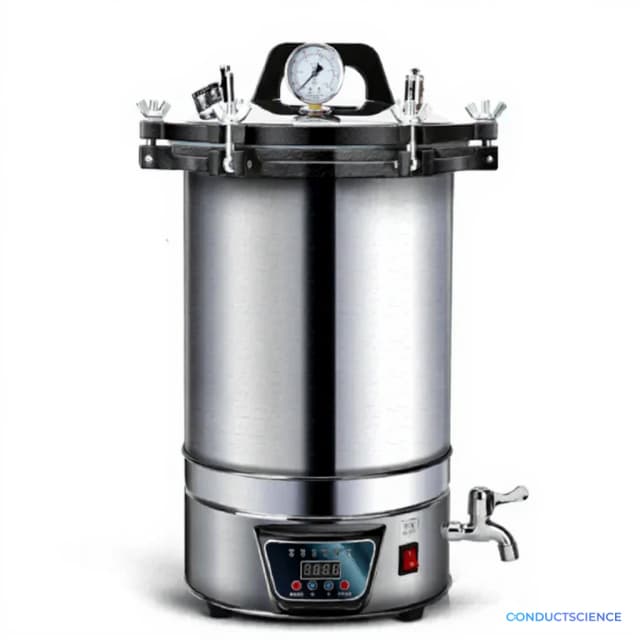
The Tablet Four-usage Tester (BIO-TFUT-3) is a comprehensive pharmaceutical testing instrument that combines dissolution, disintegration, friability, and hardness testing capabilities in a single platform. This integrated system performs critical quality control evaluations required for solid dosage form characterization, incorporating automated temperature control (20-40°C ±0.3°C), precision rotation speed management (20-200 rpm ±2 rpm), and programmable timing functions (1-900 min ±0.5 min).
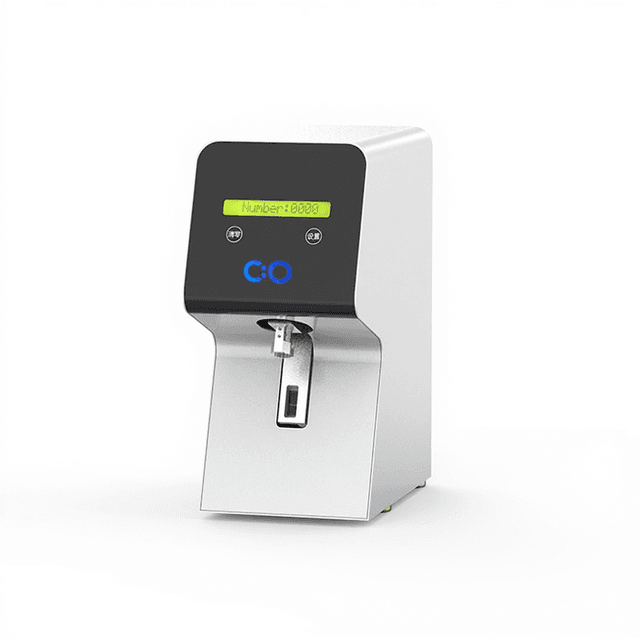
The instrument features three dissolution stations with imported SUS316 stainless steel rotation baskets and paddle rods, ensuring chemical compatibility and durability. Automated control systems provide real-time monitoring with digital display output, automatic detection, diagnosis, and alarm functions. The unit includes dual-path disintegration testing capability, friability testing with precise cylinder rotation control, and continuous hardness measurement using high-precision pressure sensors with motor-controlled compression and manual tablet feeding.
How It Works
The instrument operates through four distinct testing methodologies integrated into a single platform. Dissolution testing utilizes the paddle or basket method where tablets are placed in temperature-controlled dissolution media (20-40°C) with precise agitation at 20-200 rpm. The SUS316 stainless steel components ensure chemical inertness while maintaining consistent hydrodynamic conditions for reproducible drug release measurements.
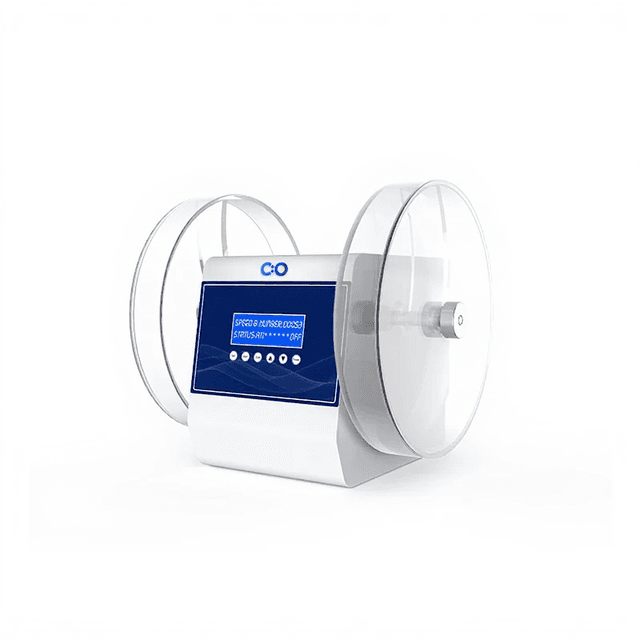
Disintegration testing employs dual-path oscillation mechanisms with nacelle assemblies moving at 30-32 cycles per minute over a 55±2 mm range, simulating physiological conditions for tablet breakdown assessment. Friability testing uses a rotating drum (Φ286×39 mm) to subject tablets to controlled mechanical stress, measuring weight loss after standardized tumbling cycles. Hardness testing incorporates high-precision pressure sensors with motor-controlled compression to measure the force required for tablet fracture, providing quantitative strength assessment.
Automated control systems coordinate temperature regulation, timing functions, and motor operations while continuously monitoring test parameters. Digital displays provide real-time feedback, and alarm functions alert operators to out-of-specification conditions or test completion.
Features & Benefits
Control Type
- Auto-control with auto-detection, auto-diagnosis and auto-alarm
Temperature Control
- Auto-temperature control with high precision
Timing Control
- Auto-time control with auto-timing shutdown
Display Features
- Auto-display, auto-latching, auto-reset and auto-cyclic test
Friability Control
- Automatic control with high precision cylinder rotation speed and number of turns
Hardness Sensor
- High-precision pressure sensor
Hardness Measurement
- Continuous measurement with manual tablet feeding and motor control
Disintegration Paths
- Two-path disintegration with simultaneous operation
Dissolution Components
- Rotation baskets and paddle rods made of imported SUS316 stainless steel
Test Capabilities
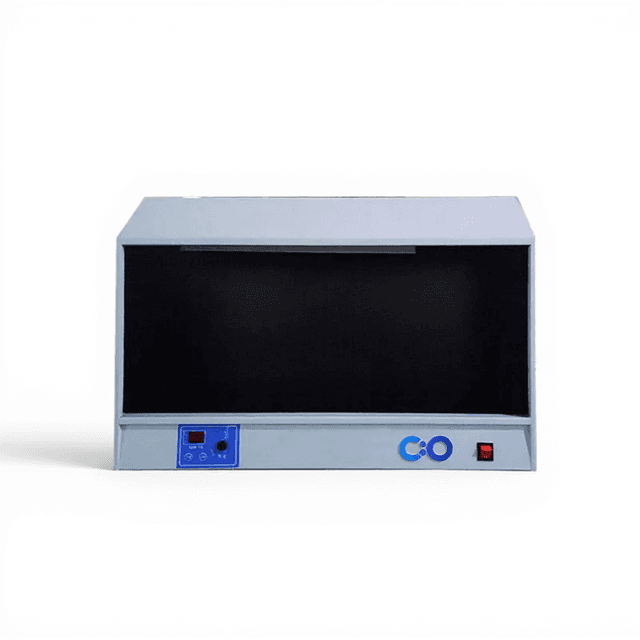
- Clarity testing for injection and bottled medicine liquid
Power/Voltage
- AC110/220V±10%, 50/60Hz
Automation Level
- semi-automated
Cylinder Number
- 2
Cylinder Radius
- φ286
Rotating Speed
- 20~100rpm
External Dimensions
- 370×300×340mm
Material
- SUS316 stainless steel
Display Type
- Digital
Research Domain
- Analytical Chemistry
- Clinical Diagnostics
- Food Science
- Industrial Hygiene
- Materials Science
- Pharmaceutical QC
Weight
- 12kg
Shipping weight
- 26.46 lb
Shipping box
- L: 11259.84 cm
- W: 1535.43 cm
- H: 38.0 cm
| Feature | This Product | Typical Alternative | Advantage |
|---|---|---|---|
| Testing Integration | Four-function platform combining dissolution, disintegration, friability, and hardness testing | Most instruments focus on single testing functions requiring multiple separate instruments | Reduces laboratory space requirements and provides comprehensive tablet characterization in a single workflow. |
| Temperature Control Precision | ±0.3°C precision across 20-40°C range | Standard models typically offer ±0.5°C to ±1.0°C precision | Enhanced temperature stability improves dissolution test reproducibility and regulatory compliance. |
| Dissolution Stations | 3 dissolution testing positions | Entry-level models often provide 1-2 testing positions | Increased sample throughput while maintaining individual vessel temperature and agitation control. |
| Construction Materials | Imported SUS316 stainless steel dissolution components | Standard models may use 316L stainless steel or other materials | Superior corrosion resistance and chemical compatibility extends component lifetime and reduces replacement costs. |
| Control System | Auto-control with detection, diagnosis, and alarm functions | Basic models typically offer manual control with limited automation | Reduces operator intervention requirements and provides automated quality assurance monitoring. |
| Hardness Testing Method | High-precision pressure sensor with continuous measurement capability | Traditional mechanical hardness testers with single-point measurements | Enables statistical analysis of tablet strength variation within batches for improved quality assessment. |
The BIO-TFUT-3 offers integrated multi-function testing capability with precision temperature control and advanced automation features. The SUS316 stainless steel construction and comprehensive monitoring systems provide enhanced reliability and regulatory compliance support compared to single-function or basic automated systems.
Practical Tips
Verify temperature calibration using certified thermometers at multiple points across the operating range before conducting formal testing.
Why: Temperature accuracy is critical for reproducible dissolution testing and regulatory compliance documentation.
Clean SUS316 stainless steel components with appropriate solvents immediately after testing to prevent buildup of tablet excipients or API residues.
Why: Regular cleaning maintains component integrity and prevents cross-contamination between different formulations.
Allow thermal equilibration of dissolution media for at least 15 minutes before introducing test tablets to ensure stable temperature conditions.
Why: Temperature stability at test initiation improves reproducibility and reduces variability in dissolution profiles.
Check paddle or basket alignment if dissolution results show unusual variability between vessels, as mechanical irregularities affect hydrodynamic conditions.
Why: Proper alignment ensures consistent agitation patterns critical for reproducible drug release measurements.
Document rotation speed verification using calibrated tachometer or stroboscope as part of system suitability testing.
Why: Agitation speed directly affects dissolution rate and must be verified to meet pharmacopeial requirements.
Ensure adequate ventilation when testing formulations containing volatile solvents or when using organic dissolution media.
Why: Proper ventilation prevents accumulation of potentially hazardous vapors in the laboratory environment.
Use consistent tablet orientation and placement techniques during hardness testing to minimize measurement variability.
Why: Standardized sample positioning ensures reproducible force application and accurate strength measurements.
Perform friability drum speed verification periodically using the specified 24-26 rpm range to ensure compliance with pharmacopeial standards.
Why: Drum rotation speed affects the mechanical stress applied to tablets and must be verified for valid friability results.
Setup Guide
What’s in the Box
- Main testing unit (BIO-TFUT-3)
- Dissolution vessels and covers (typical)
- SUS316 stainless steel paddles and baskets
- Disintegration test assembly with nacelles (typical)
- Friability drum assembly
- Power cable
- User manual and documentation (typical)
- Calibration certificate (typical)
Warranty
ConductScience provides a standard one-year manufacturer warranty covering defects in materials and workmanship, with technical support available for installation, operation, and maintenance guidance.
Compliance
References
Background reading relevant to this product:
What dissolution media compatibility can be expected with the SUS316 stainless steel components?
SUS316 stainless steel provides excellent compatibility with standard pharmacopeial dissolution media including hydrochloric acid solutions, phosphate buffers, and organic solvents commonly used in dissolution testing. The material offers superior corrosion resistance compared to standard 316L stainless steel.
Can the system accommodate both USP Apparatus 1 (basket) and Apparatus 2 (paddle) configurations?
Yes, the system includes both basket assemblies (2 units) and paddle rods, allowing configuration for either USP dissolution apparatus depending on test method requirements. The 3-station design accommodates standard dissolution testing protocols.
What is the precision and accuracy of the temperature control system?
Temperature control maintains ±0.3°C precision across the 20-40°C operating range, meeting typical pharmacopeial requirements for dissolution testing. The automated temperature control system provides continuous monitoring and adjustment.
How does the hardness testing function integrate with the other test capabilities?
Hardness testing uses a high-precision pressure sensor with motor-controlled compression and manual tablet feeding. This allows continuous measurement of breaking force while maintaining access to dissolution, disintegration, and friability testing functions.
What data output options are available for documentation and analysis?
The digital display system provides real-time parameter monitoring with auto-latching and reset functions. Consult product datasheet for specific data logging or computer interface capabilities.
Can the friability drum accommodate different tablet sizes and quantities?
The friability drum has internal dimensions of Φ286×39 mm, suitable for standard tablet friability testing protocols. Consult USP specifications for appropriate tablet quantities based on total sample weight requirements.
What maintenance procedures are required for the SUS316 stainless steel components?
SUS316 components require routine cleaning with appropriate solvents and periodic inspection for wear or corrosion. The high-grade stainless steel minimizes maintenance requirements compared to lower-grade materials.
How does the dual-path disintegration testing improve efficiency?
Dual-path operation allows simultaneous testing of multiple samples with automatic timing shutdown, effectively doubling throughput compared to single-path systems while maintaining standardized test conditions.
Have a question about this product?
Have a question? Just ask.
Send it over and we'll email you a personalized answer — no call, no scheduling.
Prefer to talk it through?
Frequently Bought Together