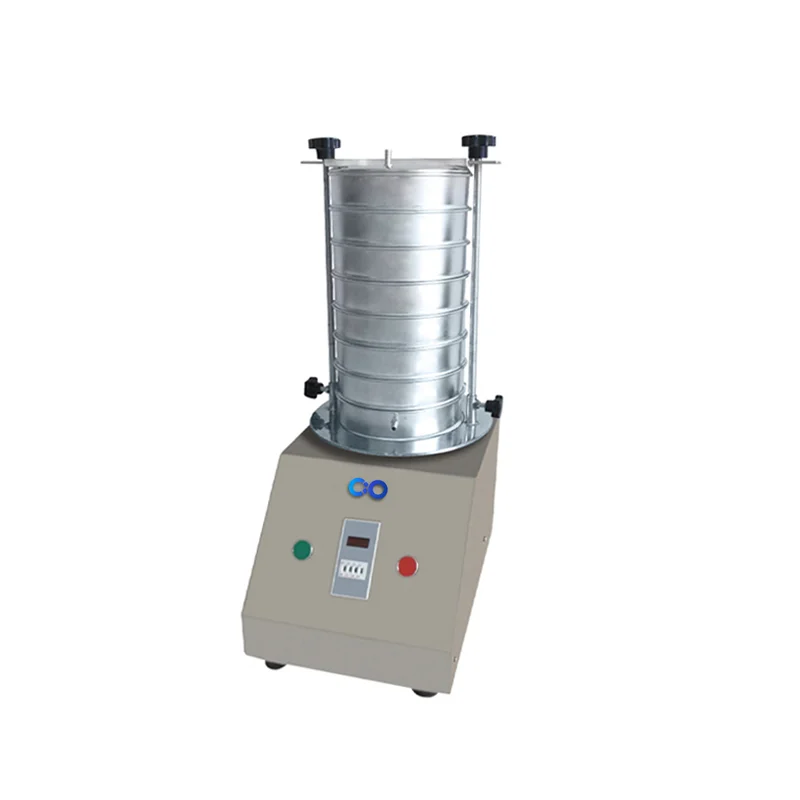
Laboratory Test Sieve
Automated biochemistry analyzer with 37 sample positions, 8 wavelengths, and 200 tests/hour throughput for quantitative analysis of biological samples using spectrophotometric detection.

Louise Corscadden, PhD
Director of Science · ConductScience
Ask Louise about Laboratory Test Sieve fit, setup, configuration, or quote prep.
Already working with us? Sign in to connect this with My Scientist.
Key Specifications
Full details →- Model fit
- 3 selectable configurations
- SKU family
- BIO-BK-TS200 | BIO-BK-TS200X | BIO-BK-TS300
- Shipping box
- 62.5 x 46 x 42.5 cm
- Ordering
- Online checkout and quote request available
- Category
- Lab Equipment
- Build notes
- 50~150g
This automated biochemistry analyzer performs quantitative analysis of biological samples using spectrophotometric detection across eight discrete wavelengths. The system accommodates 37 sample positions and 28 reagent positions, enabling high-throughput analysis of serum, plasma, and other biological fluids. With 48 reusable cuvettes and precise temperature control at 37±0.2°C, the analyzer supports multiple analytical methods including end-point, fixed-time, rate, and turbidimetric assays.
The instrument processes up to 200 tests per hour with sample volumes ranging from 2-70μL, making it suitable for clinical chemistry panels, enzyme assays, and metabolite quantification. The eight-wavelength configuration (340, 405, 450, 510, 546, 578, 630, 700nm) covers the spectral range required for most routine biochemical assays, while the automated sample handling reduces manual intervention and improves reproducibility.
How It Works
The analyzer employs spectrophotometric principles to quantify analytes in biological samples. Light from a stable source passes through the sample contained in optical cuvettes, and the transmitted light is measured by photodetectors at specific wavelengths. The Beer-Lambert law governs the relationship between light absorption and analyte concentration, enabling precise quantification.
The system maintains cuvettes at 37±0.2°C for optimal enzymatic reactions and uses automated pipetting to deliver precise sample and reagent volumes. The eight discrete wavelengths (340, 405, 450, 510, 546, 578, 630, 700nm) are selected to match the absorption maxima of common chromophores and enzyme substrates used in clinical chemistry. Rate measurements monitor absorbance changes over time for kinetic enzyme assays, while end-point measurements determine final absorbance values for colorimetric assays.
Sample and reagent positioning systems enable unattended operation, with the analyzer automatically moving samples through washing, incubation, and measurement cycles. The 48 reusable cuvettes are cleaned between measurements to prevent carryover contamination.
Features & Benefits
Screen Mesh Size Range
- 2 mesh to 2800 mesh
Timing Range
- 0~99min59s
Sample Material Requirement
- 50~150g
Automation Level
- fully-automated
Throughput
- 200 tests/hour
Analysis Method
- End-point, Fixed-time, Rate, Turbidimetry
Sample Positions
- 37
Reagent Positions
- 28
Sample Volume
- 2~70μl
Temperature Control
- 37±0.2°C
Cuvettes
- 48 reusable
Wavelengths
- 340, 405, 450, 510, 546, 578, 630, 700nm
External Size
- 625×425×460mm
Research Domain
- Analytical Chemistry
- Cell Biology
- Clinical Diagnostics
- Immunology
- Metabolic Research
- Pharmaceutical QC
Power/Voltage
- AC 220V±10% or 110V±10%, 50/60Hz, 300W
Weight
- 36kg
Shipping weight
- 79.37 lb
Shipping box
- L: 62.5 cm
- W: 46 cm
- H: 42.5 cm
| Feature | This Product | Typical Alternative | Advantage |
|---|---|---|---|
| Sample Throughput | 200 tests/hour | Entry-level analyzers often provide 100-150 tests/hour | Higher throughput reduces laboratory turnaround time and increases daily analytical capacity. |
| Wavelength Selection | 8 discrete wavelengths (340-700nm) | Basic systems typically offer 4-6 wavelengths | Broader wavelength range accommodates more diverse assay chemistries without instrument limitations. |
| Sample Positions | 37 sample positions | Compact analyzers often have 20-30 positions | Larger sample capacity reduces the frequency of sample tray exchanges during high-volume runs. |
| Temperature Control | 37±0.2°C precision | Standard systems typically maintain ±0.5°C tolerance | Tighter temperature control improves reproducibility of temperature-sensitive enzymatic reactions. |
| Sample Volume Range | 2-70μL | Many systems require minimum 5-10μL | Lower minimum volume capability is essential for pediatric samples and precious research specimens. |
| Cuvette System | 48 reusable cuvettes | Some systems use disposable cuvettes or fewer reusable units | Reusable cuvettes reduce operating costs while providing sufficient capacity for continuous operation. |
This analyzer provides high-throughput automated analysis with precise temperature control and broad wavelength coverage. The combination of 37 sample positions, 8 wavelengths, and 200 tests/hour throughput offers analytical flexibility and efficiency for diverse laboratory requirements.
| Model | SKU | Listed price | Status | Shipping box |
|---|---|---|---|---|
| BIO-BK-TS300 | BIO-BK-TS300 | $1,950.00 | Available | 62.5 x 46 x 42.5 cm |
| BIO-BK-TS200X | BIO-BK-TS200X | $1,400.00 | Available | 62.5 x 46 x 42.5 cm |
| BIO-BK-TS200 | BIO-BK-TS200 | $1,100.00 | Available | 62.5 x 46 x 42.5 cm |
Practical Tips
Verify wavelength accuracy weekly using certified optical filters and document any drift beyond ±2nm.
Why: Wavelength accuracy directly affects analytical precision and inter-laboratory result comparability.
Clean reagent lines monthly with appropriate cleaning solutions to prevent precipitation buildup and ensure accurate dispensing.
Why: Reagent line blockages can cause volume delivery errors and compromise analytical accuracy.
Allow the system to reach thermal equilibrium (37±0.2°C) for at least 30 minutes before beginning analytical runs.
Why: Temperature stability is essential for reproducible enzymatic reactions and consistent assay performance.
Run quality control samples at the beginning, middle, and end of each analytical batch to monitor system performance.
Why: Regular QC monitoring detects analytical drift and ensures result reliability throughout extended runs.
If absorbance readings appear noisy, check cuvette cleanliness and inspect optical components for contamination.
Why: Optical interference from dirty cuvettes or lenses is the most common cause of measurement imprecision.
Use appropriate personal protective equipment when handling biological samples and ensure proper waste disposal according to laboratory protocols.
Why: Biological samples may contain infectious agents requiring standard precautions to protect laboratory personnel.
Pre-warm reagents to room temperature before loading to minimize temperature-related analytical variations.
Why: Cold reagents can temporarily affect reaction kinetics and lead to inconsistent results in temperature-sensitive assays.
Perform daily blank measurements to verify baseline stability and detect potential optical system drift.
Why: Baseline drift can indicate optical component degradation or contamination requiring corrective action.
Setup Guide
What’s in the Box
- Main analyzer unit
- Power supply cable
- Data interface cables (typical)
- Sample containers set (typical)
- Reagent bottles (typical)
- User manual and software
- Calibration certificate (typical)
- Quality control materials (typical)
Warranty
ConductScience provides a standard one-year manufacturer warranty covering parts and labor, with comprehensive technical support for installation, training, and troubleshooting throughout the warranty period.
Compliance
What wavelengths are available and how do I select the appropriate one for my assay?
The system provides eight discrete wavelengths: 340, 405, 450, 510, 546, 578, 630, and 700nm. Select wavelengths based on your chromophore's absorption maximum - 340nm for NADH-based enzyme assays, 405nm for p-nitrophenyl substrates, 510-578nm for colored reaction products, and 700nm for turbidimetric measurements.
How do I optimize sample volume for different types of assays?
The system accepts 2-70μL sample volumes. Use minimum volumes (2-10μL) for precious samples like pediatric specimens, medium volumes (10-30μL) for routine chemistry panels, and larger volumes (30-70μL) when dilution is required or for assays requiring higher precision.
What maintenance is required for the 48 reusable cuvettes?
The cuvettes undergo automated washing cycles between samples. Perform daily cleaning verification using blank measurements, weekly deep cleaning with appropriate detergents, and monthly optical path length verification to maintain measurement accuracy.
How does temperature control affect enzymatic assays?
The 37±0.2°C temperature control is critical for enzymatic reactions, as enzyme activity doubles approximately every 10°C. The tight temperature tolerance ensures reproducible kinetic measurements and prevents temperature-related analytical errors.
Can the system handle both kinetic and end-point assays simultaneously?
Yes, the analyzer supports end-point, fixed-time, rate, and turbidimetric methods. You can program different assay types for different sample positions within the same run, optimizing workflow efficiency for mixed analytical requirements.
What is the carryover rate and how is it minimized?
Carryover is minimized through automated cuvette washing between samples and separate pipetting systems for samples and reagents. Consult product datasheet for specific carryover specifications, typically <0.1% for most clinical chemistry applications.
How do I validate analytical methods on this system?
Method validation requires establishing linearity, precision, accuracy, and analytical measurement range using certified reference materials. Run quality control samples at multiple concentrations and document performance according to your laboratory's validation protocol.
Have a question about this product?
Have a question? Just ask.
Send it over and we'll email you a personalized answer — no call, no scheduling.
Prefer to talk it through?
Accessories
Enhance your setup with compatible accessories
Frequently Bought Together