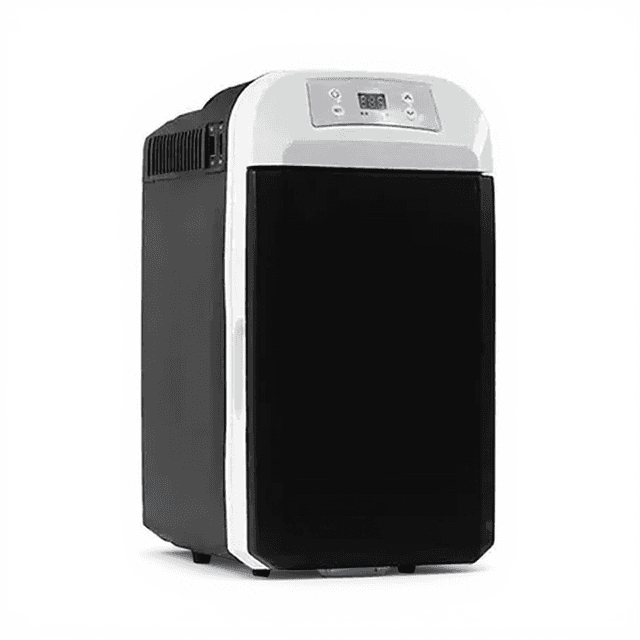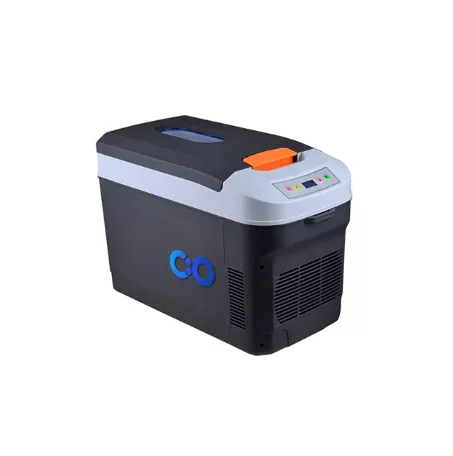
Car Refrigerator
Portable semiconductor-based refrigerator series offering dual cooling/heating functionality in 8L-22L capacities for laboratory transport and field applications.

Louise Corscadden, PhD
Director of Science · ConductScience
Ask Louise about Car Refrigerator fit, setup, configuration, or quote prep.
Already working with us? Sign in to connect this with My Scientist.
Key Specifications
Full details →- Model fit
- 4 selectable configurations
- SKU family
- BIO-CR-8 | BIO-CR-15 | BIO-CR-19 | BIO-CR-22
- Shipping box
- 15.35 x 10.83 x 8.46 cm
- Ordering
- Online checkout and quote request available
- Category
- Lab Equipment
- Build notes
- Confirm accessories, station layout, and support needs before purchase
The Car Refrigerator series represents a portable temperature control solution utilizing semiconductor thermoelectric technology for laboratory and field applications. These units provide dual cooling and heating capabilities without compressors or refrigerants, operating through the Peltier effect to achieve temperature differentials relative to ambient conditions.
Available in four capacity configurations (8L, 15L, 19L, and 22L), these units achieve cooling temperatures 22-28°C below ambient and heating up to 60±5°C. The semiconductor-based design eliminates mechanical vibration and provides silent operation suitable for temperature-sensitive transport and storage applications. Multiple power supply options (DC 12V/24V and AC 220V/110V) enable use in laboratory, vehicle, and field environments.
How It Works
The Car Refrigerator operates on thermoelectric cooling principles utilizing the Peltier effect. Semiconductor elements create a temperature differential when electrical current is applied, with one side becoming cold while the other becomes hot. This solid-state cooling mechanism eliminates the need for compressors, refrigerants, or moving parts.
Temperature control is achieved through current direction and magnitude adjustment. Cooling mode pumps heat from the internal chamber to the external environment, achieving temperatures 22-28°C below ambient. Heating mode reverses the current flow, warming the chamber to 60±5°C. LED displays provide temperature monitoring, while dual power supply options enable operation from vehicle DC systems or standard AC power.
The absence of mechanical components results in vibration-free operation and eliminates refrigerant leakage concerns. Heat dissipation occurs through external fins and optional forced air circulation, with power consumption ranging from 50-70W depending on operating mode and unit size.
Features & Benefits
Cooling Technology
- semiconductor
Heating Capability
- dual functions of cooling and heating
Compressor
- compressor-free design
Refrigerant
- cryogen-free
Environmental Impact
- pollution-free
Portability
- portable design
Power Efficiency
- lowest power consumption
Service Life
- long service life
Form Factor
- small volume, lightweight
Automation Level
- manual
Temperature Accuracy
- 0.1°C
Temperature Uniformity
- ≤2°C
Temperature Stability
- ≤3°C
Internal Dimensions (W×D×H)
- 580×613×1325mm
External Dimensions (W×D×H)
- 680×747×1885mm
Research Domain
- Analytical Chemistry
- Clinical Diagnostics
- Environmental Monitoring
- Food Science
- Microbiology
- Pharmaceutical QC
Capacity
- 450L
Temperature Range
- 2~8°C
Power/Voltage
- 220W
Weight
- 135kg
Shipping weight
- 7.05 lb
Shipping box
- L: 15.35 cm
- W: 10.83 cm
- H: 8.46 cm
| Feature | This Product | Typical Alternative | Advantage |
|---|---|---|---|
| Cooling Technology | Semiconductor thermoelectric (Peltier effect) | Many portable units use compressor-based cooling systems | Eliminates mechanical vibration and noise that could affect sensitive samples or laboratory environments |
| Temperature Control Range | Dual cooling (-22 to -28°C below ambient) and heating (60±5°C) | Most portable refrigerators offer cooling only | Single unit handles both refrigeration and warming requirements for diverse sample storage protocols |
| Power Supply Flexibility | DC 12V/24V and AC 220V/110V with optional 110V | Many units offer limited power options | Enables seamless transition between laboratory bench and vehicle transport without power adapters |
| Capacity Options | Four models from 8L to 22L | Limited size selections in portable thermoelectric category | Allows selection of appropriate capacity for specific sample volumes and transport requirements |
| Environmental Impact | Pollution-free operation without refrigerants | Compressor units require refrigerants with potential leakage concerns | Eliminates environmental compliance issues and refrigerant handling requirements in laboratory settings |
This thermoelectric refrigerator series provides semiconductor-based temperature control with dual cooling/heating capability across four capacity options. The vibration-free design and multiple power supply compatibility make it suitable for laboratory transport and field applications requiring precise temperature maintenance.
| Model | SKU | Listed price | Status | Shipping box |
|---|---|---|---|---|
| BIO-CR-22 | BIO-CR-22 | $750.00 | Available | 15.35 x 10.83 x 8.46 cm |
| BIO-CR-19 | BIO-CR-19 | $630.00 | Available | 15.35 x 10.83 x 8.46 cm |
| BIO-CR-15 | BIO-CR-15 | $520.00 | Available | 15.35 x 10.83 x 8.46 cm |
| BIO-CR-8 | BIO-CR-8 | $390.00 | Available | 15.35 x 10.83 x 8.46 cm |
Practical Tips
Pre-cool or pre-heat the empty chamber for 30 minutes before loading temperature-sensitive materials.
Why: Ensures stable temperature conditions and reduces thermal shock to samples during loading.
Clean external heat dissipation fins monthly using compressed air or soft brush to remove dust accumulation.
Why: Maintains optimal heat transfer efficiency and prevents performance degradation from blocked airflow.
Place an independent temperature logger inside the chamber to verify actual internal temperatures during critical applications.
Why: LED display shows set temperature rather than actual chamber temperature, and independent verification ensures sample integrity.
Ensure adequate ventilation clearance (minimum 10cm) around external surfaces during operation.
Why: Prevents overheating of semiconductor elements and maintains consistent cooling performance.
If cooling performance decreases, verify ambient temperature has not exceeded the unit's operating range.
Why: Thermoelectric cooling is relative to ambient conditions, and extreme ambient temperatures reduce achievable temperature differentials.
Verify temperature accuracy using calibrated reference thermometers placed at multiple locations within the chamber.
Why: Ensures temperature uniformity and validates performance for applications requiring documented temperature control.
Arrange contents to allow air circulation and avoid overloading beyond 80% of rated capacity.
Why: Maintains temperature uniformity throughout the chamber and prevents thermal stratification of stored materials.
Setup Guide
What’s in the Box
- Car Refrigerator unit (selected model)
- DC power adapter (12V/24V) (typical)
- AC power cord (220V or 110V) (typical)
- User manual and technical specifications
- Temperature monitoring guide (typical)
Warranty
ConductScience provides a standard one-year manufacturer warranty covering defects in materials and workmanship, with technical support for operational guidance and troubleshooting assistance.
Compliance
References
Background reading relevant to this product:
What is the actual temperature range achievable in different ambient conditions?
Cooling performance is relative to ambient temperature, achieving 22-28°C below ambient depending on model. In a 25°C laboratory, expect internal temperatures around -3°C to 3°C. Heating reaches 60±5°C regardless of ambient conditions.
How does power consumption vary between cooling and heating modes?
The BIO-CR-8 consumes 55W cooling/50W heating, while larger models (15L-22L) consume 70W cooling/60W heating. Heating mode is slightly more efficient across all models.
Can the unit operate continuously during vehicle transport?
Yes, DC 12V/24V capability enables continuous operation from vehicle electrical systems. Monitor battery capacity for extended use when engine is not running.
What maintenance is required for semiconductor cooling elements?
Semiconductor elements require no scheduled maintenance. Keep external heat dissipation fins clean and ensure adequate ventilation clearance around the unit during operation.
How quickly does the unit reach target temperature?
Temperature achievement time depends on ambient conditions, load, and target differential. Allow 30-45 minutes for initial temperature stabilization and verify performance before loading temperature-sensitive materials.
Is temperature logging or data recording available?
Units feature LED displays for visual monitoring. For continuous data logging, external temperature loggers may be added depending on documentation requirements.
What is the temperature uniformity within the chamber?
Consult product datasheet for specific uniformity specifications. Arrange contents to allow air circulation and avoid placing items directly against cooling/heating surfaces.
Have a question about this product?
Have a question? Just ask.
Send it over and we'll email you a personalized answer — no call, no scheduling.
Prefer to talk it through?