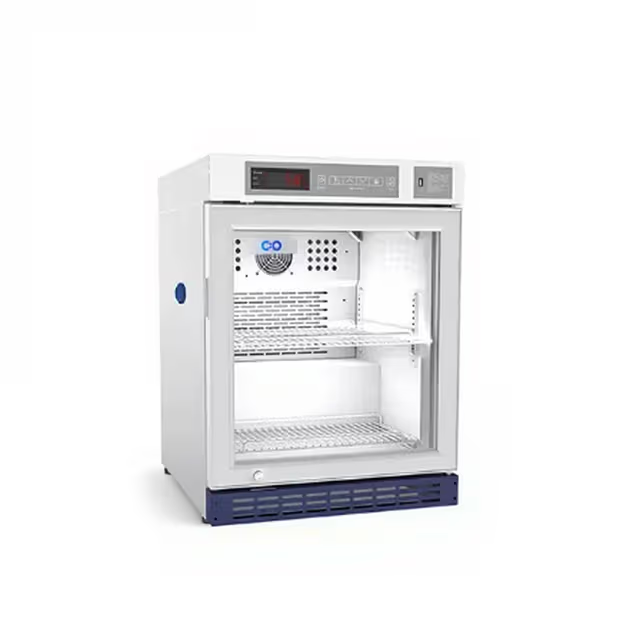
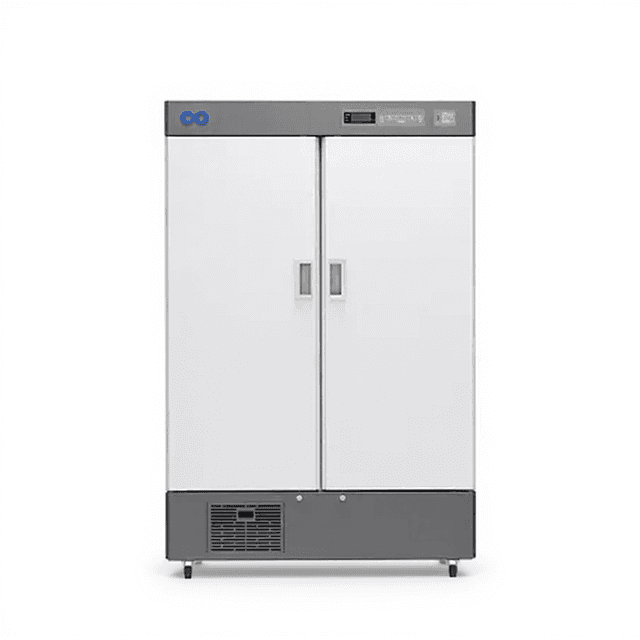
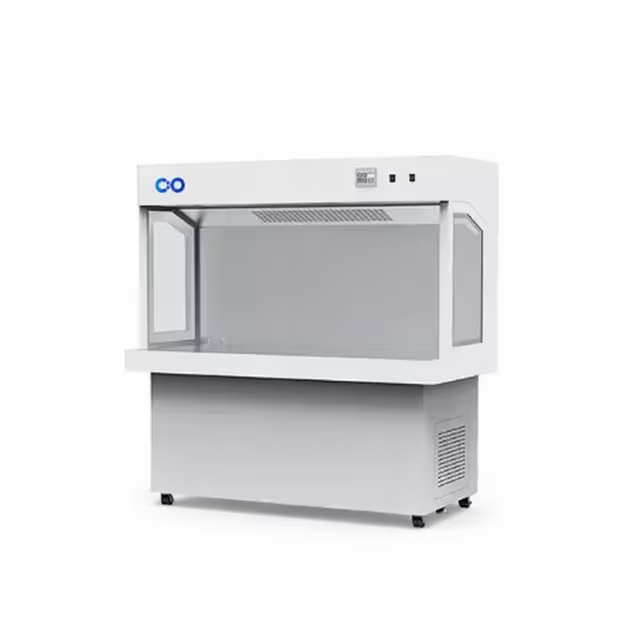
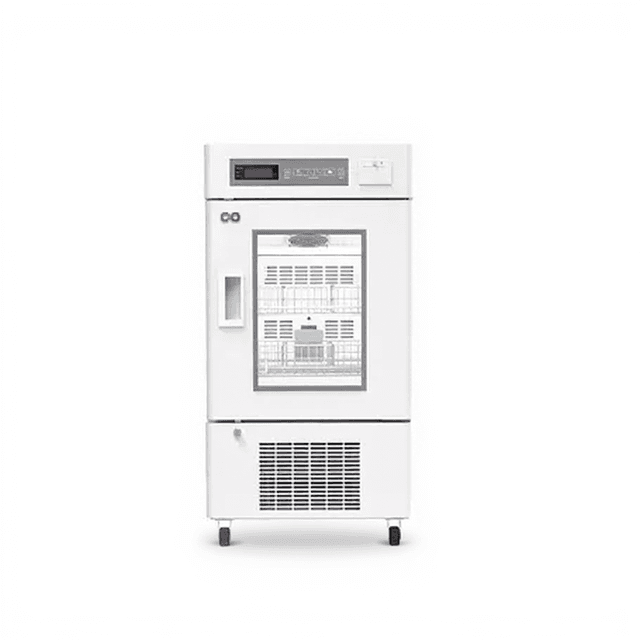
Laboratory Refrigerator 2-8°C (628L/650L/968L)
Precision laboratory refrigerators with 2-8°C temperature control, microprocessor monitoring, and dual glass doors for temperature-sensitive sample storage.

Louise Corscadden, PhD
Director of Science · ConductScience
Ask Louise about Laboratory Refrigerator 2-8°C (628L/650L/968L) fit, setup, configuration, or quote prep.
Already working with us? Sign in to connect this with My Scientist.
Key Specifications
Full details →- Model fit
- 3 selectable configurations
- SKU family
- Assigned during quote
- Shipping box
- 52.17 x 43.31 x 17.87 cm
- Ordering
- Online checkout and quote request available
- Category
- Lab Equipment
- Build notes
- Confirm accessories, station layout, and support needs before purchase
The Laboratory Refrigerator series provides precise temperature control for storage of temperature-sensitive biological materials, reagents, and samples in research environments. Operating within a 2-8°C range with ±0.1°C accuracy, these units maintain uniform temperature distribution (≤2°C variation) throughout the storage compartment using microprocessor-controlled cooling systems.
Available in three capacity configurations (628L, 650L, 968L), each unit features dual electrically heated glass doors for visibility without thermal compromise, automatic defrost cycling, and comprehensive alarm systems covering temperature excursions, door status, and power failures. The air-cooling refrigeration system utilizes R290 refrigerant with copper tube aluminum fin heat exchangers for efficient thermal management in laboratory settings.
How It Works
The refrigeration system operates through vapor compression cooling using R290 refrigerant circulated through copper tube aluminum fin heat exchangers. A microprocessor controller monitors internal temperature via integrated sensors and modulates compressor operation to maintain the 2-8°C setpoint with 0.1°C accuracy. Air circulation fans distribute cooled air throughout the storage compartment to achieve uniform temperature distribution.
The dual electrically heated glass doors incorporate resistive heating elements to prevent condensation formation while maintaining thermal insulation. Automatic defrost cycles prevent ice accumulation on evaporator coils, with defrost water directed to an external drain system. The polyurethane cyclopentane insulation minimizes thermal bridging and maintains stable internal conditions despite ambient temperature variations.
Temperature monitoring occurs continuously, with LED display showing current internal temperature and alarm systems activating for high/low temperature excursions, thermostat malfunctions, door openings, and power interruptions exceeding 8 hours.
Features & Benefits
Shipping weight
- 416.67 lb
Shipping box
- L: 52.17 cm
- W: 43.31 cm
- H: 17.87 cm
| Feature | This Product | Typical Alternative | Advantage |
|---|---|---|---|
| Temperature Accuracy | ±0.1°C precision control | Entry-level models often provide ±0.5°C accuracy | Enables storage of temperature-critical materials requiring narrow tolerance ranges for biological activity preservation. |
| Temperature Uniformity | ≤2°C variation throughout compartment | Standard units may show 3-5°C temperature gradients | Eliminates hot spots that could compromise sample integrity in different storage locations. |
| Door Configuration | Dual electrically heated glass doors | Solid doors or single glass door without heating | Provides visual inventory access while preventing condensation and maintaining thermal efficiency. |
| Recovery Time | ≤15 minutes return to 8°C | Standard refrigerators may require 30+ minutes | Minimizes temperature exposure duration during sample access, protecting thermolabile materials. |
| Alarm System | Temperature, door, power, and fault monitoring | Basic models may have limited alarm functions | Provides comprehensive sample protection through multiple failure mode detection and notification. |
| Capacity Range | 628L, 650L, and 968L options | Fewer size options in precision refrigerator category | Accommodates varying laboratory storage requirements from medium to large research operations. |
Delivers laboratory-grade temperature precision with comprehensive monitoring systems and multiple capacity options. Features dual heated glass doors and rapid temperature recovery for efficient sample access while maintaining stringent storage conditions.
| Model | SKU | Listed price | Status | Shipping box |
|---|---|---|---|---|
| BIO-BPR-5V968 — 968L Capacity | BIO-BPR-5V968 | $1,799.00 | Available | 52.17 x 43.31 x 17.87 cm |
| BIO-BPR-5V650 — 650L Capacity | BIO-BPR-5V650 | $1,399.00 | Available | 52.17 x 43.31 x 17.87 cm |
| BIO-BPR-5V628 — 628L Capacity | BIO-BPR-5V628 | $999.00 | Available | 52.17 x 43.31 x 17.87 cm |
Practical Tips
Perform temperature mapping quarterly using calibrated sensors at geometric center, corners, and mid-points of each shelf level.
Why: Verifies temperature uniformity specifications and identifies any developing thermal gradients before they affect sample integrity.
Clean condenser coils monthly using compressed air or soft brush to remove dust accumulation.
Why: Maintains heat transfer efficiency and prevents compressor overwork that could lead to temperature instability.
Load samples in containers that allow air circulation and avoid blocking internal fans or vents.
Why: Ensures proper air movement for temperature uniformity and prevents localized temperature variations.
If temperature recovery exceeds 15 minutes, check door seals for damage and verify proper closure.
Why: Compromised door seals are the most common cause of extended recovery times and temperature instability.
Document temperature excursion events with duration and magnitude to assess potential sample impact.
Why: Provides traceability for quality management and enables informed decisions about sample usability following thermal events.
Ensure adequate ventilation around the unit and never block air intake or exhaust areas.
Why: Prevents compressor overheating and maintains efficient refrigeration performance in laboratory environments.
Organize frequently accessed samples near the front to minimize door opening duration.
Why: Reduces thermal load and temperature recovery time, maintaining more stable conditions for other stored materials.
Use NIST-traceable reference thermometers placed in glycol-filled bottles for accurate temperature verification.
Why: Provides thermal mass similar to liquid samples and ensures calibration accuracy reflects actual storage conditions.
Setup Guide
What’s in the Box
- Laboratory refrigerator unit
- Power cord
- User manual and specifications
- Temperature monitoring accessories (typical)
- Shelf configuration hardware (typical)
- Drain hose connections (typical)
Warranty
ConductScience provides standard one-year manufacturer warranty covering compressor, control systems, and structural components with technical support for installation and operational guidance.
Compliance
References
Background reading relevant to this product:
What temperature validation procedures are recommended for qualification?
Temperature mapping using calibrated sensors at multiple locations within the storage compartment, with data logging over 24-48 hours to verify uniformity and stability specifications.
How does the alarm system differentiate between brief door openings and actual temperature excursions?
The microprocessor controller includes time delays and temperature thresholds to distinguish normal access from sustained temperature deviations requiring immediate attention.
Can the unit maintain temperature stability during frequent door openings?
Temperature recovery to 8°C occurs within 15 minutes following door closure, with electrically heated glass doors minimizing thermal loss during brief access periods.
What maintenance intervals are required for optimal performance?
Quarterly cleaning of condenser coils, monthly temperature calibration verification, and annual comprehensive service including refrigerant system inspection.
How does ambient temperature affect cooling performance?
Cooling times are specified for 32°C ambient conditions; higher ambient temperatures may extend initial cool-down and recovery times but do not affect steady-state accuracy.
What data logging capabilities are available?
LED display shows current temperature; external data loggers can be connected for continuous recording and documentation requirements. Consult product datasheet for specific interface options.
How does this compare to standard laboratory refrigerators?
Provides superior temperature uniformity (≤2°C vs. typical 3-5°C variation) and accuracy (±0.1°C vs. ±0.5°C) with dedicated laboratory features like glass doors and comprehensive alarms.
Have a question about this product?
Have a question? Just ask.
Send it over and we'll email you a personalized answer — no call, no scheduling.
Prefer to talk it through?