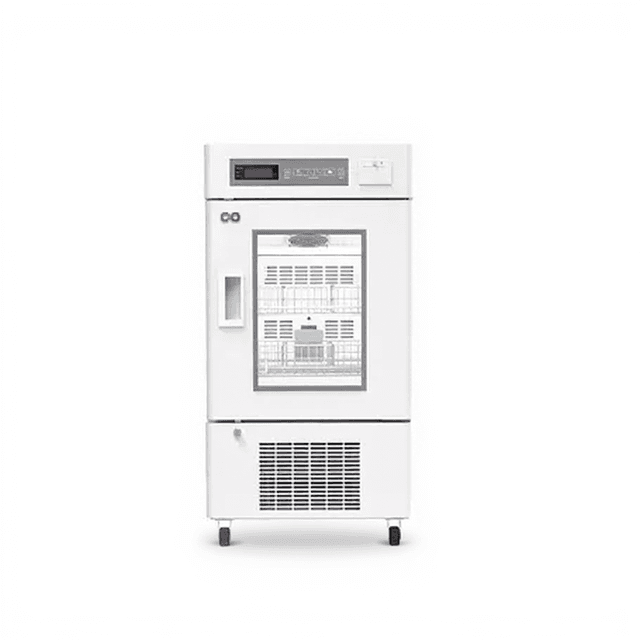
Disintegration Tester
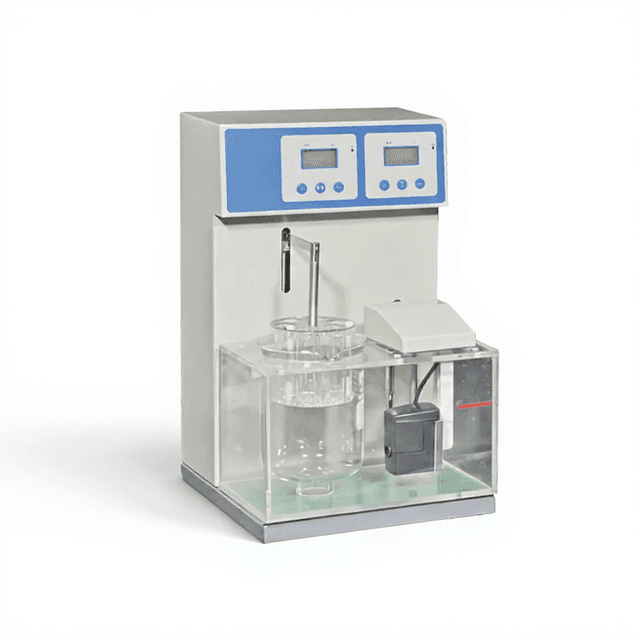
Dual-basket pharmaceutical disintegration tester with pharmacopeia-compliant 37.0°C temperature control, capacitive touchscreen interface, and programmable lifting cycles for parallel solid dosage form analysis.

Louise Corscadden, PhD
Director of Science · ConductScience
Ask Louise about Disintegration Tester fit, setup, configuration, or quote prep.
Already working with us? Sign in to connect this with My Scientist.
Key Specifications
Full details →- Model fit
- Configured during quote
- SKU family
- BIO-BBJ-2
- Shipping box
- 42.0 x 43.6 x 38.0 cm
- Ordering
- Online checkout and quote request available
- Category
- Lab Equipment
- Build notes
- Confirm accessories, station layout, and support needs before purchase
The disintegration tester is a pharmacopeial instrument designed to assess the disintegration time of tablets, capsules, and pills in compliance with the Chinese Pharmacopoeia. It is critical for quality control of solid dosage forms and pharmaceutical formulation development. By measuring disintegration duration, it evaluates drug release kinetics to ensure in vivo performance meets specifications. This instrument plays a vital role in production monitoring, quality assurance, and formulation optimization.
How It Works
The disintegration tester operates on the principle of mechanical agitation combined with precise thermal control to simulate physiological conditions for solid dosage form breakdown. The dual-basket system immerses test samples in a temperature-controlled water bath maintained at 37.0°C, replicating human body temperature. Each basket undergoes a programmable vertical lifting cycle with a default 15-minute duration, creating consistent mechanical stress that promotes tablet or capsule disintegration.
Electronic temperature sensors continuously monitor both the water bath and individual vessel temperatures, providing real-time feedback to maintain thermal stability throughout the test protocol. The bidirectional adjustment capability allows modification of lifting cycle parameters to accommodate different dosage forms or testing requirements. The capacitive touchscreen interface enables precise control of timing, temperature, and mechanical parameters while displaying real-time test progress and environmental conditions.
Safety systems include automatic overheat protection and alarm functions that prevent thermal damage to samples or equipment during extended testing protocols. The system's ability to operate continuously for over 24 hours supports comprehensive dissolution studies and multi-point sampling protocols required for thorough pharmaceutical analysis.
Features & Benefits
Basket System
- Dual-basket system
Temperature Control
- 37.0℃ (pharmacopeia-compliant)
Lifting Cycle Duration
- 15 minutes (default, adjustable bidirectionally)
Temperature Sensors
- Electronic temperature sensors
Safety Features
- Overheat alarm and automatic protection for water bath temperature
Interface
- High-resolution interface
Automation Level
- semi-automated
Display Type
- Capacitive touchscreen
Research Domain
- Analytical Chemistry
- Food Science
- Materials Science
- Pharmaceutical QC
Shipping weight
- 26.46 lb
Shipping box
- L: 42.0 cm
- W: 43.6 cm
- H: 38.0 cm
| Feature | This Product | Typical Alternative | Advantage |
|---|---|---|---|
| Basket Configuration | Dual-basket system with independent operation | Single-basket systems requiring sequential testing | Doubles testing throughput and enables direct comparative analysis between samples under identical conditions. |
| User Interface | Capacitive touchscreen with high-resolution display | Basic models often feature analog controls and simple digital displays | Provides intuitive parameter control and enhanced monitoring capabilities for complex testing protocols. |
| Temperature Monitoring | Electronic sensors for both water bath and vessel temperatures | Entry-level units may monitor water bath temperature only | Ensures comprehensive thermal documentation and verification of test conditions throughout the protocol. |
| Safety Systems | Overheat alarm and automatic temperature protection | Basic models may lack automated safety features | Protects samples and equipment during extended unattended operation, ensuring data integrity and system longevity. |
| Operation Duration | Continuous operation capability exceeding 24 hours | Standard units may require periodic monitoring or have shorter operation windows | Supports comprehensive dissolution studies and extended protocols without interruption or user intervention. |
| Timing Precision | ±0.5 minute timing accuracy | Entry-level models may offer lower timing precision | Ensures reproducible results and compliance with strict pharmacopeia timing requirements for regulatory submissions. |
The BIO-BBJ-2 offers dual-basket parallel testing capability with pharmacopeia-compliant temperature control and advanced touchscreen interface. The electronic temperature monitoring system and automated safety features support extended operation protocols while maintaining precise timing accuracy for pharmaceutical quality control applications.
Practical Tips
Verify temperature accuracy using a calibrated thermometer placed in the water bath before critical testing sessions.
Why: Ensures pharmacopeia compliance and validates that the electronic sensors are providing accurate temperature readings.
Replace the water bath contents regularly and clean the basin with distilled water to prevent mineral buildup on temperature sensors.
Why: Mineral deposits can affect temperature sensor accuracy and create thermal gradients in the water bath.
Allow the water bath to reach thermal equilibrium at 37.0°C before loading samples, typically requiring 15-20 minutes from cold start.
Why: Thermal stability ensures consistent test conditions and prevents temperature fluctuations during the initial phase of testing.
Use the dual-basket system to run control samples alongside test samples for improved data reliability.
Why: Parallel controls under identical conditions provide better validation of results and help identify equipment-related variability.
If overheat alarms activate frequently, check water levels and ensure adequate ventilation around the unit.
Why: Low water levels or poor ventilation can cause thermal stress and trigger protective safety systems.
Document lifting cycle parameters and any modifications from the default 15-minute setting for each test batch.
Why: Complete protocol documentation ensures reproducibility and supports regulatory audit requirements.
Never disable the automatic temperature protection system even for extended testing protocols.
Why: Safety interlocks prevent equipment damage and sample degradation that could compromise expensive pharmaceutical testing.
Inspect basket mechanisms monthly for smooth vertical movement and check for wear on lifting components.
Why: Mechanical wear can affect the consistency of agitation and lead to variable disintegration results between tests.
Setup Guide
What’s in the Box
- Disintegration tester main unit
- Dual basket assembly system
- Power cord and adapter
- User manual and documentation
- Calibration certificate (typical)
- Basket positioning tools (typical)
Warranty
ConductScience provides a standard 1-year manufacturer warranty covering parts and labor, with technical support for setup, calibration, and troubleshooting assistance.
Compliance
References
Background reading relevant to this product:
What is the temperature accuracy and stability of the water bath system?
The system maintains pharmacopeia-compliant 37.0°C with electronic temperature sensors monitoring both water bath and vessel temperatures in real-time. Consult product datasheet for specific temperature tolerance specifications.
Can the lifting cycle parameters be modified from the standard protocol?
Yes, the system features bidirectional adjustment capability for the lifting cycle, with a default 15-minute duration that can be customized through the capacitive touchscreen interface to accommodate different testing requirements.
How long can the system operate continuously for extended studies?
The instrument supports continuous operation exceeding 24 hours with timing precision of ±0.5 minutes, making it suitable for comprehensive dissolution studies and multi-point sampling protocols.
What safety features protect samples during unattended operation?
Integrated safety systems include overheat alarm and automatic protection for water bath temperature, preventing thermal damage during extended or overnight testing protocols.
Is the system compatible with both USP and Ph. Eur. testing protocols?
The pharmacopeia-compliant design with 37.0°C temperature control and programmable lifting cycles supports both USP and European Pharmacopoeia disintegration testing requirements.
Can both baskets operate independently for different test conditions?
Yes, the dual-basket system provides independent operation, allowing simultaneous testing of different samples or replicates under identical thermal conditions but potentially different mechanical parameters.
What data recording capabilities are available through the touchscreen interface?
The high-resolution capacitive touchscreen provides monitoring and control capabilities. Consult product datasheet for specific data logging and export features.
How does this compare to single-basket disintegration testers?
The dual-basket design doubles testing throughput and enables direct comparative analysis between samples under identical conditions, improving efficiency over single-basket systems that require sequential testing.
Have a question about this product?
Have a question? Just ask.
Send it over and we'll email you a personalized answer — no call, no scheduling.
Prefer to talk it through?