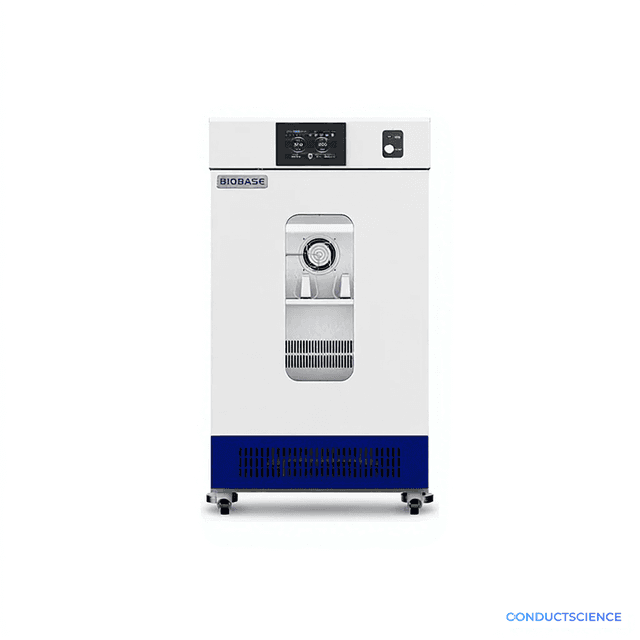
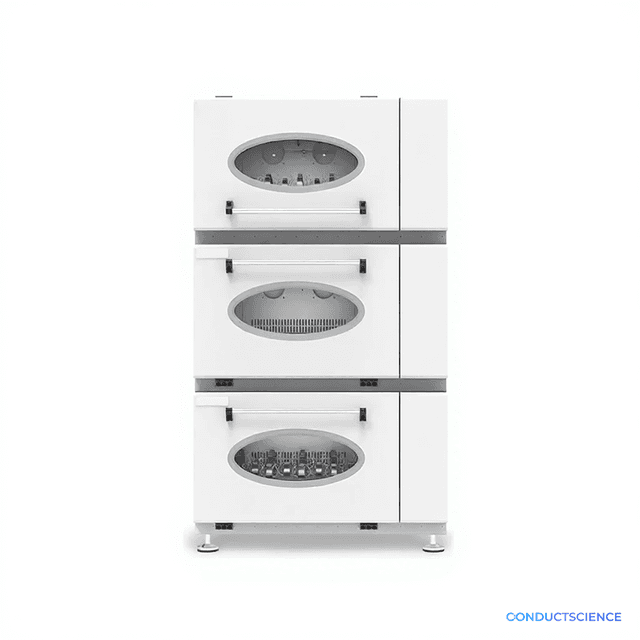
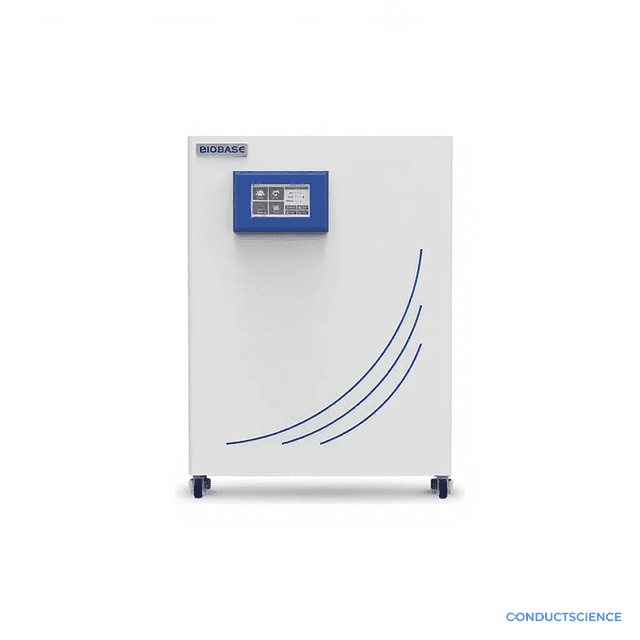
Multi-chamber Constant Temperature Incubator
Dual-chamber laboratory incubator with 150L capacity per chamber, providing precise temperature control from RT+5°C to 65°C with ±0.5°C stability for microbial cultivation and sample incubation.
| Automation Level | semi-automated |
| Chamber Quantity | 2 |
| Temperature Control Range | RT+5~65℃ |
| Temperature Resolution | 0.1℃ |
| Temperature Fluctuation | ±0.5℃ |
| Working Environment | 5~35℃ |

The Multi-chamber Constant Temperature Incubator provides precise dual-chamber temperature control for laboratory cultivation and sample incubation applications. Each chamber offers 150L capacity with independent temperature regulation from ambient +5°C to 65°C, utilizing forced convection for uniform heat distribution. The system maintains temperature stability within ±0.5°C with 0.1°C resolution, supporting consistent environmental conditions for microbial growth, enzymatic reactions, and sample preservation.
The dual-chamber design enables simultaneous incubation of different samples at distinct temperature profiles, maximizing laboratory throughput while conserving bench space. Each chamber includes two adjustable trays for flexible sample organization and accommodates a wide range of culture vessels and laboratory containers. The 1200W heating system with forced air circulation ensures rapid temperature equilibration and spatial uniformity throughout both chambers.
How It Works
The incubator operates through forced convection heating, where internal fans circulate heated air throughout each chamber to eliminate temperature gradients and maintain spatial uniformity. A precision heating element controlled by microprocessor-based temperature regulation adjusts power output to maintain setpoint within ±0.5°C. Temperature sensors continuously monitor chamber conditions with 0.1°C resolution, providing feedback to the control system for stable thermal performance.
The dual-chamber architecture allows independent temperature control for each 150L compartment, enabling simultaneous incubation of samples requiring different thermal conditions. Forced air circulation ensures rapid temperature recovery when chambers are opened and promotes consistent environmental conditions across all sample positions within each chamber.
Features & Benefits
Automation Level
- semi-automated
Chamber Quantity
- 2
Temperature Control Range
- RT+5~65℃
Temperature Resolution
- 0.1℃
Temperature Fluctuation
- ±0.5℃
Working Environment
- 5~35℃
Convection Mode
- Forced convection
Tray
- 2(Single chamber)
Standard Accessory
- Tray
Optional Accessory
- Independent temperature limit alarm system
Consumption
- 1200W
Internal Size(W*D*H)
- 560*530*600mm
External Size(W*D*H)
- 705*740*1800mm
Brand
- ConductScience
Research Domain
- Analytical Chemistry
- Cell Biology
- Environmental Monitoring
- Food Science
- Microbiology
- Pharmaceutical QC
Capacity
- 150L*2
Power/Voltage
- AC220V, 50/60Hz(Standard); 110V, 50/60Hz(Optional)
Weight
- 220.0 kg
Dimensions
- L: 60.0 mm
- W: 56.0 mm
- H: 53.0 mm
Comparison Guide
| Feature | This Product | Typical Alternative | Advantage |
|---|---|---|---|
| Chamber Configuration | Dual independent chambers with 150L capacity each | Single chamber designs or shared-environment multi-compartment units | Independent temperature control enables simultaneous experiments at different thermal conditions without cross-contamination |
| Temperature Range | RT+5°C to 65°C with ±0.5°C stability | Similar range but often with ±1°C or greater fluctuation | Tighter temperature control ensures more consistent experimental conditions for temperature-sensitive applications |
| Heating System | 1200W forced convection with air circulation | Lower wattage gravity convection systems | Faster temperature recovery and superior spatial uniformity throughout the chamber volume |
| Temperature Resolution | 0.1°C display resolution | 1°C resolution on entry-level models | Precise temperature monitoring enables better experimental documentation and repeatability |
| Operating Environment | Functions in 5-35°C ambient conditions | More restricted ambient temperature ranges | Greater operational flexibility in varying laboratory environmental conditions |
| Sample Organization | Two adjustable trays per chamber (4 total) | Fixed shelving or fewer adjustment options | Flexible configuration accommodates diverse container sizes and experimental layouts |
This dual-chamber incubator offers independent temperature control for parallel experiments, forced convection for uniform heating, and precise temperature stability within ±0.5°C. The 300L total capacity and adjustable tray system provide substantial throughput with experimental flexibility for diverse laboratory applications.
Practical Tips
Verify temperature accuracy using calibrated reference thermometers placed at multiple positions within each chamber during qualification.
Why: Spatial temperature verification ensures uniform performance across all sample positions and validates control system accuracy.
Clean interior surfaces and trays regularly with mild detergent, ensuring complete drying before resuming operation.
Why: Regular cleaning prevents contamination buildup and maintains optimal air circulation for temperature uniformity.
Allow adequate spacing between containers and avoid overloading chambers to maintain proper air circulation.
Why: Proper airflow ensures temperature uniformity and prevents localized thermal variations that could affect experimental results.
Minimize door opening frequency and duration during critical incubation periods to maintain stable thermal conditions.
Why: Temperature recovery requires time and energy, and frequent disruptions can introduce thermal fluctuations affecting sample consistency.
If temperature uniformity appears compromised, check for obstructed air circulation or fan operation issues.
Why: Forced convection depends on unimpeded airflow, and blockages can create thermal gradients affecting experimental reproducibility.
Document ambient laboratory temperature conditions when recording incubation data for experimental traceability.
Why: Ambient conditions can influence equilibration time and energy consumption, providing context for experimental reproducibility.
Install optional temperature limit alarm system for extended unattended incubations or valuable sample protection.
Why: Alarm systems provide early warning of temperature excursions that could compromise sample integrity or safety.
Setup Guide
What’s in the Box
- Multi-chamber constant temperature incubator
- Four adjustable trays (two per chamber)
- Power cord
- User manual and operating instructions
- Calibration certificate (typical)
Warranty
ConductScience provides a one-year manufacturer warranty covering parts and labor, with technical support for calibration procedures and operational guidance throughout the warranty period.
Compliance
Can both chambers be set to different temperatures simultaneously?
Yes, each 150L chamber has independent temperature control, allowing simultaneous incubation at different setpoints within the RT+5°C to 65°C range.
How quickly does the incubator reach setpoint temperature?
Temperature equilibration time depends on setpoint and ambient conditions, but the 1200W forced convection system typically achieves setpoint within 30-45 minutes from ambient temperature.
What is the maximum container size that fits in each chamber?
Each chamber measures 560×530×600mm internally, accommodating standard laboratory vessels up to these dimensions with space for air circulation.
How is temperature uniformity maintained throughout each chamber?
Forced convection fans circulate heated air continuously, eliminating thermal gradients and maintaining ±0.5°C stability across all sample positions.
Can the incubator operate reliably in non-climate-controlled laboratory spaces?
Yes, the unit functions within ambient temperatures from 5-35°C, suitable for most laboratory environments without additional climate control.
What calibration procedures are recommended for temperature verification?
Use calibrated reference thermometers to verify display accuracy at operating temperatures, with annual calibration recommended for regulated applications.
How does this compare to single-chamber incubators for laboratory workflow?
The dual-chamber design doubles incubation capacity while enabling simultaneous experiments at different temperatures, improving laboratory efficiency compared to single-chamber units.
Have a question about this product?
Accessories
Enhance your setup with compatible accessories