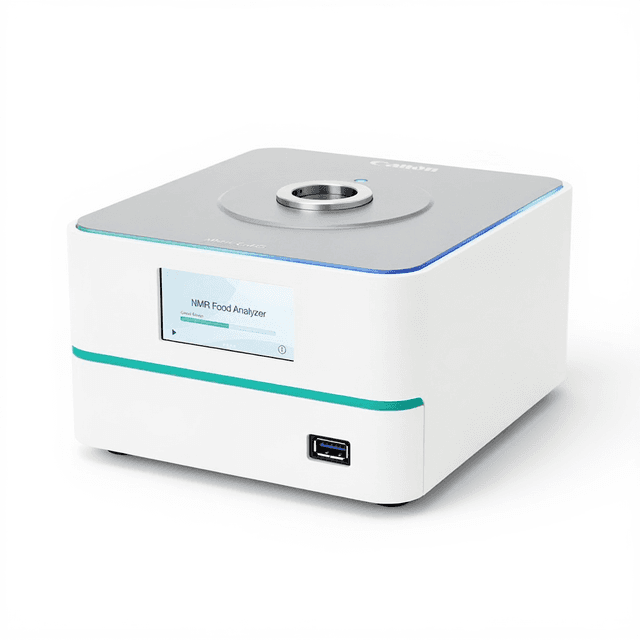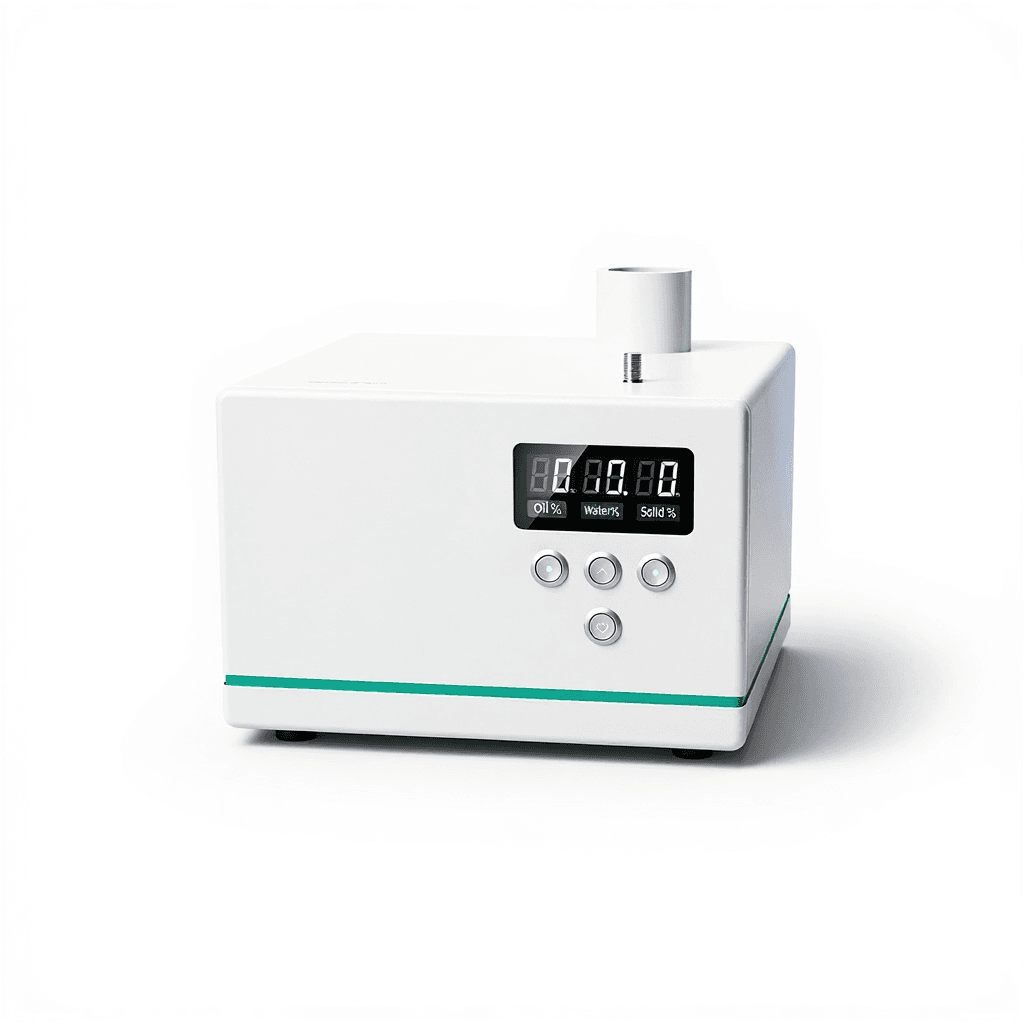
NMR Oil & Water Content Analyzer
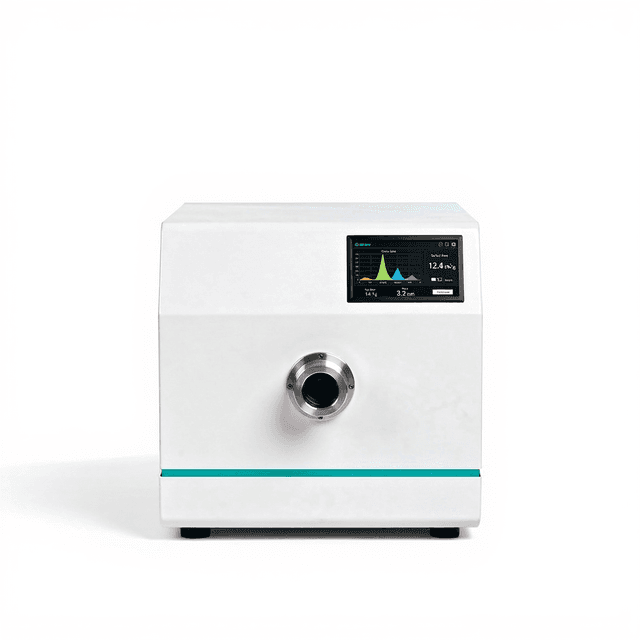
Benchtop 0.5 Tesla NMR analyzer for simultaneous, non-destructive measurement of oil and water content in agricultural, food, and industrial samples.
| Field Strength | 0.5 T (20 MHz) |
| Bore Diameter | 20 mm |
| Automation Level | semi-automated |
| Brand | Greenwaves Scientific |
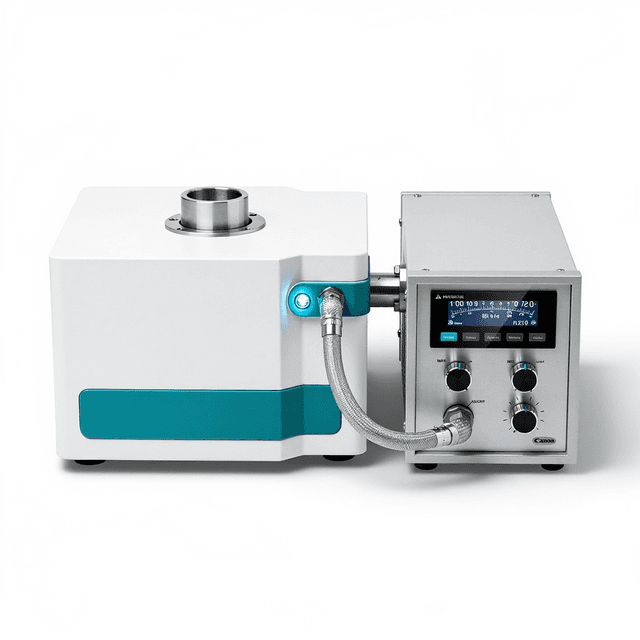
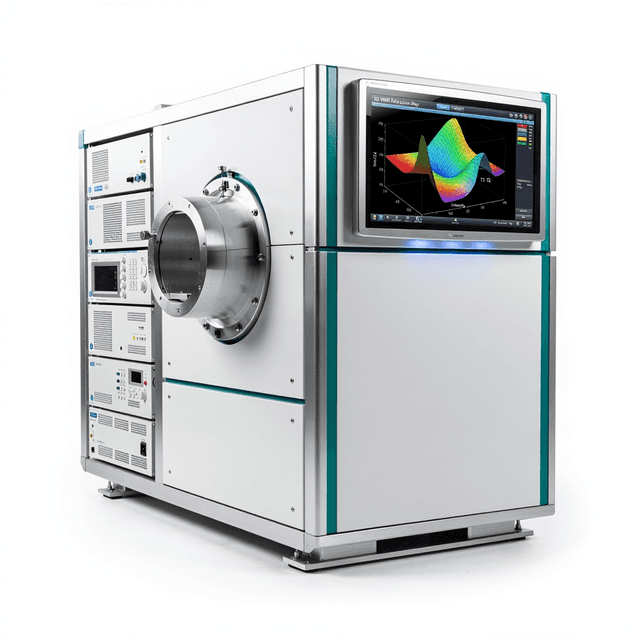
The NMR Oil & Water Content Analyzer employs 0.5 Tesla (20 MHz) nuclear magnetic resonance spectroscopy to provide rapid, non-destructive quantification of oil and moisture content in diverse materials. The benchtop system utilizes a 20 mm bore diameter for direct sample analysis without chemical extraction or complex sample preparation protocols.
This compact analyzer leverages the distinct NMR relaxation properties of hydrogen nuclei in oil and water phases to simultaneously determine both components in a single measurement cycle. The system accommodates solid, semi-solid, and liquid samples, making it suitable for food science, agricultural analysis, and industrial quality control applications where traditional gravimetric or chemical methods may be time-consuming or destructive to sample integrity.
How It Works
Nuclear magnetic resonance spectroscopy measures the behavior of hydrogen nuclei (protons) when subjected to a strong magnetic field and radiofrequency pulses. In this 0.5 Tesla system, hydrogen atoms in oil and water molecules exhibit distinct relaxation characteristics due to their different molecular environments and mobility patterns.
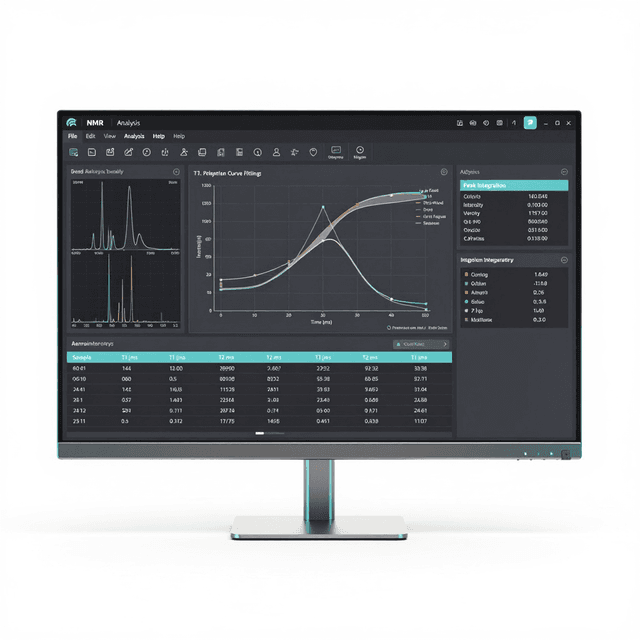
The analyzer applies a 20 MHz radiofrequency pulse sequence that excites hydrogen nuclei, then measures the resulting NMR signal decay. Oil-bound hydrogen typically exhibits longer T2 relaxation times compared to water-bound hydrogen due to reduced molecular motion constraints. The system employs mathematical deconvolution algorithms to separate overlapping signal components and quantify the relative contributions of oil and water phases.
Sample analysis occurs within the 20 mm bore without chemical pretreatment, preserving sample integrity while providing quantitative results based on signal amplitude integration. The measurement principle relies on the proportional relationship between hydrogen concentration and NMR signal intensity for each phase component.
Features & Benefits
Field Strength
- 0.5 T (20 MHz)
Bore Diameter
- 20 mm
Automation Level
- semi-automated
Brand
- Greenwaves Scientific
Research Domain
- Agricultural Research
- Analytical Chemistry
- Food Science
- Industrial Hygiene
- Materials Science
- Pharmaceutical QC
Weight
- 100.0 lbs
Dimensions
- L: 80.0 in
- W: 60.0 in
- H: 80.0 in
Comparison Guide
| Feature | This Product | Typical Alternative | Advantage |
|---|---|---|---|
| Magnetic Field Strength | 0.5 Tesla (20 MHz) | Entry-level systems often use 0.2-0.3 Tesla fields | Higher field strength improves signal-to-noise ratio and measurement precision for low-concentration samples. |
| Sample Accommodation | 20 mm bore diameter | Smaller bore systems may limit sample size options | Larger bore diameter accommodates various sample containers and geometries for greater analytical flexibility. |
| Measurement Capability | Simultaneous oil and water content | Some systems measure only moisture or require separate oil analysis | Dual-parameter measurement reduces analysis time and provides comprehensive compositional data in a single run. |
| System Design | Compact benchtop configuration | Larger systems may require dedicated floor space | Space-efficient design integrates into existing laboratory workflows without facility modifications. |
| Sample Preparation | No preparation required | Chemical extraction methods require solvents and heating | Direct analysis eliminates reagent costs and safety concerns while preserving sample integrity. |
This analyzer combines 0.5 Tesla field strength with simultaneous oil and water measurement capability in a compact benchtop design. The 20 mm bore accommodates diverse sample types while the non-destructive measurement approach eliminates chemical pretreatment requirements.
Practical Tips
Verify calibration using certified reference materials that span your expected concentration range before analyzing unknown samples.
Why: Ensures measurement accuracy across the full analytical range and compensates for any drift in system response.
Clean the bore tube regularly with appropriate solvents to remove sample residues that could affect measurement consistency.
Why: Sample contamination can alter background signals and reduce measurement precision over time.
Allow samples to equilibrate to room temperature for at least 30 minutes before analysis.
Why: Temperature variations affect NMR relaxation times and can introduce systematic errors in oil and water quantification.
Monitor signal-to-noise ratios and repeat measurements if values fall below acceptable thresholds.
Why: Poor signal quality can compromise the mathematical deconvolution of oil and water components.
If measurements show unusual variability, check for ferromagnetic materials near the analyzer that could affect field homogeneity.
Why: Magnetic field disturbances can cause signal instability and reduce measurement reproducibility.
Ensure the 0.5 Tesla magnetic field safety perimeter is maintained and post appropriate warning signs.
Why: Strong magnetic fields can affect pacemakers and attract ferromagnetic objects, creating safety hazards.
Use consistent sample positioning within the bore to minimize measurement variation between replicates.
Why: Sample geometry affects signal uniformity and can introduce systematic differences in relaxation measurements.
Setup Guide
What’s in the Box
- NMR Oil & Water Content Analyzer main unit
- Power supply and cables (typical)
- Sample tubes and holders (typical)
- Analysis software CD/USB (typical)
- USB interface cable (typical)
- User manual and quick start guide (typical)
- Calibration certificate (typical)
Warranty
ConductScience provides a standard one-year manufacturer warranty covering parts and labor, with technical support available for installation, calibration, and operational questions. Extended warranty options may be available for high-throughput laboratory environments.
Compliance
What sample volume is required for accurate oil and water content measurements?
The 20 mm bore diameter accommodates sample volumes typically ranging from 1-10 mL depending on sample geometry. Consult product datasheet for specific volume requirements based on your sample type and measurement precision needs.
How does temperature affect measurement accuracy and do samples need temperature control?
NMR relaxation times are temperature-dependent, so samples should be equilibrated to ambient temperature before analysis. The system software can compensate for minor temperature variations, but consistent sample temperature improves measurement reproducibility.
What is the typical measurement precision for oil and water content determination?
Measurement precision depends on sample composition and oil/water concentration levels. Consult product datasheet for specific precision specifications across different concentration ranges and sample matrices.
Can the analyzer handle emulsions and what is the detection limit for each phase?
The system is designed to analyze both oil-in-water and water-in-oil emulsions by distinguishing relaxation characteristics of each phase. Detection limits and dynamic range specifications are provided in the technical datasheet.
How frequently does the system require recalibration and what standards are recommended?
Calibration frequency depends on usage intensity and measurement requirements. Certified oil and water content reference standards should be used, with calibration verification recommended weekly for routine use or before critical measurements.
What maintenance procedures are required to maintain measurement accuracy?
Routine maintenance includes bore tube cleaning, temperature stability verification, and periodic performance checks using reference standards. The permanent magnet design eliminates cryogen requirements but may need annual field uniformity verification.
How does this NMR method compare to traditional gravimetric moisture analysis methods?
NMR analysis is non-destructive and faster than oven-drying methods, typically completing measurements in under 5 minutes. Unlike gravimetric methods, NMR can simultaneously quantify both oil and water content without chemical extraction or thermal treatment.
Have a question about this product?
Accessories
Enhance your setup with compatible accessories
Upgrade Options