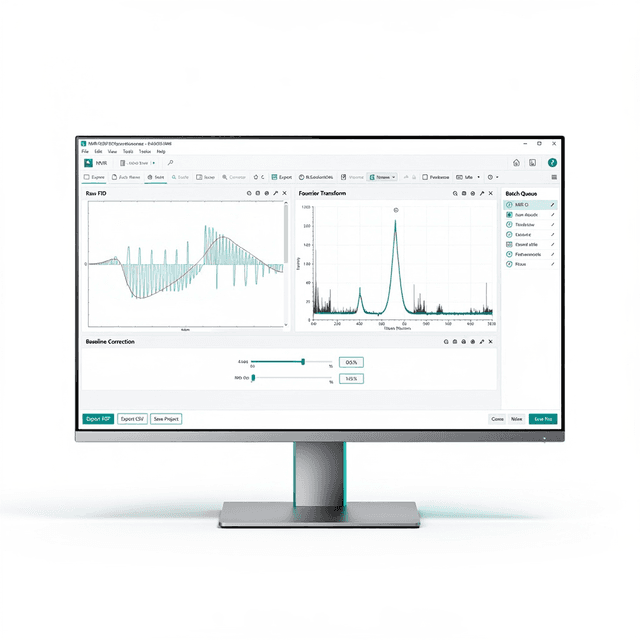
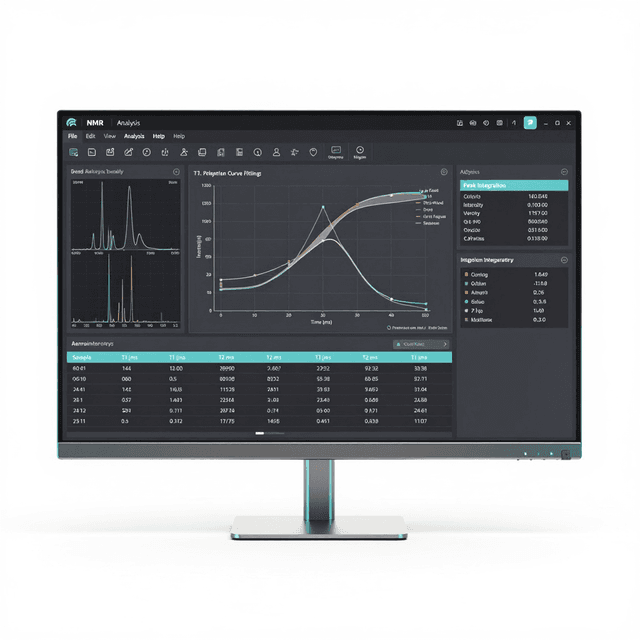
Variable-Temperature NMR Relaxometer
0.5 T variable-temperature NMR relaxometer for T1/T2 measurements from -40°C to +80°C, featuring FLAT technology for enhanced sensitivity in materials characterization and thermal process studies.

Louise Corscadden, PhD
Director of Science · ConductScience
Ask Louise about Variable-Temperature NMR Relaxometer fit, setup, configuration, or quote prep.
Already working with us? Sign in to connect this with My Scientist.
Key Specifications
Full details →- Model fit
- Configured during quote
- SKU family
- NMS-VTMR
- Shipping box
- 80.0 x 60.0 x 80.0 cm
- Ordering
- Online checkout and quote request available
- Category
- NMR Spectroscopy
- Build notes
- Confirm accessories, station layout, and support needs before purchase
The Variable-Temperature NMR Relaxometer provides T1 and T2 relaxation measurements across a controlled temperature range of -40°C to +80°C, enabling researchers to characterize temperature-dependent molecular dynamics in diverse materials. The system operates at 0.5 T (20 MHz) with a 10 mm bore diameter, accommodating liquid, gel, solid, and particulate samples. Proprietary FLAT technology enhances sensitivity for detection of weak NMR signals in challenging materials.
This benchtop instrument integrates relaxometry with optional MRI imaging capabilities, supporting real-time monitoring of thermal processes, phase transitions, and molecular mobility changes. The temperature-controlled environment enables kinetic studies of polymer curing, gel formation, and aging processes that require precise thermal programming. Applications span materials characterization, formulation development, and thermal process optimization across research and industrial settings.
How It Works
Nuclear magnetic resonance relaxometry measures the time constants T1 (spin-lattice relaxation) and T2 (spin-spin relaxation) that characterize how nuclear spins return to equilibrium after radiofrequency excitation. The 0.5 Tesla permanent magnet generates a uniform magnetic field that aligns nuclear spins, while the 20 MHz radiofrequency system applies pulse sequences to perturb this equilibrium. Temperature control from -40°C to +80°C enables study of thermal effects on molecular dynamics.
The FLAT (Fast Low Angle ShoT) technology enhances signal-to-noise ratio for materials with short relaxation times or low proton density. As temperature changes, molecular motion rates alter, directly affecting relaxation times: increased temperature typically reduces T1 and T2 through enhanced molecular mobility, while cooling extends relaxation times as motion becomes restricted.
The 10 mm bore accommodates standard NMR tubes containing liquid, gel, solid, or particulate samples. Real-time data acquisition during temperature programming enables kinetic analysis of thermal processes, with optional MRI imaging providing spatial resolution of relaxation parameter distributions within heterogeneous samples.
Features & Benefits
Bore Diameter
- 10 mm
Automation Level
- semi-automated
Brand
- Greenwaves Scientific
Temperature Range
- -40°C to +80°C
Research Domain
- Analytical Chemistry
- Environmental Monitoring
- Food Science
- Industrial Hygiene
- Materials Science
- Pharmaceutical QC
Shipping weight
- 200.0 lb
Shipping box
- L: 80.0 cm
- W: 60.0 cm
- H: 80.0 cm
| Feature | This Product | Typical Alternative | Advantage |
|---|---|---|---|
| Magnetic Field Strength | 0.5 Tesla (20 MHz) | Entry-level models often operate at 0.1-0.3 T | Higher field strength improves signal-to-noise ratio and measurement precision for quantitative relaxation studies |
| Temperature Range | -40°C to +80°C | Many systems offer narrower ranges like 0-60°C | Extended range enables study of freeze-thaw processes and high-temperature curing reactions |
| Bore Diameter | 10 mm | Smaller systems may have 5-8 mm bores | Larger bore accommodates standard sample tubes and improves temperature uniformity across sample volume |
| Sample Compatibility | Liquids, gels, solids, particulates | Some systems limited to liquid samples only | Multi-phase capability eliminates need for specialized sample preparation or multiple instruments |
| Signal Enhancement | FLAT technology for weak signals | Standard pulse sequences without enhancement | Enables measurements on challenging materials with low proton density or fast relaxation |
| Imaging Capability | Optional MRI integration | Most relaxometers offer point measurements only | Spatial resolution reveals heterogeneity and enables process visualization in complex samples |
This Variable-Temperature NMR Relaxometer combines 0.5 T field strength with extended temperature control and multi-phase sample compatibility. The FLAT enhancement technology and optional imaging capability distinguish it from basic relaxometry systems, while the permanent magnet design offers stability advantages over electromagnetic field systems.
Practical Tips
Calibrate temperature using reference materials with known thermal properties across your experimental range before critical measurements.
Why: Temperature accuracy directly affects relaxation time measurements and kinetic analysis validity
Monitor magnetic field stability using a water reference sample measured weekly to detect any drift or interference.
Why: Field variations alter resonance frequency and can introduce systematic errors in relaxation measurements
Allow samples to equilibrate for at least 5 minutes at target temperature before measurements to ensure uniform thermal distribution.
Why: Temperature gradients within samples lead to averaging effects that obscure true relaxation behavior
Optimize delay times in pulse sequences based on expected T1 and T2 values to maximize measurement precision while maintaining reasonable acquisition times.
Why: Inappropriate timing parameters lead to incomplete relaxation recovery or poor curve fitting accuracy
If signal intensity varies unexpectedly, check sample positioning and ensure no air bubbles are present in liquid samples.
Verify magnetic field containment and post appropriate warnings when using the optional MRI imaging mode.
Why: Higher magnetic gradients used in imaging can affect nearby ferromagnetic objects differently than the static measurement field
Document environmental conditions including ambient temperature and humidity during measurements for data traceability.
Why: External factors can influence sample properties and measurement reproducibility in quantitative studies
Setup Guide
What’s in the Box
- Variable-Temperature NMR Relaxometer main unit
- Temperature control system and cables
- Radiofrequency console and amplifier
- Acquisition software and computer interface
- Sample holder and positioning system (typical)
- Power supply and cables
- User manual and calibration certificate (typical)
- Temperature reference standards (typical)
Warranty
ConductScience provides a standard one-year manufacturer warranty covering parts and labor, with comprehensive technical support for setup, calibration, and operational questions from applications specialists familiar with NMR relaxometry techniques.
Compliance
What pulse sequences are available for T1 and T2 measurements?
The system supports standard inversion-recovery for T1 and CPMG (Carr-Purcell-Meiboom-Gill) pulse trains for T2 measurements, with customizable delay times and pulse spacing optimized for the 0.5 T field strength.
How accurate is temperature control during measurements?
Temperature stability is maintained within typical NMR specifications, though exact accuracy should be verified through calibration with reference materials. The system supports both isothermal holds and programmed temperature ramps.
What sample volumes are required for reliable measurements?
The 10 mm bore accommodates standard NMR tubes with sample volumes typically ranging from 0.5-2 mL, depending on sample type and required signal-to-noise ratio. Smaller volumes may be possible with signal averaging.
Can the system measure samples with very short T2 relaxation times?
The FLAT technology specifically enhances sensitivity for materials with short relaxation times, though the practical limit depends on sample composition. Consult product datasheet for minimum detectable T2 values.
How does this compare to high-field NMR for relaxation studies?
The 0.5 T field provides sufficient resolution for relaxation measurements while offering permanent magnet stability, compact size, and lower operating costs compared to superconducting high-field systems.
What data formats are supported for export and analysis?
Consult product datasheet for specific data output formats and compatibility with common NMR analysis software packages.
Is the system suitable for quality control in production environments?
The benchtop design and temperature range make it suitable for industrial QC applications, though specific validation requirements should be confirmed for regulated manufacturing environments.
Have a question about this product?
Have a question? Just ask.
Send it over and we'll email you a personalized answer — no call, no scheduling.
Prefer to talk it through?
Accessories
Enhance your setup with compatible accessories
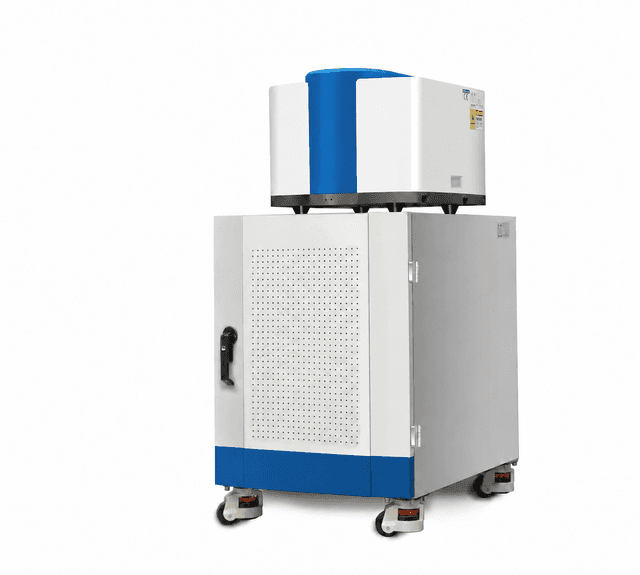
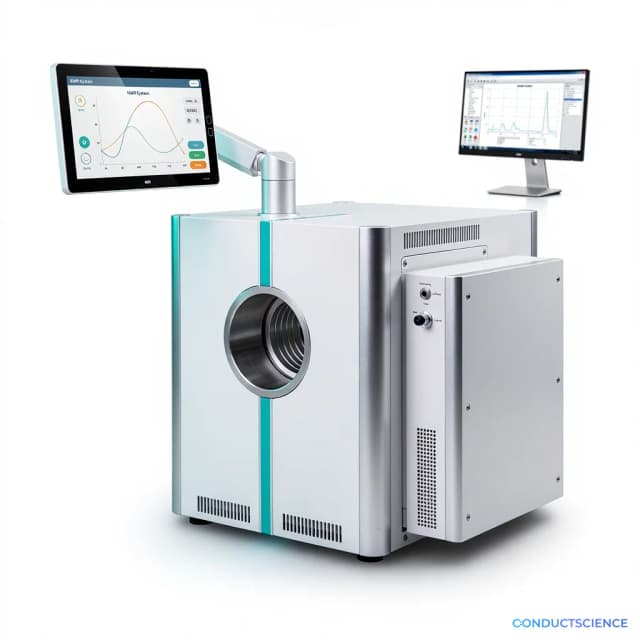
Frequently Bought Together