High-Performance 2D NMR Analyzer
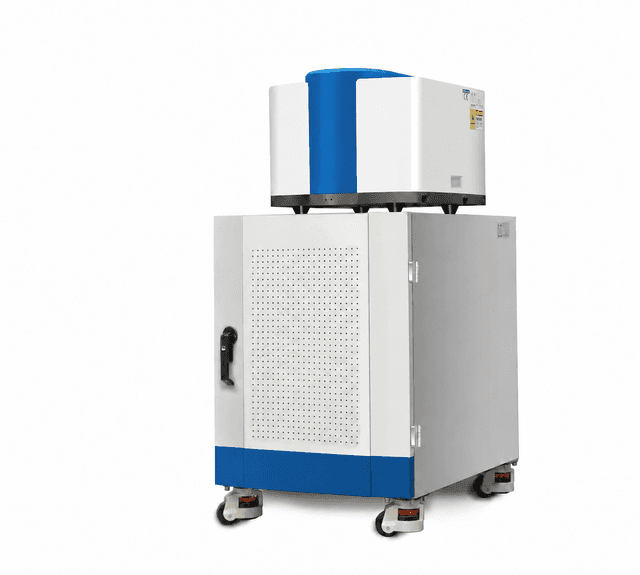
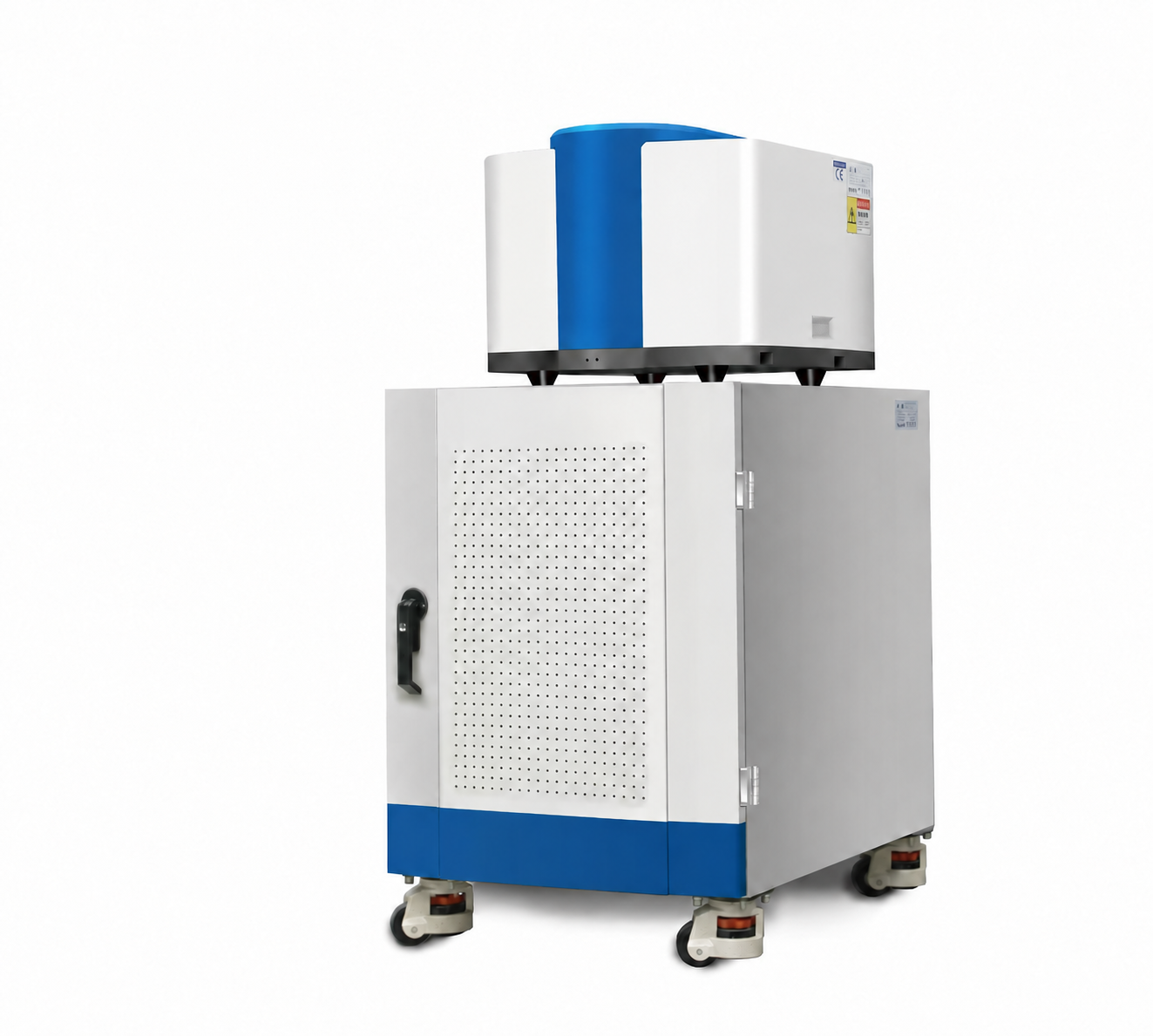
Advanced 0.5 Tesla NMR relaxometry system for T1-T2 correlation measurements on rock cores, featuring thermal-stable operation for quantitative reservoir characterization.

Louise Corscadden, PhD
Director of Science · ConductScience
Ask Louise about High-Performance 2D NMR Analyzer fit, setup, configuration, or quote prep.
Already working with us? Sign in to connect this with My Scientist.
Key Specifications
Full details →- Model fit
- Configured during quote
- SKU family
- NMS-MESOMR-2D
- Shipping box
- 80.0 x 60.0 x 80.0 cm
- Ordering
- Online checkout and quote request available
- Category
- NMR Spectroscopy
- Build notes
- Confirm accessories, station layout, and support needs before purchase
The High-Performance 2D NMR Analyzer represents an advanced nuclear magnetic resonance system specifically designed for demanding T1-T2 correlation measurements on rock core samples. Operating at 0.5 Tesla (23 MHz) with a 40 mm vertical bore configuration, this instrument enables comprehensive characterization of pore fluid distributions and reservoir properties through multidimensional relaxometry.
The system's advanced active cooling architecture maintains thermal stability during extended 2D experimental sequences, preventing temperature-induced drift that compromises quantitative measurements. This thermal management capability is essential for accurate T1-T2 correlation analysis, T2-D diffusion measurements, and full 2D distribution mapping in petroleum reservoir characterization and geotechnical applications.
How It Works
Nuclear magnetic resonance relaxometry exploits the magnetic properties of hydrogen nuclei (protons) in fluids within porous media. When exposed to the 0.5 Tesla magnetic field, protons align with the field direction. Radiofrequency pulses at the Larmor frequency (23 MHz) disturb this alignment, and the subsequent relaxation back to equilibrium is measured as T1 (longitudinal) and T2 (transverse) relaxation times.
The T1-T2 correlation technique applies a series of inversion recovery and Carr-Purcell-Meiboom-Gill (CPMG) pulse sequences to simultaneously measure both relaxation parameters. Different fluid types and pore environments exhibit characteristic T1/T2 ratios, enabling fluid typing and wettability assessment. The vertical bore geometry accommodates standard core plugs while the active cooling system maintains consistent magnetic field homogeneity during extended acquisition periods.
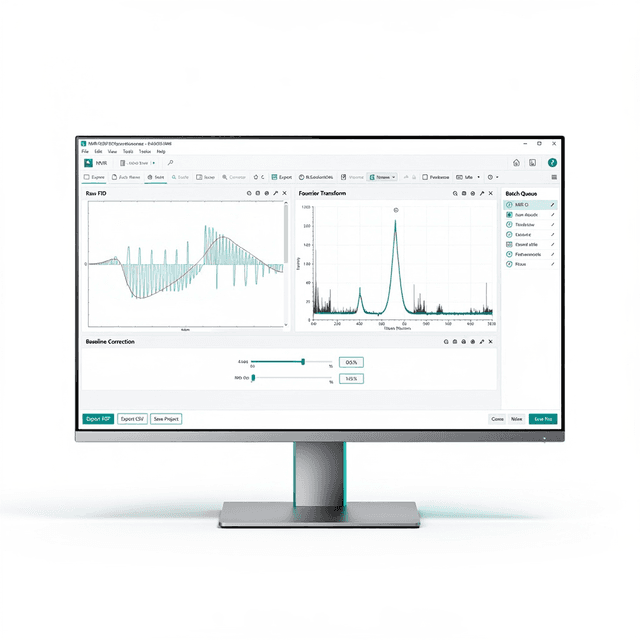
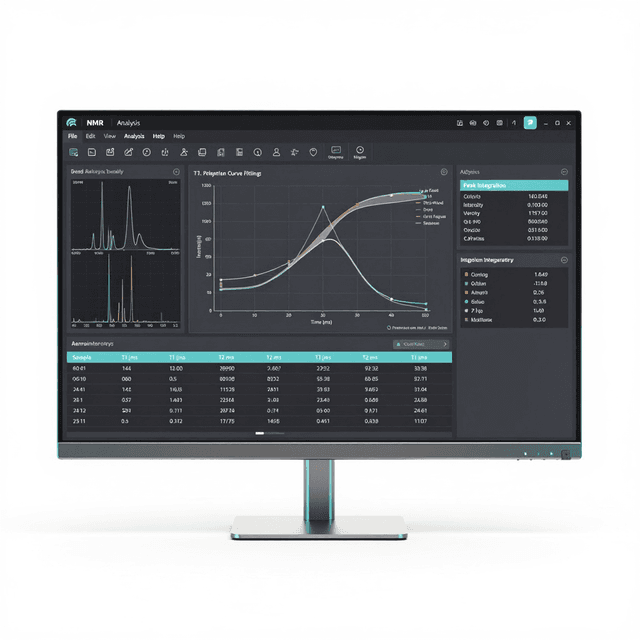
Two-dimensional Laplace inversion algorithms process the raw signal decay data to generate T1-T2 correlation maps, revealing fluid distributions across the relaxation time spectrum. Additional T2-diffusion measurements provide complementary information about molecular mobility and pore connectivity.
Features & Benefits
Field Strength
- 0.5 T (23 MHz)
Bore Diameter
- 40 mm
Measurement Types
- T1-T2 Correlation, T2-D, 2D Distributions
Automation Level
- semi-automated
Brand
- Greenwaves Scientific
Research Domain
- Analytical Chemistry
- Environmental Monitoring
- Materials Science
Shipping weight
- 800.0 lb
Shipping box
- L: 80.0 cm
- W: 60.0 cm
- H: 80.0 cm
Practical Tips
Verify 90° and 180° pulse calibrations monthly using the provided reference samples to maintain measurement accuracy.
Why: Pulse calibration drift directly affects T1 and T2 measurement precision and can introduce systematic errors in correlation maps.
Clean the bore assembly weekly with lint-free wipes and maintain the cooling system filters according to the service schedule.
Why: Sample residue buildup and cooling system contamination can degrade field homogeneity and thermal stability.
Allow 30-60 minutes for sample temperature equilibration before measurements to ensure accurate relaxation time determination.
Why: Temperature gradients within the sample can broaden relaxation time distributions and reduce measurement reproducibility.
Monitor baseline noise levels and signal decay consistency between repeat measurements to identify potential system drift.
Why: Consistent baseline performance indicates proper magnet and electronics stability essential for quantitative analysis.
If T1-T2 correlation maps show unexpected asymmetry, check sample positioning and bore homogeneity using calibration phantoms.
Why: Off-center sample placement or field inhomogeneity can distort relaxation time distributions and compromise fluid typing accuracy.
Maintain minimum 1-meter clearance around the magnet assembly and remove all ferromagnetic objects from the measurement area.
Why: Magnetic field interactions with ferromagnetic materials can cause projectile hazards and degrade measurement precision.
Use consistent echo spacing parameters across sample sets to enable direct comparison of T2 distributions between measurements.
Why: Variable experimental parameters can introduce artifacts that complicate quantitative interpretation of relaxation behavior.
Warranty
ConductScience provides a comprehensive 1-year manufacturer warranty covering all electronic components and magnet assembly. Technical support includes software updates, measurement protocol guidance, and remote diagnostic assistance.
Compliance
What sample sizes are compatible with the 40 mm bore diameter?
The system accommodates standard 1.5-inch (38 mm) diameter core plugs with lengths up to 5 cm, typical for petroleum industry reservoir characterization studies.
How long do T1-T2 correlation experiments typically require?
Measurement duration depends on sample properties and signal-to-noise requirements, typically ranging from 2-8 hours for comprehensive 2D correlation maps with adequate statistical precision.
What temperature stability is maintained during extended measurements?
The active cooling system maintains temperature stability within ±0.1°C during continuous operation, preventing thermal drift that would compromise quantitative relaxometry measurements.
Can the system measure both water and oil phases simultaneously?
Yes, T1-T2 correlation maps can distinguish different fluid phases based on their characteristic relaxation behavior, enabling simultaneous analysis of bound water, free water, and hydrocarbon components.
What data formats are supported for export and analysis?
Consult product datasheet for specific data export formats and compatibility with third-party petrophysical analysis software packages.
How does this system compare to higher field strength NMR instruments?
While higher field systems offer improved spectral resolution, the 0.5 Tesla field strength provides optimal balance of measurement sensitivity and operational convenience for relaxometry applications without requiring cryogenic cooling.
What maintenance procedures are required for optimal performance?
Regular maintenance includes cleaning the bore assembly, calibrating pulse sequences with reference standards, and servicing the cooling system components according to the recommended schedule.
Have a question about this product?
Have a question? Just ask.
Send it over and we'll email you a personalized answer — no call, no scheduling.
Prefer to talk it through?
Frequently Bought Together