Benchtop NMR for Solid Fat Content Analysis
Dedicated pulsed NMR analyzer for non-destructive solid fat content measurement across 0-100% range using direct and indirect methods with automated data acquisition.

Louise Corscadden, PhD
Director of Science · ConductScience
Ask Louise about Benchtop NMR for Solid Fat Content Analysis fit, setup, configuration, or quote prep.
Already working with us? Sign in to connect this with My Scientist.
Key Specifications
Full details →- Model fit
- Configured during quote
- SKU family
- NMS-PQ001-SFC
- Shipping box
- 80.0 x 60.0 x 80.0 cm
- Ordering
- Online checkout and quote request available
- Category
- NMR Spectroscopy
- Build notes
- Confirm accessories, station layout, and support needs before purchase
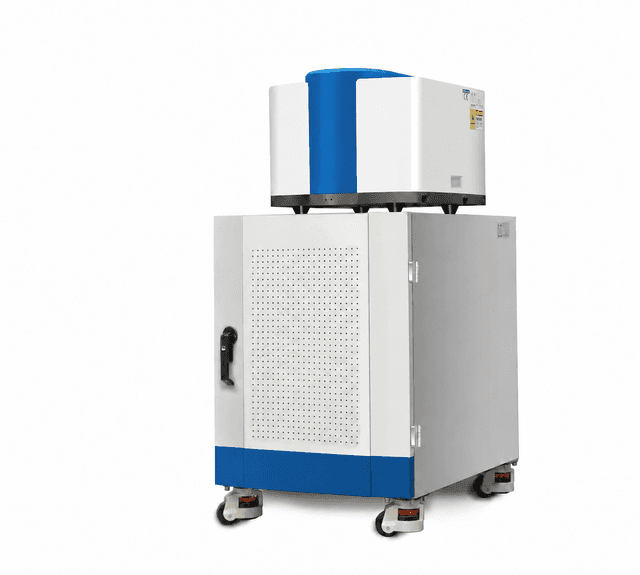
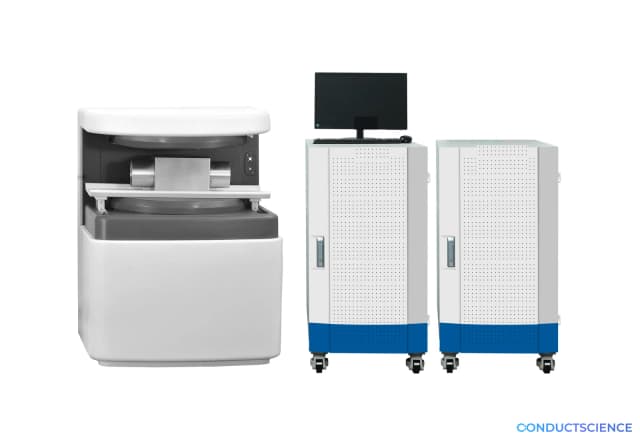
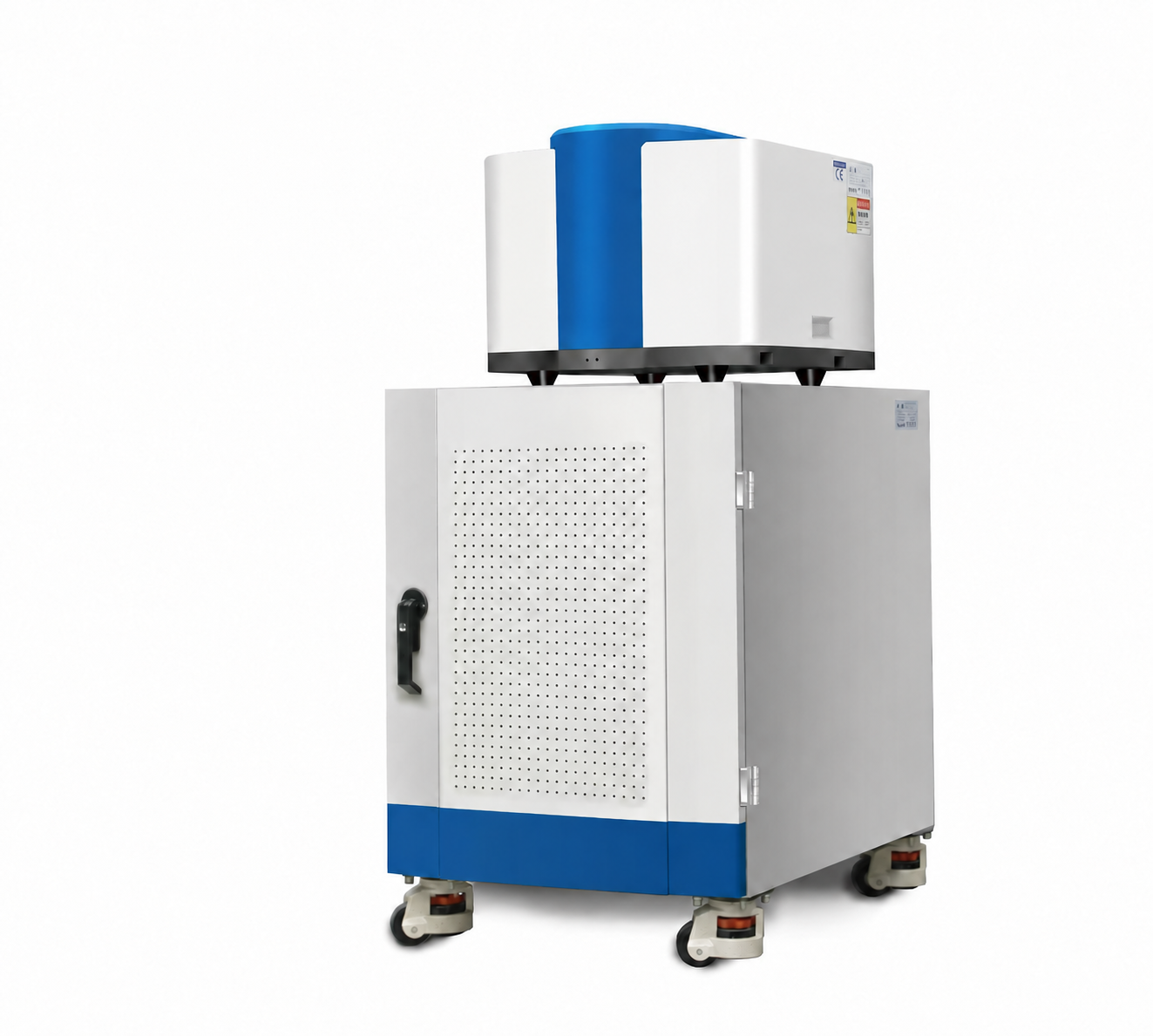
The Benchtop NMR for Solid Fat Content Analysis is a dedicated pulsed NMR analyzer engineered for precise, non-destructive measurement of solid fat content (SFC) across the complete 0-100% range in fats, oils, and lipid-containing products. Built around a 0.505T permanent magnet operating at 21 MHz proton frequency, this instrument delivers high-sensitivity ¹H detection with 10 μs system dead time and low-noise preamplification for reliable signal-to-noise performance.
The system supports both direct and indirect NMR measurement methods using multiple hard pulse sequences, enabling comprehensive SFC characterization without sample preparation or destruction. High-throughput capabilities include automated data acquisition, scheduled sampling protocols, and queryable data export. The instrument provides stable magnetic field performance (≤200 Hz/h drift, ≤30 ppm uniformity) with precise frequency control (0.1 Hz accuracy) for reproducible measurements in research and quality control environments.
How It Works
Time-domain NMR solid fat content analysis exploits the differential relaxation behavior of ¹H nuclei in solid versus liquid fat phases. The 0.505T permanent magnet generates a stable magnetic field that aligns proton spins, while RF pulses at 21 MHz excite the nuclear magnetic moments. Solid fat components exhibit rapid transverse relaxation (T₂ typically <1 ms), causing their NMR signals to decay quickly, while liquid fat signals persist with longer relaxation times.
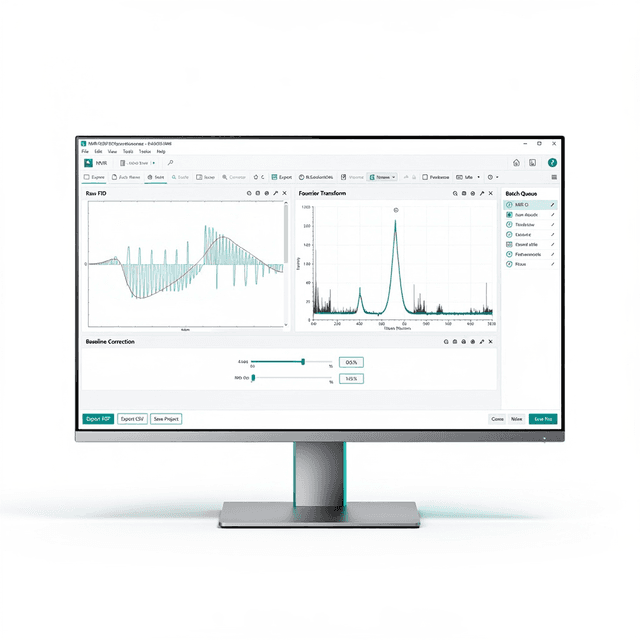
The instrument employs multiple hard pulse sequences to generate free induction decay (FID) signals that distinguish between solid and liquid phases based on signal decay characteristics. Direct measurement calculates SFC by comparing integrated signal intensities from both phases, while indirect measurement compares liquid-phase signals to a completely melted reference. The 10 μs dead time and high-sensitivity detection enable accurate quantification across the full 0-100% SFC range.
Automated data acquisition protocols execute scheduled measurements with precise timing control (10 ns pulse accuracy) and high sampling bandwidth (5 MHz) to capture rapid signal evolution. The system's thermal stability and magnetic field uniformity (≤30 ppm) ensure reproducible results without external temperature control or sample preparation requirements.
Features & Benefits
Product Application
- Food and Beverage Analysis
- Production and Quality Control
- Solid Fat Content Analyzer
Solid Fat Content Range
- 0% - 100%
Sample Types
- fats and oils
Pulse Sequences
- multiple hard pulse sequences for Fid and FID_SFC1
Measurement Method
- direct and indirect measurement of solid fat content by NMR
Automation Level
- high degree of automation
Data Features
- scheduled sampling with automatic data saving and queryable export
Sample Handling
- no sample handling required
Sample Recyclability
- recyclable samples
Testing Speed
- fast testing and fast inversion speed
Standards Compliance
- test results in accordance with domestic and international standards
Automation Level
- semi-automated
Brand
- Greenwaves Scientific
Research Domain
- Analytical Chemistry
- Food Science
- Industrial Hygiene
- Materials Science
- Pharmaceutical QC
Shipping weight
- 100.0 lb
Shipping box
- L: 80.0 cm
- W: 60.0 cm
- H: 80.0 cm
Practical Tips
Verify frequency calibration daily using the internal reference and perform full system calibration weekly with certified SFC standards.
Why: Frequency drift can affect measurement accuracy, especially for quantitative SFC determinations across the full 0-100% range.
Clean the sample probe regularly with appropriate solvents and inspect RF connections for oxidation or damage.
Why: Contamination on the probe surface can affect signal quality, while poor connections introduce noise and measurement variability.
Allow samples to equilibrate to measurement temperature for at least 30 minutes before analysis, especially for temperature-sensitive fat systems.
Why: Temperature gradients within samples lead to inaccurate SFC measurements since crystallization state is highly temperature-dependent.
Run duplicate measurements on each sample and investigate any results that differ by more than 2% SFC to identify potential measurement issues.
Why: SFC measurement reproducibility is critical for quality control applications, and significant deviations may indicate sample heterogeneity or instrument drift.
If signal intensity appears low, check for ferromagnetic contamination near the magnet and verify proper sample positioning in the measurement zone.
Why: Magnetic field disturbances reduce signal quality and can shift the measurement frequency away from optimal detection conditions.
Maintain at least 0.5 meter clearance around the permanent magnet and avoid bringing ferromagnetic tools or devices near the instrument.
Why: Strong magnetic fields can damage electronic devices and create projectile hazards with ferromagnetic objects.
Document sample history including temperature exposure and storage conditions, as thermal cycling can affect fat crystallization and SFC values.
Why: Fat polymorphic state depends on thermal history, making sample documentation essential for interpreting SFC results in research applications.
Establish control charts using reference materials to monitor long-term instrument stability and identify calibration drift before it affects sample results.
Why: Statistical process control helps maintain measurement quality and provides early warning of instrument performance changes that could compromise data integrity.
Warranty
ConductScience provides a standard one-year manufacturer warranty covering defects in materials and workmanship, with comprehensive technical support for method development and troubleshooting throughout the warranty period.
Compliance
References
Background reading relevant to this product:
What sample preparation is required for SFC analysis?
No sample preparation is required. Samples are analyzed directly in their original state without chemical treatment or modification, maintaining sample integrity for subsequent analyses.
How does measurement accuracy compare between direct and indirect methods?
Both methods provide equivalent accuracy when properly calibrated. Direct method measures both solid and liquid phases simultaneously, while indirect method compares liquid signals to a melted reference, with method selection based on sample matrix requirements.
What is the minimum sample volume required for reliable measurements?
Consult product datasheet for specific sample volume requirements, which depend on the probe geometry and measurement sensitivity needed for your SFC range of interest.
Can the system measure SFC in emulsions or dispersed systems?
Yes, the instrument can analyze SFC in complex matrices including emulsions and dispersed lipid systems, though specific protocols may need optimization based on sample characteristics.
What calibration standards are recommended for SFC measurements?
Use certified reference materials with known SFC values across your measurement range, typically including pure solid and liquid fat standards for instrument calibration and performance verification.
How frequently should the system be recalibrated?
Frequency calibration should be verified daily or before each measurement session, while full system calibration is typically performed weekly or when measurement drift exceeds acceptable limits.
What temperature control is needed during measurements?
SFC measurements are temperature-dependent and require precise temperature control according to standard protocols, typically at specific temperatures between 10-35°C depending on the fat type and application.
Can measurement data be exported to external systems?
Yes, the system provides automated data saving with queryable export functionality, enabling integration with laboratory information management systems and statistical analysis software.
Have a question about this product?
Have a question? Just ask.
Send it over and we'll email you a personalized answer — no call, no scheduling.
Prefer to talk it through?