MicroScan Benchtop NMR Core Analyzer
Compact benchtop NMR core analyzer for non-destructive porosity, permeability, pore size distribution, oil/water saturation, movable and bound fluid saturation, wettability, and pore water distribution analysis.

Louise Corscadden, PhD
Director of Science · ConductScience
Ask Louise about MicroScan Benchtop NMR Core Analyzer fit, setup, configuration, or quote prep.
Already working with us? Sign in to connect this with My Scientist.
Key Specifications
Full details →- Model fit
- 4 selectable configurations
- SKU family
- NMS-MICROMR
- Shipping box
- 80.0 x 60.0 x 80.0 cm
- Ordering
- Online checkout and quote request available
- Category
- NMR Spectroscopy
- Build notes
- Confirm accessories, station layout, and support needs before purchase
MicroScan Benchtop NMR Core Analyzer
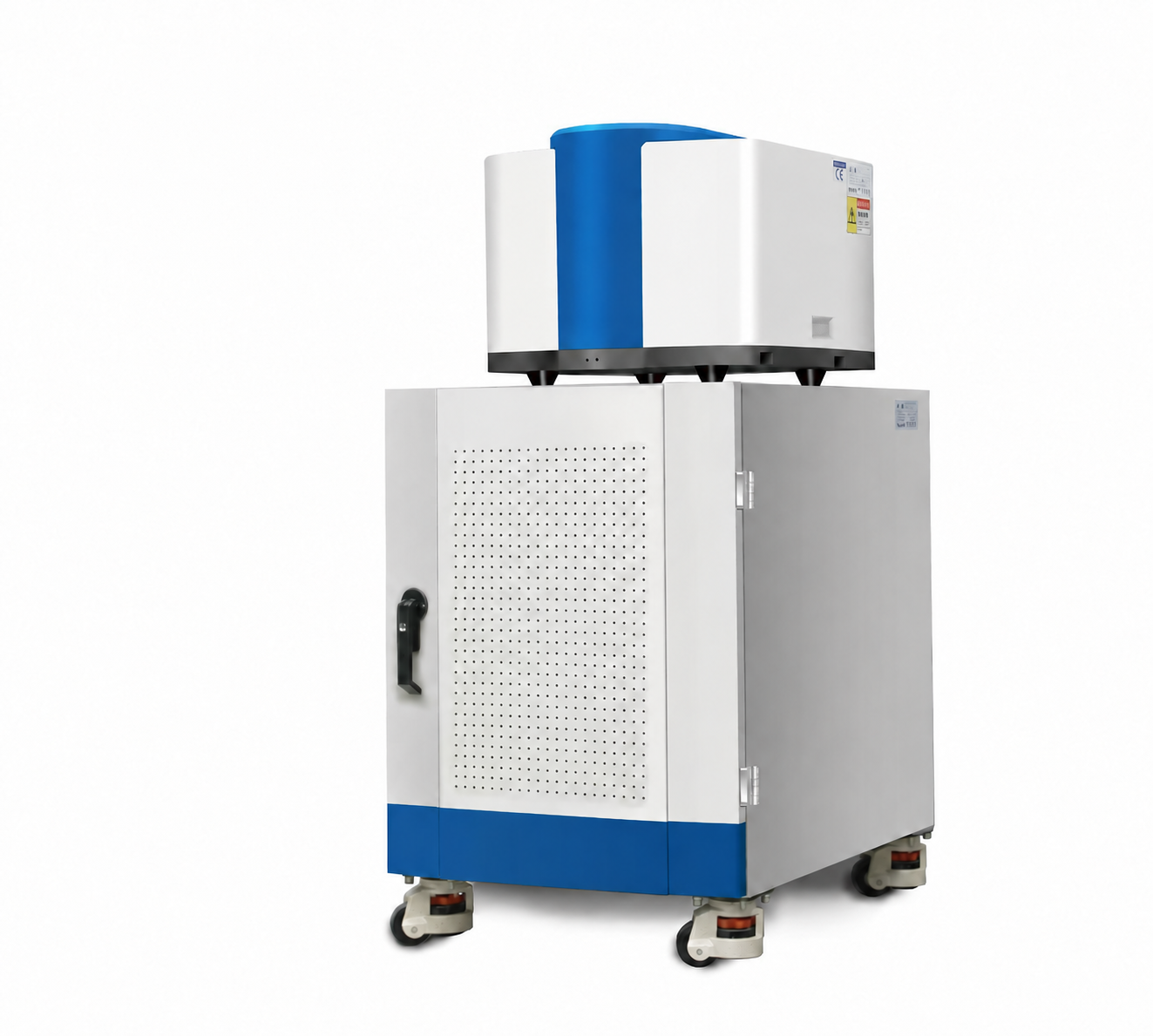
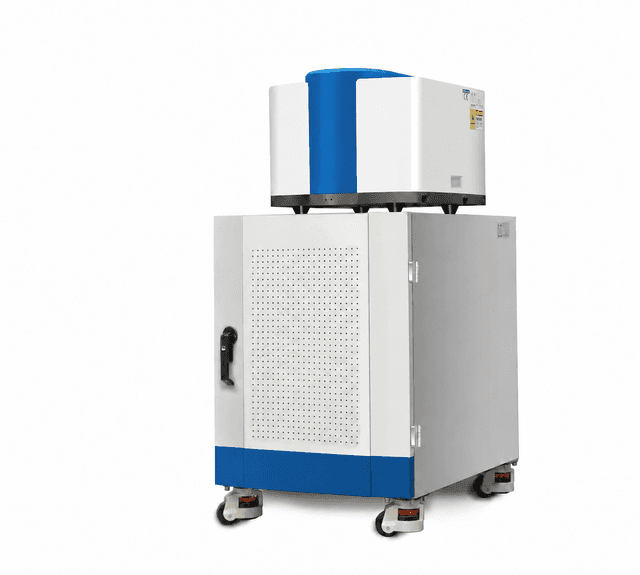
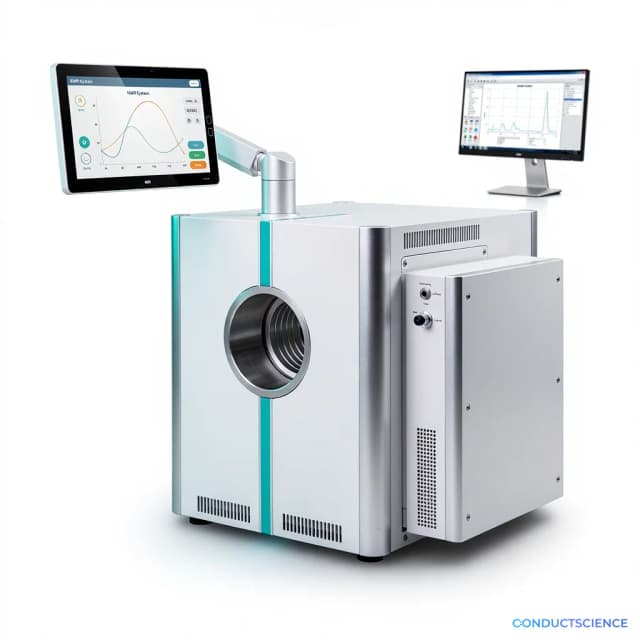
The MicroScan Benchtop NMR Core Analyzer is a compact low-field nuclear magnetic resonance system designed for professional core analysis in petroleum exploration, reservoir evaluation, and geotechnical research. The MicroMR Series supports fast, non-destructive testing of core and cuttings samples while analyzing microscopic molecular-level properties through hydrogen proton signal detection.
The system is designed to meet the analytical needs of the petroleum exploration industry, including porosity, permeability, fluid saturation, movable fluid saturation, bound fluid saturation, pore size distribution, wettability, and pore water content/distribution analysis. It provides objective and repeatable data for reservoir evaluation and core property characterization.
The product is available in four configurations: MicroMR12-025V, MicroMR12-040V, MicroMR02-025V, and MicroMR02-040V. The series offers multiple magnetic field options and probe configurations, allowing laboratories to select the model that best fits their sample size and testing requirements. The benchtop design, automated NMR analysis software, and reliable measurement workflow make it suitable for laboratories that need accurate, repeatable, and cost-effective NMR-based core analysis.
Standard Configuration / What Is Included
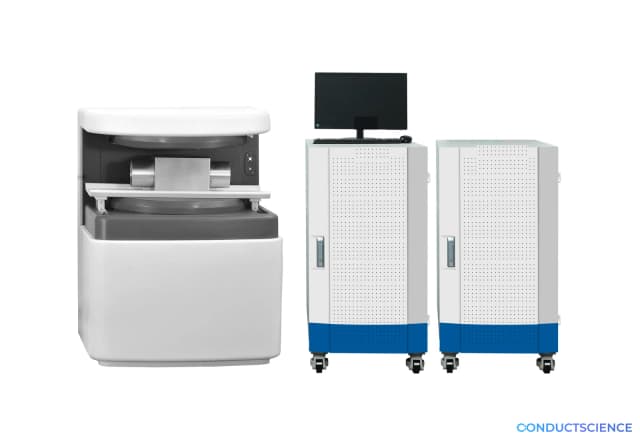
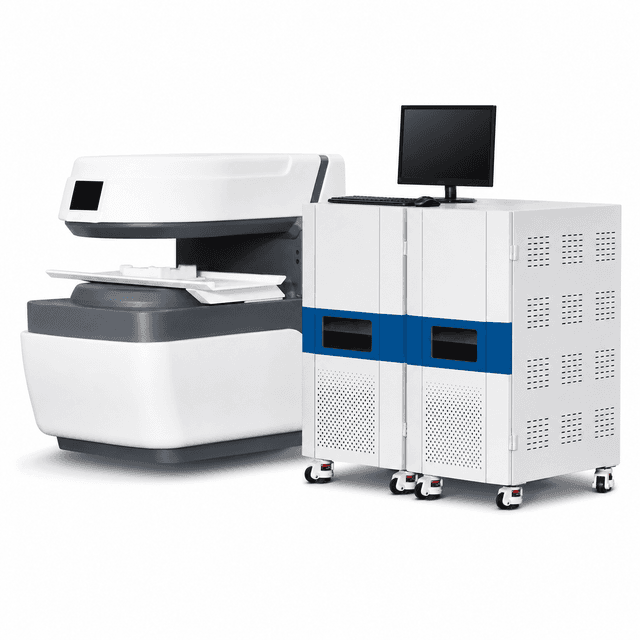
The standard configuration includes the magnet unit, RF unit, spectrometer unit, FLAT probe coil, NMR Analysis System, NMR Core Analysis Software, computer peripherals, and required accessories. The quoted MicroMR02-040V configuration includes both a Ø46 mm probe for Ø38 mm × H60 mm samples and a Ø32 mm probe for Ø25.4 mm × H60 mm samples.
Components: Magnet unit box, magnet, RF unit box, preamplifier, RF power amplifier, magnet temperature control, heating system, power supply system, industrial control computer, clock controller (CLK), pulse sequence generator (PSG), direct digital frequency synthesis (DDS), probe coil with FLAT technology, multiple probe options, NMR Analysis System, NMR Core Analysis Software, Niumag software CD, debugging tools, special tools, 50Ω terminals, BNC adapter assembly, testing cables, fuses, test tubes, test tube stand, LCD display, mouse and keyboard.
Key Features
- Compact benchtop NMR system for professional core analysis
- Fast, non-destructive testing with results available in seconds or minutes
- Designed for petroleum exploration, reservoir evaluation, and geotechnical research
- Supports macro-scale samples from millimeter-scale to decimeter-scale samples
- Detects hydrogen proton signals within the detection zone
- Analyzes microscopic molecular-level properties and sample dynamics
- Multiple magnetic field and probe configurations available
- Compatible with core samples, cuttings, and complex reservoir media
- Supports porosity, permeability, pore size distribution, fluid saturation analysis
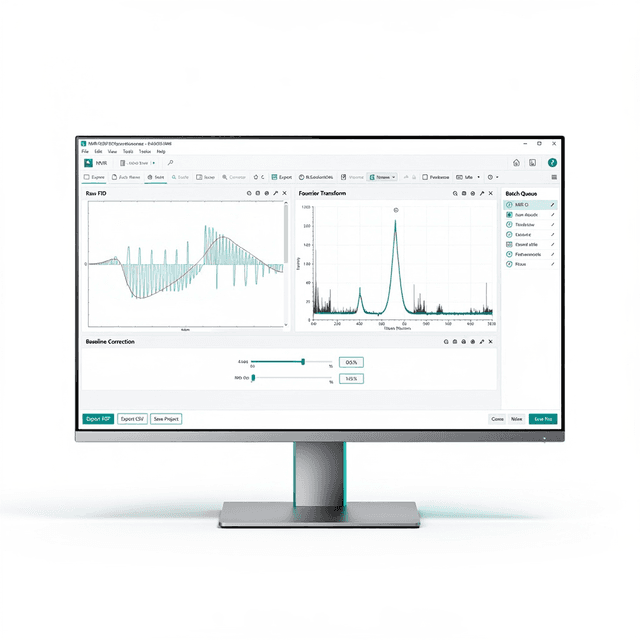
- Automated software workflow for center frequency search, RF pulse calibration, sampling, data saving, querying, and export
- High accuracy, excellent repeatability, stable performance, and strong cost-effectiveness
Applications
- Fluid identification in complex reservoir media
- Core porosity analysis
- Pore size distribution evaluation
- Permeability prediction
- Oil and water saturation determination
- Movable fluid saturation analysis
- Bound fluid saturation analysis
- Wettability assessment
- Pore water content and distribution profiling
- Reservoir core and cuttings sample evaluation
- Petroleum exploration and reservoir characterization
- Geotechnical and porous media research
Technical Specifications
| Parameter | Specification |
|---|---|
| Product Series | MicroMR Series NMR Core Analyzer |
| Available Models | MicroMR12-025V, MicroMR12-040V, MicroMR02-025V, MicroMR02-040V |
| System Type | Benchtop low-field NMR core analysis system |
| Detecting Nucleus | ¹H nucleus |
| Magnetic Field Options | 0.28T ± 0.03T / 0.05T ± 0.005T |
| Magnet Type | Permanent magnet, no shielding required |
| Field Homogeneity | ≤100 ppm for Ø40 mm × H60 mm cylinder |
| Probe Options | 1-inch (Ø32 mm, sample Ø25.4 mm × H60 mm) and 1.5-inch (Ø46 mm, sample Ø38.1 mm × H60 mm) |
| Maximum Sample Diameter | Up to 1.5 inches |
| Minimum Echo Time (1-inch) | 60 μs with FLAT technology |
| Minimum Echo Time (1.5-inch) | 100 μs with FLAT technology |
| Frequency Source | 1–30 MHz |
| Frequency Control Accuracy | 0.1 Hz |
| Pulse Accuracy | 10 ns |
| RF Transmission Power | Better than 300 W |
| Preamplifier | FLAT technology, gain 64 dB ± 1.5 dB |
| Operating Platform | 4-core i7 processor, 8 GB memory, 1 TB hard disk |
| Software | NMR Analysis System and NMR Core Analysis Software |
| Pulse Sequences | FID, SE, CPMG, IR, and other hard pulse sequences |
| Power Requirement | 220 V, 50 Hz |
| Rated Power | 600 W |
| Working Temperature | 22–28°C; temperature drift <2°C/hour |
| Ambient Humidity | 30–90%, no condensation |
| Magnet Cabinet Dimensions | 445 × 505 × 371 mm; approximately 40 kg |
| Control Cabinet Dimensions | 560 × 750 × 700 mm; approximately 94 kg |
| Total Weight | Approximately 140 kg |
| Warranty | 12 months, including labor and spare parts |
How It Works
Nuclear magnetic resonance relaxometry measures the relaxation behavior of hydrogen nuclei (protons) in water and hydrocarbon fluids within porous media. When placed in the permanent magnetic field, proton spins align with the field direction. Radio frequency pulses tip the magnetization away from equilibrium, and the subsequent relaxation back to equilibrium provides quantitative information about the local environment surrounding the hydrogen atoms.
T1 (longitudinal) relaxation reflects the rate of magnetization recovery along the magnetic field direction, while T2 (transverse) relaxation measures the decay of magnetization in the plane perpendicular to the field. In porous rocks, relaxation rates correlate with pore size distribution—smaller pores exhibit faster relaxation due to increased surface-to-volume ratios and stronger surface relaxation effects.
The instrument applies Carr-Purcell-Meiboom-Gill (CPMG) pulse sequences to measure T2 distributions, enabling differentiation between bound fluids in micropores and movable fluids in larger pore spaces. T2 cutoff values separate bound and free fluid components, providing estimates of effective porosity and permeability through established petrophysical correlations.
Features & Benefits
Shipping weight
- 300.0 lb
Shipping box
- L: 80.0 cm
- W: 60.0 cm
- H: 80.0 cm
| Feature | This Product | Typical Alternative | Advantage |
|---|---|---|---|
| Magnet Technology | Permanent NdFeB magnet (2 MHz or 12 MHz) | Entry-level models often use electromagnets requiring continuous power | Eliminates ongoing power consumption and provides stable field without electromagnetic interference |
| Bore Diameter Options | 25 mm and 40 mm configurations available | Basic systems typically offer single bore size | Accommodates various core sample dimensions without requiring sample modification |
| Field Strength Flexibility | Dual frequency options (2 MHz and 12 MHz) | Fixed frequency systems common in this price range | Allows optimization of measurement sensitivity based on sample characteristics and analysis requirements |
| Measurement Capabilities | Both T1 and T2 relaxation analysis | Some instruments limited to T2-only measurements | Provides comprehensive relaxation characterization for enhanced fluid discrimination and pore structure analysis |
| Installation Requirements | Benchtop design with standard laboratory power | Larger systems may require dedicated installation and specialized infrastructure | Integrates into existing laboratory spaces without facility modifications or additional infrastructure costs |
| Operating Cost Structure | No cryogenic or continuous cooling requirements | Superconducting systems require ongoing helium costs | Reduces total cost of ownership through elimination of consumable cooling requirements |
The MicroScan provides permanent magnet convenience with flexible bore sizes and dual frequency options for comprehensive T2 and T1 analysis. The benchtop design eliminates infrastructure requirements while maintaining quantitative measurement capabilities essential for core analysis workflows.
| Model | SKU | Listed price | Status | Shipping box |
|---|---|---|---|---|
| MicroMR12-040V | MicroMR12-040V | $219,000.00 | Available | 80.0 x 60.0 x 80.0 cm |
| MicroMR12-025V | MicroMR12-025V | $179,000.00 | Available | 80.0 x 60.0 x 80.0 cm |
| MicroMR02-040V | MicroMR02-040V | $189,000.00 | Available | 80.0 x 60.0 x 80.0 cm |
| MicroMR02-025V | MicroMR02-025V | $159,000.00 | Available | 80.0 x 60.0 x 80.0 cm |
Practical Tips
Verify system performance using distilled water reference standards at regular intervals to monitor signal stability and relaxation time accuracy.
Why: Reference standards provide traceable calibration verification and early detection of system drift.
Keep the permanent magnet environment free of ferromagnetic materials and avoid temperature fluctuations greater than 5°C during measurements.
Why: Temperature stability maintains field homogeneity and measurement reproducibility over time.
Allow core samples to reach thermal equilibrium with the magnet temperature before measurement to minimize baseline drift.
Why: Temperature equilibration reduces thermal gradients that can affect relaxation measurements and signal stability.
Use appropriate repetition times (5×T1) between pulse sequences to ensure complete magnetization recovery and quantitative results.
Why: Insufficient recovery time leads to systematic underestimation of signal intensity and incorrect porosity calculations.
If signal-to-noise appears degraded, check sample positioning and verify the probe tuning matches the measurement frequency.
Why: Proper sample positioning and probe tuning maximize signal coupling and measurement sensitivity.
Maintain minimum safe distances from the permanent magnet and follow established protocols for handling magnetic materials in the laboratory.
Why: Strong permanent magnets pose risks to personnel with medical implants and can damage magnetic storage devices.
Document sample saturation history and fluid properties when interpreting T2 distributions for permeability estimation.
Why: Accurate permeability correlations require knowledge of wetting phase properties and saturation conditions.
Apply appropriate T2 cutoff values (typically 3-33 ms) based on sample lithology when separating bound and movable fluid components.
Why: Cutoff selection significantly affects effective porosity calculations and should reflect actual pore structure characteristics.
Warranty
ConductScience provides a one-year manufacturer warranty covering instrument defects and technical support. Extended service contracts available for ongoing calibration verification and maintenance support.
Compliance
What is the typical measurement time for T2 relaxation analysis of a core sample?
Measurement time depends on sample characteristics and required signal-to-noise ratio, typically ranging from 5-30 minutes for standard core samples. Samples with fast relaxation may require shorter repetition times but more averages.
How does the permanent magnet design affect measurement sensitivity compared to superconducting systems?
Permanent magnet systems operate at lower field strengths (2-12 MHz vs 60+ MHz for superconducting), resulting in reduced sensitivity but eliminating cryogenic requirements. Signal-to-noise is adequate for most core analysis applications.
Can the system distinguish between oil and water in saturated core samples?
T2 relaxation can differentiate fluids based on their relaxation characteristics, though definitive fluid identification requires knowledge of sample history and complementary analysis methods. T1/T2 ratios provide additional discrimination capability.
What sample preparation is required for accurate porosity measurements?
Samples should be fully saturated with water or brine of known properties. Temperature equilibration and proper sample sizing for the selected bore diameter are essential for quantitative results.
How is permeability estimated from T2 measurements?
Permeability estimation uses empirical correlations between T2 geometric mean and measured permeability, such as the Timur-Coates equation. Correlation constants must be calibrated for specific rock types and measurement conditions.
What maintenance is required for the permanent magnet system?
Permanent magnets require minimal maintenance but should be protected from temperature extremes and mechanical shock. Regular cleaning of bore assemblies and periodic system calibration verification are recommended.
Can the system measure carbonate rocks with complex pore structures?
Yes, T2 distributions can characterize complex pore systems including microporosity in carbonates. Multi-exponential fitting algorithms resolve overlapping relaxation components from different pore size populations.
What data output formats are provided by the acquisition software?
Consult product datasheet for specific data export formats. Standard outputs typically include raw signal data, processed T2 distributions, and derived parameters such as porosity and T2 statistics.
Have a question about this product?
Have a question? Just ask.
Send it over and we'll email you a personalized answer — no call, no scheduling.
Prefer to talk it through?
Accessories
Enhance your setup with compatible accessories
Frequently Bought Together