Operant Conditioning Base Chamber
Modular acrylic operant conditioning chamber for mice or rats.
Add levers, nose pokes, pellet dispensers, shock grids, and other modules to match your protocol.

Louise Corscadden, PhD
Director of Science · ConductScience
Ask Louise about Operant Conditioning Base Chamber fit, setup, configuration, or quote prep.
Already working with us? Sign in to connect this with My Scientist.
Papers that mention operant conditioning
From 2021 to 2025, 915 animal research papers mentioned operant conditioning. The count covers the test on any apparatus, not only this one.
Key Specifications
Full details →- Chamber Dimensions Mouse
- 18 cm (L) x 18 cm (W) x 20 cm (H)
- Chamber Dimensions Rat
- 26 cm (L) x 26 cm (W) x 25 cm (H)
- Model fit
- Mouse, Rat
- SKU family
- ME-OC-BASE
- Ordering
- Online checkout and quote request available
- Category
- Learning & Memory Tests
Overview
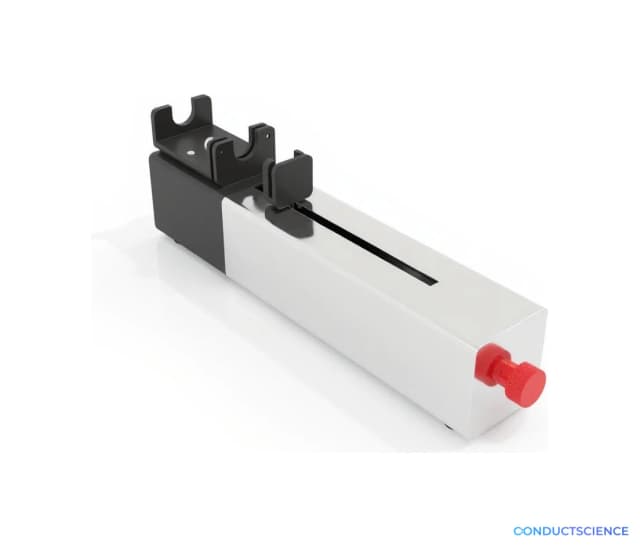
The Operant Conditioning Base Chamber is the foundation of the Maze Engineers modular operant conditioning system. This precision-engineered acrylic chamber provides a controlled environment for behavioral research, designed for easy integration with interchangeable response mechanisms, reinforcement modules, and stimulus devices.
What Is Included
- Acrylic chamber body with removable lid
- Automated LED house light
- Plain floor panel (swappable for shock grid)
- Feces and urine collection tray
Design
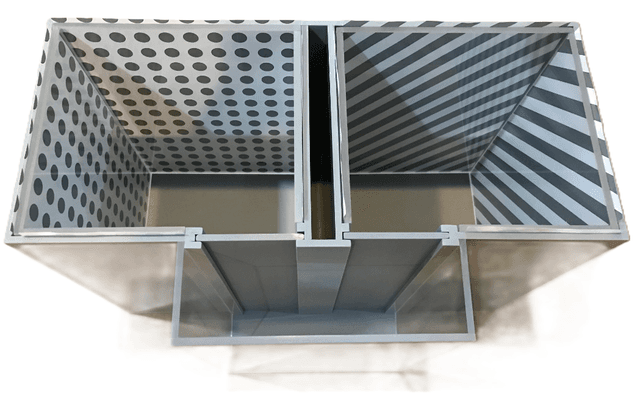
The chamber features transparent acrylic walls for observation, a secure removable lid for animal placement, and standardized mounting points for all Maze Engineers operant modules. Configure the chamber for any operant paradigm by adding only the components your study requires.
Features & Benefits
Research identifiers
These IDs come from the Measurement Method Ontology (MMO) and NCBI Taxonomy. Use them in data records and methods sections.
- Behavioral test
- Operant conditioning
MMO:0000601 - Species
- Mouse
NCBITaxon:10090 - Rat
NCBITaxon:10116
- Mouse
Test and species
- Behavioral test
- Operant conditioning
- Species
- Mouse, Rat
Chamber Dimensions Mouse
- 18 cm (L) x 18 cm (W) x 20 cm (H)
Chamber Dimensions Rat
- 26 cm (L) x 26 cm (W) x 25 cm (H)
Data sharing
Ready for RO-Crate, the open standard for sharing data.
| Model | SKU | Listed price | Status | Shipping box |
|---|---|---|---|---|
| Mouse | ME-OC-BASE-M | $2,890.00 | Available | Confirmed during quote |
| Rat | ME-OC-BASE-R | $3,190.00 | Available | Confirmed during quote |
Datasheet
Specifications, models, materials, and operating envelopes
What operant paradigms can this chamber support?
With the appropriate modules, the base chamber supports lever-press schedules, nose-poke detection, food and liquid reinforcement, shock-based punishment and avoidance, drug self-administration, and discrimination tasks.
Can I expand the system later?
Yes. The chamber uses standardized mounting points. Add or swap modules at any time without modifying the base unit.
What is the difference between the Mouse and Rat chambers?
The Mouse chamber interior measures 18 x 18 x 20 cm, while the Rat chamber measures 26 x 26 x 25 cm. Module mounting points are compatible across both sizes.
Have a question about this product?
Research data
Operant conditioning in published research
915 animal research papers in PubMed from 2021 to 2025 mention operant conditioning
23% fewer than the 1,190 papers from 2011 to 2015
These counts are for the test, whoever made the apparatus, not for this product.
The lists below cover 2021 to 2025, the years in the band.
Hover over a bar to see its year. Click or tap a bar to show only that year in the lists below, or drag across the bars to show a span of years. On a keyboard, use the arrow keys on the chart to read each year, and the menus below it to pick the years.
What the 915 papers from 2021 to 2025 mention
A paper can mention more than one species, test or condition, so the percentages can add up to more than 100%.
Conditions they study
- Anxiety 28 papers (3%)
- Cognitive impairment and dementia 23 papers (3%)
- Pain conditions 21 papers (2%)
Animal models and techniques they mention
- Optogenetics 40 papers (4%)
- In vivo electrophysiology 24 papers (3%)
- Chemogenetics (DREADDs) 20 papers (2%)
Other tests they mention
- Self-administration 215 papers (23%)Shop self-administration apparatus
- Open field 33 papers (4%)Shop open field apparatus
- Conditioned place preference 32 papers (3%)Shop conditioned place preference apparatus
To put a whole battery on one quote, open the test battery tool and start from operant conditioning. Pick the other tests your study will run, then add the apparatus we sell for each.
Where operant conditioning ranks
By papers from 2021 to 2025, operant conditioning ranks 18th of the 90 tests we track.
What researchers measure in operant conditioning
Of the 915 papers from 2021 to 2025, 202 name lever presses or nose pokes in the title or abstract, more than any other measure.
Next come accuracy (35 papers) and breakpoint (30 papers).
Papers per year for the 6 measures we trackHave a question? Just ask.
Send it over and we'll email you a personalized answer, with no call or scheduling.
Prefer to talk it through?