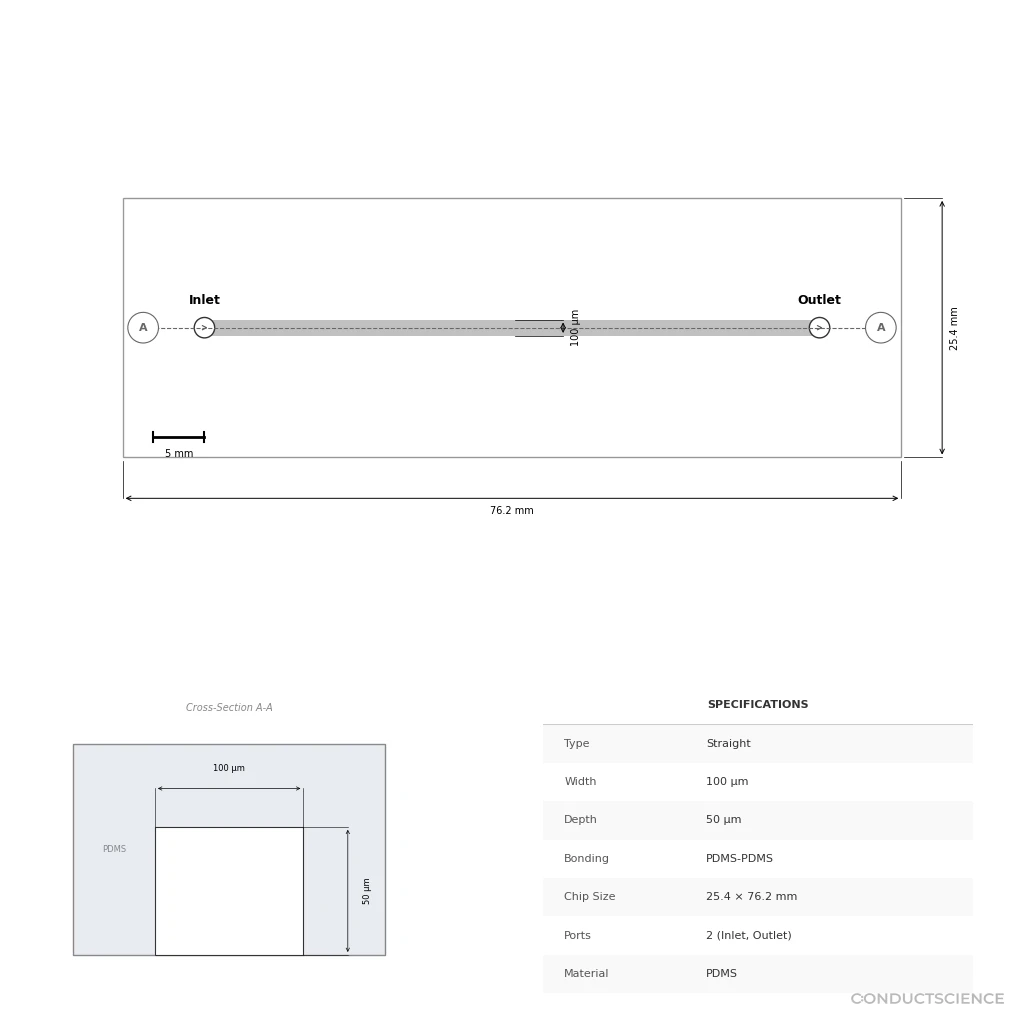
PDMS Chip (SU-8 Mold Process)
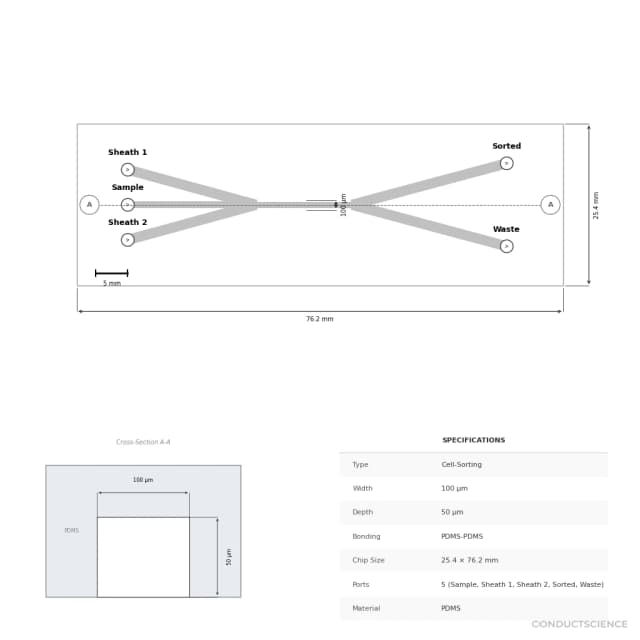
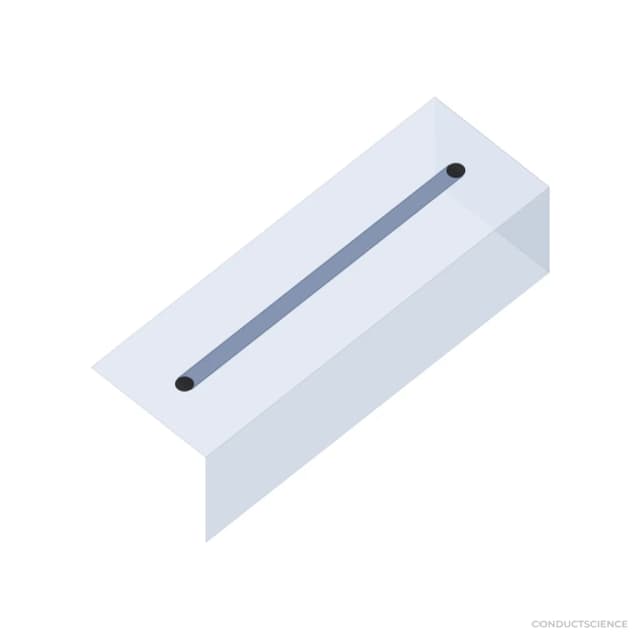
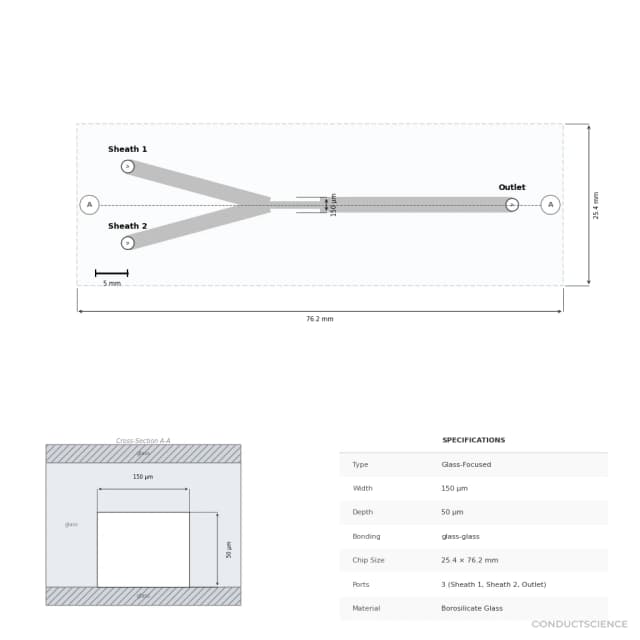
PDMS microfluidic chips fabricated using SU-8 photolithography molds for precise microscale fluid handling and analysis applications. Reusable chip — designed for multiple experimental runs. Compatible with standard microfluidic tubing: steel pins...
PDMS microfluidic chips fabricated using SU-8 photolithography molds provide researchers with precise microfluidic channel architectures for a wide range of applications. The polydimethylsiloxane (PDMS) material offers optical transparency, biocompatibility, and gas permeability essential for cell-based assays and chemical analysis workflows. The SU-8 photolithography mold process enables high-resolution channel definition with vertical sidewalls and reproducible geometries across multiple chip replicates.
These chips serve as versatile platforms for droplet generation, cell culture, particle separation, and reagent mixing in microscale volumes. The soft lithography fabrication approach allows for rapid prototyping of custom channel designs while maintaining dimensional accuracy required for quantitative microfluidic experiments.
How It Works
The PDMS microfluidic chip operates through controlled fluid flow in channels with dimensions ranging from micrometers to millimeters. Fluid movement is governed by laminar flow principles at low Reynolds numbers, where viscous forces dominate over inertial forces. This laminar regime enables predictable fluid behavior and precise control over mixing, separation, and reaction conditions.
The SU-8 photolithography mold process creates master templates with precisely defined channel geometries. PDMS prepolymer is cast against these masters, cured, and bonded to substrates to form enclosed channels. The resulting chips maintain high aspect ratios and smooth channel walls essential for reproducible fluid dynamics. Surface treatments can modify channel wetting properties to control droplet formation or enhance cell adhesion.
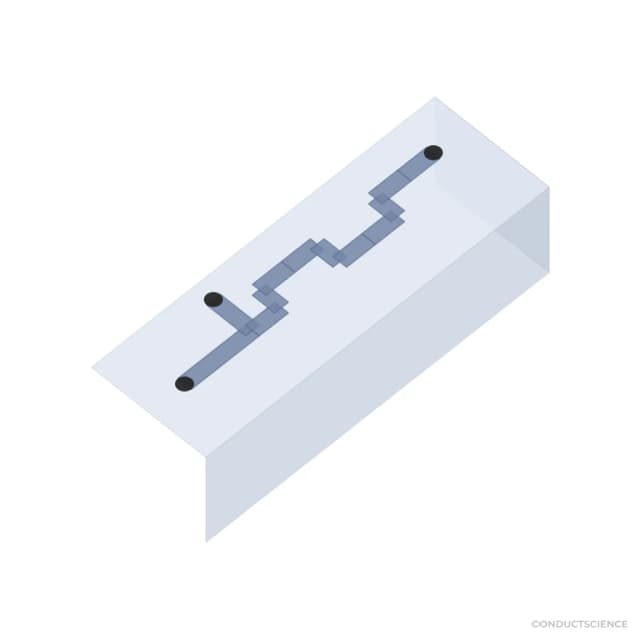
Fluid manipulation relies on pressure-driven flow, electrokinetic effects, or surface tension forces depending on the application. Channel geometry determines flow patterns, with T-junctions enabling droplet formation and serpentine channels promoting mixing through chaotic advection.
Features & Benefits
Pack Size
- 10-Pack
- 25-Pack
Weight
- 3.3 lbs
Dimensions
- L: 181.8 in
- W: 136.3 in
- H: 90.9 in
Comparison Guide
| Feature | This Product | Typical Alternative | Advantage |
|---|---|---|---|
| Material Biocompatibility | PDMS polymer with established biocompatibility | Glass or thermoplastic materials may require additional surface treatments | Enables direct cell culture applications without cytotoxicity concerns |
| Fabrication Method | SU-8 photolithography mold process | Hot embossing or injection molding require expensive tooling | Allows rapid prototyping and custom design iterations |
| Optical Properties | Transparent PDMS with refractive index 1.4 | Some polymers have limited transparency or autofluorescence | Supports high-quality microscopy imaging across multiple wavelengths |
| Gas Permeability | High oxygen and CO2 permeability | Glass and most plastics are gas-impermeable | Maintains cell viability in long-term culture experiments |
| Surface Modification | Compatible with plasma treatment and chemical functionalization | Limited surface modification options for some materials | Enables customized surface properties for specific applications |
This PDMS chip combines the precision of SU-8 photolithography with the biocompatibility and optical properties required for advanced microfluidic research. The material properties support both analytical chemistry and biological applications with excellent imaging capabilities.
Practical Tips
Prime channels slowly to avoid air bubble formation which can disrupt flow patterns.
Why: Air bubbles create unpredictable flow resistance and can interfere with downstream analysis.
Clean channels immediately after use with appropriate solvents before protein or cell debris can adhere to walls.
Why: Prompt cleaning prevents permanent contamination and extends chip reusability.
Verify flow rates using direct measurement rather than pump settings alone.
Why: Channel geometry variations can affect actual flow rates compared to pump specifications.
Use appropriate biosafety containment when working with live cells or biological samples.
Why: Microfluidic systems can generate aerosols requiring proper containment protocols.
Allow sufficient equilibration time for steady-state flow conditions before data collection.
Why: Transient flow effects can introduce variability in quantitative measurements.
Check for channel deformation under high magnification if flow patterns appear irregular.
Why: PDMS flexibility can lead to channel collapse under excessive vacuum or pressure.
Store unused chips in dust-free environment to maintain channel cleanliness.
Why: Particle contamination can block narrow channels and affect experimental reproducibility.
Setup Guide
What’s in the Box
- PDMS microfluidic chip
- Protective storage container (typical)
- User documentation with handling instructions (typical)
Warranty
ConductScience provides standard warranty coverage for manufacturing defects. Technical support available for application guidance and troubleshooting.
Compliance
References
Background reading relevant to this product:
What channel dimensions can be achieved with the SU-8 mold process?
SU-8 photolithography enables channel widths from 10 micrometers to several millimeters with height-to-width aspect ratios up to 10:1. Consult product datasheet for specific geometry options available.
How many uses can be expected from a single chip?
Chip lifetime depends on application and cleaning protocols. Cell culture applications may require single-use chips, while chemical analysis allows multiple uses with appropriate cleaning between experiments.
What bonding methods are compatible with these chips?
PDMS chips bond reversibly to glass through van der Waals forces or permanently through oxygen plasma treatment and thermal bonding for high-pressure applications.
Can the chips withstand organic solvents?
PDMS exhibits good compatibility with aqueous solutions and moderate resistance to polar solvents. Avoid prolonged exposure to non-polar solvents which can cause swelling.
What pressure range is suitable for operation?
Operating pressure depends on channel geometry and bonding method. Reversibly bonded chips typically operate below 1 bar, while plasma-bonded chips can withstand several bars of pressure.
How should chips be stored between uses?
Store in protective containers away from dust and contaminants. For cell culture applications, consider sterilization protocols appropriate for PDMS material.
What imaging techniques are compatible?
PDMS transparency enables brightfield, fluorescence, and phase contrast microscopy. The material's refractive index (1.4) is suitable for high-resolution imaging applications.
Have a question about this product?