Polycarbonate Metabolic Cage for Mice
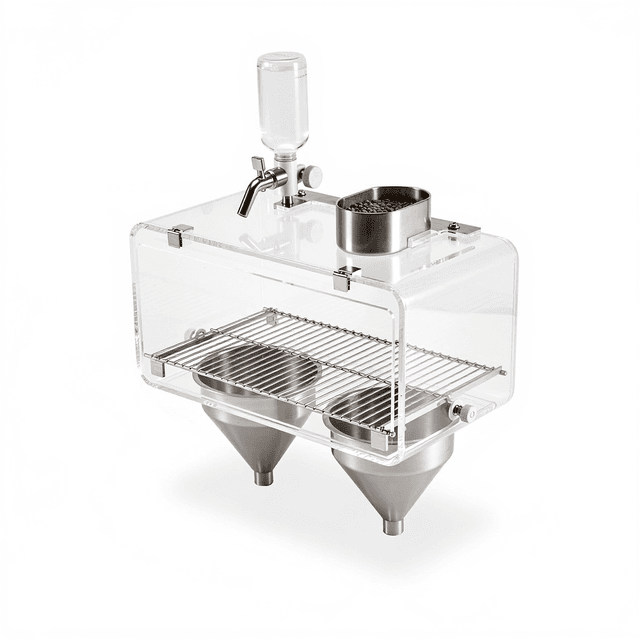
Polycarbonate metabolic cage with separate urine and feces collection systems for mouse pharmacokinetic studies and metabolic research.
| Cage Material | Polycarbonate (PC) |
| Lid Material | Stainless Steel SUS304, polished |
| Collection | Separate urine and feces collection |
| Automation Level | manual |
| Brand | ConductScience |
| Species | Mouse |

The Polycarbonate Metabolic Cage for Mice provides a controlled environment for pharmacokinetic studies, renal function assessment, and metabolic research requiring precise urine and feces collection. The polycarbonate construction offers chemical resistance and transparency for visual monitoring, while the stainless steel SUS304 lid delivers durability and easy cleaning protocols standard in research environments.
This metabolic cage features separate collection systems for urine and feces, enabling accurate measurement of excretion patterns without cross-contamination. The design supports standardized housing conditions while facilitating quantitative collection of metabolic byproducts essential for PK parameter determination, renal clearance studies, and metabolic profiling experiments.
How It Works
The metabolic cage operates on the principle of controlled environmental housing with integrated waste collection systems. The polycarbonate chamber provides a transparent, chemically inert environment that allows continuous visual monitoring while preventing contamination of collected samples. The separate collection mechanism relies on gravity-assisted separation where urine passes through a mesh floor into a dedicated collection vessel, while feces are retained in a separate compartment.
The stainless steel SUS304 lid ensures durability and provides easy access for animal handling while maintaining environmental control. The system's design facilitates precise temporal collection of excreta, enabling researchers to correlate metabolic output with experimental interventions. The chemical resistance of polycarbonate prevents interaction with metabolites, preserving sample integrity for downstream analytical procedures.
Features & Benefits
Cage Material
- Polycarbonate (PC)
Lid Material
- Stainless Steel SUS304, polished
Collection
- Separate urine and feces collection
Automation Level
- manual
Brand
- ConductScience
Species
- Mouse
Research Domain
- Addiction Research
- Aging Research
- Metabolic Research
- Neuroscience
- Pharmaceutical QC
- Toxicology
Certifications
- CE, ISO, RoHS
Weight
- 2.0 kg
Dimensions
- L: 50.1 mm
- W: 24.7 mm
- H: 63.2 mm
Comparison Guide
| Feature | This Product | Typical Alternative | Advantage |
|---|---|---|---|
| Construction Material | Polycarbonate with stainless steel SUS304 lid | Glass or acrylic materials with various lid options | Polycarbonate provides superior impact resistance compared to glass while maintaining transparency and chemical compatibility |
| Collection System | Separate urine and feces collection | Single collection chamber or manual separation required | Eliminates cross-contamination and improves accuracy of metabolic measurements |
| Weight | 2 kg total weight | Glass models typically weigh 3-5 kg | Reduced weight facilitates handling, cleaning, and laboratory workflow efficiency |
| Certifications | CE, ISO, RoHS certified | Varies by manufacturer and model | Documented compliance supports use in regulated research environments |
| Lid Material | Stainless steel SUS304 polished finish | Plastic, aluminum, or basic stainless steel | Medical-grade stainless steel provides superior corrosion resistance and durability for repeated sterilization cycles |
This polycarbonate metabolic cage offers a combination of chemical resistance, impact tolerance, and separate collection systems with documented certifications. The stainless steel SUS304 lid and lightweight design provide practical advantages for routine laboratory use while maintaining sample integrity.
Practical Tips
Validate collection efficiency by measuring known volumes of water and standard feces samples before experimental use.
Why: Ensures accurate quantitative measurements and identifies any system losses or cross-contamination.
Inspect the mesh floor regularly for wear or damage that could affect separation efficiency.
Why: Prevents sample contamination and maintains the integrity of separate collection systems.
Record ambient temperature and humidity during collection periods as metadata for your samples.
Why: Environmental conditions can affect evaporation rates and sample concentration, impacting analytical results.
Pre-weigh collection vessels and subtract tare weight for accurate sample mass determination.
Why: Provides precise quantitative data essential for pharmacokinetic calculations and metabolic balance studies.
If urine appears in the feces collection area, check mesh alignment and ensure proper cage leveling.
Why: Maintains separation integrity required for accurate metabolic measurements.
Monitor food and water consumption continuously to correlate with excretion patterns and identify outlier data.
Why: Consumption data provides context for interpreting metabolic output and identifying experimental artifacts.
Handle all collected samples with appropriate PPE and follow institutional biosafety protocols.
Why: Protects researchers from potential biological hazards and maintains sample chain of custody.
Setup Guide
What’s in the Box
- Polycarbonate metabolic cage chamber
- Stainless steel SUS304 lid
- Mesh floor insert
- Urine collection vessel (typical)
- Feces collection container (typical)
- User manual and setup instructions (typical)
Warranty
ConductScience provides a standard one-year manufacturer warranty covering defects in materials and workmanship, with technical support for setup and operation guidance.
Compliance
What is the optimal acclimation period before beginning metabolic collection?
Allow 24-48 hours for animal acclimation to minimize stress artifacts. Monitor food and water consumption patterns to ensure normal behavior before starting data collection.
How do I prevent sample evaporation during extended collection periods?
Use collection vessels with tight-fitting lids and consider refrigerated collection systems. Monitor environmental humidity and temperature to minimize evaporative losses.
Can the cage accommodate different mouse strains and sizes?
The cage is designed for standard laboratory mouse strains. Verify appropriate sizing for larger strains and monitor animal comfort throughout the study period.
What cleaning protocols are recommended between studies?
Disassemble all components and wash with laboratory detergent, rinse thoroughly, and sterilize according to facility protocols. The polycarbonate and stainless steel materials are compatible with standard sterilization methods.
How accurate is the separation of urine and feces collection?
The mesh floor design provides effective separation, though some cross-contamination may occur. Validate separation efficiency for your specific experimental requirements.
What volume capacity do the collection vessels have?
Consult product datasheet for specific collection vessel volumes. Plan collection schedules based on expected excretion volumes for your experimental timeframe.
Is the cage compatible with automated monitoring systems?
The manual design allows integration with external monitoring equipment. The transparent construction facilitates video monitoring and behavioral analysis systems.
How does this compare to glass metabolic cages?
Polycarbonate offers better impact resistance and transparency than glass while maintaining chemical compatibility. Weight is reduced compared to glass alternatives, facilitating handling and cleaning.
Have a question about this product?
Accessories
Enhance your setup with compatible accessories