Puzzle Box
Behavioral apparatus for assessing general cognition, executive function, and problem-solving in rodents through escape learning from a bright start zone to a dark goal compartment.
| warranty_length | 1 YEAR |
| storage_included | Yes |
| assembly_required | Yes |
| Automation Level | manual |
| Species | Mouse, Rat |

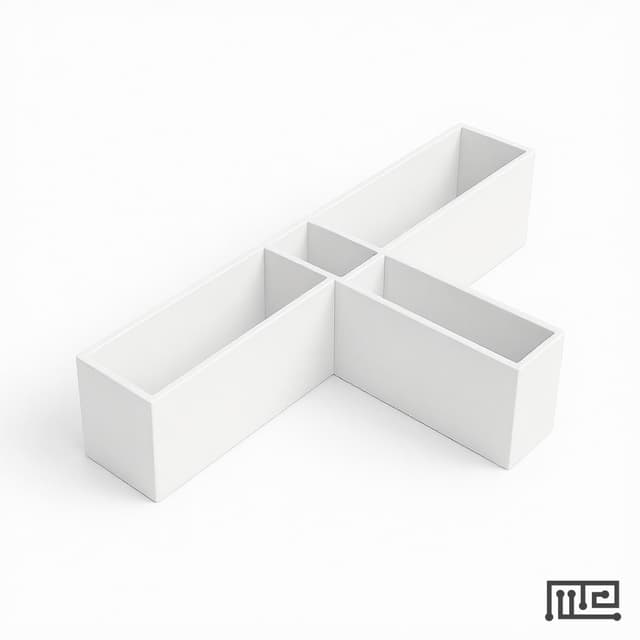
The Puzzle Box is a behavioral apparatus designed to assess general cognition, executive function, and problem-solving abilities in rodents. This classic maze configuration evaluates an animal's capacity to navigate from a brightly illuminated start zone through an underpass to reach a darkened goal compartment. The paradigm measures escape latency, exploration patterns, and cognitive flexibility as animals learn to solve the spatial puzzle through trial-and-error learning.
Available in mouse and rat configurations with species-appropriate dimensional scaling, the apparatus features distinct environmental zones that leverage the natural preference of rodents for dark, enclosed spaces. The contrast between the aversive bright start zone and rewarding dark goal zone creates motivation for task completion while allowing researchers to quantify cognitive performance through latency measurements and behavioral observation.
How It Works
The Puzzle Box operates on the principle of escape learning, utilizing the natural aversion of rodents to brightly illuminated environments and their preference for dark, enclosed spaces. Animals are placed in the illuminated start zone and must discover the concealed underpass entrance to reach the rewarding dark goal compartment. This creates an innate motivation to solve the spatial puzzle without requiring food restriction or external reinforcement.
Cognitive assessment occurs through measurement of escape latency - the time required for an animal to locate and navigate through the underpass. Initial trials reflect problem-solving ability and exploration strategies, while repeated exposures reveal learning capacity, memory retention, and cognitive flexibility. The paradigm engages executive functions including spatial working memory, behavioral inhibition, and strategy switching as animals optimize their navigation approach across trials.
Features & Benefits
warranty_length
- 1 YEAR
storage_included
- Yes
assembly_required
- Yes
Color
- Black
- Blue
- Clear
- Grey
- White
Behavioral Construct
- General Cognition
- Executive Function
- Problem Solving
- Escape Learning
- Spatial Learning
- Cognitive Flexibility
Automation Level
- manual
Research Domain
- Aging Research
- Anxiety and Depression
- Behavioral Pharmacology
- Learning and Memory
- Neurodegeneration
- Neuroscience
Species
- Mouse
- Rat
Weight
- 21.0 kg
Dimensions
- L: 43.2 mm
- W: 38.0 mm
- H: 27.9 mm
Comparison Guide
| Feature | This Product | Typical Alternative | Advantage |
|---|---|---|---|
| Environmental Motivation | Natural light-dark preference with bright start zone and dark goal compartment | Many cognitive tests require food restriction or external reinforcement schedules | Eliminates confounding effects of nutritional status and reduces animal welfare concerns associated with food deprivation protocols |
| Species Configuration Options | Dedicated mouse and rat dimensional scaling with appropriate underpass sizes | Generic sizing requires manual adjustments or custom modifications | Ensures optimal difficulty level and prevents size-related confounding factors that could affect cognitive assessment validity |
| Assembly Design | Modular components with integrated storage solutions and multiple color options | Fixed configurations with limited customization options | Provides experimental flexibility and efficient laboratory space management while accommodating diverse protocol requirements |
| Task Complexity | Hidden underpass entrance requiring spatial exploration and discovery learning | Simpler preference tests may lack cognitive challenge for comprehensive assessment | Engages multiple cognitive domains including executive function, spatial working memory, and problem-solving strategies |
This puzzle box apparatus offers species-optimized dimensions, natural behavioral motivation through light-dark preference, and modular design flexibility. The hidden underpass configuration provides cognitive challenge appropriate for executive function assessment while maintaining standardized testing conditions across research applications.
Practical Tips
Verify underpass dimensions allow comfortable animal passage without becoming trapped by testing with representative animals before beginning experiments.
Why: Inappropriate sizing can create welfare issues or confound cognitive measurements with physical limitations.
Clean apparatus thoroughly with ethanol between subjects and allow complete drying to eliminate olfactory cues.
Why: Residual scent marks can provide navigation cues that compromise cognitive assessment validity.
Standardize lighting intensity and room conditions across all testing sessions using light meter measurements.
Why: Consistent environmental conditions ensure reliable escape motivation and enable valid comparison across animals and time points.
Record both successful and failed trials with predetermined maximum latency cutoffs to prevent indefinite testing periods.
Why: Ceiling effects provide important information about cognitive limitations while maintaining standardized protocols.
If animals show no exploration behavior, verify start zone lighting intensity and check for external distractions that might override natural motivation.
Why: Insufficient environmental contrast or competing stimuli can eliminate the escape motivation necessary for task engagement.
Monitor animals continuously during trials to ensure they do not become trapped or show signs of excessive stress.
Why: Real-time observation allows immediate intervention if navigation difficulties arise or welfare concerns develop.
Conduct habituation sessions to familiarize animals with apparatus handling and environmental conditions before data collection.
Why: Reduced stress from handling and novel environment exposure improves cognitive performance measurement accuracy.
Video record trials for later analysis of exploration patterns and behavioral strategies beyond simple latency measurement.
Why: Detailed behavioral analysis provides insight into cognitive processes and problem-solving approaches that supplement latency data.
Setup Guide
What’s in the Box
- Start zone compartment (typical)
- Goal zone compartment with removable cover (typical)
- Underpass section (typical)
- Assembly hardware and connectors (typical)
- Storage components (confirmed)
- Assembly instructions (typical)
Warranty
ConductScience provides a 1-year manufacturer warranty covering defects in materials and workmanship, with technical support for setup and operational questions.
Compliance
References
Background reading relevant to this product:
What is the Puzzle Box?
The Puzzle Box is a behavioral paradigm that assesses problem-solving ability, cognitive flexibility, and executive function in rodents through a series of progressively more difficult obstacles.
How does the Puzzle Box work?
Animals must navigate through a series of barriers of increasing complexity to reach a goal compartment. Obstacles progress from simple doorways to blocked passages requiring digging, plug removal, or object manipulation.
What research applications use the Puzzle Box?
The Puzzle Box is used to study executive function, cognitive flexibility, and problem-solving in autism, schizophrenia, and traumatic brain injury models. It provides unique insight into higher-order cognitive abilities beyond spatial memory.
Have a question about this product?
Accessories
Enhance your setup with compatible accessories
Frequently Bought Together