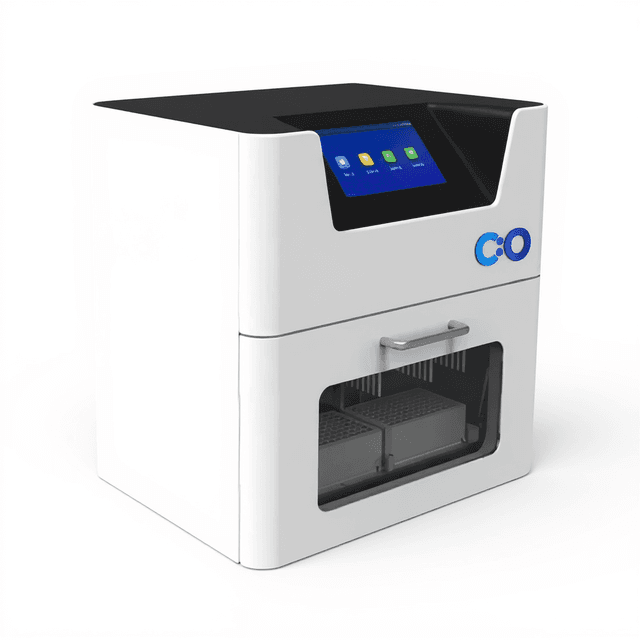
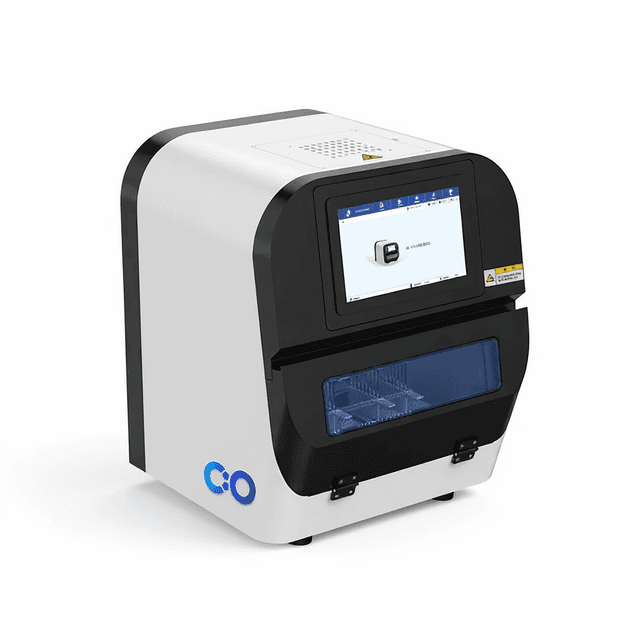
Semi-auto Chemistry Biochemistry Analyzer
Semi-automated biochemistry analyzer with touchscreen interface, multi-temperature incubation, and spectrophotometric detection for clinical chemistry applications.
| Instrument Type | Clinical Analyzers |
| Application Area | Clinical Diagnostics |
| Automation Level | semi-automated |
| screen_size | 7.0 inch |
| interface_type | touch screen |
| test_items_storage | 300 test items |

The Semi-auto Chemistry Biochemistry Analyzer is a clinical diagnostic instrument designed for quantitative analysis of biochemical markers in biological samples. The system features a 7.0-inch LCD touchscreen interface and supports analysis of serum, plasma, urine, and cerebrospinal fluid using endpoint, fixed-time, and dynamic analytical methods. With 20 incubating positions and intelligent temperature control across four settings (room temperature, 25°C, 30°C, 37°C), the analyzer accommodates diverse assay requirements.
The instrument incorporates a flow-through direct-reading cuvette system with seven fixed wavelengths (340, 405, 450, 510, 546, 578, 630 nm) plus two open filter positions for method flexibility. Data management capabilities include storage for 300 test items and 20,000 test results, with integrated thermal printing for immediate result documentation and abnormal value flagging.
How It Works
The analyzer operates on spectrophotometric principles, measuring light absorption at specific wavelengths to quantify analyte concentrations. The system uses a flow-through direct-reading cuvette that maintains optical stability while allowing continuous sample measurement. Light from the instrument's source passes through the sample-containing cuvette, and the transmitted light is detected at predetermined wavelengths corresponding to the analyte's absorption characteristics.
Temperature-controlled incubation enhances enzymatic reactions and maintains assay specificity. The intelligent temperature control system maintains precise conditions across 20 incubating positions, enabling simultaneous processing of multiple samples. The system supports three analytical methods: endpoint measurement for stable reactions, fixed-time two-point measurement for comparative analysis, and dynamic rate measurement for enzyme kinetics.
Data processing algorithms calculate concentrations based on calibration curves stored in the instrument's memory. Results are automatically flagged when values fall outside predetermined normal ranges, and the thermal printer provides immediate documentation of analytical outcomes.
Features & Benefits
Instrument Type
- Clinical Analyzers
Application Area
- Clinical Diagnostics
Automation Level
- semi-automated
screen_size
- 7.0 inch
interface_type
- touch screen
test_items_storage
- 300 test items
test_results_storage
- 20,000 test results
printer_type
- built-in thermal printer
temperature_options
- room temperature, 25.0℃, 30.0℃, 37.0℃
incubator_control
- intelligent temperature control
Temperature Range
- room temperature to 37.0℃
Display Type
- LCD
Research Domain
- Analytical Chemistry
- Clinical Diagnostics
- Metabolic Research
- Microbiology
- Pharmaceutical QC
Weight
- 6.06 kg
Dimensions
- L: 65.0 mm
- W: 36.0 mm
- H: 27.0 mm
Comparison Guide
| Feature | This Product | Typical Alternative | Advantage |
|---|---|---|---|
| Display Interface | 7.0-inch LCD touchscreen with graphical interface | Entry-level models often feature smaller displays or button-based navigation | Larger touchscreen interface reduces training time and provides more intuitive method navigation during routine analysis. |
| Data Storage Capacity | 300 test items, 20,000 test results | Basic analyzers typically offer limited method storage and result retention | Extensive storage enables comprehensive method libraries and long-term data retention for quality trending analysis. |
| Temperature Control Options | Four temperature settings with intelligent control (RT, 25°C, 30°C, 37°C) | Many semi-automated systems offer fewer temperature options or less precise control | Multiple temperature settings accommodate diverse assay requirements from ambient tests to physiological temperature enzyme reactions. |
| Incubation Capacity | 20 incubating positions | Smaller systems often provide fewer simultaneous incubation positions | Higher capacity enables batch processing of samples, improving laboratory throughput and workflow efficiency. |
| Analytical Methods | Three methods: endpoint, fixed-time, and dynamic rate measurement | Basic analyzers may support only endpoint measurements | Multiple analytical approaches provide methodological flexibility for different assay types and enzyme kinetics studies. |
| Result Documentation | Built-in thermal printer with abnormal value flagging | Some systems require external printers or lack automatic flagging capabilities | Integrated printing with intelligent flagging supports immediate clinical decision-making and quality assurance workflows. |
This analyzer combines touchscreen operation, extensive data storage, and multi-temperature incubation capabilities in a semi-automated platform. The system provides methodological flexibility through multiple analytical approaches while maintaining integrated result documentation and quality control features.
Practical Tips
Perform wavelength verification monthly using certified reference standards, particularly after any optical component maintenance.
Why: Wavelength accuracy directly affects analytical precision and ensures reliable quantitative results across all assays.
Clean the flow-through cuvette system daily with appropriate cleaning solutions to prevent carry-over between samples.
Why: Optical contamination can introduce systematic errors and affect the accuracy of subsequent measurements.
Allow the incubator to stabilize for at least 15 minutes after temperature changes before processing critical samples.
Why: Temperature equilibration ensures enzymatic reactions proceed at the intended rate and maintains assay reproducibility.
If results appear inconsistent, check sample positioning in incubator wells and verify reagent temperature equilibration.
Why: Temperature gradients or poor thermal contact can significantly impact enzymatic reaction rates and final results.
Run quality control samples at the beginning of each analytical session and after any system maintenance.
Why: Regular QC monitoring ensures analytical performance remains within acceptable limits and maintains result reliability.
Use appropriate personal protective equipment when handling biological samples and ensure proper ventilation around the thermal printer.
Why: Biological samples pose exposure risks, and thermal printer emissions require adequate air circulation for operator safety.
Organize sample analysis by temperature requirements to minimize incubator temperature changes during batch runs.
Why: Reducing temperature transitions improves workflow efficiency and maintains more stable analytical conditions.
Replace thermal printer paper before it runs out completely to avoid interrupting result documentation during critical analyses.
Why: Continuous result documentation is essential for maintaining analytical records and supporting quality assurance protocols.
Setup Guide
What’s in the Box
- Semi-auto Chemistry Biochemistry Analyzer main unit
- Power adapter and cord (typical)
- Flow-through cuvette assembly (typical)
- Thermal printer paper roll (typical)
- User manual and quick start guide (typical)
- Calibration certificate (typical)
- Quality control materials (typical)
Warranty
ConductScience provides a standard one-year manufacturer warranty covering parts and labor, with technical support for method development and troubleshooting assistance. Extended warranty options and on-site service contracts are available for high-throughput laboratory environments.
Compliance
What sample volumes are required for analysis?
Consult product datasheet for specific sample volume requirements, which typically vary by assay type and may range from microliters to several hundred microliters depending on the analytical method.
How frequently should wavelength calibration be performed?
Wavelength accuracy verification should be performed according to laboratory quality protocols, typically monthly or after any maintenance procedures that could affect optical alignment.
Can custom assay methods be programmed into the system?
Yes, the analyzer stores up to 300 test items, allowing laboratories to input custom analytical methods with user-defined parameters for specialized applications.
What is the temperature stability across the incubator positions?
Consult product datasheet for specific temperature uniformity specifications across all 20 incubating positions at each of the four temperature settings.
How does the system handle quality control integration?
The analyzer can process quality control samples using the same protocols as patient specimens, with results stored in the 20,000-result memory for trending analysis and laboratory accreditation requirements.
What data export capabilities are available?
The built-in thermal printer provides immediate hard copy results, though additional data connectivity options should be confirmed in the product datasheet for laboratory information system integration.
How does this compare to fully automated clinical chemistry systems?
This semi-automated system requires manual sample handling and reagent addition, making it suitable for lower throughput laboratories or specialized testing that benefits from operator control over each analytical step.
Have a question about this product?
Accessories
Enhance your setup with compatible accessories