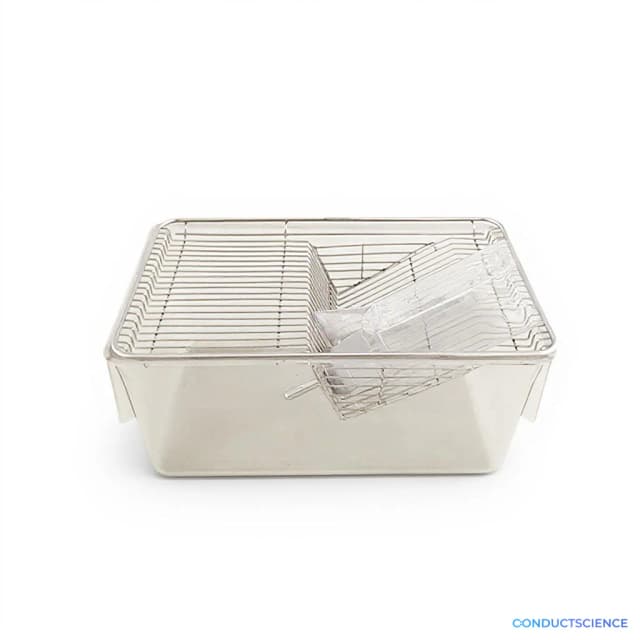
Stainless Steel Rack for Mouse Cages
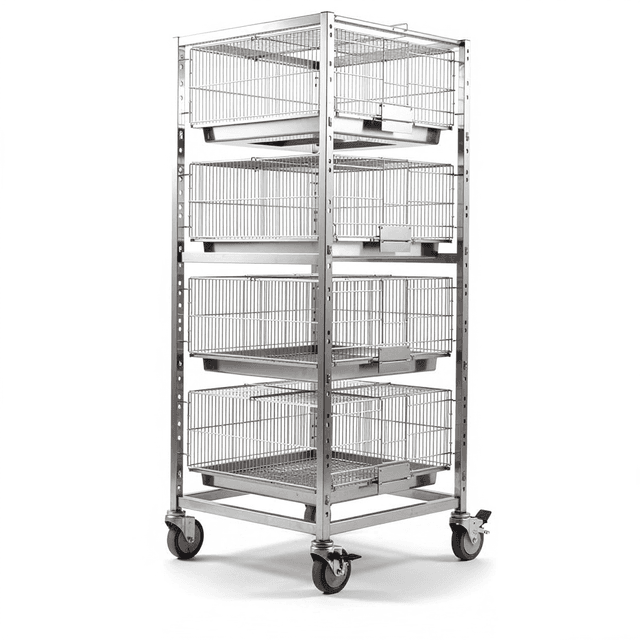
Multi-tier stainless steel rack with adjustable shelves for organizing mouse cages in laboratory animal facilities. Features SS304 construction with lockable casters for mobility and stability.
| Frame Material | Stainless Steel SS304 |
| Configuration | Multi-tier, adjustable shelves |
| Surface Treatment | Polished, corrosion-resistant |
| Casters | Lockable wheels included |
| Brand | ConductScience |
| Species | Mouse |

The Stainless Steel Rack for Mouse Cages provides a durable, multi-tier housing solution for laboratory mouse colonies. Constructed from SS304 stainless steel with a polished, corrosion-resistant surface treatment, this rack accommodates multiple mouse cages in a space-efficient vertical configuration. The adjustable shelf system allows researchers to customize cage spacing based on specific experimental requirements and animal welfare protocols.
The rack includes lockable caster wheels for mobility while maintaining stability during stationary use. The polished stainless steel construction facilitates thorough cleaning and disinfection protocols required in animal research facilities. The multi-tier design maximizes cage capacity within limited laboratory floor space while providing adequate ventilation clearance between levels.
How It Works
The rack functions as a structural support system utilizing the strength properties of SS304 stainless steel to create a stable, multi-level housing platform. The adjustable shelf configuration allows vertical spacing to be modified based on cage dimensions and ventilation requirements. Each shelf level distributes the weight of multiple mouse cages across the steel frame, while the polished surface treatment minimizes bacterial adhesion and facilitates sanitization protocols.
The lockable caster system provides controlled mobility through a wheel mechanism that can be engaged for transport or locked to prevent movement during animal handling procedures. The stainless steel construction resists corrosion from cleaning chemicals and maintains structural integrity under repeated sterilization cycles. Adequate spacing between shelf levels ensures proper air circulation around cages while maximizing vertical storage density within the laboratory footprint.
Features & Benefits
Frame Material
- Stainless Steel SS304
Configuration
- Multi-tier, adjustable shelves
Surface Treatment
- Polished, corrosion-resistant
Casters
- Lockable wheels included
Brand
- ConductScience
Research Domain
- Aging Research
- Anxiety and Depression
- Behavioral Pharmacology
- Cancer Research
- Developmental Biology
- Learning and Memory
- Metabolic Research
- Neuroscience
- Toxicology
Species
- Mouse
Weight
- 30.0 kg
Dimensions
- L: 65.0 mm
- W: 32.0 mm
- H: 82.0 mm
Comparison Guide
| Feature | This Product | Typical Alternative | Advantage |
|---|---|---|---|
| Frame Material | SS304 stainless steel with polished surface treatment | Wire construction or lower-grade steel materials | Provides superior corrosion resistance and easier sanitization for research animal facility protocols. |
| Shelf Adjustability | Adjustable shelf system for customizable cage spacing | Fixed-height shelf positions | Allows optimization of ventilation clearance and accommodation of different cage sizes within the same rack. |
| Mobility System | Lockable caster wheels included | Stationary mounting or basic wheels without locking | Enables controlled repositioning for cleaning while maintaining stability during animal handling procedures. |
| Surface Treatment | Polished, corrosion-resistant finish | Painted or untreated metal surfaces | Minimizes bacterial adhesion and facilitates thorough disinfection protocols required in research settings. |
| Multi-tier Configuration | Vertical cage storage with adequate ventilation spacing | Single-level storage or poorly ventilated stacking | Maximizes cage capacity within limited laboratory floor space while maintaining proper air circulation. |
This rack combines SS304 stainless steel construction with adjustable shelf positioning and lockable mobility, offering research facilities a durable and flexible mouse housing solution. The polished surface treatment and multi-tier design support both sanitation protocols and space optimization requirements common in laboratory animal facilities.
Practical Tips
Position shelf levels to allow at least 6 inches clearance above each cage for adequate ventilation and easy animal access during handling procedures.
Why: Proper ventilation prevents ammonia buildup and facilitates routine cage maintenance protocols.
Clean stainless steel surfaces with appropriate disinfectant using non-abrasive cloths to preserve the polished finish and prevent bacterial adhesion.
Why: Maintaining the polished surface treatment ensures optimal sanitation properties over the rack's lifetime.
Always engage wheel locks when the rack is positioned for animal handling or cage maintenance to prevent unexpected movement.
Why: Rack stability during procedures prevents animal escape and reduces injury risk during handling.
Load cages evenly across shelf levels to maintain proper weight distribution and rack stability throughout the housing period.
Why: Even weight distribution prevents rack tilting and ensures structural stability under full cage loading.
Periodically inspect caster wheels for hair, bedding debris, or cage material that may interfere with proper wheel function.
Why: Clean wheels ensure smooth mobility and prevent damage to laboratory flooring during rack repositioning.
Label shelf levels clearly when housing different experimental groups to prevent cross-contamination and maintain proper animal identification.
Why: Clear labeling supports experimental integrity and compliance with animal research protocols.
If shelves become difficult to adjust, check for debris in adjustment mechanisms and clean with appropriate solvent before applying lubricant if needed.
Why: Smooth shelf adjustment maintains flexibility for changing experimental requirements and cage configurations.
Setup Guide
What’s in the Box
- Stainless steel rack frame components
- Adjustable shelves
- Lockable caster wheels (4)
- Assembly hardware
- Assembly instructions (typical)
Warranty
ConductScience provides a standard one-year manufacturer warranty covering defects in materials and workmanship. Technical support is available for assembly guidance and maintenance protocols throughout the product lifecycle.
Compliance
What is the maximum number of standard mouse cages this rack can accommodate?
The exact cage capacity depends on the specific cage dimensions and shelf spacing configuration. The adjustable shelf system allows customization based on your cage size and ventilation requirements - consult product datasheet for specific capacity calculations.
Is the stainless steel construction compatible with common laboratory disinfectants?
Yes, the SS304 stainless steel construction with polished surface treatment is designed to withstand repeated cleaning with standard laboratory disinfectants including quaternary ammonium compounds, alcohols, and chlorine-based cleaners.
Can the shelf heights be adjusted after initial assembly?
Yes, the adjustable shelf system allows repositioning of shelf levels to accommodate different cage sizes or modify ventilation spacing as experimental requirements change.
What is the weight capacity per shelf level?
The specific weight capacity per shelf depends on the configuration and shelf spacing. The overall rack weighs 30 kg and is designed for multiple mouse cages - consult product datasheet for detailed load specifications.
How does this compare to wire rack alternatives for animal housing?
Stainless steel construction offers superior durability and sanitation compared to wire racks, with better corrosion resistance and easier cleaning protocols. The polished surface minimizes bacterial adhesion better than wire surfaces.
Are the caster wheels suitable for frequent repositioning of loaded racks?
The lockable caster wheels are designed for controlled mobility, allowing repositioning for cleaning or reconfiguration. The locking mechanism provides stability during stationary use and animal handling procedures.
What maintenance is required for the stainless steel surfaces?
Regular cleaning with appropriate disinfectants maintains the polished surface. Avoid abrasive cleaners that could damage the finish. Periodic inspection of caster wheels and adjustment mechanisms ensures continued proper function.
Have a question about this product?
Accessories
Enhance your setup with compatible accessories
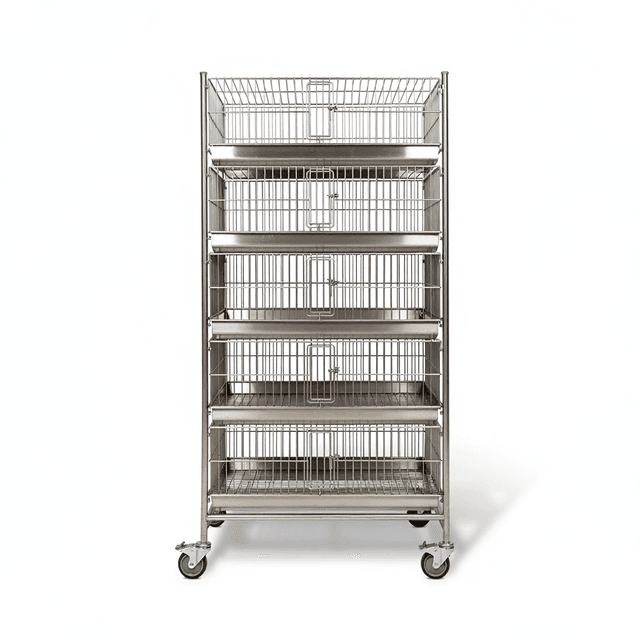
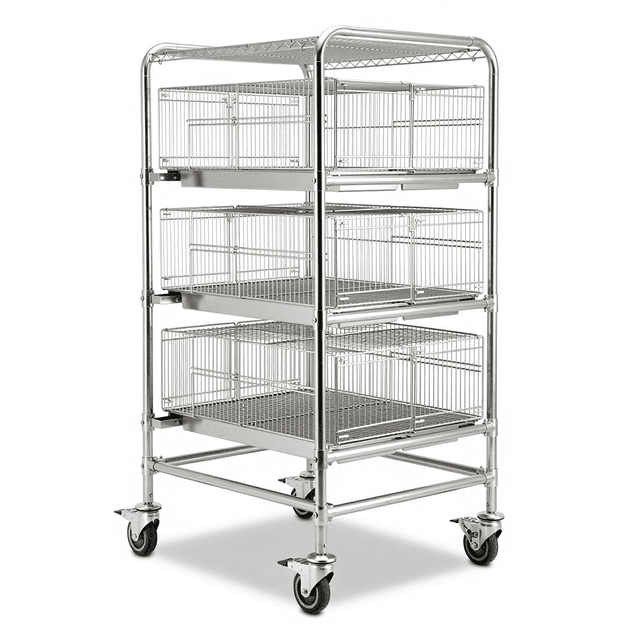
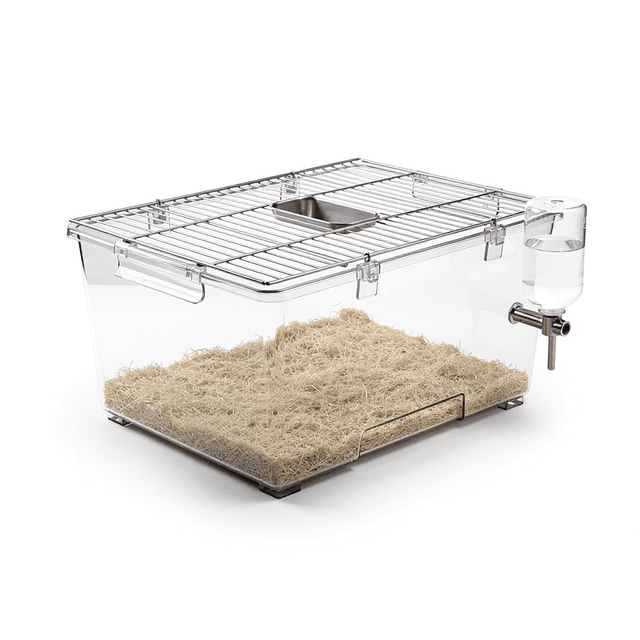
Frequently Bought Together
Upgrade Options