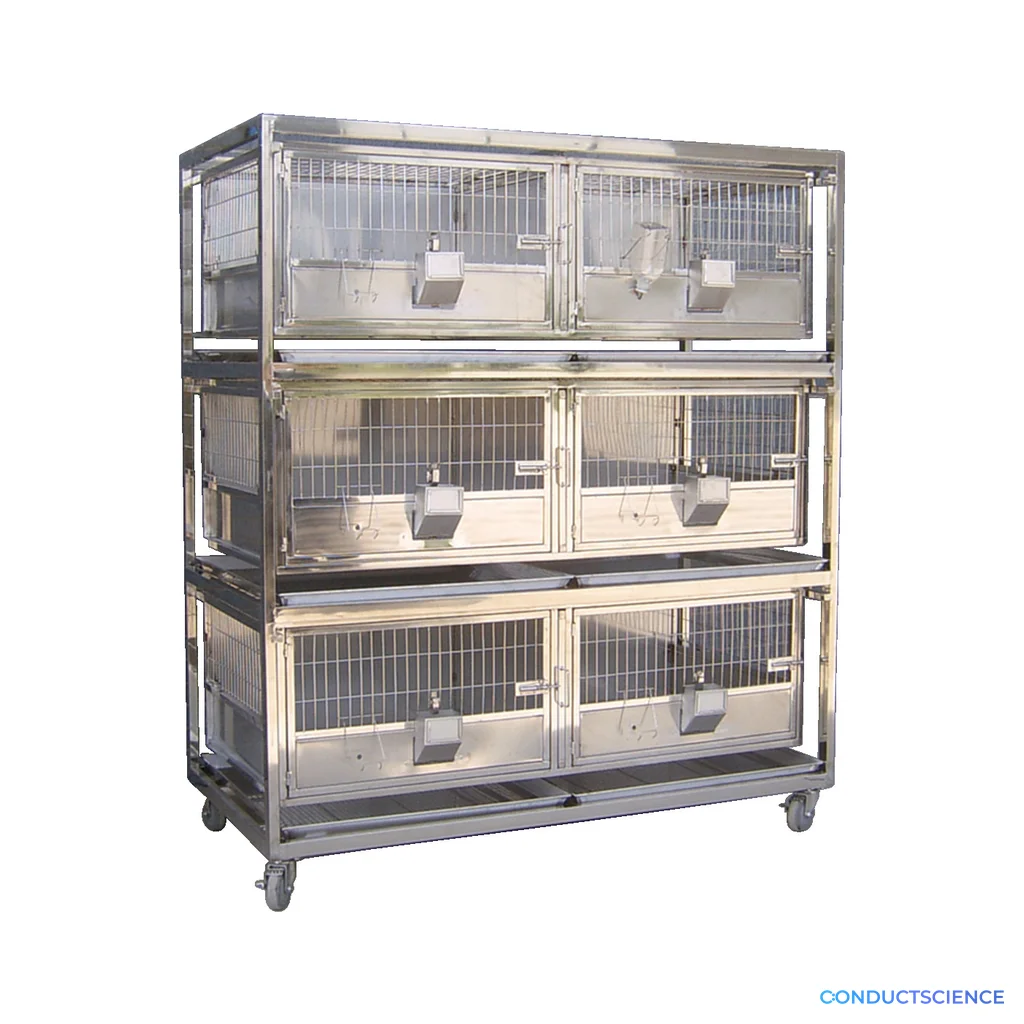
Stainless Steel Laboratory Rabbit Cage
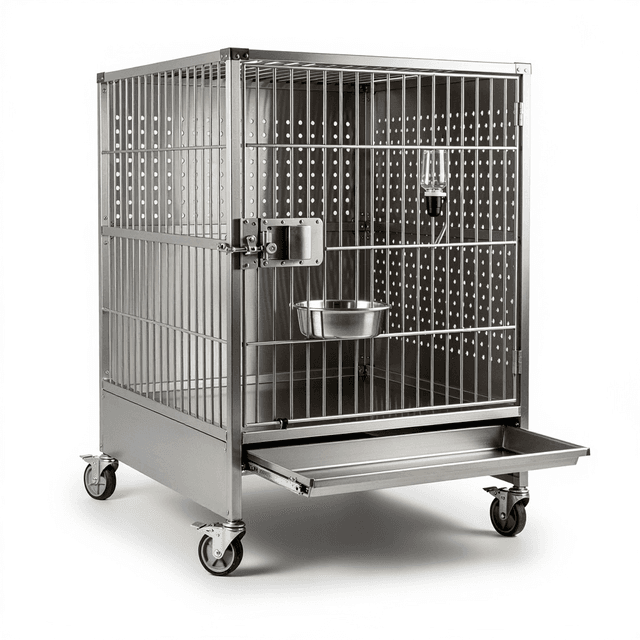
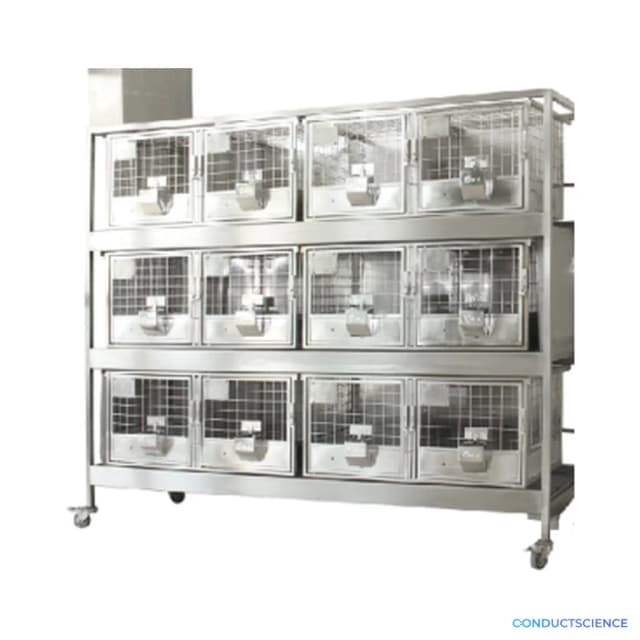
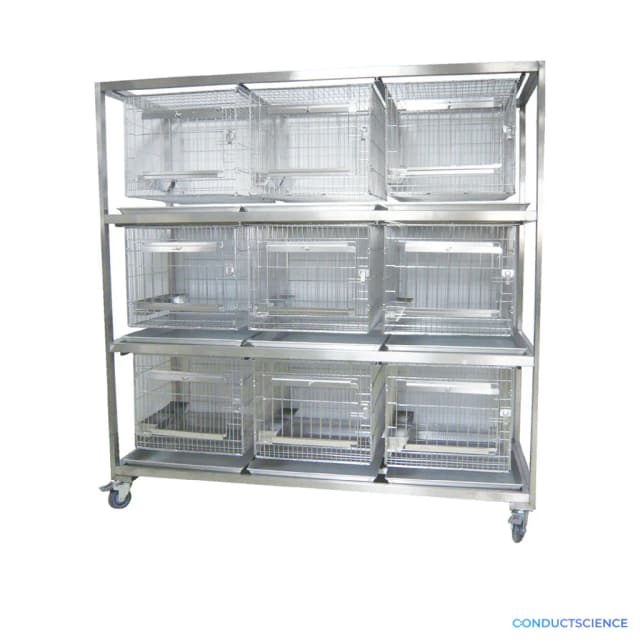
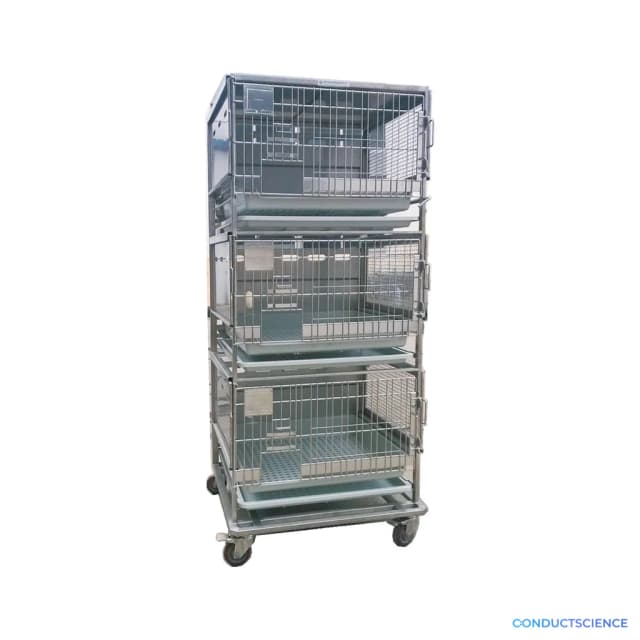
Three-level 304 stainless steel rabbit housing with six positions, 1500 × 700 × 450 mm cage geometry, and a removable divider that supports up to 1 m² of single housing area when configured for that use.
The page helps scientists compare rabbit fit, separation or combined-space needs, observation, sanitation, room placement, and daily care before quote approval.

Louise Corscadden, PhD
Director of Science · ConductScience
Ask Louise about Stainless Steel Laboratory Rabbit Cage fit, setup, configuration, or quote prep.
Already working with us? Sign in to connect this with My Scientist.
Key Specifications
Full details →- Cage dimensions
- 1500 × 700 × 450 mm
- Layout
- 3 levels × 2 positions per level = 6 cage positions
- Construction
- 304 stainless steel
- Divider
- Removable divider; up to 1 m² single housing area
- Reference
- EU COM(2008) 543
- Rack dimensions
- 1600 × 820 × 1850 mm
Configure rabbit housing around space, separation, and care
Rabbit housing should be selected from the approved animal-care and study plan, with attention to usable space, animal size, stocking, observation, handling, feeding, water, waste, and sanitation. This stainless steel cage provides a defined European-style configuration and practical guidance for matching the enclosure to scientific and facility requirements.
The rack measures 1600 × 820 × 1850 mm and arranges six cage positions across three levels, with two positions per level. Each cage measures 1500 × 700 × 450 mm. A removable divider can be used to create up to 1 m² of single housing area when that arrangement is appropriate. The source also references EU COM(2008) 543. Institutional requirements and protocol approval remain the basis for final housing decisions.
The divider changes more than floor area. It affects animal separation, staff access, observation, cleaning, and the way feed and water are presented. Define whether the intended workflow uses divided positions, combined space, or a planned change between those states. The quote confirms divider hardware, doors, floors, feeding, watering, waste components, and retention features around that use. This creates a clear baseline for comparing the plastic and modular rabbit housing alternatives.
Facility planning should include working clearance at every level, cage service space, waste movement, and the route from the receiving area to final placement. Stainless steel construction supports a durable sanitation program, while the facility determines validated cleaning agents, contact times, rinsing, drying, and clean-to-used flow.
Share the rabbit size range, stocking plan, study duration, divider strategy, observation and handling needs, room drawing, water method, waste process, sanitation workflow, and delivery path with ConductScience. The final quote can state the cage configuration, supplied interfaces, accessories, placement, and responsibilities. Quote review keeps the supplied system aligned with animal-care, room, and facility requirements. It also gives care, facilities, and procurement teams one confirmed implementation record.
How It Works
The cage housing system operates on the principle of providing controlled microenvironmental conditions while maintaining accessibility for routine husbandry and research protocols. The SS304 stainless steel construction creates a non-porous surface that resists bacterial colonization and facilitates complete sterilization through autoclave or chemical disinfection cycles. The polished surface treatment reduces surface roughness, minimizing areas where pathogens or contaminants could establish residence.
The structural design accommodates natural rabbit behaviors including nesting, territorial spacing, and maternal care while providing researchers with visual access for behavioral observation and health monitoring. The cage dimensions and construction support the weight and activity levels of adult breeding rabbits while providing adequate space for litters during early development. The manual operation system allows researchers to maintain direct control over all aspects of colony management including feeding schedules, environmental enrichment placement, and nest box positioning.
Ventilation design facilitates air exchange while preventing cross-contamination between housing units. The robust 25 kg construction provides stability during routine handling and cleaning procedures, while the stainless steel material maintains structural integrity through repeated sterilization cycles essential for maintaining pathogen-free breeding colonies.
Features & Benefits
Cage dimensions
- 1500 × 700 × 450 mm
Layout
- 3 levels × 2 positions per level = 6 cage positions
Construction
- 304 stainless steel
Divider
- Removable divider; up to 1 m² single housing area
Reference
- EU COM(2008) 543
Rack dimensions
- 1600 × 820 × 1850 mm
| Feature | This Product | Typical Alternative | Advantage |
|---|---|---|---|
| Construction Material | SS304 stainless steel with polished surface treatment | Basic models often use powder-coated steel or plastic construction | Provides superior corrosion resistance and enables repeated autoclave sterilization without surface degradation. |
| Surface Treatment | Polished finish for reduced bacterial retention | Standard finishes may have rougher surfaces | Facilitates thorough cleaning protocols and minimizes areas where pathogens could establish residence. |
| Application Focus | Specifically designed for breeding colony management | General housing cages may not optimize for breeding behaviors | Accommodates natural rabbit behaviors including nesting and maternal care essential for successful breeding programs. |
| Sterilization Compatibility | Autoclavable construction supports complete sterilization | Basic models may have limited sterilization options | Enables strict biosecurity protocols required for pathogen-free breeding colony maintenance. |
| Structural Weight | 25 kg robust construction | Lighter models may have reduced stability | Provides housing stability during routine procedures and prevents displacement during animal activity. |
| Operation System | Manual operation for direct researcher control | Varies by model, some include automated features | Allows researchers to maintain precise control over colony management procedures and feeding schedules. |
This breeding cage combines SS304 stainless steel construction with polished surface treatment and breeding-specific design features. The manual operation system and autoclavable construction support strict biosecurity protocols while accommodating natural rabbit behaviors essential for successful research breeding programs.
Practical Tips
Inspect welds and joints regularly for any signs of corrosion or wear, particularly around high-stress areas and connection points.
Why: Early detection prevents cage failure and maintains the sterile barrier essential for breeding colony health.
Establish consistent cleaning and sterilization schedules between animal groups, allowing adequate contact time for disinfectants on the polished surfaces.
Why: Systematic protocols ensure complete pathogen elimination and maintain biosecurity throughout breeding programs.
Position nest boxes and environmental enrichment to allow visual monitoring while maintaining natural breeding behaviors and maternal care activities.
Why: Balances research observation requirements with animal welfare needs essential for successful breeding outcomes.
Use appropriate personal protective equipment when handling cages during cleaning and sterilization procedures, particularly when using chemical disinfectants.
Why: Protects personnel from exposure to cleaning chemicals and potential zoonotic pathogens during cage maintenance.
Maintain detailed records of cage assignments, breeding pair history, and environmental conditions to ensure research data traceability.
Why: Comprehensive documentation supports research validity and enables identification of environmental factors affecting breeding success.
If animals show signs of stress or reduced breeding performance, evaluate ventilation patterns, noise levels, and cage positioning within the vivarium.
Why: Environmental factors significantly impact reproductive success and can confound research outcomes if not properly controlled.
After autoclave sterilization, allow complete cooling and drying before reintroducing animals to prevent thermal stress and condensation issues.
Why: Proper temperature equilibration ensures animal safety and prevents humidity problems that could affect breeding behavior.
Implement quarantine protocols for new breeding animals using separate cage units to prevent disease transmission to established colonies.
Why: Biosecurity measures protect valuable breeding lines and prevent research disruption from infectious disease outbreaks.
Setup Guide
What’s in the Box
- Selected stainless steel rabbit cage system; divider, service interfaces, and supplied components confirmed in the quote
Warranty
ConductScience provides a standard one-year manufacturer warranty covering materials and workmanship defects. Technical support is available for setup, operation, and maintenance procedures throughout the warranty period.
Compliance
How does the removable divider affect selection?
It changes available space, separation, observation, access, and cleaning, so define its intended use before quoting.
Why is this product quote-only?
Rabbit fit, divider use, husbandry interfaces, freight, placement, and supplied components materially affect the delivered configuration.
What should be shared with ConductScience?
Share the housing plan, rabbit size, divider strategy, room drawing, water, waste, sanitation, delivery, and access needs.
Have a question about this product?
Have a question? Just ask.
Send it over and we'll email you a personalized answer — no call, no scheduling.
Prefer to talk it through?
Accessories
Enhance your setup with compatible accessories
Frequently Bought Together