Stainless Steel Wire Rat Cage and Rack System
SUS304 stainless steel wire cage and rack system with integrated waste collection trays and water bottle holders for laboratory rat housing.
| Surface Treatment | Polished |
| Waste Collection | Removable trays included |
| Water Bottles | Integrated holders |
| Brand | ConductScience |
| Material | Stainless Steel SUS304 wire |
| Species | Rat |

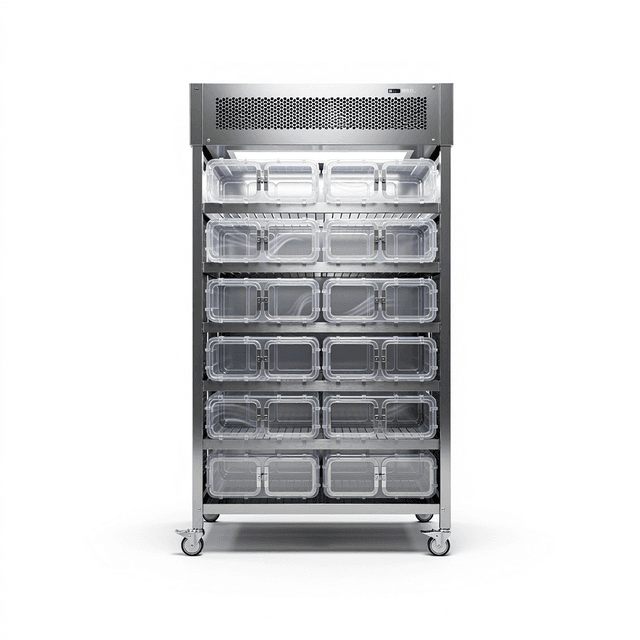
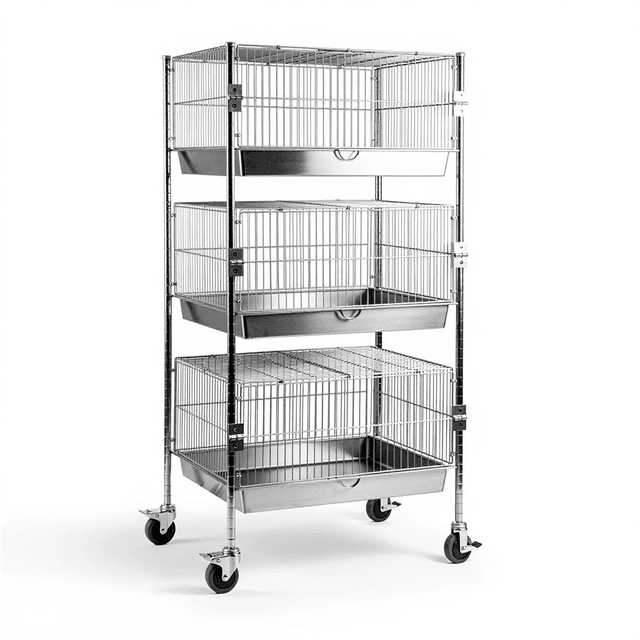
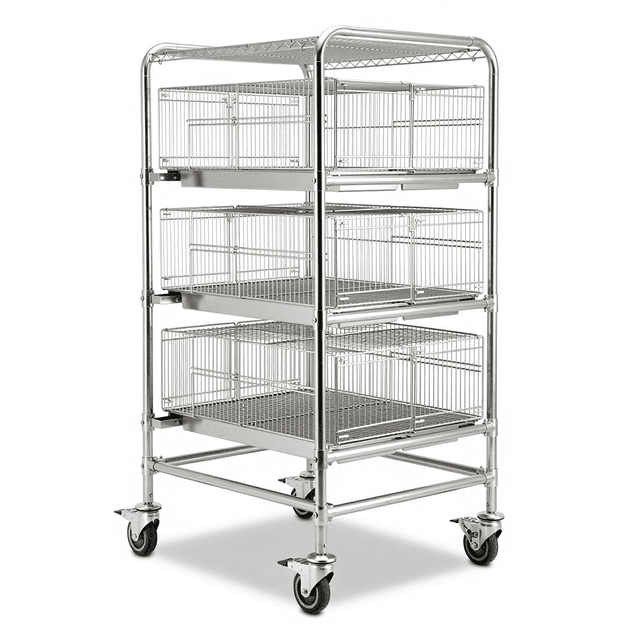
The Stainless Steel Wire Rat Cage and Rack System provides a durable housing solution for laboratory rat colonies, constructed from SUS304 grade stainless steel wire with polished surface treatment. The system integrates removable waste collection trays and dedicated water bottle holders to support standardized animal husbandry protocols in research facilities.
This cage and rack configuration enables efficient colony management while maintaining appropriate ventilation and visibility for daily health assessments. The stainless steel construction offers corrosion resistance and facilitates thorough sanitization between housing cycles, supporting consistent environmental conditions for behavioral, pharmacological, and breeding studies.
How It Works
The wire cage system utilizes SUS304 stainless steel construction to provide a durable, corrosion-resistant housing environment that maintains structural integrity under repeated sanitization cycles. The wire mesh design enables continuous air circulation while containing bedding material and preventing escape.
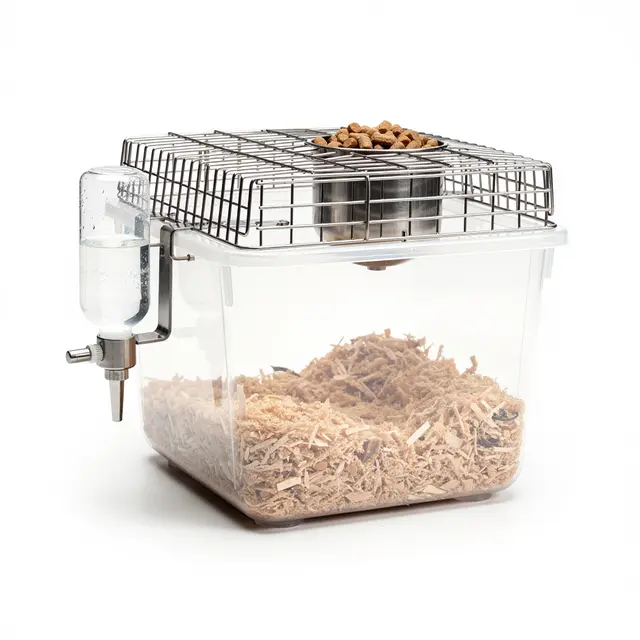
Removable waste collection trays slide beneath each cage level to contain soiled bedding and waste products, allowing for efficient cleaning without disturbing housed animals. Integrated water bottle holders secure standard laboratory water bottles at consistent heights, ensuring reliable access to drinking water while preventing spillage into cage areas.
The rack configuration maximizes vertical space utilization while providing adequate clearance between cage levels for animal observation and routine husbandry procedures. The polished stainless steel surface treatment reduces bacterial adhesion and facilitates thorough decontamination protocols.
Features & Benefits
Surface Treatment
- Polished
Waste Collection
- Removable trays included
Water Bottles
- Integrated holders
Brand
- ConductScience
Material
- Stainless Steel SUS304 wire
Research Domain
- Addiction Research
- Behavioral Pharmacology
- Developmental Biology
- Learning and Memory
- Neurodegeneration
- Toxicology
Species
- Rat
Weight
- 45.0 kg
Dimensions
- L: 65.0 mm
- W: 32.0 mm
- H: 82.0 mm
Comparison Guide
| Feature | This Product | Typical Alternative | Advantage |
|---|---|---|---|
| Construction Material | SUS304 stainless steel wire with polished finish | Lower-grade stainless steel or plastic construction in economy models | Superior corrosion resistance and longevity under repeated sterilization cycles |
| Waste Management | Removable waste collection trays included | Some systems require separate tray purchase or use fixed waste areas | Enables efficient cleaning without animal disturbance or system disassembly |
| Water Bottle Integration | Integrated water bottle holders | Basic systems may require separate bottle mounting hardware | Streamlines setup and ensures consistent water bottle positioning across all cages |
| Surface Treatment | Polished stainless steel finish | Unfinished or brushed surfaces in standard models | Reduces bacterial adhesion and facilitates thorough sanitization protocols |
This system combines SUS304 grade stainless steel construction with integrated waste management and water bottle holders in a single package. The polished surface treatment and removable tray design support efficient maintenance protocols essential for long-term research colony management.
Practical Tips
Rotate waste trays through cleaning cycles to ensure dry trays are always available for immediate cage servicing.
Why: Prevents interruption of animal care routines and maintains sanitary conditions.
Check water bottle holder security weekly and retighten mounting hardware as needed.
Why: Prevents bottle displacement that could result in water deprivation or cage flooding.
Verify cage level positioning using a bubble level during initial setup and after any rack adjustment.
Why: Ensures proper waste tray drainage and water bottle function across all cage positions.
Inspect wire joints and welds monthly for signs of fatigue or corrosion, especially in high-humidity environments.
Why: Early detection prevents structural failure that could compromise animal containment.
Maintain consistent bedding depth across all cages to standardize environmental conditions for behavioral studies.
Why: Reduces environmental variables that could confound experimental results.
If waste trays bind during removal, check for bedding buildup in tray guides and clean thoroughly.
Why: Smooth tray operation is essential for routine maintenance without stressing housed animals.
Setup Guide
What’s in the Box
- Stainless steel cage units
- Rack framework components
- Removable waste collection trays
- Water bottle holder brackets
- Assembly hardware
- Installation instructions
- Maintenance guidelines (typical)
Warranty
ConductScience provides a standard one-year manufacturer warranty covering material defects and workmanship. Technical support is available for assembly guidance and maintenance protocols throughout the warranty period.
Compliance
What wire spacing is used in the cage construction and is it appropriate for adult rats?
Consult the product datasheet for specific wire spacing measurements to ensure compatibility with your rat strain and age groups. Standard laboratory rat caging typically uses spacing that prevents escape while maintaining adequate ventilation.
Can the cages accommodate standard laboratory bedding materials?
Yes, the wire floor design with removable waste trays is compatible with common bedding materials including corncob, paper-based, and wood chip products.
How many cage units are included in a single rack system?
Consult the product specifications for the exact cage capacity, as configurations may vary based on rack height and cage dimensions.
Is the stainless steel compatible with autoclave sterilization?
Yes, SUS304 stainless steel is designed for repeated autoclave cycles at standard sterilization temperatures without degradation.
What water bottle sizes are compatible with the integrated holders?
The holders are designed for standard laboratory water bottles, but consult specifications for exact bottle diameter and volume compatibility.
How frequently should waste trays be changed during studies?
Change frequency depends on animal density, bedding type, and study requirements, but the removable design allows for assessment without animal disturbance.
Can individual cages be removed from the rack for cleaning?
The modular design typically allows for individual cage removal, but verify specific mounting mechanisms in the product documentation.
Have a question about this product?