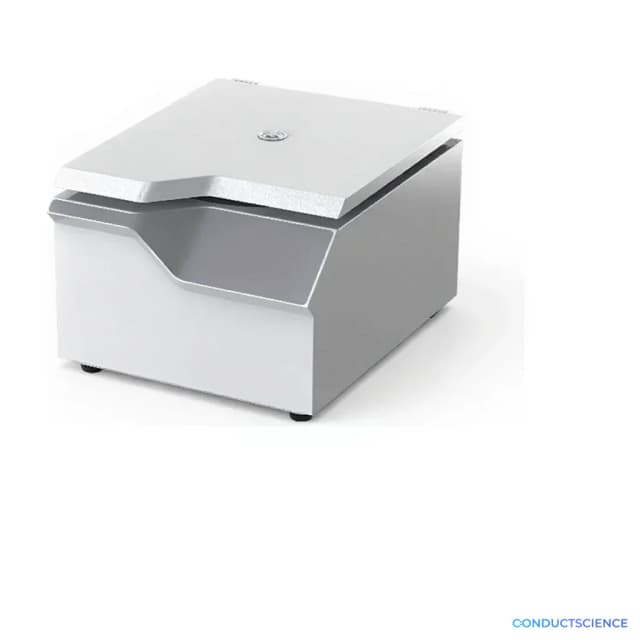
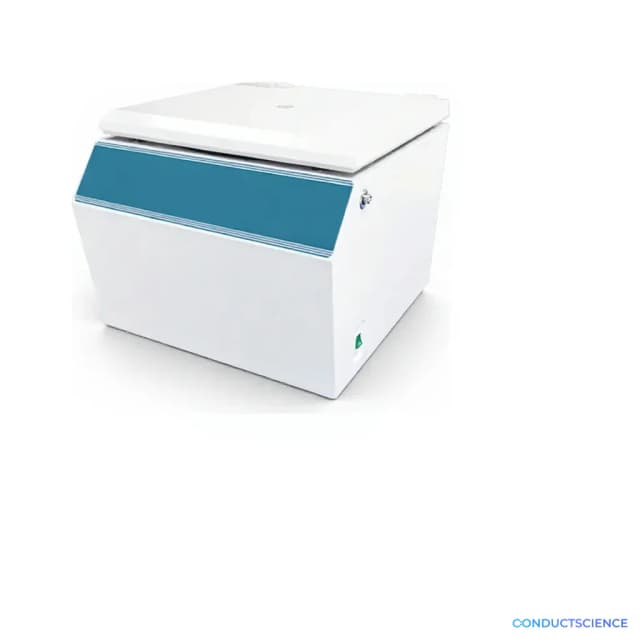
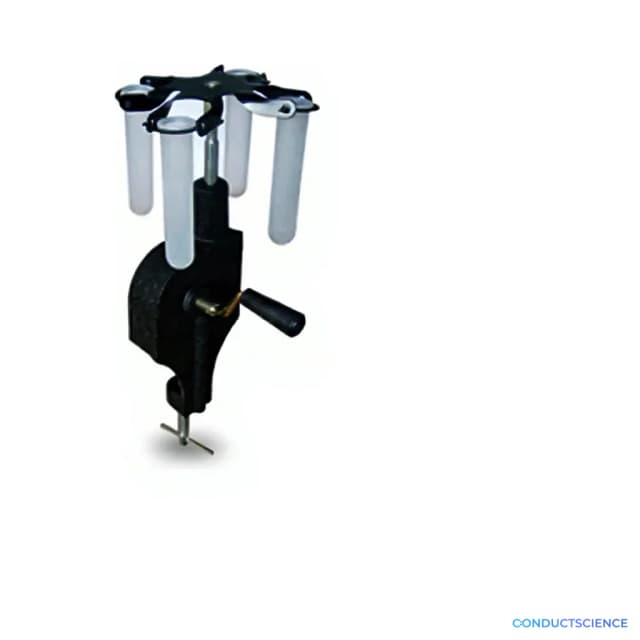
Table Top Dairy Centrifugal Centrifuge Machine For Dairy
Laboratory centrifuge designed for dairy product analysis and milk component separation in research and quality control applications.
| Automation Level | manual |

This table-top dairy centrifugal centrifuge machine provides laboratory-grade separation capabilities for dairy research and quality control applications. The compact design accommodates standard laboratory bench space while delivering the centrifugal force necessary for milk fat separation, protein analysis, and dairy product characterization studies.
The centrifuge utilizes high-speed rotation to separate dairy components based on density differences, enabling researchers to isolate cream layers, analyze butterfat content, and perform compositional studies of milk and dairy products. The table-top configuration provides convenient access for routine dairy testing protocols while maintaining the precision required for quantitative analytical work.
How It Works
The centrifuge operates on the principle of sedimentation, where samples are subjected to centrifugal force significantly greater than gravity. When dairy samples are spun at high rotational speeds, components separate based on their density differences - with heavier particles migrating outward toward the tube bottom and lighter components remaining closer to the rotation axis.
For dairy applications, this mechanism allows separation of milk fat globules (lower density) from the aqueous protein and lactose phase (higher density). The degree of separation depends on the relative centrifugal force (RCF), which is determined by both rotational speed and radius of rotation. Temperature control during centrifugation prevents thermal damage to heat-sensitive dairy proteins while maintaining consistent separation efficiency.
Features & Benefits
Automation Level
- manual
Research Domain
- Analytical Chemistry
- Food Science
- Microbiology
Weight
- 29.98 kg
Dimensions
- L: 42.0 mm
- W: 43.6 mm
- H: 38.0 mm
Comparison Guide
| Feature | This Product | Typical Alternative | Advantage |
|---|---|---|---|
| Installation Footprint | Table-top design for bench installation | Floor-standing models require dedicated floor space | Maximizes laboratory space efficiency while maintaining accessibility for routine sample processing |
| Dairy Application Design | Specifically designed for dairy centrifugal separation | General-purpose laboratory centrifuges may lack dairy-specific features | Optimized for dairy component separation protocols and milk analysis workflows |
| Operational Convenience | Compact table-top operation | Larger units may require more complex setup procedures | Simplifies routine dairy testing with easy bench-top access and operation |
This dairy-specific centrifuge combines table-top convenience with capabilities designed for milk component separation and dairy research applications. The compact design provides space-efficient installation while maintaining the performance necessary for dairy analysis protocols.
Practical Tips
Pre-cool samples and rotor when working with temperature-sensitive dairy proteins to prevent denaturation during centrifugation.
Why: Heat generated during high-speed centrifugation can damage protein structures and affect analysis results.
Clean rotor and chamber immediately after each use to prevent milk protein buildup and bacterial growth.
Why: Dairy residues can harbor bacteria and create contamination risks for subsequent samples.
Verify speed accuracy periodically using a tachometer or strobe light to ensure consistent separation conditions.
Why: Speed variations directly affect relative centrifugal force and separation efficiency in dairy analysis protocols.
Always ensure rotor and lid are properly secured before operation and never open while spinning.
Why: Unsecured components can become dangerous projectiles at high rotational speeds.
If unusual vibration occurs, check for proper tube balance and inspect rotor for damage or contamination.
Why: Imbalanced loads or rotor damage can cause dangerous vibrations and affect separation quality.
Use consistent centrifugation parameters (time, speed, temperature) across sample batches for reproducible separation results.
Why: Parameter variations introduce unwanted variables that can affect the reliability of dairy compositional analyses.
Setup Guide
What’s in the Box
- Centrifuge main unit (typical)
- Standard rotor (typical)
- Power cord (typical)
- User manual (typical)
- Safety instructions (typical)
Warranty
ConductScience provides standard manufacturer warranty coverage with technical support for equipment operation and maintenance guidance.
Compliance
What tube sizes and volumes can this centrifuge accommodate?
Consult product datasheet for specific rotor compatibility and maximum tube dimensions. Standard laboratory centrifuge tubes are typically supported.
What is the maximum relative centrifugal force (RCF) achievable?
Maximum RCF depends on rotor radius and speed capabilities - refer to technical specifications for exact values and calculate RCF using the standard formula.
Can this centrifuge maintain temperature control during operation?
Temperature control capabilities should be confirmed from product specifications, as this varies by model and is critical for heat-sensitive dairy proteins.
How do I balance samples properly for dairy applications?
Load tubes in opposing positions with equal sample volumes. For odd numbers of samples, use a balance tube filled with water to the same level.
What maintenance is required for consistent performance?
Regular cleaning of rotor and chamber, periodic inspection of rotor condition, and following manufacturer's maintenance schedule for optimal operation.
How does this compare to fixed-angle versus swing-out rotors?
Rotor type affects separation efficiency and pellet formation. Consult specifications to determine which rotor types are available for this model.
Have a question about this product?