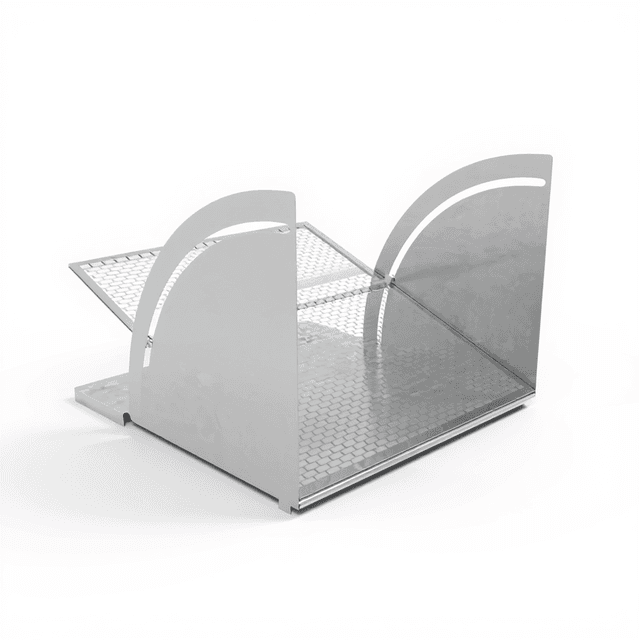
The Floor Maze
Ground-level behavioral testing maze for assessing spatial navigation, motor function, and exploratory behavior in rodents without elevation stress.
| Automation Level | manual |
| Species | Mouse, Rat |

Overview
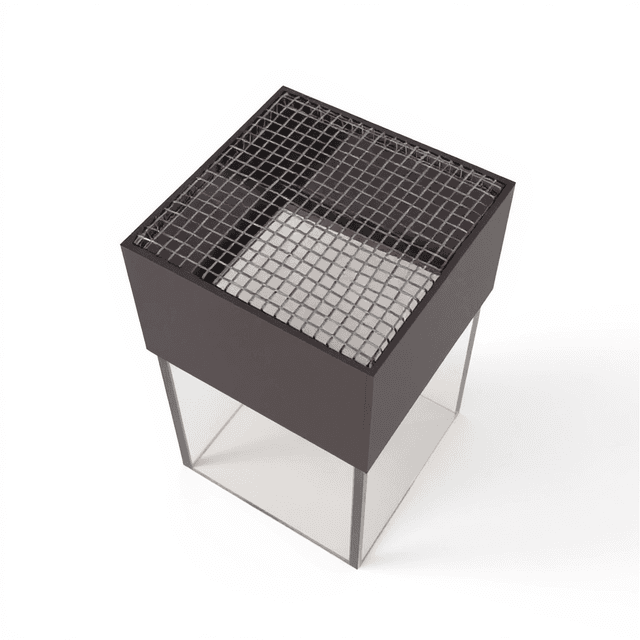
The Floor Maze is a ground-level behavioral testing apparatus that projects visual stimuli onto a semi-transparent floor illuminated from below by a digital projector, enabling study of rodent visual cognition in a biologically relevant testing environment. This design aligns with rodents' natural downward gaze orientation and eliminates the elevation stress associated with elevated maze designs.
The system supports rapid modification of experimental parameters and is compatible with electrophysiological recording and stimulation equipment, overhead video tracking, and automated reward delivery systems.
Key Features
| Feature | Description |
|---|---|
| Isolates Visual Modality | Projects visual cues onto illuminated floor for precise vision-dependent behavioral studies |
| Flexible Experimental Design | Adapts to visual discrimination, attention, and decision-making tasks |
| Neural Integration Ready | Fully compatible with electrophysiological recording systems |
| Customizable Reward Systems | Supports intracranial stimulation, pellet dispensers, and lickometer-based liquid rewards |
| Rapid Reconfiguration | Enables seamless transition between paradigms |
| Cross-Species Relevance | Bridges rodent and primate visual cognition research |
| Ground-Level Design | Eliminates height-induced anxiety confounds |
| Modular Construction | Configurable for linear tracks, T-mazes, plus-mazes, and custom layouts |
Paradigms Supported
- Visual discrimination testing
- Visuospatial attention assessment
- Biconditional learning protocols
- Visual decision-making studies
- Spatial learning experiments
- Novel object exploration
- Behavioral phenotyping
Applications
- Neuroscience: Evaluating spatial learning and memory deficits in transgenic mouse models
- Behavioral Pharmacology: Pre-clinical studies measuring drug effects on activity and exploration
- Learning & Memory: Hippocampus-dependent spatial memory formation
- Anxiety & Depression: Anxiety-like behaviors without height-induced stress confounds
- Motor Function: Locomotor coordination in motor system disorder studies
- Aging Research: Age-related changes in spatial navigation abilities
Specifications
| Specification | Detail |
|---|---|
| Weight | 6.06 lbs |
| Dimensions | 65.0 × 36.0 × 27.0 cm |
| Species | Mouse, Rat |
| Automation Level | Manual |
| Testing Environment | Ground-level (vs. elevated systems) |
Setup & Operation
- Unpack and inspect components
- Prepare testing environment (quiet room, consistent lighting)
- Assemble maze structure with secure connections
- Install recording equipment (overhead camera/tracking)
- Calibrate tracking system with maze dimensions
- Conduct habituation session (5–10 minutes)
- Establish cleaning protocol between animals (70% ethanol)
Practical Tips
- Allow 5–10 minutes of habituation before formal testing
- Inspect wall connections before each session
- Maintain consistent lighting across sessions
- Verify maze dimensions periodically for tracking system accuracy
- Reduce ambient noise and maintain 20–24°C room temperature
Compatible Tracking Systems
- EthoVision
- ANY-maze
- Custom analysis software packages
References
- Jacobson, T. K., et al. (2014). Automated visual cognitive tasks using the Floor Projection Maze. Journal of Visualized Experiments.
- Yang, S., & Burwell, R. D. (2020). Neuronal activity in the rat pulvinar during visuospatial attention tasks. Vision.
- Yang, S., et al. (2022). Functional differentiation of dorsal and ventral posterior parietal cortex. Cerebral Cortex.
- Vorhees, C. V., et al. (2006). Morris water maze: procedures for assessing spatial and related forms of learning and memory. Nature Protocols.
How It Works
The Floor Maze operates on the principle that rodents exhibit natural exploratory behaviors when placed in novel environments. The maze structure provides defined pathways and choice points that allow researchers to measure specific behavioral parameters including path selection, exploration time, and spatial memory formation. Unlike elevated mazes, the ground-level design eliminates height-induced anxiety as a confounding variable.
Behavioral assessment relies on the animal's innate tendency to explore new territories while forming spatial maps of the environment. The maze configuration can be modified to test various cognitive functions, from simple motor activity to complex spatial learning tasks. Video tracking systems typically monitor animal movement patterns, providing quantitative data on velocity, distance traveled, time spent in specific zones, and choice accuracy.
Features & Benefits
Behavioral Construct
- Spatial Learning
- Spatial Memory
- Exploratory Behavior
- Locomotor Activity
- Anxiety-like Behavior
- Motor Coordination
Automation Level
- manual
Research Domain
- Aging Research
- Anxiety and Depression
- Behavioral Pharmacology
- Learning and Memory
- Motor Function
- Neuroscience
Species
- Mouse
- Rat
Weight
- 6.06 kg
Dimensions
- L: 65.0 mm
- W: 36.0 mm
- H: 27.0 mm
Comparison Guide
| Feature | This Product | Typical Alternative | Advantage |
|---|---|---|---|
| Testing Environment | Ground-level maze design | Elevated maze systems at 50-100cm height | Eliminates height-induced anxiety that can confound behavioral measurements and allows focus on spatial learning variables |
| Maze Configuration | Modular wall system | Fixed maze configurations | Enables multiple experimental paradigms with single equipment investment and protocol flexibility |
| Cleaning Requirements | Easy-clean surface materials | Varies by manufacturer | Reduces time between testing sessions and maintains experimental validity through standardized decontamination |
| Animal Stress Factors | No elevation stress component | Height-induced anxiety in elevated systems | Provides cleaner assessment of cognitive functions without confounding fear responses |
The Floor Maze provides a versatile behavioral testing platform that eliminates elevation-induced confounds while maintaining the spatial learning assessment capabilities required for neuroscience research. The modular design offers experimental flexibility with standardized testing conditions.
Practical Tips
Allow 5-10 minutes of habituation before formal testing to reduce novel environment stress responses.
Why: Habituation separates exploration of maze structure from task-specific learning behaviors.
Inspect wall connections before each testing session to ensure maze integrity and prevent escape routes.
Why: Loose connections can create unintended pathways that compromise experimental validity.
Maintain consistent lighting conditions across all testing sessions to prevent visual cue variations.
Why: Changes in lighting can alter animal navigation strategies and introduce uncontrolled variables.
Verify maze dimensions periodically with measuring tools to ensure tracking system accuracy.
Why: Dimensional accuracy is critical for spatial distance calculations and behavioral zone definitions.
If animals show reluctance to explore, reduce ambient noise levels and ensure room temperature is within 20-24°C range.
Why: Environmental stressors can suppress natural exploratory behaviors and affect experimental outcomes.
Ensure maze walls are sufficiently high to prevent jumping while allowing overhead observation access.
Why: Adequate containment maintains animal safety while preserving experimental control conditions.
Setup Guide
What’s in the Box
- Maze wall segments (typical)
- Floor panel sections (typical)
- Connecting hardware and fasteners (typical)
- Assembly instructions (typical)
- User manual with behavioral protocols (typical)
Warranty
ConductScience provides a standard one-year manufacturer warranty covering defects in materials and workmanship, with technical support for setup and protocol optimization.
Compliance
References
Background reading relevant to this product:
What maze configurations are possible with this system?
The modular design allows for multiple configurations including linear tracks, T-mazes, plus-mazes, and custom layouts depending on experimental requirements. Consult product specifications for available wall segments and connection options.
How does this compare to elevated maze systems?
Floor mazes eliminate height-induced anxiety responses that can confound behavioral measurements in elevated systems, providing cleaner assessment of spatial learning and exploratory behaviors without fear-related variables.
What cleaning protocols are recommended between animals?
Use 70% ethanol or equivalent disinfectant to clean all surfaces between test sessions, allowing complete drying to eliminate olfactory cues that could influence subsequent animal behavior.
Can this accommodate both mice and rats?
Yes, the maze dimensions are suitable for both species, though optimal wall height and pathway width may vary. Consult product specifications for recommended configurations for each species.
What video tracking systems are compatible?
The open-top design accommodates most overhead video tracking systems including Ethovision, ANY-maze, and custom analysis software packages designed for rodent behavioral studies.
How long do typical testing sessions last?
Session duration varies by protocol, typically ranging from 5-15 minutes for exploration tasks to longer periods for complex learning paradigms. Protocol optimization depends on specific experimental objectives.
Have a question about this product?
Accessories
Enhance your setup with compatible accessories

Frequently Bought Together