Trinocular Inverted Microscope — Standard
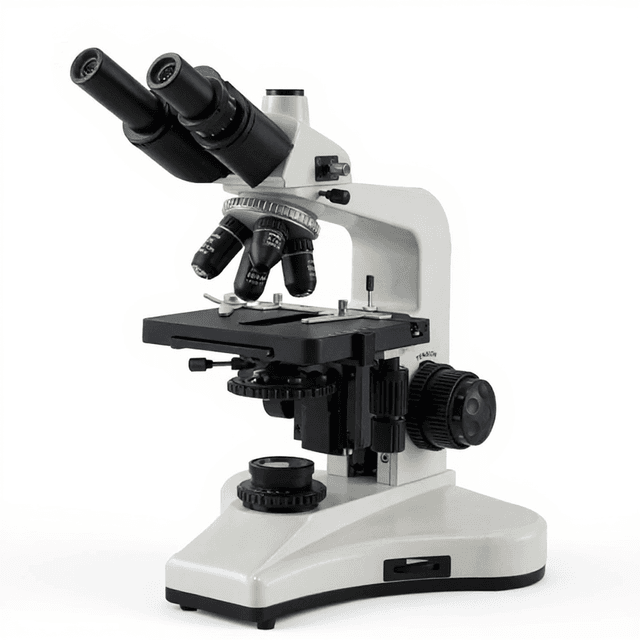
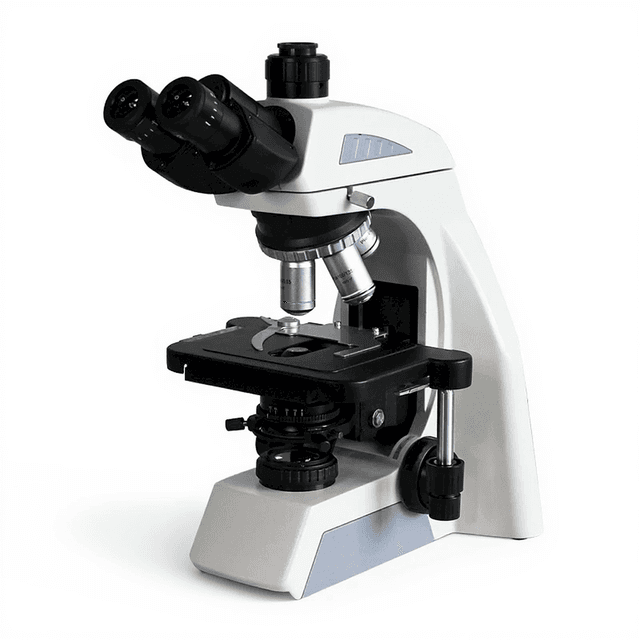
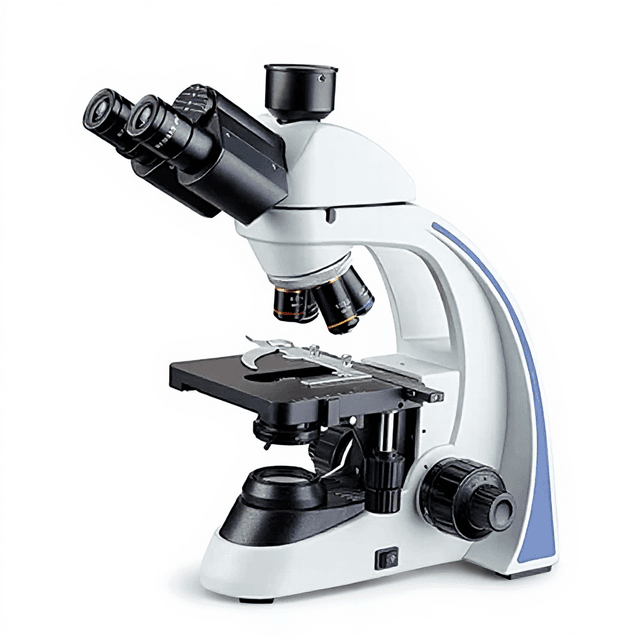
Trinocular inverted microscope with dual eyepieces and camera port for cell culture observation and digital documentation in research applications.
| Automation Level | manual |
| wf10x_diameter | Ø22mm |
| eyepiece | Eyepiece Diam – Ø30mm, Parfocal Distance – Ø10mm, WF10X – Ø22mm, WF16X (Optional) – Ø11mm |
| nosepiece | Quadruple nosepiece |
| brightness_control | LED brightness control |
| total-magnification | 100X~400X (Standard) |
The Trinocular Inverted Microscope (BIO-0528) is a precision optical instrument designed for advanced cellular and tissue observation in research environments. This inverted configuration positions objectives beneath the specimen stage, enabling examination of living cells in culture vessels, thick specimens, and samples requiring micromanipulation. The trinocular design incorporates dual eyepieces for direct observation and a third optical port for camera attachment, facilitating simultaneous viewing and digital documentation.
The inverted architecture proves essential for cell culture studies, allowing researchers to examine specimens in their native culture environment without disturbing the growth medium. The instrument's compact footprint (63.0 × 65.5 × 30.5 cm) accommodates standard laboratory benchtops while providing the optical performance required for detailed cellular morphology assessment, live cell imaging, and routine histological examination.
How It Works
Inverted microscopy operates on the principle of transmitted light illumination from above the specimen, with objectives positioned below the specimen stage. Light passes through the specimen and is collected by the objective lens system, which forms a magnified real image. This inverted configuration eliminates the working distance limitations encountered with upright microscopes when examining specimens in deep culture vessels.
The trinocular head incorporates a beam splitter that divides the light path between the binocular eyepieces and the camera port. This optical arrangement enables simultaneous visual observation and digital capture without switching between viewing modes. The infinity-corrected optical system maintains image quality across the full magnification range while accommodating various objective combinations.
Phase contrast and brightfield illumination modes provide versatility for different specimen types. The mechanical stage allows precise XY positioning of specimens, while the focusing mechanism provides fine control over the Z-axis positioning for optimal image sharpness throughout the specimen thickness.
Features & Benefits
Automation Level
- manual
wf10x_diameter
- Ø22mm
eyepiece
- Eyepiece Diam – Ø30mm
- Parfocal Distance – Ø10mm
- WF10X – Ø22mm
- WF16X (Optional) – Ø11mm
nosepiece
- Quadruple nosepiece
brightness_control
- LED brightness control
total-magnification
- 100X~400X (Standard)
eyepiece_inclination
- 45°
mechanical_stage_dimensions
- 112 × 79
eyepiece_parfocal_distance
- Ø10mm
effective_distance
- 11mm
objective
- BF 10X/0.25
- BF 20X/0.40
- BF 40X/0.60
total_magnification
- 100X~400X
focusing_precision
- 2 um
objectives_bf
- ['10X/0.25', '20X/0.40', '40X/0.60']
filter
- Blue Filter
- Frosted Filter
eyepiece_diameter
- Ø30mm
petri_dish_compatibility
- Three sizes
focusing_type
- Coaxial coarse/fine focusing
phase_contrast_objective
- 10X/0.25
filters
- ['Blue Filter', 'Frosted Filter']
stage_type
- Double layer mechanical stage
wf16x_diameter
- Ø11mm
Research Domain
- Cancer Research
- Cell Biology
- Developmental Biology
- Histopathology
- Microbiology
- Pharmaceutical QC
Display Type
- LED
Power/Voltage
- 9W
Weight
- 14.0 lbs
Dimensions
- L: 63.0 in
- W: 65.5 in
- H: 30.5 in
Comparison Guide
| Feature | This Product | Typical Alternative | Advantage |
|---|---|---|---|
| Optical Configuration | Trinocular inverted design with dual eyepieces and camera port | Entry-level models often feature binocular-only designs | Enables simultaneous visual observation and digital documentation without switching between modes |
| Mechanical Stage | Integrated mechanical XY positioning stage | Basic models may use fixed or simple manual stages | Provides precise specimen positioning control for systematic examination and coordinate-based navigation |
| Footprint | Compact 63.0 × 65.5 cm bench footprint | Larger research microscopes often require dedicated bench space | Accommodates standard laboratory workbenches while maintaining full functionality |
| Illumination System | Multiple contrast mode capability | Basic models may offer brightfield illumination only | Supports diverse specimen types requiring different contrast enhancement techniques |
This trinocular inverted microscope combines the accessibility advantages of inverted optics with simultaneous documentation capability and precise mechanical positioning. The compact design accommodates standard laboratory spaces while providing the optical versatility required for diverse cell culture and histological applications.
Practical Tips
Verify optical alignment using a calibration slide before critical observations.
Why: Ensures consistent image quality and accurate measurements across all magnifications.
Clean objective lenses with lens tissue and appropriate cleaning solution after each use.
Why: Prevents contamination buildup that degrades image contrast and resolution.
Allow the illumination system to warm up for 15 minutes before critical observations.
Why: Stabilizes light intensity and color temperature for consistent imaging conditions.
Check objective seating and nosepiece alignment if image quality suddenly degrades.
Why: Loose objectives are a common cause of focus drift and reduced image sharpness.
Use consistent illumination settings and exposure times for quantitative image analysis.
Why: Maintains reproducible measurement conditions across experimental sessions.
Ensure culture vessels are securely positioned on the stage before objective approach.
Why: Prevents objective collision with specimens and potential damage to both optics and samples.
Cover the microscope when not in use to protect optical surfaces from dust accumulation.
Why: Reduces cleaning frequency and maintains optimal image quality between uses.
Setup Guide
What’s in the Box
- Trinocular inverted microscope main unit
- Binocular eyepiece set (typical)
- Objective lens set (typical)
- Mechanical specimen stage (typical)
- Illumination system with power supply (typical)
- Camera adapter for trinocular port (typical)
- User manual and documentation (typical)
- Dust cover (typical)
Warranty
ConductScience provides a standard one-year manufacturer warranty covering defects in materials and workmanship, with technical support for setup and operational guidance.
Compliance
References
Background reading relevant to this product:
What culture vessel sizes are compatible with the inverted configuration?
The inverted design accommodates standard culture plates, petri dishes, and flasks. Specific working distance and stage dimensions should be consulted in the product datasheet for compatibility with specialized chambers.
Can the trinocular port accommodate different camera systems?
The trinocular port accepts cameras via standard C-mount or other adapters. Camera-specific adapters may be required depending on the digital imaging system used.
What magnification range is available with this microscope?
Total magnification depends on the objective and eyepiece combinations used. Consult product datasheet for specific magnification ranges and optical specifications.
How precise is the mechanical stage positioning?
The mechanical stage provides controlled XY movement for systematic specimen examination. Specific positioning accuracy and travel range specifications should be verified in the technical documentation.
What maintenance is required for optimal optical performance?
Regular cleaning of optical surfaces with appropriate lens cleaning materials and periodic alignment verification maintain image quality. Specific maintenance intervals are detailed in the user manual.
Is phase contrast capability included with the standard configuration?
Phase contrast availability depends on the specific optical configuration. Consult product specifications to verify which contrast modes are included or available as options.
Have a question about this product?
Accessories
Enhance your setup with compatible accessories
Replacement Parts & Consumables
Frequently Bought Together
Related Products