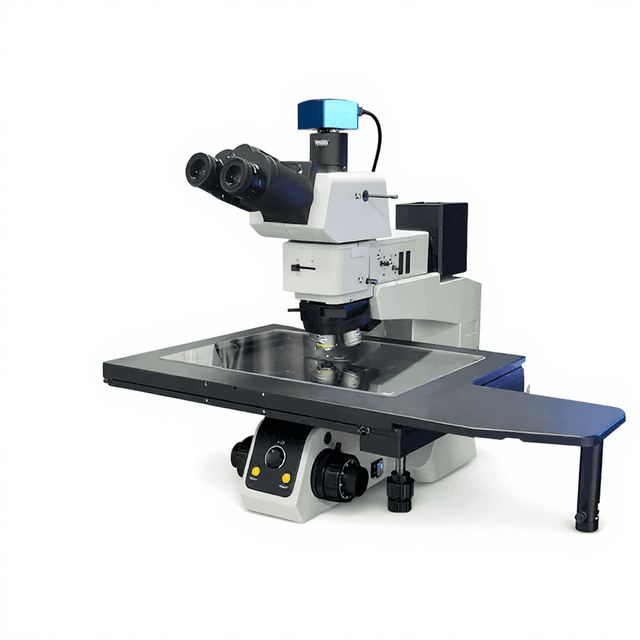
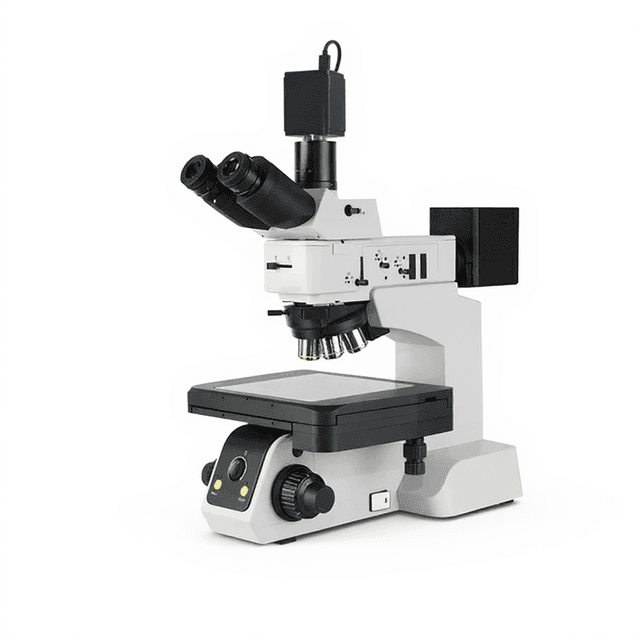
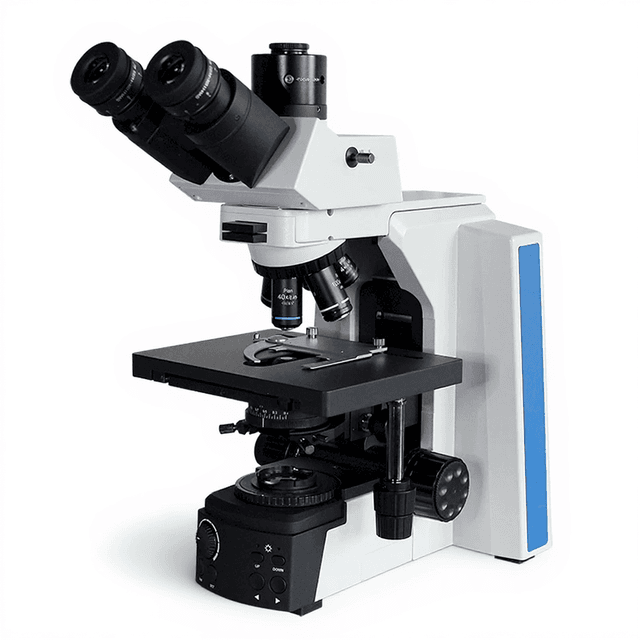
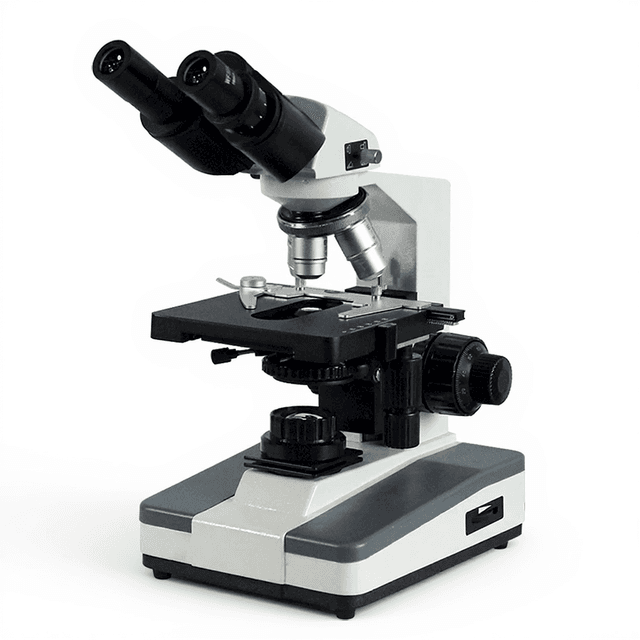
High-class 40X~1000X Ergonomic Design Biological Microscope for Laboratory and University Research
Trinocular biological microscope with infinity plan achromatic objectives, 40X-1000X magnification range, mechanical stage, and LED illumination for laboratory research applications.

Louise Corscadden, PhD
Director of Science · ConductScience
Ask Louise about High-class 40X~1000X Ergonomic Design Biological Microscope for Laboratory and University Research fit, setup, configuration, or quote prep.
Already working with us? Sign in to connect this with My Scientist.
Key Specifications
Full details →- Model fit
- Configured during quote
- SKU family
- MCX-0009
- Shipping box
- 4.9 x 6.6 x 6.6 cm
- Ordering
- Online checkout and quote request available
- Category
- Microscopy
- Build notes
- Confirm accessories, station layout, and support needs before purchase
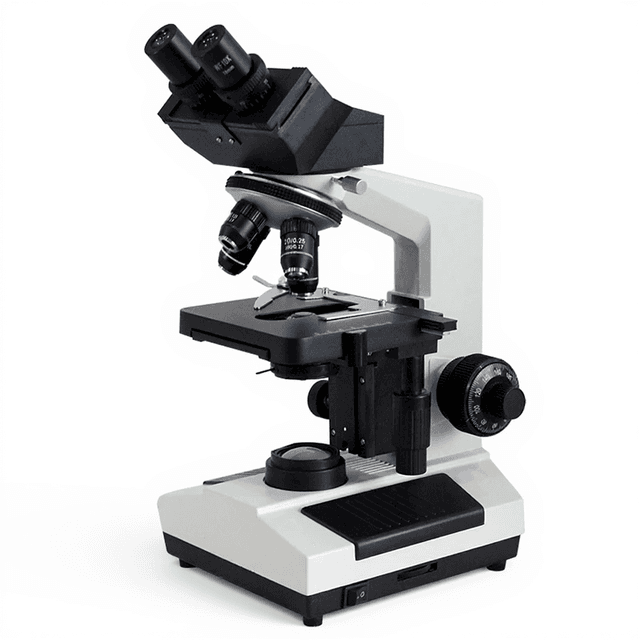
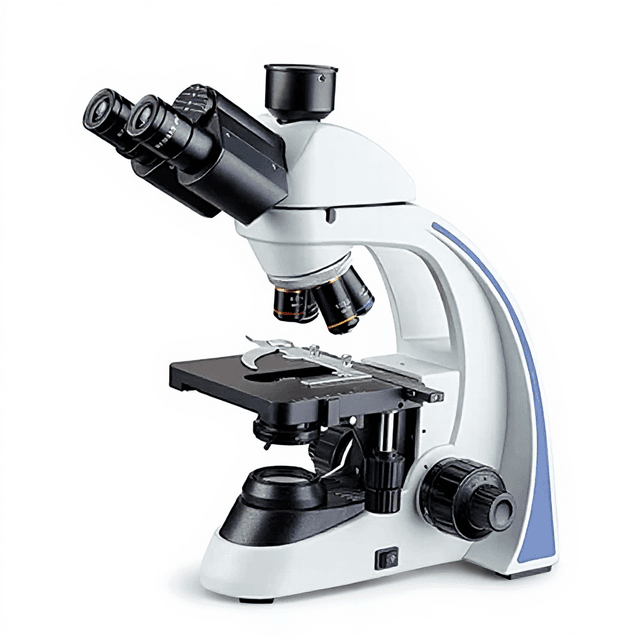
This trinocular biological microscope provides comprehensive brightfield observation capabilities for laboratory and university research applications. The instrument features an infinity-corrected optical system with plan achromatic objectives and a quintuple nosepiece, supporting magnifications from 40X to 1000X. The ergonomic trinocular head inclines 30° and rotates 360° with adjustable interpupillary distance (47-78mm) for comfortable extended observation sessions.
The microscope incorporates a double-layer mechanical stage (230mm x 150mm) with 78mm x 54mm movement range and coaxial coarse/fine focusing system providing 37.7mm focusing range with 2μm fine focus precision. An Abbe condenser (N.A. 1.25) with rack and pinion adjustment enables optimal specimen illumination through the built-in 1W LED system with brightness control. The system accommodates 45mm diameter color filters and includes WF10X eyepieces for standard observation protocols.
How It Works
Biological microscopy operates through the principle of light transmission and magnification using a compound lens system. The built-in LED illumination source directs light through the Abbe condenser (N.A. 1.25), which focuses and controls the illumination cone angle onto the specimen. Light transmitted through or reflected from the specimen travels through the infinity-corrected plan achromatic objective lenses, which form an intermediate image at infinity before the tube lens creates the final magnified image.
The infinity optical system eliminates spherical aberration and provides consistent image quality across the field of view. The quintuple nosepiece allows rapid switching between different magnification objectives while maintaining parfocal alignment. The coaxial focusing mechanism provides both coarse and fine adjustment capabilities, with the fine focus offering 2μm precision for critical focusing of high-magnification observations.
The trinocular head design enables simultaneous visual observation through the binocular eyepieces and documentation through the third port, facilitating both real-time examination and image capture for research documentation and analysis purposes.
Features & Benefits
Automation Level
- manual
Product Type
- Microscope
Microscope Type
- Biological / Compound
Application
- Clinical Research
- Life Science
Skill Level
- Intermediate
Brand
- ConductScience
Research Domain
- Cell Biology
- Clinical Diagnostics
- Developmental Biology
- Histopathology
- Materials Science
- Microbiology
Shipping weight
- 1.9 lb
Shipping box
- L: 4.9 cm
- W: 6.6 cm
- H: 6.6 cm
| Feature | This Product | Typical Alternative | Advantage |
|---|---|---|---|
| Optical System | Infinity plan achromatic objectives with trinocular head | Entry-level models often use finite-conjugate achromat objectives with binocular viewing only | Infinity correction eliminates aberrations when adding optical accessories and enables simultaneous viewing and documentation. |
| Focusing Precision | Coaxial coarse/fine focusing with 2μm minimum division | Basic models typically offer 5-10μm fine focus precision | Enhanced focusing precision enables critical examination of fine cellular structures and accurate depth measurements. |
| Stage Design | Double-layer mechanical stage with 78mm x 54mm movement range | Student models often feature single-layer stages with limited travel range | Precise specimen positioning and systematic field scanning essential for research documentation and quantitative studies. |
| Condenser System | Abbe condenser N.A. 1.25 with rack and pinion adjustment | Basic systems may use fixed condensers with lower numerical aperture | Adjustable high-N.A. condenser optimizes resolution and contrast for different specimen types and imaging techniques. |
| Illumination | Built-in 1W LED with brightness adjustment | Lower-cost models may use halogen bulbs with shorter lifespan | LED illumination provides consistent color temperature and eliminates heat effects on living specimens during extended observations. |
| Nosepiece Configuration | Quintuple nosepiece with ball bearing positioning | Many systems offer quadruple nosepieces with simpler detent mechanisms | Additional objective position and precision alignment system accommodate specialized objectives and improve workflow efficiency. |
This microscope combines infinity-corrected optics with precision mechanical components and ergonomic design features that enhance research productivity. The trinocular configuration with high-precision focusing supports both routine observations and documentation requirements essential for laboratory research applications.
Practical Tips
Verify parfocal alignment between objectives by focusing on a specimen edge and rotating through different magnifications.
Why: Proper parfocal adjustment minimizes refocusing time and prevents specimen damage during magnification changes.
Clean objective lenses with lens paper and appropriate cleaning solution, working from center outward in spiral motions.
Why: Proper lens cleaning maintains image quality and prevents accumulation of immersion oil or debris that degrades resolution.
Always start observations at lowest magnification to locate specimen area before switching to higher power objectives.
Why: This workflow prevents potential objective damage and reduces time needed to locate regions of interest.
Adjust condenser aperture diaphragm to approximately 70-80% of the objective's numerical aperture for optimal image quality.
Why: Proper aperture setting balances resolution and contrast while avoiding diffraction artifacts from over-closed diaphragms.
Store microscope with lowest power objective in position and stage lowered to prevent accidental contact.
Why: This configuration minimizes risk of objective damage and extends mechanical component lifespan during storage periods.
Use the mechanical stage controls rather than manually moving slides to prevent scratching of stage surface.
Why: Mechanical positioning maintains precise control and prevents damage to both specimens and stage components.
If image appears dim or uneven, check condenser height and aperture settings before adjusting LED brightness.
Why: Illumination problems often result from improper condenser alignment rather than insufficient light intensity.
Allow LED illumination to stabilize for several minutes before critical observations or image capture.
Why: LED output stabilization ensures consistent color temperature and brightness for reproducible imaging results.
Setup Guide
What’s in the Box
- Trinocular microscope body with illumination system
- Set of infinity plan achromatic objectives (typical)
- Pair of WF10X eyepieces
- Abbe condenser with aperture control
- Double-layer mechanical stage
- Green color filter
- Power adapter and cord (typical)
- Dust cover (typical)
- User manual and optical alignment guide (typical)
Warranty
ConductScience provides a standard one-year manufacturer warranty covering optical and mechanical components, with technical support for setup, calibration, and maintenance procedures.
Compliance
References
Background reading relevant to this product:
What is the numerical aperture range of the objective lenses?
The product specifications indicate infinity plan achromatic objectives are included. Consult the product datasheet for specific N.A. values for each magnification objective in the set.
Can this microscope accommodate oil immersion objectives?
The Abbe condenser (N.A. 1.25) and infinity optical system support high-magnification applications. Verify oil immersion compatibility and specific objective specifications in the product datasheet.
What camera mounting options are available for the trinocular port?
The trinocular head includes a third port for documentation purposes. Camera mounting specifications and adapter requirements should be confirmed with the manufacturer for your specific imaging system.
How do I achieve Köhler illumination with this system?
Adjust the Abbe condenser height and aperture diaphragm while observing the back focal plane of the objective. Fine-tune condenser focus and aperture opening for optimal contrast and resolution.
What is the working distance range for the different objectives?
Working distances vary by objective magnification and design. Consult the objective specifications for exact working distance values, particularly important for coverslip thickness requirements.
Can I use this microscope for fluorescence applications?
This system is designed for brightfield microscopy with LED illumination. Fluorescence applications would require additional excitation sources, filter sets, and dichroic mirrors not included with this configuration.
Have a question about this product?
Have a question? Just ask.
Send it over and we'll email you a personalized answer — no call, no scheduling.
Prefer to talk it through?
Accessories
Enhance your setup with compatible accessories
Frequently Bought Together
Upgrade Options
Related Products