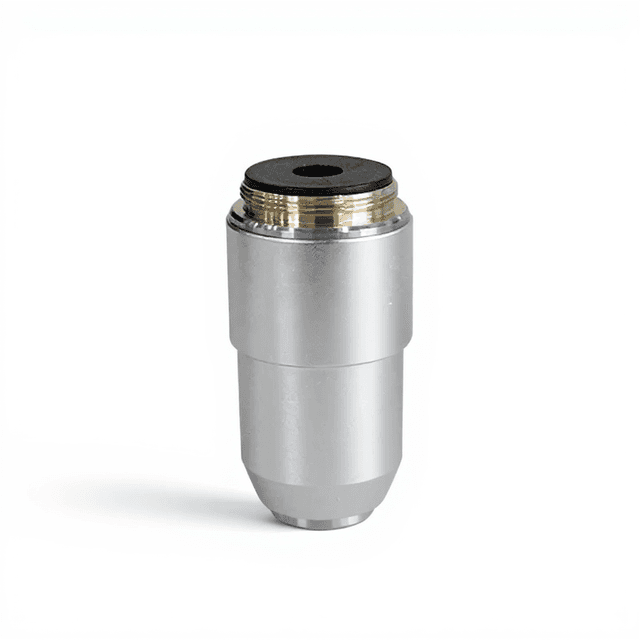
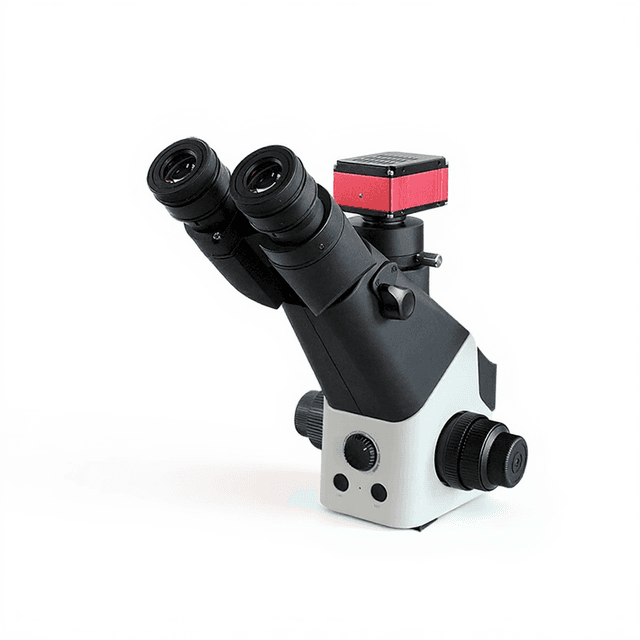
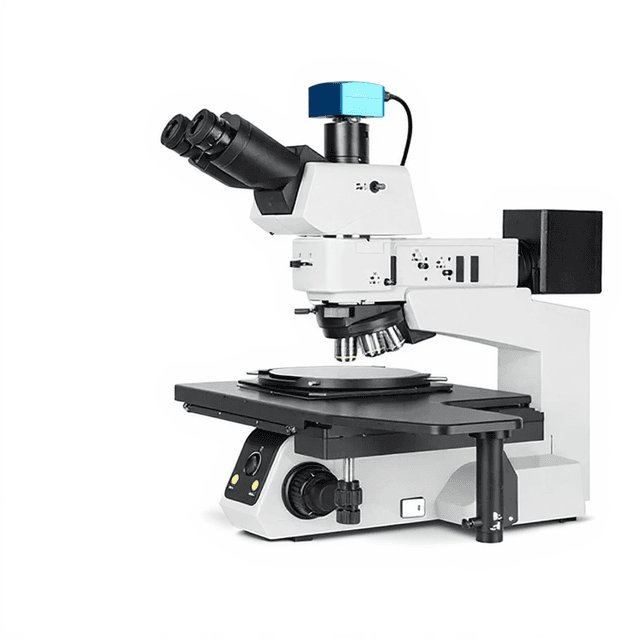
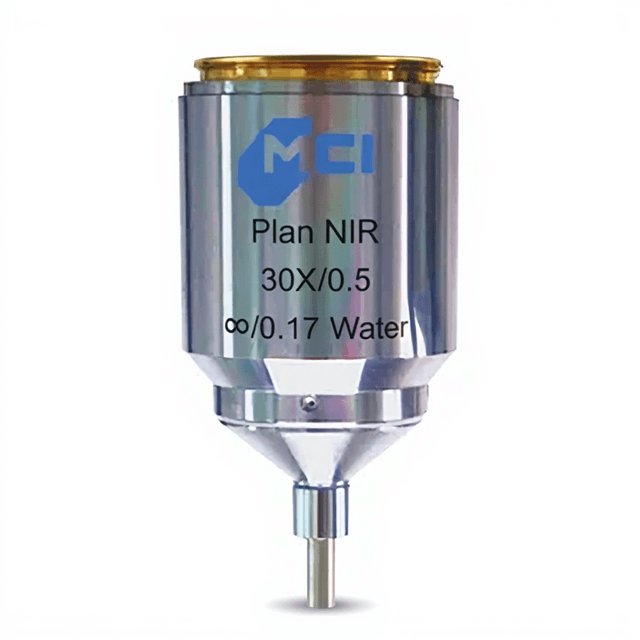
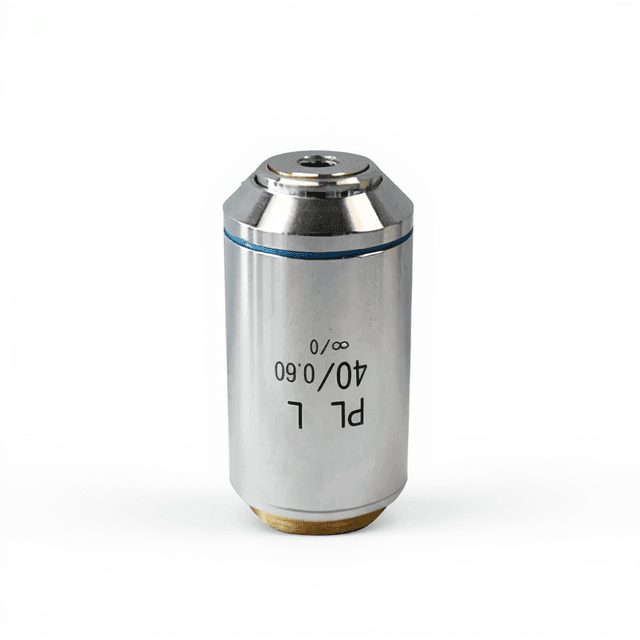
Infinity-Corrected Plan Achromatic Metallurgical Microscope Objective Lens for BF/DF Microscope
Infinity-corrected plan achromatic objective lens with 0.70 N.A.
and 2.5mm working distance for brightfield/darkfield metallurgical microscopy applications.

Louise Corscadden, PhD
Director of Science · ConductScience
Ask Louise about Infinity-Corrected Plan Achromatic Metallurgical Microscope Objective Lens for BF/DF Microscope fit, setup, configuration, or quote prep.
Already working with us? Sign in to connect this with My Scientist.
Key Specifications
Full details →- Model fit
- Configured during quote
- SKU family
- MCX-0027
- Shipping box
- 4.9 x 6.6 x 6.6 cm
- Ordering
- Online checkout and quote request available
- Category
- Microscopy
- Build notes
- Confirm accessories, station layout, and support needs before purchase
The Infinity-Corrected Plan Achromatic Metallurgical Microscope Objective Lens is a precision optical component designed for brightfield and darkfield microscopy applications in materials science and metallurgy. This objective features a numerical aperture of 0.70 and working distance of 2.5mm, providing high-resolution imaging with 0.4793 μm theoretical resolution for detailed microstructural analysis.
The infinity-corrected design eliminates spherical aberration across the field of view while the achromatic correction reduces chromatic aberration for sharp, color-accurate imaging. The 45mm parfocal distance ensures consistent focus when switching between multiple objectives, streamlining workflows in routine metallographic examination and quality control applications.
How It Works
This infinity-corrected objective utilizes a multi-element lens system designed to produce parallel light rays that converge only when focused by the microscope's tube lens. The plan achromatic correction combines spherical aberration correction across the field with chromatic aberration correction for two wavelengths, typically blue and red regions of the visible spectrum.
The 0.70 numerical aperture provides high light-gathering capability and resolution, determined by the half-angle of the cone of light that can enter the objective. The metallurgical design is optimized for reflected light illumination, with coatings and internal architecture suited for brightfield and darkfield observation of opaque specimens.
The infinity optical system allows for insertion of optical accessories (filters, polarizers, DIC prisms) in the parallel light path without affecting image quality or introducing aberrations, making it suitable for advanced contrast techniques in materials characterization.
Features & Benefits
Product Type
- Microscope
Microscope Type
- Metallurgical
Application
- Materials Science
- Quality Control
Skill Level
- Intermediate
Brand
- ConductScience
Research Domain
- Analytical Chemistry
- Environmental Monitoring
- Industrial Hygiene
- Materials Science
- Pharmaceutical QC
Shipping weight
- 1.9 lb
Shipping box
- L: 4.9 cm
- W: 6.6 cm
- H: 6.6 cm
| Feature | This Product | Typical Alternative | Advantage |
|---|---|---|---|
| Numerical Aperture | 0.70 N.A. | Entry-level metallurgical objectives often offer 0.50-0.65 N.A. | Higher numerical aperture provides better resolution and light-gathering capability for detailed microstructural analysis. |
| Working Distance | 2.5mm | High N.A. objectives commonly have shorter working distances | Balanced working distance allows specimen manipulation while maintaining high resolution performance. |
| Optical Correction | Plan achromatic | Basic objectives may offer only spherical or chromatic correction | Combined plan and achromatic correction provides flat field imaging with reduced color artifacts. |
| Parfocal Distance | 45mm | Varies by model and manufacturer | Standard parfocal distance ensures compatibility with most modern microscope systems and objective sets. |
| Resolution | 0.4793 μm | Lower N.A. objectives typically offer 0.6-1.0 μm resolution | Higher resolution enables visualization of fine microstructural features and smaller defects in materials analysis. |
This objective combines high numerical aperture performance with practical working distance and comprehensive optical correction. The infinity-corrected design with plan achromatic correction provides versatile, high-quality imaging for demanding metallurgical applications.
Practical Tips
Verify parfocal distance using a calibration specimen when installing in a new microscope system.
Why: Proper parfocal adjustment ensures consistent focus across all objectives in the nosepiece.
Clean lens elements monthly using appropriate solvents and lint-free tissue, working from center outward.
Why: Contaminated optics reduce contrast and resolution, affecting measurement accuracy.
Use Köhler illumination setup to maximize the resolution potential of the 0.70 N.A. specification.
Why: Proper illumination geometry is essential for achieving theoretical resolution limits.
Always use protective caps when storing or transporting the objective to prevent lens damage.
Why: Exposed lens surfaces are vulnerable to scratches and contamination that permanently degrade optical performance.
Allow thermal equilibration for 10-15 minutes after installation before critical measurements.
Why: Temperature changes can affect focus stability and measurement repeatability.
If images appear soft, check for proper tube lens installation and infinity space distance.
Why: Infinity-corrected objectives require proper tube lens configuration for optimal image formation.
Setup Guide
What’s in the Box
- Infinity-corrected plan achromatic objective lens
- Protective lens caps (front and rear) (typical)
- Product documentation and specifications (typical)
Warranty
ConductScience provides a one-year manufacturer warranty covering optical defects and mechanical components, with technical support for installation and performance optimization.
Compliance
References
Background reading relevant to this product:
What is the theoretical resolution limit of this objective?
The 0.70 numerical aperture provides a theoretical resolution of 0.4793 μm, suitable for detailed microstructural analysis and phase identification in metallurgical specimens.
Can this objective be used with polarized light techniques?
Yes, the infinity-corrected design allows polarizing accessories to be inserted in the parallel light path without affecting image quality, enabling polarized light microscopy for materials analysis.
How does the 2.5mm working distance affect specimen preparation requirements?
The 2.5mm working distance requires specimens to be properly prepared and mounted to avoid contact with the objective front lens, while still allowing adequate space for stage manipulation and focusing.
Is this objective compatible with both brightfield and darkfield illumination?
Yes, the metallurgical design supports both brightfield and darkfield reflected light techniques for comprehensive specimen examination and contrast enhancement.
What microscope systems are compatible with the 45mm parfocal distance?
The 45mm parfocal distance is standard for most modern infinity-corrected metallurgical microscopes, ensuring compatibility with existing objective sets and nosepieces.
How should the objective be maintained for optimal performance?
Regular cleaning of front and rear lens elements using appropriate solvents and lens tissue, proper storage with protective caps, and periodic alignment verification maintain optimal optical performance.
Have a question about this product?
Have a question? Just ask.
Send it over and we'll email you a personalized answer — no call, no scheduling.
Prefer to talk it through?
Accessories
Enhance your setup with compatible accessories
Frequently Bought Together
Upgrade Options
Related Products