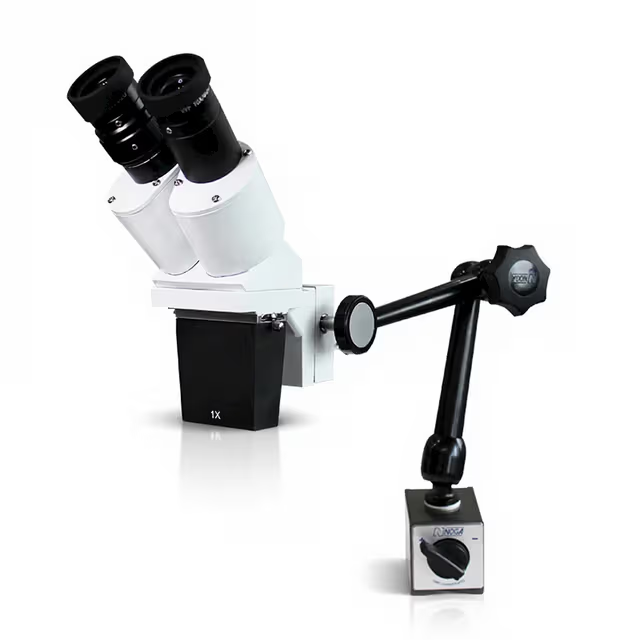
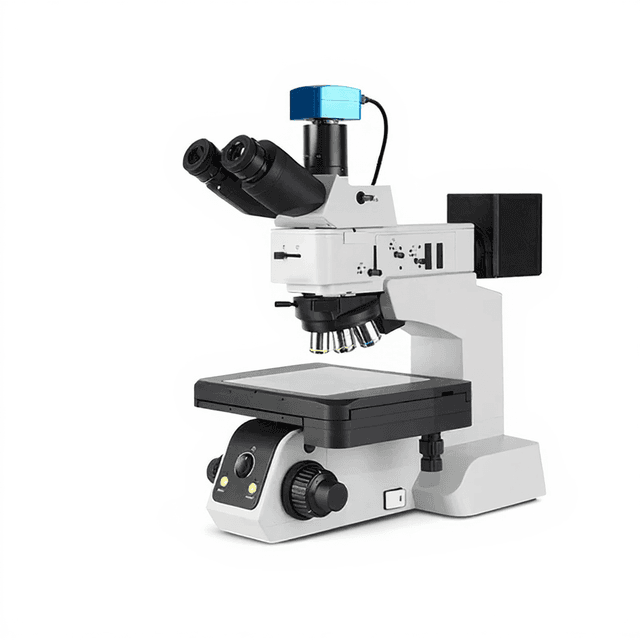
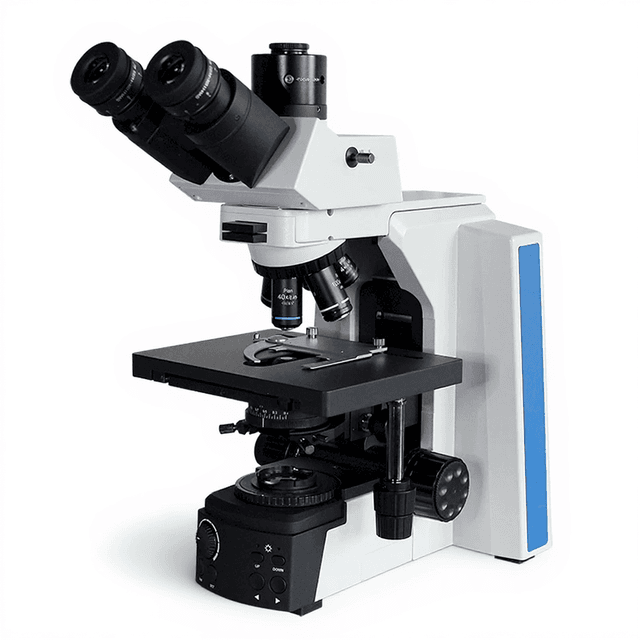
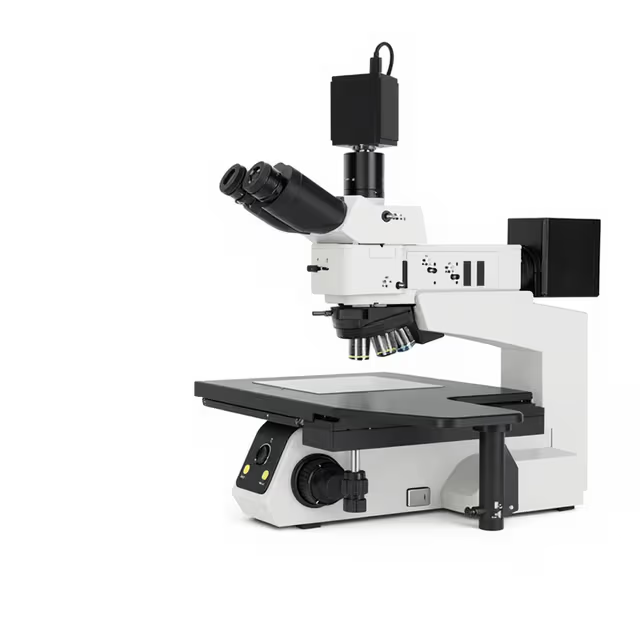
Infinity-corrected Plan Achromatic Metallurgical Microscope Objective Lens for 5X 10X 20X 40X 50X 60X 80X 100X
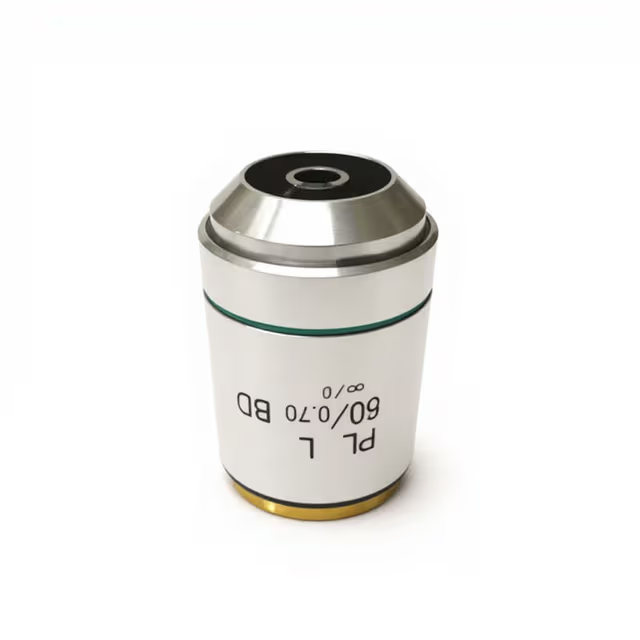
Infinity-corrected plan achromatic metallurgical microscope objective with 0.70 N.A.
and 2.02mm working distance for materials analysis and optical microscopy applications.

Louise Corscadden, PhD
Director of Science · ConductScience
Ask Louise about Infinity-corrected Plan Achromatic Metallurgical Microscope Objective Lens for 5X 10X 20X 40X 50X 60X 80X 100X fit, setup, configuration, or quote prep.
Already working with us? Sign in to connect this with My Scientist.
Key Specifications
Full details →- Model fit
- Configured during quote
- SKU family
- MCX-0028
- Shipping box
- 4.9 x 6.6 x 6.6 cm
- Ordering
- Online checkout and quote request available
- Category
- Microscopy
- Build notes
- Confirm accessories, station layout, and support needs before purchase
The Infinity-corrected Plan Achromatic Metallurgical Microscope Objective Lens represents precision optical engineering for materials characterization and metallurgical analysis. This objective lens features a numerical aperture of 0.70 and working distance of 2.02mm, designed for infinity-corrected optical systems commonly used in research and industrial microscopy applications.
Plan achromatic design corrects for spherical aberration and field curvature while providing flat-field imaging across the entire field of view. The infinity correction eliminates chromatic aberration introduced by tube length variations, ensuring consistent optical performance when combined with appropriate tube lenses and microscope bodies.
How It Works
The infinity-corrected design operates by collecting light rays from the specimen and collimating them into parallel beams before reaching the tube lens. This configuration eliminates optical aberrations introduced by varying tube lengths and allows for insertion of optical components (filters, polarizers, beam splitters) without affecting image quality.
Plan achromatic correction combines multiple lens elements with different dispersion characteristics to minimize chromatic aberration across the visible spectrum while flattening the field curvature. The 0.70 numerical aperture determines the light-gathering capacity and theoretical resolution limit according to the Abbe diffraction formula, providing a balance between resolution and working distance for metallurgical applications.
The 2.02mm working distance accommodates thick specimens and allows space for specialized illumination techniques common in materials analysis, including polarized light and differential interference contrast methods.
Features & Benefits
Automation Level
- manual
Product Type
- Microscope
Microscope Type
- Metallurgical
Application
- Materials Science
- Quality Control
Skill Level
- Intermediate
Brand
- ConductScience
Research Domain
- Analytical Chemistry
- Histopathology
- Industrial Hygiene
- Microbiology
Shipping weight
- 1.9 lb
Shipping box
- L: 4.9 cm
- W: 6.6 cm
- H: 6.6 cm
| Feature | This Product | Typical Alternative | Advantage |
|---|---|---|---|
| Numerical Aperture | 0.70 N.A. | Entry-level objectives often offer 0.25-0.50 N.A. | Higher numerical aperture enables better resolution and light-gathering capacity for detailed specimen analysis. |
| Working Distance | 2.02mm | High magnification objectives typically have shorter working distances | Sufficient clearance for thick specimens and specialized sample preparation techniques. |
| Optical Correction | Plan achromatic design | Basic objectives may have spherical aberration or field curvature | Flat field imaging across entire field of view with corrected chromatic aberration for accurate color rendition. |
| System Compatibility | Infinity-corrected | Finite conjugate systems require specific tube lengths | Allows insertion of optical accessories without affecting focus or requiring optical adjustments. |
This objective combines high numerical aperture with practical working distance and infinity correction, offering versatility for advanced metallurgical microscopy applications requiring both resolution and accessibility.
Practical Tips
Verify proper tube lens focal length and microscope compatibility before installation to ensure specified optical performance.
Why: Incorrect tube lens selection can significantly affect magnification and image quality.
Clean lens elements only when necessary using appropriate solvents and lens tissue, working from center outward.
Why: Over-cleaning or improper technique can damage anti-reflection coatings and degrade optical performance.
Match condenser numerical aperture to objective N.A. using appropriate diaphragm settings for optimal resolution and contrast.
Why: Mismatched apertures result in reduced resolution or poor contrast in the final image.
Maintain proper working distance of 2.02mm between specimen and front lens element to achieve optimal focus.
Why: Incorrect working distance prevents the objective from reaching its design focal point and optimal performance.
If images appear soft or lack contrast, verify that all optical surfaces are clean and properly aligned with microscope optical axis.
Why: Contamination or misalignment degrades image quality and can mimic specimen preparation artifacts.
Handle by the barrel only, avoiding contact with lens elements, and store with protective caps when not in use.
Why: Fingerprints and dust on optical surfaces degrade performance and can be difficult to remove without damage.
Setup Guide
What’s in the Box
- Microscope objective lens
- Protective lens caps (typical)
- Documentation and specifications (typical)
Warranty
ConductScience provides standard manufacturer warranty coverage for optical components with technical support for installation and compatibility questions.
Compliance
References
Background reading relevant to this product:
What tube lens focal length is required for this infinity-corrected objective?
Standard infinity-corrected systems typically use 200mm tube lenses, but consult microscope manufacturer specifications to ensure proper magnification and optical performance.
Can this objective be used with oil immersion techniques?
The 2.02mm working distance and air-interface design make this objective unsuitable for oil immersion. Working distance would be insufficient for oil coupling.
What is the theoretical resolution limit with this numerical aperture?
Using the Abbe formula with 0.70 N.A. and white light (550nm), theoretical resolution is approximately 400 nanometers under optimal illumination conditions.
Is this objective compatible with polarized light microscopy?
Yes, the infinity-corrected design allows insertion of polarizing filters and analyzers in the optical path without affecting focus or image quality.
What maintenance is required for optimal performance?
Regular cleaning of lens elements with appropriate solvents and lens tissue, protection from dust when not in use, and periodic inspection for mechanical wear on threading.
Have a question about this product?
Have a question? Just ask.
Send it over and we'll email you a personalized answer — no call, no scheduling.
Prefer to talk it through?
Frequently Bought Together
Upgrade Options
Related Products