Positive Image Metallurgical Microscope with 6-inch Working Stage & Fast Moving Device
Metallurgical microscope with infinite optical correction, 50x-1000x magnification, large mechanical stage, and polarization capabilities for materials characterization and quality control applications.

Louise Corscadden, PhD
Director of Science · ConductScience
Ask Louise about Positive Image Metallurgical Microscope with 6-inch Working Stage & Fast Moving Device fit, setup, configuration, or quote prep.
Already working with us? Sign in to connect this with My Scientist.
Key Specifications
Full details →- Model fit
- Configured during quote
- SKU family
- MCX-0022
- Shipping box
- 4.9 x 6.6 x 6.6 cm
- Ordering
- Online checkout and quote request available
- Category
- Microscopy
- Build notes
- Confirm accessories, station layout, and support needs before purchase
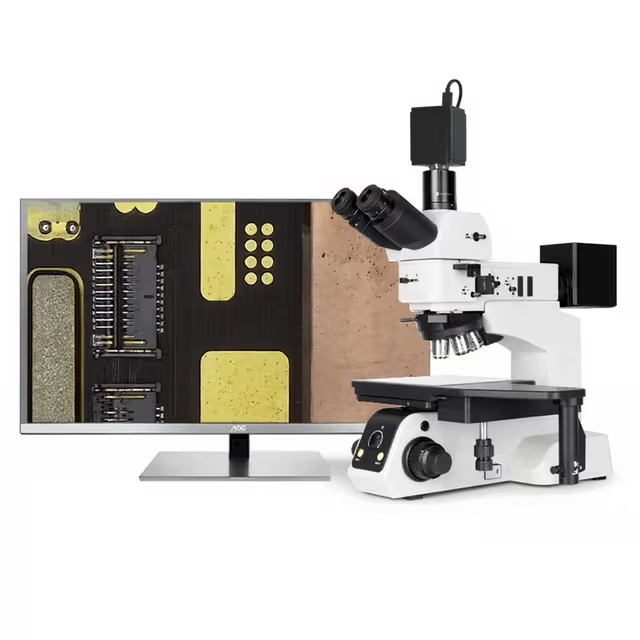
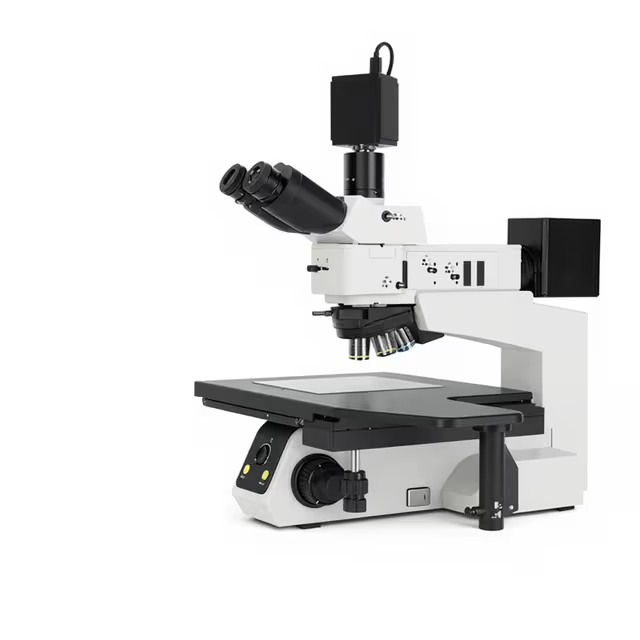
The Positive Image Metallurgical Microscope features an infinite chromatic aberration correction optical system designed for materials characterization and metallographic analysis. The system provides 50x-500x optical magnification with an optional 100x long working distance objective extending the range to 1000x. The large 6-inch mechanical stage accommodates specimens up to 450 × 240mm with precise coaxial X-Y positioning and fast moving device for efficient sample navigation.
The microscope incorporates both reflected and transmitted illumination systems with 5W adjustable LED sources, polarization capabilities, and differential interference contrast (DIC) compatibility. The binocular observation head delivers positive images through high eye-point eyepieces with adjustable interpupillary distance. Digital imaging capabilities extend magnification to 3000x when equipped with the optional 12MP camera system, enabling comprehensive documentation of microstructural features.
How It Works
The microscope employs an infinite chromatic aberration correction optical system that minimizes color distortion across the magnification range. Incident illumination from the 5W LED source passes through the reflective illuminator containing variable aperture and field stops, then reflects off the specimen surface back through the objective lens. The infinite optical design maintains parfocality and allows for the insertion of additional optical components like polarizers and DIC prisms without affecting image quality.
The polarization system consists of a polarizer in the illumination path and an analyzer in the observation tube, enabling examination of anisotropic materials and stress analysis. The roll-out achromatic condenser (N.A. 0.9) can be engaged for transmitted light applications. The mechanical stage provides precise specimen positioning through coaxial controls, while the fast moving device enables rapid navigation across large samples. Digital documentation is achieved through the optional camera adapter system with focusing capability.
Features & Benefits
Automation Level
- manual
Product Type
- Microscope
Microscope Type
- Metallurgical
Application
- Materials Science
- Quality Control
Skill Level
- Intermediate
Brand
- ConductScience
Research Domain
- Analytical Chemistry
- Materials Science
Shipping weight
- 1.9 lb
Shipping box
- L: 4.9 cm
- W: 6.6 cm
- H: 6.6 cm
| Feature | This Product | Typical Alternative | Advantage |
|---|---|---|---|
| Optical Magnification Range | 50x-1000x with infinite chromatic aberration correction | Entry-level systems often limited to 400-500x maximum magnification | Extended magnification range enables detailed feature analysis without sacrificing image quality at higher powers |
| Stage Size and Travel | 6-inch stage with 450 × 240mm platform and 158 × 158mm travel | Smaller stages typically accommodate specimens up to 100mm with limited travel range | Large stage capacity enables examination of industrial components and multiple specimens without remounting |
| Illumination System | Dual 5W LED systems for reflected and transmitted light | Basic models often provide single halogen illumination with limited intensity control | LED technology offers consistent color temperature, longer life, and reduced heat generation during extended analysis sessions |
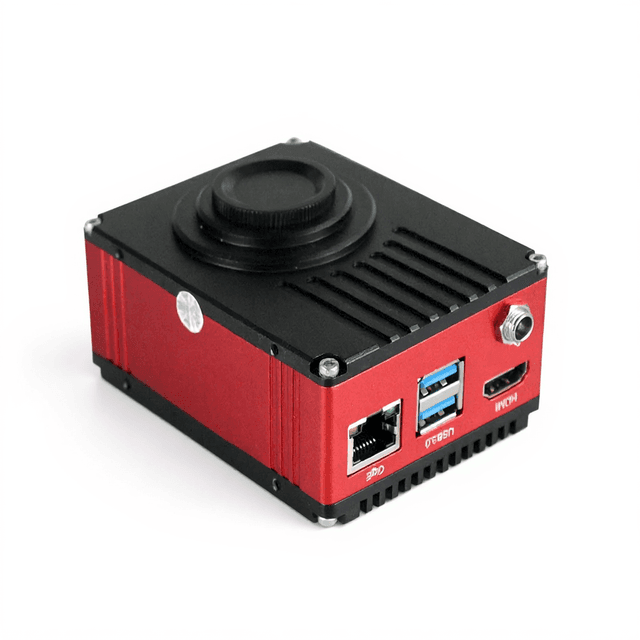
| Digital Integration | 3000x digital magnification with 12MP camera system | Lower resolution cameras or no digital capability in entry systems | High-resolution documentation enables detailed analysis, measurement, and report generation for quality control workflows |
| Polarization Capabilities | Integrated polarizer with 360° rotary analyzer and DIC compatibility | Basic models often lack polarization or require separate accessories | Built-in polarization enables stress analysis and anisotropic material characterization without additional equipment |
| Stage Positioning System | Coaxial X-Y controls with fast moving device | Separate stage controls or limited positioning precision | Coaxial positioning improves operator ergonomics and specimen navigation efficiency during analysis workflows |
This metallurgical microscope combines extended magnification capabilities, large specimen capacity, and comprehensive polarization analysis in a single platform. The infinite optical correction system and dual LED illumination provide superior image quality for demanding materials characterization applications.
Practical Tips
Verify parfocality between objectives using a test specimen with surface features at different heights.
Why: Proper parfocality ensures minimal refocusing when changing magnifications, maintaining analysis efficiency and measurement accuracy.
Clean objective lenses weekly using lens tissue and appropriate solvents, checking for oil or debris contamination.
Why: Clean optics maintain image contrast and resolution, preventing artifacts that could affect microstructural interpretation.
Use coaxial illumination alignment and adjust field stops to optimize image contrast for specific specimen features.
Why: Proper illumination setup enhances feature visibility and reduces optical artifacts that can obscure structural details.
If polarized light shows uneven extinction, check polarizer alignment and ensure analyzer rotation is smooth.
Why: Proper polarization alignment is critical for stress analysis and anisotropic material characterization accuracy.
Calibrate digital measurements using a stage micrometer before performing quantitative analysis.
Why: Calibrated measurements ensure accurate dimensional analysis and statistical data for quality control documentation.
Ensure LED illumination intensity is appropriate for extended viewing to prevent eye strain during long analysis sessions.
Why: Proper illumination levels maintain operator comfort and analysis accuracy during extended metallographic examinations.
Document specimen preparation parameters including etchants and exposure times for reproducible results.
Why: Consistent preparation protocols enable reliable comparison of results across different analysis sessions and operators.
Lubricate stage movement mechanisms monthly and verify travel limit stops for proper operation.
Why: Smooth stage operation prevents specimen damage and maintains positioning accuracy during detailed examinations.
Setup Guide
What’s in the Box
- Metallurgical microscope main unit
- PL10x/25mm eyepieces (pair)
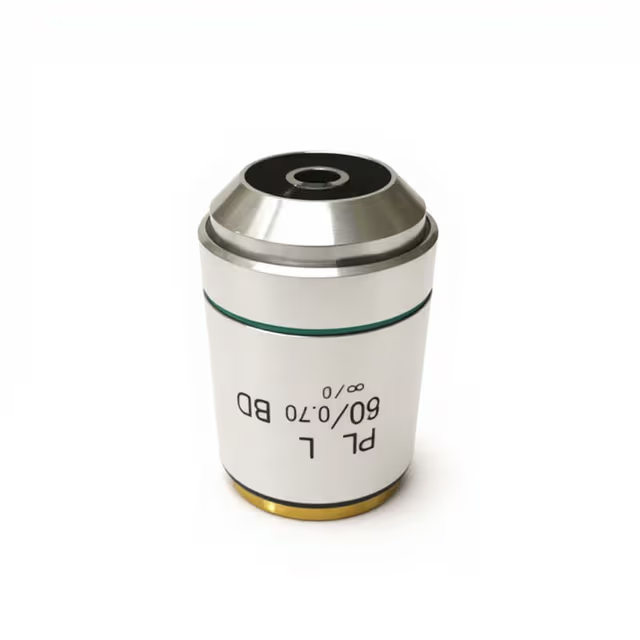
- BD Semi-Apo 5x objective lens
- 6-inch mechanical stage with fast moving device
- Polarizing assembly with rotary components
- Power supply and LED illumination systems
- User manual and operating instructions (typical)
- Dust cover and maintenance kit (typical)
Warranty
ConductScience provides a comprehensive 1-year manufacturer warranty covering optical and mechanical components with dedicated technical support for installation and operational guidance.
Compliance
References
Background reading relevant to this product:
What is the working distance of the standard objective lens and how does this affect specimen clearance?
The BD Semi-Apo 5x objective provides 15mm working distance, allowing clearance for thick specimens and manipulation during examination. The optional 100x LWD objective maintains long working distance for high-magnification analysis.
Can this microscope perform quantitative metallographic analysis and measurement?
The digital imaging system with 12MP camera enables quantitative analysis when coupled with appropriate software. The precise mechanical stage and high-resolution optics support dimensional measurements and statistical analysis of microstructural features.
How does the polarization system support stress analysis applications?
The 360° rotary polarizer and analyzer enable photoelastic stress analysis by revealing stress-induced birefringence patterns. The system supports both qualitative stress visualization and quantitative retardation measurements in transparent materials.
What specimen preparation is required for optimal imaging results?
Specimens require standard metallographic preparation including sectioning, mounting, grinding, polishing, and etching as appropriate. The large stage accommodates mounted specimens up to 450 × 240mm for comprehensive analysis.
Can the microscope be used for both opaque and transparent materials?
Yes, the dual illumination system provides reflected light for opaque materials like metals and ceramics, plus transmitted light capability through the roll-out condenser for transparent specimens and thin sections.
What is the numerical aperture range and resolution capability of the optical system?
The system includes objectives from 5x (NA 0.15) to the optional 100x configuration, with the achromatic condenser providing NA 0.9 for transmitted light applications. Consult product datasheet for specific resolution values at each magnification.
How does this compare to scanning electron microscopy for materials analysis?
This optical system provides real-time color imaging, large field of view, and minimal specimen preparation compared to SEM. It excels at overview analysis, polarization studies, and routine quality control where high-vacuum conditions are not required.
Have a question about this product?
Have a question? Just ask.
Send it over and we'll email you a personalized answer — no call, no scheduling.
Prefer to talk it through?
Frequently Bought Together
Upgrade Options
Related Products