Laboratory Ultrasonic cleaner
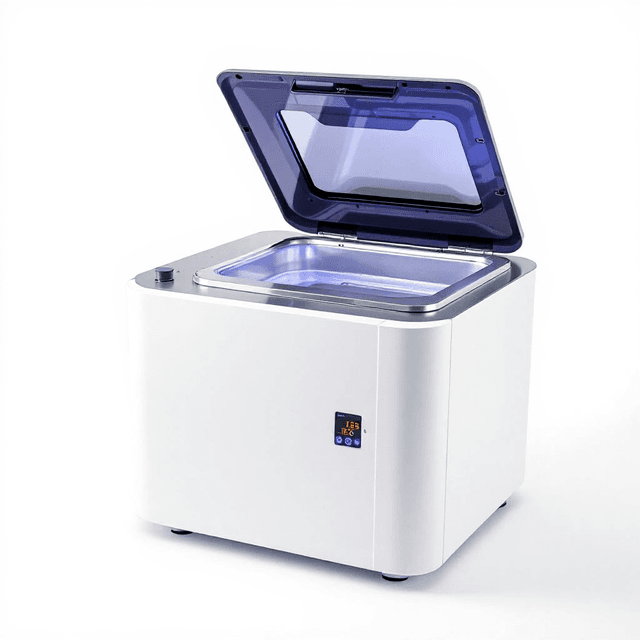
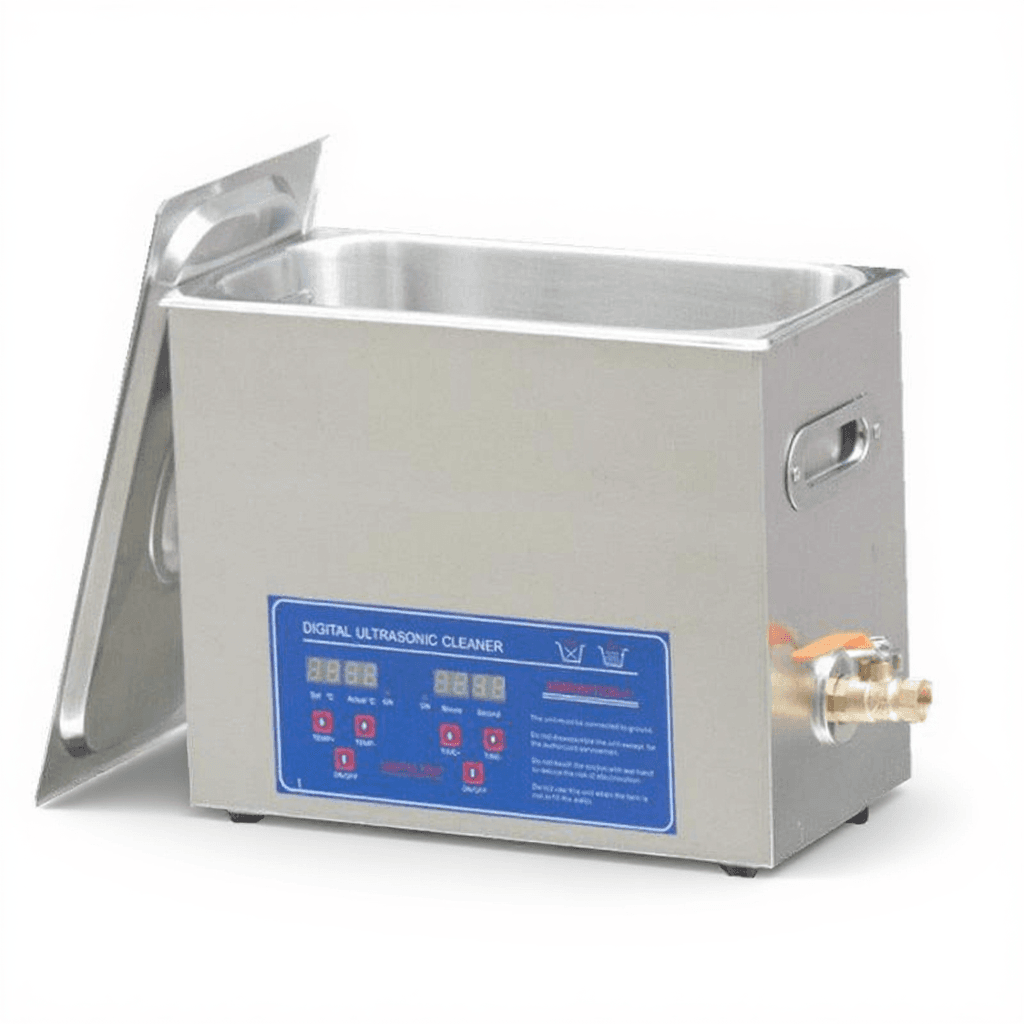
High-frequency ultrasonic cleaner utilizing 40 kHz cavitation for laboratory instrument decontamination and sample preparation, available in capacities from 2L to 30L with stainless steel construction.
| ultrasonic-power | 120W, 180W, 240W, 360W, 420W, 480W, 600W, 80W |
| ultrasound-frequency | 40KHZ |
| vibrator | 10pcs, 2pcs, 3pcs, 4pcs, 6pcs, 8pcs |
| Working Voltage | American Standard: ~110V/60HZ, British and European Standars: ~230±10V/50HZ |
| ultrasound_frequency | 40kHz |
| cleaning_principle | Cavitation using high-frequency ultrasound waves |
The Laboratory Ultrasonic Cleaner utilizes high-frequency ultrasound waves at 40 kHz to generate cavitation bubbles in cleaning solutions, providing effective decontamination of laboratory instruments and equipment. The cavitation process creates microscopic bubbles that expand and collapse near surface contaminants, generating powerful micro-jets that remove debris from complex geometries and hard-to-reach areas. Available in eight capacity configurations from 2L to 30L with stainless steel SUS304 construction, the system accommodates diverse laboratory cleaning requirements.
The cleaner operates through transducers mounted on the tank bottom or sidewall, delivering ultrasonic power ranging from 80W to 600W depending on tank capacity. The system supports both aqueous and solvent-based cleaning solutions, with optimal cavitation occurring at 35°C for water and 50-65°C for aqueous solutions. Beyond surface cleaning, the unit serves as a sonication platform for sample preparation, including solution homogenization and cell lysis applications in research workflows.
How It Works
The ultrasonic cleaner operates through acoustic cavitation, a phenomenon where high-frequency sound waves (40 kHz) propagate through cleaning solution, creating alternating high and low pressure regions. During low-pressure phases, microscopic bubbles form in the liquid, while high-pressure phases cause these bubbles to collapse violently near contaminated surfaces. This asymmetric bubble collapse generates micro-jets with velocities exceeding 100 m/s, directing concentrated cleaning energy into surface irregularities, pores, and crevices inaccessible to conventional cleaning methods.
The system employs piezoelectric transducers positioned on the tank bottom or sidewall to convert electrical energy into mechanical vibrations. These transducers create standing wave patterns throughout the cleaning bath, ensuring uniform cavitation distribution. The cavitation intensity depends on solution temperature, with optimal performance occurring at 35°C for water-based solutions and 50-65°C for specialized cleaning formulations.
For sample preparation applications, controlled cavitation provides mechanical disruption of cellular structures, particle agglomeration, and molecular assemblies. The ultrasonic energy creates localized high-temperature, high-pressure conditions during bubble collapse, facilitating chemical reactions and enhancing mass transfer processes in solution preparation workflows.
Features & Benefits
ultrasonic-power
- 120W
- 180W
- 240W
- 360W
- 420W
- 480W
- 600W
- 80W
ultrasound-frequency
- 40KHZ
vibrator
- 10pcs
- 2pcs
- 3pcs
- 4pcs
- 6pcs
- 8pcs
Working Voltage
- American Standard: ~110V/60HZ
- British and European Standars: ~230±10V/50HZ
ultrasound_frequency
- 40kHz
cleaning_principle
- Cavitation using high-frequency ultrasound waves
optimal_water_cavitation_temperature
- 35°C
optimal_aqueous_solution_temperature
- 50°C to 65°C
applications
- ['Cleaning surgical tools', 'Cleaning murine implants', 'Preparing uniform solutions by sonication']
transducer_location
- Bottom or sidewall of tank
Automation Level
- manual
Capacity
- 2L
- 3.2L
- 6.5L
- 10L
- 15L
- 20L
- 22L
- 30L
Material
- Stainless Steel
- SUS304
Power/Voltage
- ~110V/60HZ (American Standard), ~230±10V/50HZ (British and European Standards)
- 100W
- 250W
- 300W
- 400W
- 50W
- 600W
- 800W
Species
- Mouse
Research Domain
- Analytical Chemistry
- Cell Biology
- Materials Science
- Microbiology
- Neuroscience
- Pharmaceutical QC
Weight
- 7.0 lbs
Dimensions
- L: 26.3 in
- W: 22.0 in
- H: 17.6 in
Comparison Guide
| Feature | This Product | Typical Alternative | Advantage |
|---|---|---|---|
| Operating Frequency | 40 kHz fixed frequency | Some models offer dual frequency or sweep frequency options | Optimized frequency provides consistent cavitation bubble size for reliable cleaning performance across diverse applications. |
| Capacity Range | Eight options from 2L to 30L | Entry-level units often limited to 2-3 capacity options | Comprehensive size selection enables matching tank capacity to specific laboratory throughput and space requirements. |
| Ultrasonic Power | 80W to 600W across capacity range | Varies by model | Scalable power delivery ensures adequate cavitation intensity for different tank volumes and cleaning requirements. |
| Tank Construction | Stainless steel SUS304 throughout | Basic models may use standard stainless steel or composite materials | Superior corrosion resistance and chemical compatibility with diverse cleaning solutions and solvents. |
| Voltage Compatibility | Dual standard support (110V/230V) | Single voltage models common in entry-level equipment | International compatibility eliminates need for external transformers in multi-site laboratory installations. |
| Transducer Configuration | 2-10 transducers based on tank size | Smaller units may have fewer transducers | Multiple transducer arrays ensure uniform acoustic field distribution for consistent cleaning throughout tank volume. |
This ultrasonic cleaner offers comprehensive capacity selection with consistent 40 kHz operation across all sizes, providing laboratory flexibility for diverse cleaning and sonication applications. The SUS304 construction and dual voltage compatibility support international use with various cleaning formulations.
Practical Tips
Verify acoustic output periodically using aluminum foil cavitation test - uniform pitting indicates proper transducer function.
Why: Ensures consistent cleaning performance and identifies transducer degradation before it affects results.
Clean mineral deposits from tank surfaces monthly using dilute acetic acid solution followed by thorough rinsing.
Why: Prevents buildup that can reduce ultrasonic transmission and create uneven cleaning patterns.
Pre-rinse heavily contaminated items to remove gross debris before ultrasonic cleaning.
Why: Prevents rapid solution contamination and maintains cleaning efficiency throughout the cycle.
If cavitation appears weak, check solution temperature and degassing - trapped air reduces acoustic transmission.
Why: Optimal cavitation requires proper solution conditions for effective bubble formation and collapse.
Document cleaning parameters (time, temperature, solution type) for reproducible decontamination protocols.
Why: Standardized conditions ensure consistent results and support validation requirements in regulated environments.
Always ensure liquid level covers transducers completely before energizing the system.
Why: Prevents transducer overheating and damage from operating in air or insufficient liquid coupling.
Use perforated baskets or holders to suspend items above tank bottom and allow solution circulation.
Why: Prevents acoustic shadowing and ensures uniform exposure to cavitation energy for thorough cleaning.
Setup Guide
What’s in the Box
- Ultrasonic cleaner main unit
- Stainless steel cleaning tank
- Power cord with regional plug adapter
- Perforated cleaning basket (typical)
- User manual with operation protocols
- Technical specification sheet
Warranty
ConductScience provides a standard one-year manufacturer warranty covering defects in materials and workmanship, with technical support available for troubleshooting and operational guidance.
Compliance
What cleaning solution should I use for different types of contamination?
For biological materials, use enzymatic detergents at 35-40°C. For general laboratory glassware, mild alkaline solutions work effectively. Organic solvents can be used for oil-based contamination, but ensure compatibility with SUS304 stainless steel and maintain proper ventilation.
How do I determine optimal cleaning time and power settings?
Start with 10-15 minutes at moderate power for delicate items. Heavy contamination may require 20-30 minutes at higher power settings. Monitor cavitation activity - excessive foaming indicates too much power, while insufficient bubble formation suggests inadequate energy transfer.
Can this unit be used for cell lysis and DNA extraction protocols?
Yes, controlled sonication can disrupt cell membranes and tissue structures. Use short pulse cycles (30 seconds on/off) to prevent sample heating and degradation. Ice baths help maintain sample integrity during extended sonication procedures.
What maintenance is required to ensure consistent performance?
Replace cleaning solution regularly to prevent contamination buildup. Clean the tank with dilute acid solution monthly to remove mineral deposits. Inspect transducers for damage and verify acoustic output periodically using cavitation activity indicators.
How does tank capacity affect cleaning efficiency?
Larger tanks provide more uniform acoustic fields but may have reduced power density per unit volume. Choose capacity based on item size and throughput requirements - smaller tanks often provide more intensive cleaning for delicate items.
What safety precautions should I observe during operation?
Never operate the unit without sufficient liquid level to cover transducers. Use appropriate hearing protection in enclosed spaces. Ensure adequate ventilation when using organic solvents, and wear appropriate PPE when handling cleaning solutions.
Can I clean different materials simultaneously?
Materials with similar contamination and cleaning requirements can be processed together. Separate metals of different types to prevent galvanic corrosion. Delicate items should be cleaned separately at reduced power settings to prevent damage.
Have a question about this product?
Frequently Bought Together