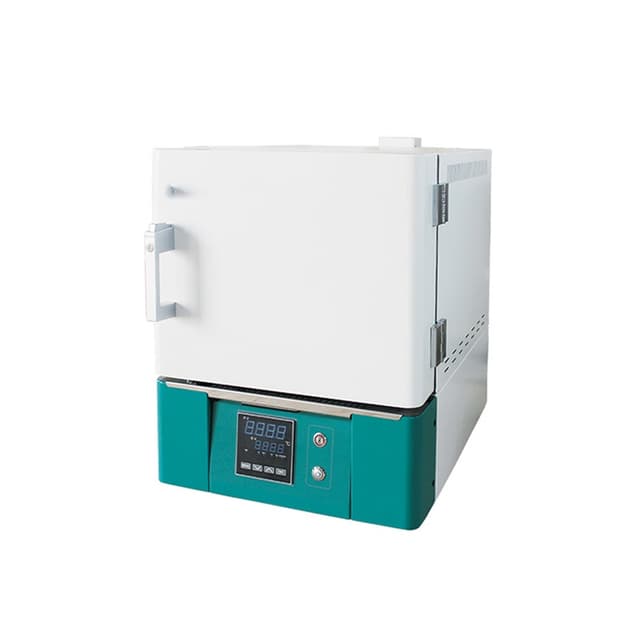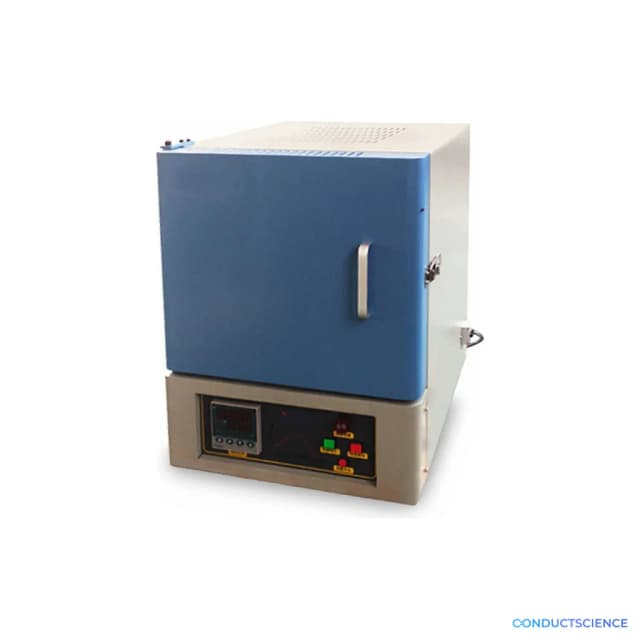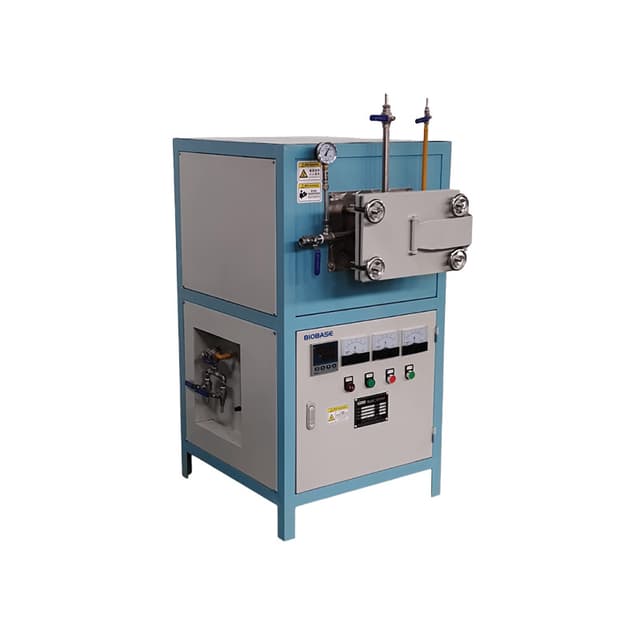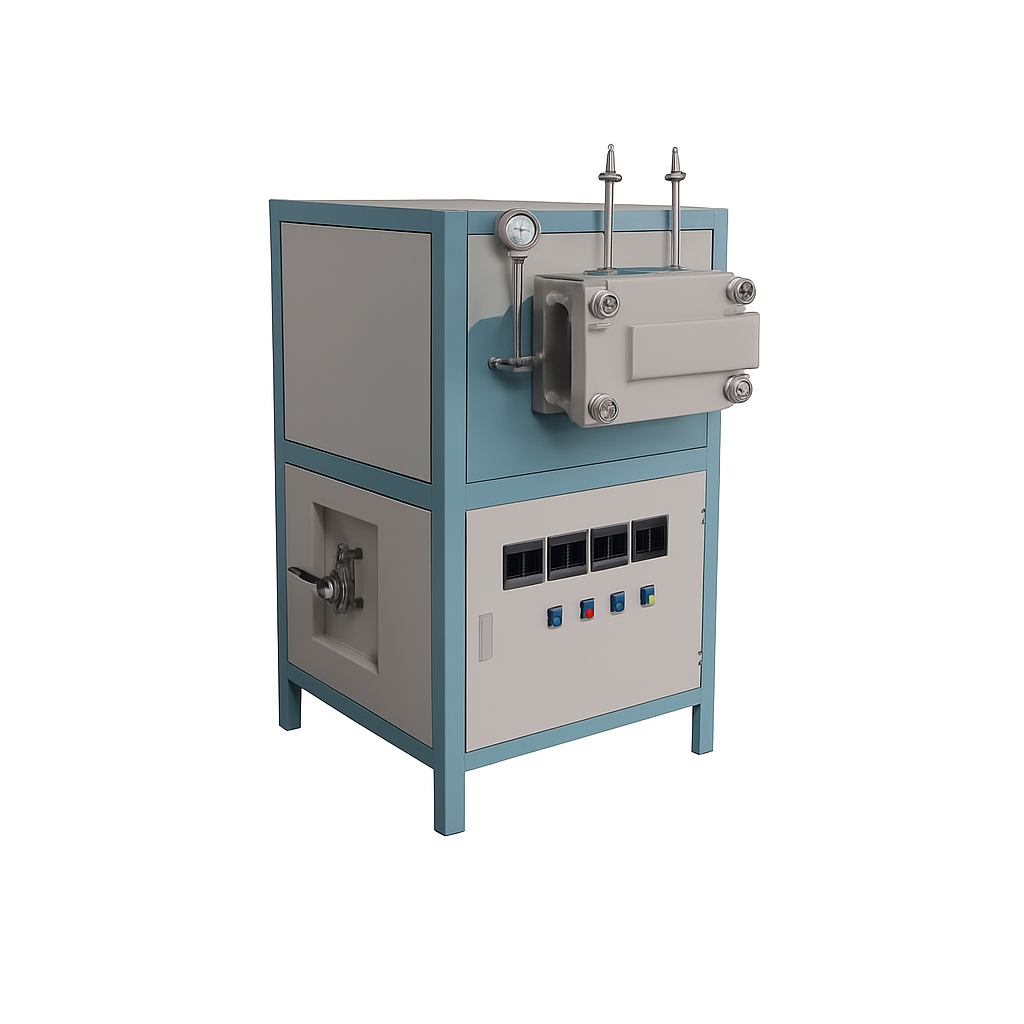
Vacuum Atmosphere Furnace 7.2L
Laboratory vacuum furnace with 7.2L chamber for controlled thermal processing under vacuum or inert atmosphere conditions, eliminating oxidation and contamination during heating cycles.

Louise Corscadden, PhD
Director of Science · ConductScience
Ask Louise about Vacuum Atmosphere Furnace 7.2L fit, setup, configuration, or quote prep.
Already working with us? Sign in to connect this with My Scientist.
Key Specifications
Full details →- Model fit
- Configured during quote
- SKU family
- BIO-0695
- Shipping box
- 12.0 x 30.0 x 20.0 cm
- Ordering
- Online checkout and quote request available
- Category
- Furnaces
- Build notes
- Confirm accessories, station layout, and support needs before purchase
Professional vacuum atmosphere furnace for high-temperature materials processing,
annealing, sintering, and specialty heat treatment applications. Features precision temperature
control and reliable vacuum/atmosphere management for laboratory and industrial use.
How It Works
The vacuum atmosphere furnace operates by combining controlled heating with atmospheric manipulation to create optimal processing conditions. The system evacuates the chamber to remove oxygen and moisture, then maintains either vacuum conditions or backfills with inert gas depending on process requirements. This eliminates oxidation reactions and prevents contamination during thermal processing.
Temperature control is achieved through resistance heating elements with feedback control systems that maintain precise setpoints throughout the heating cycle. The vacuum system typically includes a mechanical pump for initial evacuation and may incorporate molecular pumps for high vacuum applications. Sample placement within the chamber ensures uniform heat distribution while the controlled atmosphere prevents unwanted chemical reactions.
The combination of vacuum and controlled heating enables processes such as degassing, where dissolved gases are removed from materials, sintering of powders without oxidation, and thermal decomposition studies under defined atmospheric conditions. This approach provides reproducible results for materials processing and analytical applications.
Features & Benefits
Automation Level
- semi-automated
Research Domain
- Analytical Chemistry
- Environmental Monitoring
- Industrial Hygiene
- Materials Science
- Pharmaceutical QC
Shipping weight
- 29.98 lb
Shipping box
- L: 12.0 cm
- W: 30.0 cm
- H: 20.0 cm
| Feature | This Product | Typical Alternative | Advantage |
|---|---|---|---|
| Chamber Volume | 7.2L processing capacity | Entry-level models often offer 1-3L capacity | Larger volume enables batch processing of multiple samples or accommodation of larger specimens in single heating cycles. |
| Atmosphere Control | Vacuum and inert gas capability | Basic models may offer only vacuum or only inert gas operation | Dual atmosphere capability provides flexibility for different sample requirements and processing conditions. |
| Temperature Monitoring | Multiple thermocouple inputs available | Single-point temperature measurement in basic units | Multiple monitoring points enable verification of temperature uniformity and sample-specific temperature tracking. |
| Chamber Dimensions | 12.0" × 30.0" × 20.0" working space | Tube furnaces typically offer smaller, cylindrical chambers | Rectangular chamber design accommodates various sample geometries and fixture arrangements more effectively. |
| Control System | Programmable heating profiles with automated control | Manual temperature control in basic furnaces | Automated programming reduces operator intervention and improves process repeatability for complex thermal cycles. |
This 7.2L vacuum atmosphere furnace provides substantial processing capacity with dual atmosphere control capability and programmable operation. The rectangular chamber design offers versatility for different sample types while multiple temperature monitoring points ensure process control and uniformity verification.
Practical Tips
Verify temperature calibration using multiple thermocouples placed throughout the chamber volume to map heating uniformity.
Why: Chamber temperature gradients can affect sample processing consistency and result reproducibility.
Replace vacuum seals annually and inspect heating elements for signs of degradation or contamination buildup.
Why: Seal degradation affects vacuum performance while heating element condition impacts temperature control accuracy.
Allow complete pump-down before initiating heating cycles and use appropriate sample holders to prevent contamination.
Why: Residual atmosphere can cause unwanted reactions while proper sample containment maintains chamber cleanliness.
Monitor pump-down curves to identify vacuum leaks and check heating element continuity if temperature control becomes erratic.
Why: Early detection of vacuum or heating issues prevents sample damage and maintains processing reliability.
Record chamber pressure, temperature profiles, and gas flow rates for each run to enable process validation and troubleshooting.
Why: Complete process documentation supports method validation and helps identify sources of variability.
Ensure adequate ventilation around the furnace and never open the chamber while hot or under vacuum.
Why: Proper ventilation prevents heat buildup while vacuum release procedures prevent sudden atmospheric exposure of hot samples.
Pre-treat new sample holders and fixtures by heating under vacuum to remove outgassing contaminants.
Why: Initial outgassing from new materials can contaminate samples and affect vacuum performance during processing.
Clean chamber surfaces regularly with appropriate solvents to prevent cross-contamination between different sample types.
Why: Residual contamination can affect subsequent sample processing and introduce analytical artifacts.
Setup Guide
What’s in the Box
- Vacuum atmosphere furnace main unit
- Temperature controller and display
- Thermocouple sensors (typical)
- Vacuum connection fittings (typical)
- Sample holder fixtures (typical)
- Power cable and electrical connections
- Operation manual and safety documentation
- Calibration certificate (typical)
Warranty
ConductScience provides a one-year manufacturer warranty covering heating elements, temperature controllers, and vacuum system components, with technical support for installation and operation procedures.
Compliance
References
Background reading relevant to this product:
What vacuum levels can this furnace achieve and maintain during heating cycles?
Vacuum performance depends on pump configuration and chamber design. Consult product datasheet for specific pressure ranges and pumping speed requirements for your application.
What is the maximum operating temperature and heating rate capability?
Maximum temperature and heating rates vary by heating element configuration and power supply. Review technical specifications for temperature range and ramp rate capabilities.
Can the furnace operate with different inert gases besides nitrogen?
Most vacuum furnaces support argon, helium, and other inert gases depending on gas handling system design. Verify compatibility with your specific gas requirements.
How is temperature uniformity maintained across the 7.2L chamber volume?
Temperature uniformity depends on heating element placement, chamber design, and gas circulation. Multiple thermocouple monitoring helps verify uniform heating zones.
What sample types and sizes can be processed in this furnace?
The 7.2L chamber accommodates various sample configurations using appropriate fixtures. Sample size is limited by chamber dimensions and heating uniformity requirements.
How long does it take to achieve vacuum conditions before heating?
Pump-down time varies with chamber volume, vacuum level target, and pump capacity. Initial evacuation typically requires 15-30 minutes depending on system configuration.
What maintenance is required for the vacuum and heating systems?
Regular maintenance includes vacuum pump oil changes, seal inspections, heating element checks, and temperature calibration verification. Follow manufacturer maintenance schedules.
Can the furnace be integrated with data logging or LIMS systems?
Integration capability depends on controller interface options. Many modern furnaces support digital communication protocols for automated data collection.
Have a question about this product?
Have a question? Just ask.
Send it over and we'll email you a personalized answer — no call, no scheduling.
Prefer to talk it through?