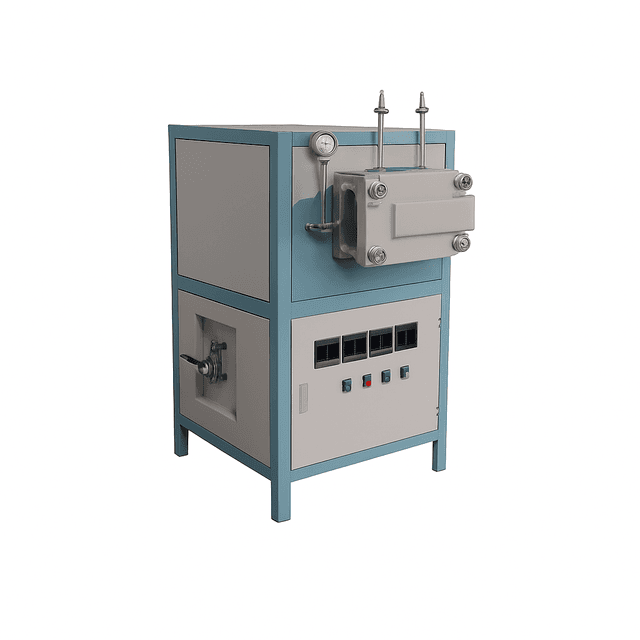
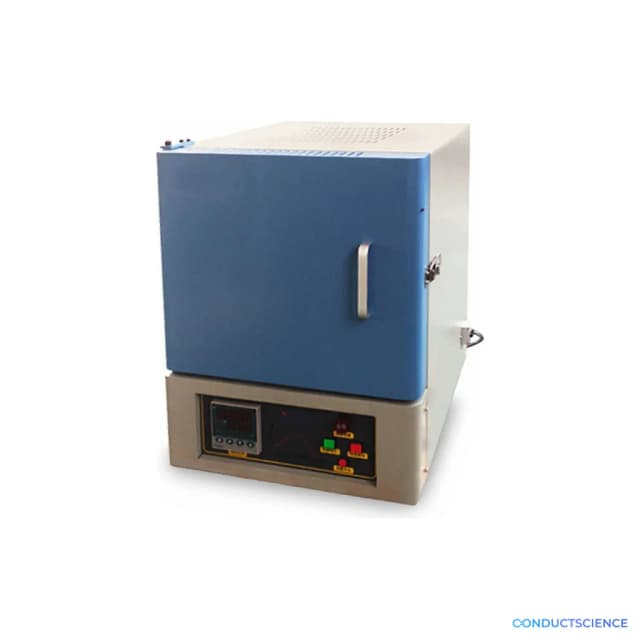
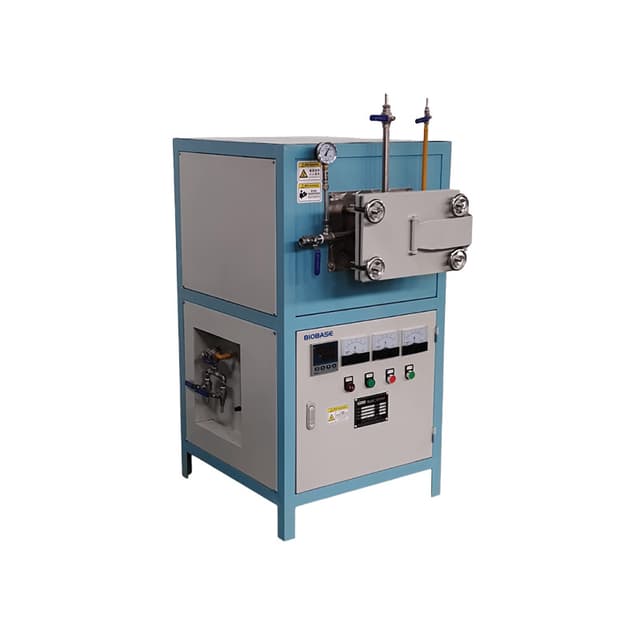
1200°C Muffle Furnace — 2L, 7L, 16L
1200°C muffle furnace available in 2L, 7L, and 16L capacities with ≤30 min temperature rise and ±1°C accuracy for ashing, calcination, and high-temperature heat treatment in research laboratories.

Louise Corscadden, PhD
Director of Science · ConductScience
Ask Louise about 1200°C Muffle Furnace — 2L, 7L, 16L fit, setup, configuration, or quote prep.
Already working with us? Sign in to connect this with My Scientist.
Key Specifications
Full details →- Model fit
- 3 selectable configurations
- SKU family
- BIO-0698
- Shipping box
- 42.0 x 43.6 x 38.0 cm
- Ordering
- Online checkout and quote request available
- Category
- Furnaces
- Build notes
- Confirm accessories, station layout, and support needs before purchase
The ConductScience Muffle Furnace delivers 1200°C maximum temperature with high-precision microcomputer control for demanding laboratory heat treatment, calcination, and ashing applications. Three models cover 2L, 7L, and 16L chamber capacities, accommodating a wide range of sample volumes and throughput requirements in analytical and materials science workflows.
The vacuum-formed polycrystalline mullite fiber furnace chamber provides superior heat preservation, enabling the furnace to rise from ambient to maximum temperature in ≤30 minutes. The double-shell design with integrated air jacket insulation keeps the external shell cool during operation, while dual air ducts ensure effective ventilation. The fully mirrored stainless steel furnace mouth maintains its integrity throughout long-term high-temperature use.
How It Works
High-temperature heating elements embedded in the ceramic chamber walls generate radiant heat that brings the furnace to temperatures up to 1200°C. The double-insulated ceramic liner stabilizes thermal performance across repeated heating cycles and protects the structural integrity of the chamber. The high-precision microcomputer controller integrates with precision sensors to continuously monitor and regulate chamber temperature, maintaining ±1°C accuracy at setpoint throughout the process.
Sample processing occurs in crucibles or containers placed inside the chamber, where controlled high-temperature heating drives off volatile components, decomposes organic matter, or induces phase transitions in refractory materials. The muffle design isolates samples from the heating elements and ensures clean thermal processing essential for reliable analytical results. The power connection for the 16L model is routed through an air switch for safe high-power operation.
Features & Benefits
- 1200°C maximum temperature — enables high-temperature calcination, sintering, and heat treatment beyond the range of standard 1000°C furnaces
- ≤30 min rise time to maximum temperature — fast thermal response minimizes wait times and improves laboratory throughput
- ±1°C temperature accuracy — precise control delivers reproducible thermal processing for standardized analytical and materials methods
- Vacuum-formed polycrystalline mullite fiber chamber — superior thermal insulation accelerates heating and reduces energy consumption
- Fully mirrored stainless steel furnace mouth — resists degradation from long-term exposure to high-temperature cycles
- Double-shell with air jacket and dual air ducts — low external surface temperature for safe handling; effective ventilation for sample off-gassing
- Double-insulated ceramic liner — stable thermal performance and structural integrity across repeated high-temperature cycles
- Available in 2L, 7L, and 16L capacities — scalable options from bench-scale analytical work to larger batch processing requirements
How It Works
The muffle furnace operates through resistive heating using iron-chromium-aluminum elements that surround the chamber walls. When electrical current passes through these heating elements, they generate thermal energy that radiates into the chamber, creating uniform heat distribution. The refractory lining insulates the chamber and maintains temperature stability while protecting the heating elements from sample vapors and corrosive atmospheres.
Temperature control is achieved through a feedback system that monitors chamber temperature and modulates power to the heating elements. The ±1°C accuracy is maintained through precise temperature sensing and control algorithms, while the ±15°C uniformity specification ensures consistent heating throughout the sample zone. This uniform heating enables complete thermal decomposition of organic matter and predictable heat treatment of materials.
Sample processing occurs in crucibles or containers placed within the chamber, where controlled heating drives off volatile components, decomposes organic compounds, or induces phase transitions in materials. The muffle design isolates samples from combustion gases and heating elements, preventing contamination and enabling clean thermal processing essential for analytical procedures.
Features & Benefits
Model
- MC2.5-12
- MC5-12
- MC10-12
Max Temp. (C)
- 1200
Temp. Rise Time (Empty)
- <=30 min
Temp. Accuracy (C)
- +/-1
Capacity (L)
- 2
- 7
- 16
Power (kW)
- 1.5
- 3
- 6
Power Supply
- MC2.5-12 & MC5-12: Standard AC220V 50/60Hz; Optional AC110V 50/60Hz
- MC10-12: Standard AC380V 50/60Hz; Optional AC220V 50/60Hz
Internal Size (WxDxH mm)
- 120x200x80
- 200x300x200
- 250x400x160
External Size (WxDxH mm)
- 450x685x600
- 530x785x640
- 600x895x700
Gross Weight (kg)
- 37
- 50
- 96
Shipping weight
- 29.98 lb
Shipping box
- L: 42.0 cm
- W: 43.6 cm
- H: 38.0 cm
| Feature | This Product | Typical Alternative | Advantage |
|---|---|---|---|
| Maximum Temperature | 1000°C with ±1°C accuracy | Entry-level models often limited to 800°C or lower precision | Higher temperature capability enables complete ashing of refractory organic compounds and broader materials processing applications |
| Temperature Uniformity | ±15°C throughout chamber | Basic models may have ±25°C or wider temperature variations | Better uniformity ensures consistent results when processing multiple samples simultaneously |
| Chamber Capacity | 2L volume with 200×120×80mm dimensions | Smaller benchtop units typically offer 1L or less capacity | Larger capacity accommodates standard crucible sizes and enables batch processing of multiple samples |
| Heating Elements | Iron-chromium-aluminum construction | Some models use nichrome or other alloys with different durability characteristics | Iron-chromium-aluminum elements provide excellent oxidation resistance and long service life under repeated thermal cycling |
| Power Options | Standard 220V with optional 110V compatibility | Many models fixed to single voltage requirement | Dual voltage options provide installation flexibility in laboratories with different electrical systems |
| Safety Features | Optional door-opening power cutoff and timing function | Basic models often lack automated safety systems | Enhanced safety features reduce risk of operator injury and enable unattended operation with timing control |
This muffle furnace combines 1000°C capability with precise temperature control and 2L capacity for versatile laboratory applications. The iron-chromium-aluminum heating elements and dual voltage compatibility provide reliable operation and installation flexibility across different laboratory environments.
| Model | SKU | Listed price | Status | Shipping box |
|---|---|---|---|---|
| 16L | BIO-0698-16L | $7,980.00 | Available | 42.0 x 43.6 x 38.0 cm |
| 7L | BIO-0698-7L | $4,495.00 | Available | 42.0 x 43.6 x 38.0 cm |
| 2L | BIO-0698-2L | $3,980.00 | Available | 42.0 x 43.6 x 38.0 cm |
Practical Tips
Verify temperature accuracy quarterly using a calibrated thermocouple placed at the chamber center during a standard heating cycle.
Why: Regular calibration ensures measurement traceability and compliance with analytical method requirements.
Inspect heating elements monthly for signs of corrosion, cracking, or deformation that could affect performance.
Why: Early detection of element degradation prevents unexpected failures and maintains temperature uniformity.
Allow crucibles to cool gradually in the chamber to room temperature before removal to prevent thermal shock.
Why: Gradual cooling prevents crucible cracking and reduces risk of sample loss or contamination.
Ensure adequate ventilation around the furnace during operation to dissipate heat and remove any evolved vapors from samples.
Why: Proper ventilation prevents overheating of surrounding equipment and removes potentially hazardous decomposition products.
Record heating rates and hold times for each sample batch to ensure reproducible thermal treatment conditions.
Why: Consistent thermal profiles are essential for reproducible analytical results and method validation.
If temperature uniformity decreases, check for sample residue buildup on chamber walls that may affect heat distribution.
Why: Residue accumulation can create hot spots and interfere with uniform heating throughout the chamber volume.
Use crucible pliers exclusively for handling hot crucibles and avoid contact with heating elements during sample loading.
Why: Proper handling tools prevent operator burns and protect heating elements from mechanical damage.
Clean the chamber interior regularly with appropriate solvents after cooling to remove sample residues and deposits.
Why: Regular cleaning prevents cross-contamination between samples and maintains optimal heat transfer efficiency.
Setup Guide
What’s in the Box
- Muffle furnace main unit
- Two crucibles
- One pair of crucible pliers
- Power cord
- User manual and documentation
- Temperature calibration certificate (typical)
Warranty
ConductScience provides a one-year manufacturer warranty covering defects in materials and workmanship. Technical support includes installation guidance, operational assistance, and troubleshooting for the duration of the warranty period.
Compliance
References
Background reading relevant to this product:
No Q&A yet. Have a question? Ask below.
Have a question about this product?
Have a question? Just ask.
Send it over and we'll email you a personalized answer — no call, no scheduling.
Prefer to talk it through?