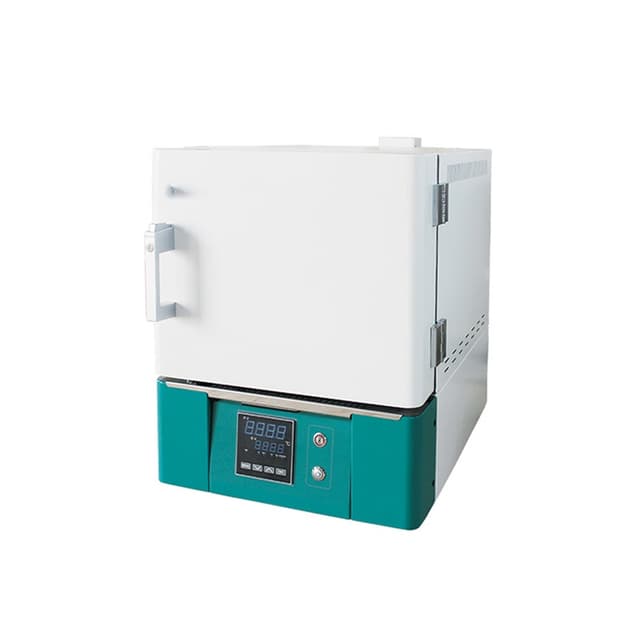
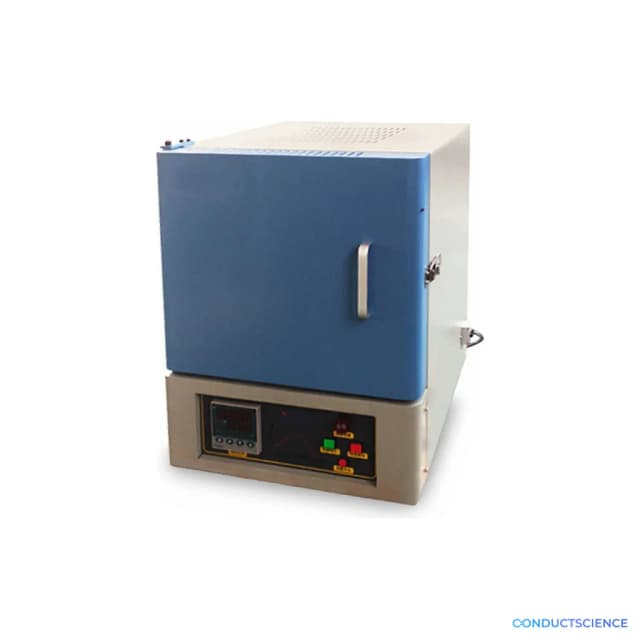
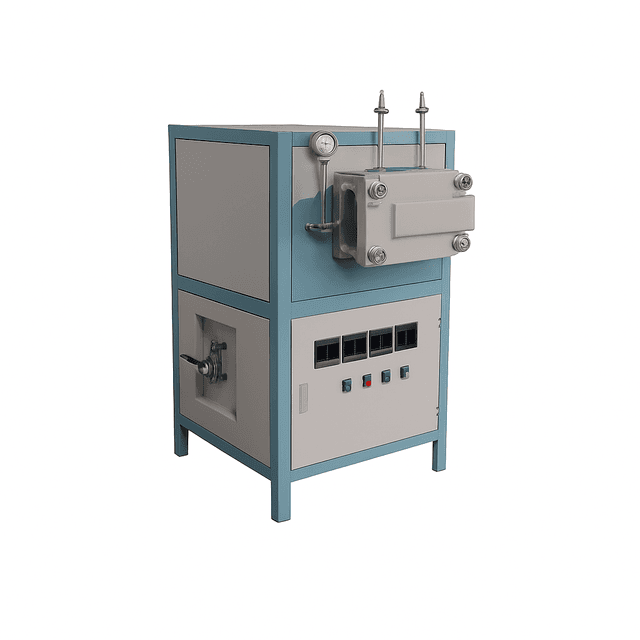
Programmable Vacuum Atmosphere Furnace
Programmable vacuum atmosphere furnace with 1-20°C/min heating rate control and polycrystalline alumina ceramic fiber insulation for controlled thermal processing applications.

Louise Corscadden, PhD
Director of Science · ConductScience
Ask Louise about Programmable Vacuum Atmosphere Furnace fit, setup, configuration, or quote prep.
Already working with us? Sign in to connect this with My Scientist.
Key Specifications
Full details →- Model fit
- Configured during quote
- SKU family
- BIO-0699
- Shipping box
- 42.0 x 43.6 x 38.0 cm
- Ordering
- Online checkout and quote request available
- Category
- Furnaces
- Build notes
- Using polycrystalline alumina ceramic fiber material
The Vacuum Atmosphere Furnace MXV6-10TP is a high-temperature thermal processing system designed for controlled atmosphere applications requiring precise heating profiles and inert environments. This furnace utilizes polycrystalline alumina ceramic fiber insulation to achieve uniform temperature distribution while minimizing thermal mass for responsive heating and cooling cycles.
The system features programmable heating rates from 1-20°C/min, enabling researchers to implement specific thermal protocols for materials processing, heat treatment studies, and thermal analysis applications. The vacuum capability allows for processing under reduced pressure conditions, preventing oxidation and enabling controlled atmosphere experiments essential for materials research and analytical chemistry applications.
How It Works
The vacuum atmosphere furnace operates by creating a controlled thermal environment through resistive heating elements while maintaining reduced pressure or inert atmosphere conditions. The polycrystalline alumina ceramic fiber insulation provides excellent thermal stability and low thermal conductivity, ensuring uniform temperature distribution across the sample chamber while minimizing heat loss to the exterior.
Temperature control is achieved through programmable heating profiles with rates adjustable from 1-20°C/min, allowing researchers to implement specific thermal protocols. The vacuum system removes atmospheric gases that could interfere with thermal processes, while optional inert gas purging can establish specific atmospheric compositions required for particular applications.
The ceramic fiber construction allows for rapid thermal response due to low thermal mass, enabling precise temperature control and faster cooling cycles compared to traditional brick-lined furnaces. This design is particularly beneficial for applications requiring reproducible heating and cooling profiles.
Features & Benefits
Automation Level
- semi-automated
Heating Speed
- 1–20°C/min (programmable)
Furnace Material
- Using polycrystalline alumina ceramic fiber material
Brand
- ConductScience
Research Domain
- Analytical Chemistry
- Environmental Monitoring
- Food Science
- Materials Science
- Pharmaceutical QC
Shipping weight
- 29.98 lb
Shipping box
- L: 42.0 cm
- W: 43.6 cm
- H: 38.0 cm
| Feature | This Product | Typical Alternative | Advantage |
|---|---|---|---|
| Heating Rate Control | 1-20°C/min programmable heating rate | Fixed heating rates or limited programmability in entry-level models | Enables precise thermal protocol implementation for reproducible experimental conditions and controlled reaction kinetics studies |
| Insulation Material | Polycrystalline alumina ceramic fiber insulation | Traditional brick insulation or lower-grade ceramic materials | Provides superior thermal uniformity and faster thermal response with reduced energy consumption |
| Atmosphere Control | Vacuum atmosphere capability with controlled environment processing | Air atmosphere only or basic inert gas purging systems | Prevents sample oxidation and enables controlled atmosphere experiments essential for sensitive materials processing |
| Thermal Mass | Low thermal mass ceramic fiber construction | Higher thermal mass brick-lined furnaces | Allows faster heating and cooling cycles, improving experimental throughput and reducing energy requirements |
The MXV6-10TP combines programmable heating rate control with vacuum atmosphere capability and low thermal mass construction, providing precise thermal processing conditions for materials research and analytical applications. The polycrystalline alumina ceramic fiber insulation ensures uniform temperature distribution while enabling responsive thermal cycling.
Practical Tips
Perform temperature calibration using multiple reference points across your operating range with a calibrated thermocouple placed in the sample zone.
Why: Ensures temperature accuracy throughout the working range rather than at a single calibration point.
Inspect ceramic fiber insulation regularly for signs of degradation or contamination and avoid mechanical contact during sample loading.
Why: Ceramic fiber damage can compromise thermal uniformity and insulation performance.
Allow adequate equilibration time at target temperature before beginning time-sensitive measurements or sample collection.
Why: Ensures thermal equilibrium throughout the sample and eliminates temperature gradients that could affect results.
If vacuum levels are insufficient, check all seals and gaskets for proper installation and consider o-ring replacement.
Why: Poor vacuum performance typically results from seal degradation rather than pump malfunction.
Record both programmed heating rate and actual measured temperature profile to verify protocol execution.
Why: Thermal lag and sample thermal mass can cause deviations from programmed profiles that affect experimental interpretation.
Ensure adequate ventilation around the furnace and use appropriate PPE when handling samples at elevated temperatures.
Why: Prevents thermal injury and ensures safe handling of potentially hazardous thermal decomposition products.
Setup Guide
What’s in the Box
- Vacuum atmosphere furnace main unit
- Temperature controller and programming interface
- Vacuum connection fittings and gaskets
- Sample crucibles and holders (typical)
- Thermocouple temperature probe (typical)
- Operating manual and safety documentation
- Power cable and connection hardware (typical)
Warranty
ConductScience provides standard one-year manufacturer warranty covering materials and workmanship, with technical support available for setup assistance and operational guidance.
Compliance
References
Background reading relevant to this product:
What is the maximum operating temperature and vacuum level achievable?
Consult product datasheet for specific maximum temperature and ultimate vacuum specifications, as these parameters depend on heating element configuration and vacuum pump capacity.
Can I introduce inert gases while maintaining controlled atmosphere?
Yes, the system typically allows for gas purging through inlet ports while maintaining atmosphere control, though specific gas handling capabilities should be verified in technical specifications.
What sample sizes and crucible types are compatible?
Sample capacity depends on furnace chamber dimensions; consult specifications for maximum sample volume and recommended crucible materials compatible with your application temperature range.
How do I calibrate the temperature control system?
Use a calibrated thermocouple placed in the sample zone and compare readings with the controller display, adjusting offset parameters according to the calibration procedure in the user manual.
What maintenance is required for the ceramic fiber insulation?
Inspect ceramic fiber regularly for damage or contamination; avoid mechanical shock and chemical exposure that could degrade insulation properties.
Can I program multi-step heating profiles with holds and ramps?
Programming capabilities vary by controller model; consult technical documentation for available profile options including isothermal holds, multiple heating rates, and cooling segments.
Have a question about this product?
Have a question? Just ask.
Send it over and we'll email you a personalized answer — no call, no scheduling.
Prefer to talk it through?