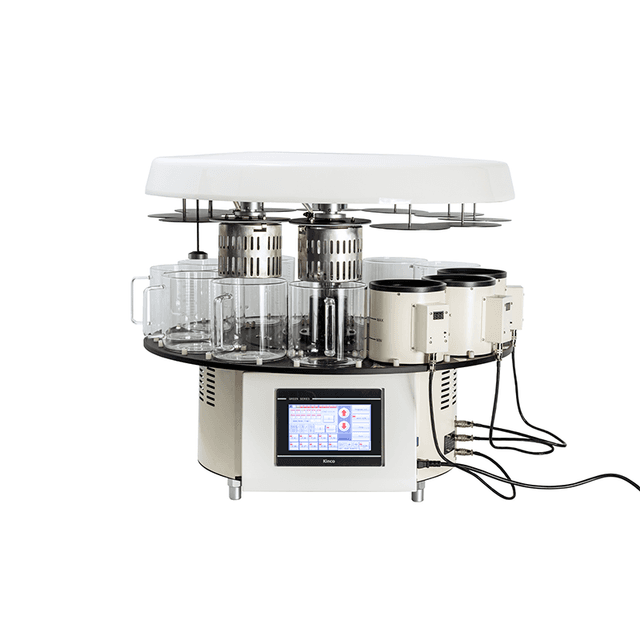
Vacuum Tissue Processor
Automated vacuum tissue processor with three operational modes, 10 customizable protocols, and integrated safety systems. Available in two configurations: RD-800-X (220-tissue capacity, 10″ display) and RD-800-K (330-tissue capacity, 15″ display)....
| pa_equipment-type | 4952 |
| pa_automation-level | semi-automated |
| pa_pathology-application | 4968 |
| pa_reagent-stations | 5020 |
| pa_specimen-capacity | 4996 |
| pa_vacuum-capability | 4995 |

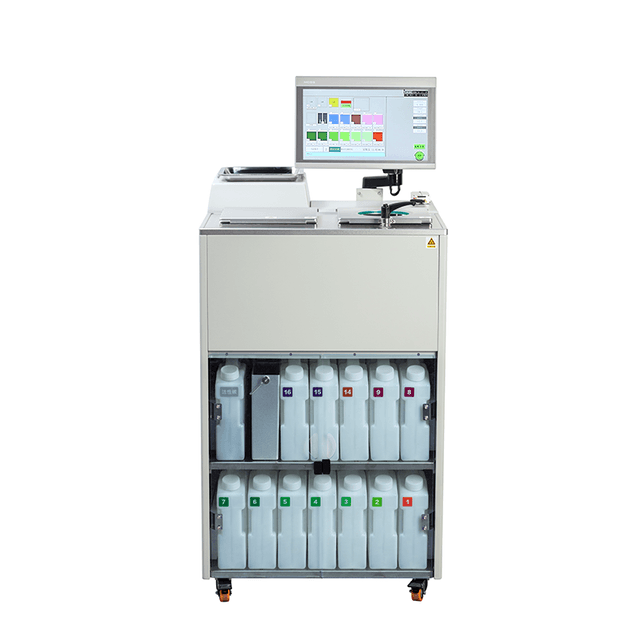
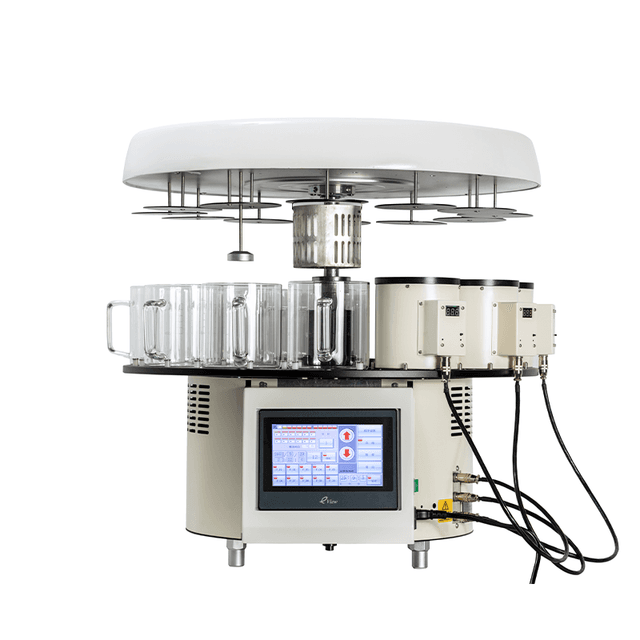
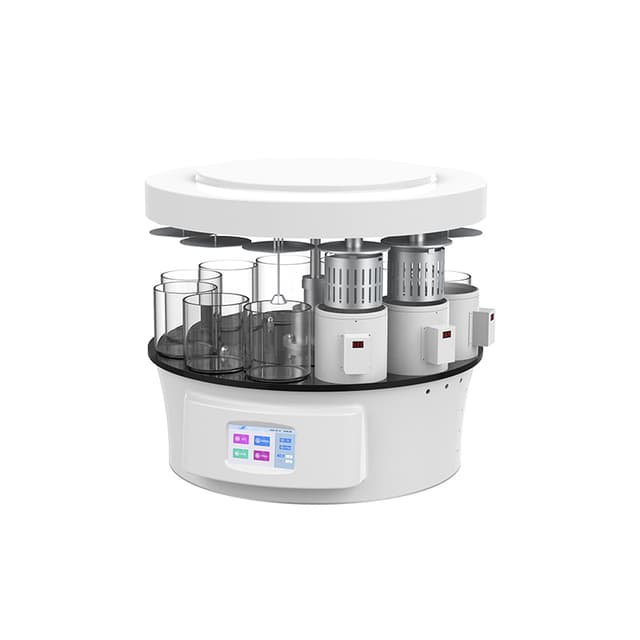
The Vacuum Tissue Processor series (RD-800-X / RD-800-K) is an automated histological processing system designed for routine dehydration, clearing, and infiltration of tissue specimens in pathology laboratories. Available in two configurations — the RD-800-X (220-tissue capacity, 10″ touchscreen) and the RD-800-K (330-tissue capacity, 15″ touchscreen) — both feature vacuum processing with three operational modes (atmospheric, positive, and negative pressure) and customizable protocols for diverse tissue types.
The system incorporates a large LCD touchscreen interface, automatic reagent rotation, and magnetic stirring capabilities for consistent specimen processing. With adjustable immersion times from 0-300 minutes and 10 customizable program sets, the processor supports both rapid and conventional dehydration workflows. Built-in safety features include a multi-alarm system, activated carbon filtration for harmful gas removal, and self-cleaning workspace functionality to prevent cross-contamination between processing runs.
How It Works
The tissue processor automates the sequential immersion of specimens through a series of reagent stations containing alcohols, clearing agents, and paraffin. The magnetic stirring system ensures uniform reagent penetration while programmable immersion times (0-300 minutes) accommodate different tissue types and sizes. The three operational modes provide flexibility for various processing requirements: atmospheric pressure for routine specimens, positive pressure for enhanced reagent penetration, and negative pressure for rapid processing cycles.
Automatic reagent rotation maintains solution quality throughout extended processing runs, while the activated carbon filtration system removes harmful vapors generated during dehydration and clearing steps. The self-cleaning workspace prevents reagent carryover between different processing protocols, ensuring consistent results across specimen batches.
Features & Benefits
pa_equipment-type
- 4952
pa_automation-level
- semi-automated
pa_pathology-application
- 4968
pa_reagent-stations
- 5020
pa_specimen-capacity
- 4996
pa_vacuum-capability
- 4995
pa_processing-speed
- 4989
operational_modes
- atmospheric, positive, and negative pressure
immersion_time_range
- 0-300 minutes
program_sets
- 10 customizable
dehydration_options
- rapid and conventional
operation_modes
- manual or automatic
filtration
- activated carbon filter
alarm_system
- multi-alarm system
workspace_cleaning
- self-cleaning
reagent_system
- automatic reagent rotation
mixing_system
- magnetic stirring system
Model
- RD-800-X (220 Tissue, 10in Display)
- RD-800-K (330 Tissue, 15in Display)
Display Type
- LCD
Research Domain
- Cancer Research
- Developmental Biology
- Histopathology
- Neuroscience
- Pharmaceutical QC
- Toxicology
Weight
- 85.0 kg
Dimensions
- L: 65.0 mm
- W: 55.0 mm
- H: 75.0 mm
Comparison Guide
| Feature | This Product | Typical Alternative | Advantage |
|---|---|---|---|
| Operational Modes | Three modes: atmospheric, positive, and negative pressure | Most entry-level processors operate only in atmospheric mode | Multiple pressure options accommodate diverse tissue types and processing requirements from routine to specialized applications |
| Programming Flexibility | 10 customizable program sets with 0-300 minute immersion times | Basic models often offer fewer programmable cycles with limited time ranges | Extensive programming capabilities support both standardized protocols and specialized research requirements |
| User Interface | Large LCD touchscreen for program control and monitoring | Many processors use basic button interfaces or small displays | Intuitive touchscreen interface simplifies protocol selection and real-time process monitoring |
| Processing Options | Both rapid and conventional dehydration modes available | Most processors operate at fixed processing speeds | Dual processing speeds optimize workflow efficiency while maintaining specimen quality standards |
| Safety Systems | Multi-alarm system with activated carbon filtration and self-cleaning workspace | Basic safety features vary widely across different models | Comprehensive safety and contamination control systems ensure operator protection and specimen integrity |
The RF-RD-800 offers advanced operational flexibility through multiple pressure modes and extensive programming options. The touchscreen interface and dual processing speeds provide workflow optimization while integrated safety systems ensure consistent, contamination-free processing results.
Practical Tips
Select pressure mode based on tissue density and size - use positive pressure for dense specimens like bone or cartilage, negative pressure for rapid processing of routine biopsies.
Why: Proper pressure selection optimizes reagent penetration and processing efficiency for different specimen types.
Replace activated carbon filters regularly and monitor reagent clarity to maintain processing quality and operator safety.
Why: Filter saturation reduces vapor control effectiveness and can compromise both safety and reagent quality.
Verify immersion timing accuracy monthly using the LCD display timer function during test runs without specimens.
Why: Timing accuracy is critical for consistent reagent penetration and reproducible histological results.
Document processing parameters and reagent change dates for each program set to maintain traceability and quality control.
Why: Systematic record-keeping enables troubleshooting and ensures compliance with laboratory quality standards.
If magnetic stirring becomes inconsistent, check for reagent crystallization or debris accumulation around stirring mechanisms.
Why: Proper stirring function is essential for uniform reagent distribution and specimen processing quality.
Ensure adequate ventilation and monitor alarm systems during processing cycles, especially when using rapid dehydration protocols.
Why: Enhanced processing conditions can increase vapor generation requiring proper safety system monitoring.
Utilize the self-cleaning cycle between different tissue types or processing protocols to prevent cross-contamination.
Why: Proper workspace cleaning maintains specimen integrity and prevents artifacts in subsequent processing runs.
Setup Guide
What’s in the Box
- Main processing unit
- Specimen baskets (typical)
- Reagent station inserts (typical)
- Power cable
- User manual and quick reference guide (typical)
- Maintenance tools and spare parts kit (typical)
- Installation and calibration documentation (typical)
Warranty
ConductScience provides a standard one-year manufacturer warranty covering parts and labor, with comprehensive technical support for installation, calibration, and routine maintenance procedures.
Compliance
References
Background reading relevant to this product:
What reagent protocols are compatible with the programmable processing cycles?
The 10 customizable program sets accommodate standard histological protocols including alcoholic dehydration, xylene clearing, and paraffin infiltration. Immersion times are adjustable from 0-300 minutes per station to optimize processing for different tissue types.
How does the pressure mode selection affect processing outcomes?
Atmospheric mode provides standard processing conditions, positive pressure enhances reagent penetration for dense tissues, and negative pressure enables rapid processing cycles while maintaining histological quality.
What specimen capacity and basket configurations are available?
Consult product datasheet for specific specimen capacity and basket dimensions. The system supports multiple specimen baskets with automatic rotation through the reagent sequence.
How is reagent quality maintained during extended processing runs?
The automatic reagent rotation system prevents reagent degradation by systematic circulation, while the activated carbon filtration removes harmful vapors that could compromise solution quality.
What maintenance procedures are required for consistent operation?
The self-cleaning workspace reduces routine cleaning requirements, but regular reagent changes, filter replacement, and calibration verification are necessary for optimal performance.
Can the system process specimens requiring non-standard protocols?
Yes, the 10 customizable program sets allow modification of immersion times, pressure modes, and stirring parameters to accommodate specialized processing requirements or research protocols.
How does the alarm system monitor processing safety and quality?
The multi-alarm system monitors operational parameters including temperature, pressure, reagent levels, and processing timing to alert operators to conditions that could affect specimen quality or safety.
Have a question about this product?

Upgrade Options