Behavioral Tracking for Field Cricket
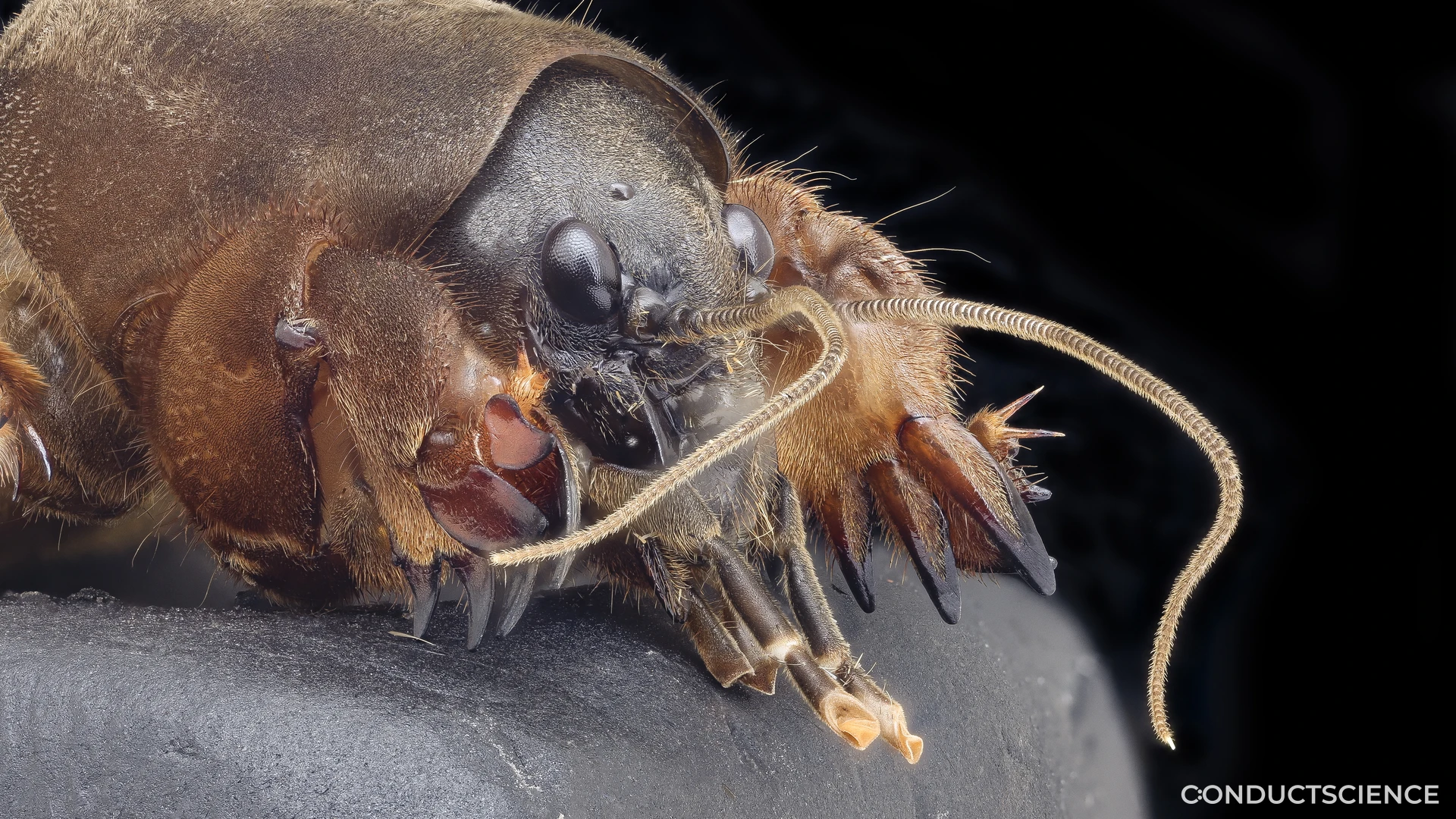
Gryllus bimaculatus
ConductVision provides automated analysis of cricket calling song patterns, female phonotaxis, male-male aggression scoring, and circadian activity rhythms in Gryllus bimaculatus.

Why Field Crickets in Behavioral Research
The field cricket (Gryllus bimaculatus) is a powerful neuroethological model for acoustic communication and circadian biology. Calling song production, female phonotaxis, and male-male aggression provide tractable, quantifiable behaviors with well-characterized neural substrates. Functional genetic tools including RNAi make crickets uniquely suited for dissecting the molecular basis of acoustic signaling and temporal behavior.
Schoneich S. (2020). Neuroethology of acoustic communication in field crickets. Prog Neurobiol, 194, 101882. PMID: 32673695
Kulkarni A, et al. (2019). The Cricket Gryllus bimaculatus: Techniques for Quantitative and Functional Genetic Analyses. Results Probl Cell Differ, 68, 183-216. PMID: 31598857
What We Measure in Field Cricket
Validated assays with quantitative parameter tracking for Gryllus bimaculatus.
Acoustic analysis of male calling song structure including carrier frequency, pulse rate, and temporal patterning. Song parameters are species-specific and sensitive to genetic and environmental manipulation.
| Parameter | Unit | Description |
|---|---|---|
| Carrier frequency | kHz | Song pitch |
| Pulse rate | pulses/s | Temporal pattern |
| Chirp duration | ms | Song element length |
| Inter-chirp interval | ms | Timing between chirps |
Schoneich S, et al. (2012). Cellular basis for singing motor pattern generation in the field cricket. Brain Behav, 2(6), 707-725. PMID: 23170234
Female approach behavior toward male calling song, quantified via trackball or arena tracking. Phonotaxis directional accuracy and response latency reveal auditory processing and mate preference.
| Parameter | Unit | Description |
|---|---|---|
| Phonotaxis score | straightness | Path toward speaker |
| Approach latency | s | Response time |
| Turn angle toward stimulus | degrees | Directional accuracy |
Sarmiento-Ponce EJ, et al. (2018). Substrate texture affects female cricket walking response to male calling song. R Soc Open Sci, 5(3), 172334. PMID: 29657819
Wyszkowska J, et al. (2023). Electromagnetic field exposure affects calling song, phonotaxis, and biogenic amines in crickets. Environ Sci Pollut Res Int, 30(36), 85975-85989. PMID: 37507567
Staged male-male fights scored for contact latency, mandible engagement, fight duration, and retreat. Cricket aggression is modulated by biogenic amines and prior fighting experience.
| Parameter | Unit | Description |
|---|---|---|
| Latency to first contact | s | Aggression onset |
| Mandible engagements | count | Combat intensity |
| Fight duration | s | Bout length |
| Retreat latency | s | Loser determination |
Sakura M, et al. (2013). Aggressive behavior in the antennectomized male cricket. J Exp Biol, 216(Pt 12), 2284-2292. PMID: 23531830
Judge KA, et al. (2008). Male weaponry in a fighting cricket. PLoS ONE, 3(12), e3980. PMID: 19107188
Infrared beam-break monitoring of locomotor activity across the circadian cycle. Free-running period, rhythm amplitude, and phase of entrainment reveal clock function.
| Parameter | Unit | Description |
|---|---|---|
| Free-running period (τ) | hours | Endogenous rhythm |
| Rhythm amplitude | relative | Strength of activity cycle |
| Phase of entrainment | hours | Activity onset under LD |
Levy K, et al. (2024). Crickets in the spotlight: exploring the impact of light on circadian behavior. J Comp Physiol A, 210(2), 325-336. PMID: 38252321
More Behavioral Tests for Field Cricket
Locomotion
Key Parameters: Total distance, velocity, resting fraction
Tomioka K. (2023). PMID: 37522601
Mate Choice
Key Parameters: Female preference index, response latency
Hunt J, et al. (2005). PMID: 15937791
ConductScience Hardware for Field Cricket Research
Sound-Proofed Arena
Acoustic isolation for song recording
Phonotaxis Trackball System
Female approach quantification
Aggression Arena with Divider
Male-male fight staging
Infrared Activity Monitor
Circadian locomotion tracking
Acoustic Recording System
Multi-channel song capture
Citations & Further Reading
- Schoneich S. (2020). Neuroethology of acoustic communication in field crickets. Prog Neurobiol, 194, 101882. PMID: 32673695
- Kulkarni A, et al. (2019). The Cricket Gryllus bimaculatus: Techniques for Quantitative and Functional Genetic Analyses. Results Probl Cell Differ, 68, 183-216. PMID: 31598857
- Schoneich S, et al. (2012). Cellular basis for singing motor pattern generation in the field cricket. Brain Behav, 2(6), 707-725. PMID: 23170234
- Sarmiento-Ponce EJ, et al. (2018). Substrate texture affects female cricket walking response to male calling song. R Soc Open Sci, 5(3), 172334. PMID: 29657819
- Wyszkowska J, et al. (2023). Electromagnetic field exposure affects calling song, phonotaxis, and biogenic amines in crickets. Environ Sci Pollut Res Int, 30(36), 85975-85989. PMID: 37507567
- Sakura M, et al. (2013). Aggressive behavior in the antennectomized male cricket. J Exp Biol, 216(Pt 12), 2284-2292. PMID: 23531830
- Judge KA, et al. (2008). Male weaponry in a fighting cricket. PLoS ONE, 3(12), e3980. PMID: 19107188
- Levy K, et al. (2024). Crickets in the spotlight: exploring the impact of light on circadian behavior. J Comp Physiol A, 210(2), 325-336. PMID: 38252321
Other Model Systems
Discuss Your Cricket Research
Tell us about your models, assays, and experimental goals — we’ll show you how ConductVision fits your workflow.