Primary Assay — Spiny Mouse
Wound Healing + Behavioral Recovery
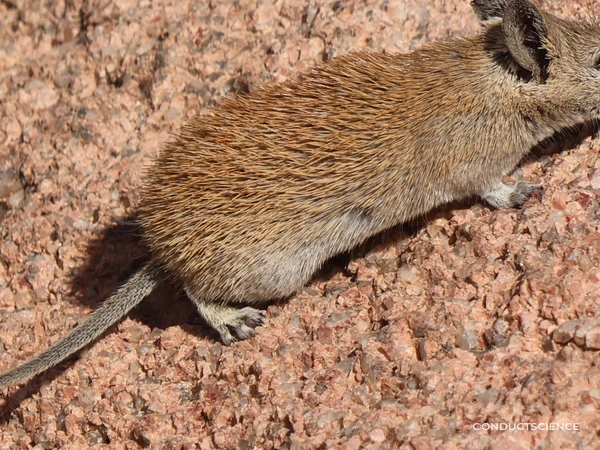
Acomys cahirinus
Spiny mice regenerate skin without scarring, enabling unique studies of how behavioral function recovers alongside tissue regeneration. Locomotor activity, wound grooming, and social re-integration track functional recovery trajectories.

Quantitative Output
Measured Parameters
Every parameter is automatically tracked frame-by-frame in the ConductVision pipeline for Acomys cahirinus.
| Parameter | Unit | Description |
|---|---|---|
| Locomotor activity post-injury | % baseline | Motor function recovery |
| Wound licking/grooming | s/hour | Self-care behavior |
| Social re-integration latency | hours | Return to group after injury |
| Pain-related behavior reduction | days to baseline | Recovery trajectory |
References
Citations for Wound Healing + Behavioral Recovery
- Seifert AW, et al. (2012). Skin shedding and tissue regeneration in African spiny mice (Acomys). Nature, 489(7417), 561-565. PMID: 23018966
Compatible Equipment
Hardware for Spiny Mouse Research
Open Field Arena
Locomotion and anxiety testing
Wound Healing Monitoring System
Long-term behavioral recovery
Social Interaction Chamber
Group behavior observation
Predator Stimulus Apparatus
Autotomy response testing
Video Tracking System
Automated behavior scoring
Related Assays
Other Spiny Mouse Primary Assays
07
Open Field
Acomys cahirinus
Standard open field measures applied to spiny mice reveal locomotor activity, anxiety-like center avoidance, and vertica…
07
Social Interaction
Acomys cahirinus
Spiny mice are communally nesting social animals. Investigation time, huddling behavior, and aggression frequency quanti…
07
Predator Avoidance (Autotomy)
Acomys cahirinus
Spiny mice shed skin under predator grasp — a unique mammalian autotomy response. Escape latency, skin release threshold…
Run Wound Healing + Behavioral Recovery on ConductVision
Our team will configure the protocol, camera rig, and analysis pipeline for your spiny mouse facility.