Behavioral Tracking for Spiny Mouse
Acomys cahirinus
ConductVision delivers automated tracking of spiny mouse wound healing behavior, social interaction, and predator avoidance. Quantify behavioral recovery post-injury, social re-integration, and autotomy responses in Acomys cahirinus.

Why Spiny Mouse in Behavioral Research
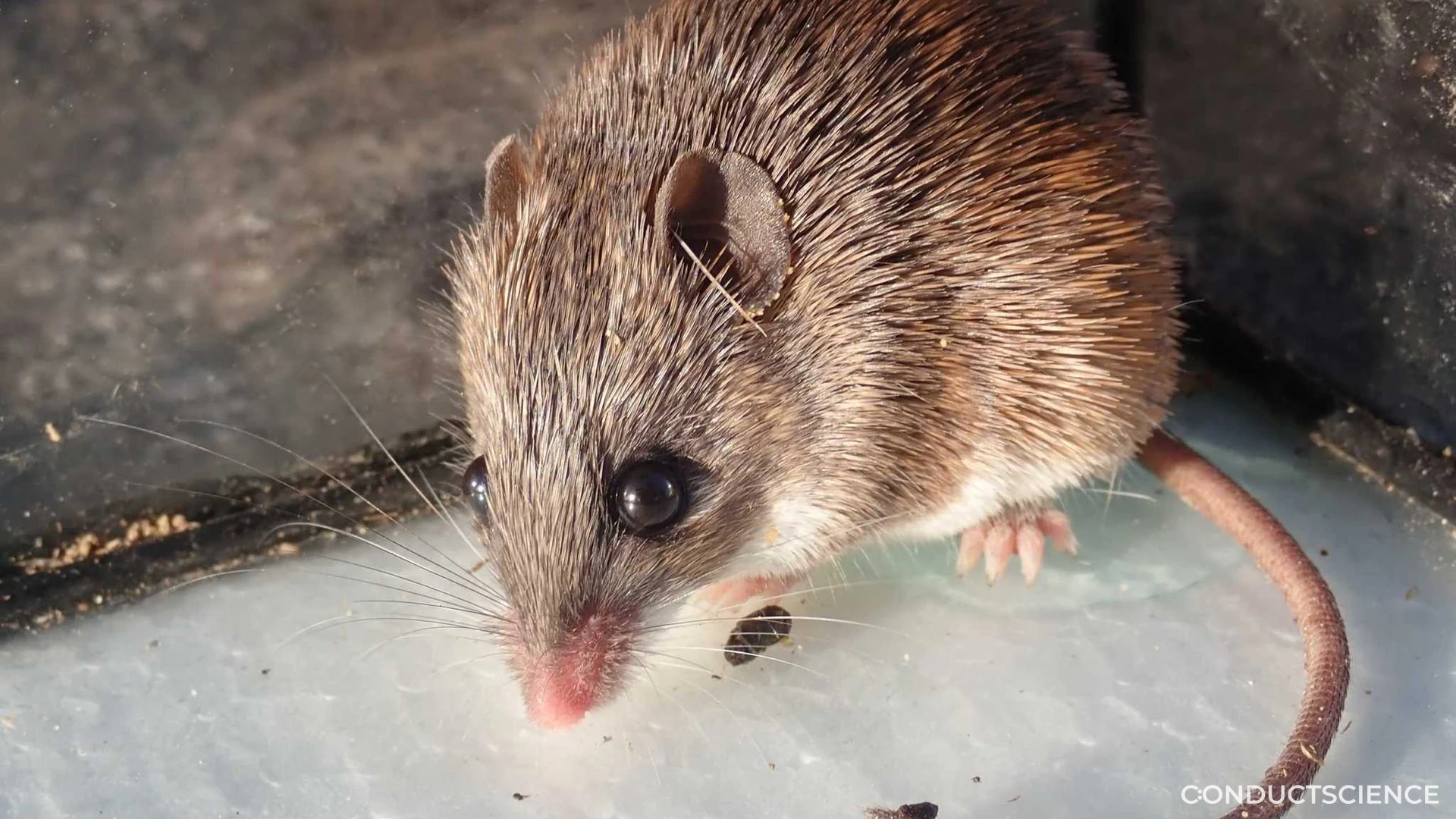
The spiny mouse (Acomys cahirinus) is a remarkable mammalian regeneration model, capable of scar-free healing of skin, ear tissue, and potentially other organs. This makes them uniquely valuable for studying how behavioral recovery tracks with tissue regeneration — a question unanswerable in standard rodent models. Their social behavior, predator-avoidance autotomy response, and communal nesting provide additional quantifiable behavioral endpoints.
Seifert AW, et al. (2012). Skin shedding and tissue regeneration in African spiny mice (Acomys). Nature, 489(7417), 561-565. PMID: 23018966
Gawriluk TR, et al. (2016). Comparative analysis of ear-hole closure identifies epimorphic regeneration as a discrete trait in mammals. Nat Commun, 7, 11164. PMID: 27109826
What We Measure in Spiny Mouse
Validated assays with quantitative parameter tracking for Acomys cahirinus.
Spiny mice regenerate skin without scarring, enabling unique studies of how behavioral function recovers alongside tissue regeneration. Locomotor activity, wound grooming, and social re-integration track functional recovery trajectories.
| Parameter | Unit | Description |
|---|---|---|
| Locomotor activity post-injury | % baseline | Motor function recovery |
| Wound licking/grooming | s/hour | Self-care behavior |
| Social re-integration latency | hours | Return to group after injury |
| Pain-related behavior reduction | days to baseline | Recovery trajectory |
Seifert AW, et al. (2012). Skin shedding and tissue regeneration in African spiny mice (Acomys). Nature, 489(7417), 561-565. PMID: 23018966
Standard open field measures applied to spiny mice reveal locomotor activity, anxiety-like center avoidance, and vertical exploration. These measures serve as baselines for wound healing and regeneration studies.
| Parameter | Unit | Description |
|---|---|---|
| Distance | cm | Locomotor activity |
| Center time | % | Anxiety-like behavior |
| Rearing | count | Vertical exploration |
Seifert AW, et al. (2012). Skin shedding and tissue regeneration in African spiny mice (Acomys). Nature, 489(7417), 561-565. PMID: 23018966
Spiny mice are communally nesting social animals. Investigation time, huddling behavior, and aggression frequency quantify social dynamics and provide endpoints for studying social recovery after injury.
| Parameter | Unit | Description |
|---|---|---|
| Investigation time | s | Sniffing conspecific |
| Huddling | s | Thermoregulatory social contact |
| Aggression frequency | events/10min | Agonistic encounters |
Gawriluk TR, et al. (2016). Comparative analysis of ear-hole closure identifies epimorphic regeneration as a discrete trait in mammals. Nat Commun, 7, 11164. PMID: 27109826
Spiny mice shed skin under predator grasp — a unique mammalian autotomy response. Escape latency, skin release threshold, and post-autotomy locomotion quantify this remarkable anti-predator adaptation.
| Parameter | Unit | Description |
|---|---|---|
| Escape latency | s | Time to flee from threat |
| Skin autotomy threshold | force (g) | Force required for skin release |
| Post-autotomy locomotion | % baseline | Movement ability after skin loss |
Seifert AW, et al. (2012). Skin shedding and tissue regeneration in African spiny mice (Acomys). Nature, 489(7417), 561-565. PMID: 23018966
ConductScience Hardware for Spiny Mouse Research
Open Field Arena
Locomotion and anxiety testing
Wound Healing Monitoring System
Long-term behavioral recovery
Social Interaction Chamber
Group behavior observation
Predator Stimulus Apparatus
Autotomy response testing
Video Tracking System
Automated behavior scoring
Citations & Further Reading
- Seifert AW, et al. (2012). Skin shedding and tissue regeneration in African spiny mice (Acomys). Nature, 489(7417), 561-565. PMID: 23018966
- Gawriluk TR, et al. (2016). Comparative analysis of ear-hole closure identifies epimorphic regeneration as a discrete trait in mammals. Nat Commun, 7, 11164. PMID: 27109826
Other Model Systems
Discuss Your Spiny Mouse Research
Tell us about your models, assays, and experimental goals — we’ll show you how ConductVision fits your workflow.