Behavioral Tracking for Three-Spined Stickleback
Gasterosteus aculeatus
ConductVision delivers automated tracking of stickleback courtship, aggression, and behavioral syndromes. Quantify zigzag dance displays, red-belly territorial defense, and boldness-exploration correlations in Gasterosteus aculeatus.

Why Three-Spined Stickleback in Behavioral Research
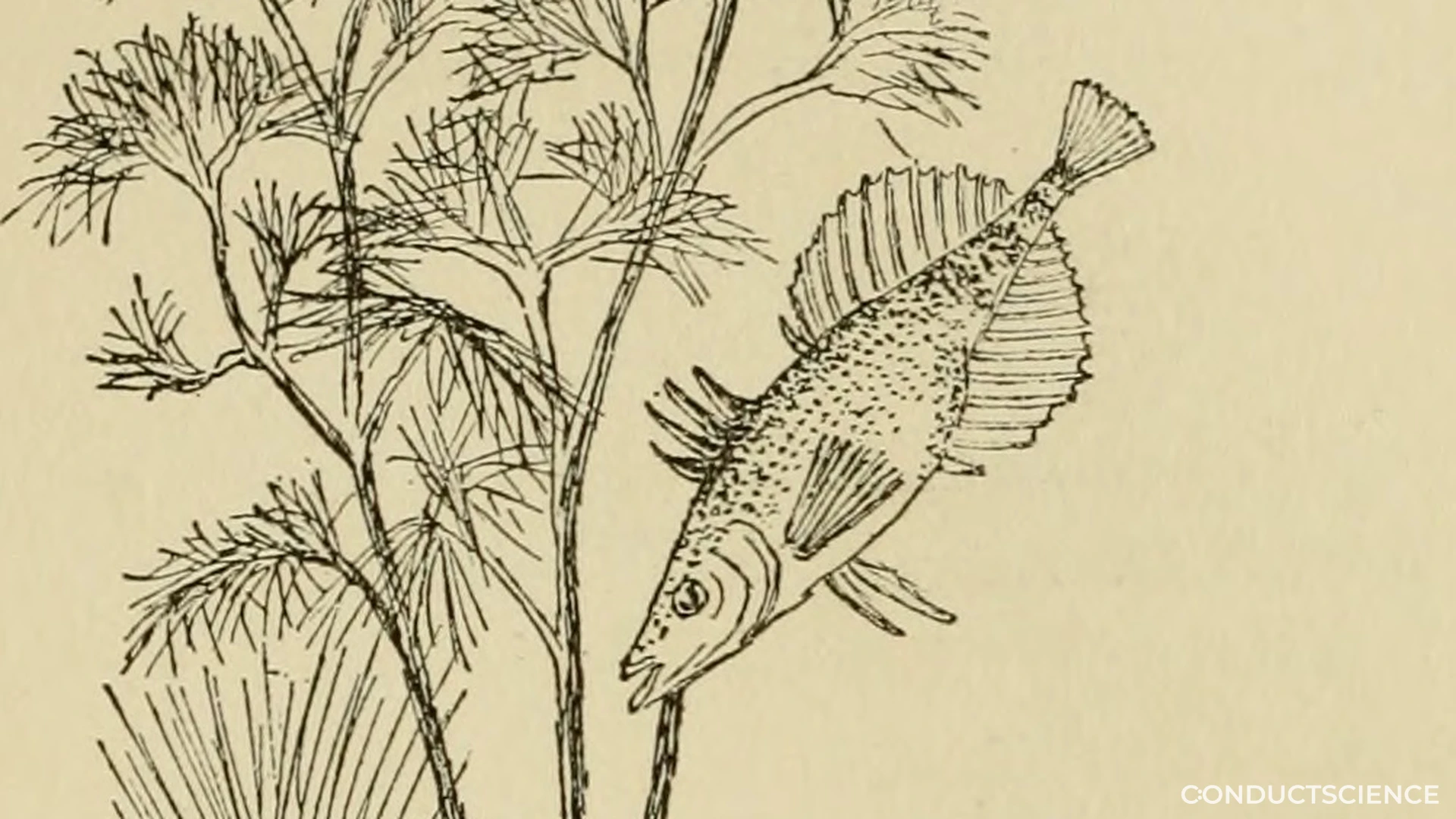
The three-spined stickleback (Gasterosteus aculeatus) is one of the most studied organisms in behavioral ecology and evolutionary biology. Their elaborate zigzag courtship dance, territorial aggression with red-belly displays, and well-documented behavioral syndromes make them a premier model for studying the evolution of behavior. Parallel evolution across lake-stream populations provides natural replicates for linking genotype to behavioral phenotype.
Wootton RJ. (2009). The Darwinian stickleback Gasterosteus aculeatus: a history of evolutionary studies. J Fish Biol, 75(8), 1919-1942. PMID: 20738663
What We Measure in Three-Spined Stickleback
Validated assays with quantitative parameter tracking for Gasterosteus aculeatus.
The zigzag dance is the iconic stickleback courtship display. Zigzag frequency, nest-leading latency, female following probability, and male red coloration intensity provide quantifiable measures of reproductive behavior and sexual selection.
| Parameter | Unit | Description |
|---|---|---|
| Zigzag frequency | events/min | Male courtship display rate |
| Lead-to-nest latency | s | Courtship completion speed |
| Female following probability | % | Receptivity index |
| Red coloration intensity | RGB value | Nuptial color score |
Wootton RJ. (2009). The Darwinian stickleback Gasterosteus aculeatus: a history of evolutionary studies. J Fish Biol, 75(8), 1919-1942. PMID: 20738663
Male sticklebacks defend territories with escalating aggressive displays. Bite frequency, display frequency, and defense latency quantify territorial aggression, a key fitness-related trait.
| Parameter | Unit | Description |
|---|---|---|
| Bite frequency | bites/min | Direct attack rate |
| Display frequency | events/min | Lateral + frontal threats |
| Territory defense latency | s | Response to intruder |
| Escalation level | ordinal | Approach → display → bite → chase |
Wootton RJ. (2009). The Darwinian stickleback Gasterosteus aculeatus: a history of evolutionary studies. J Fish Biol, 75(8), 1919-1942. PMID: 20738663
Shoaling
Stickleback shoaling behavior provides measures of social cohesion and group dynamics. Inter-individual distance, shoal preference, and nearest neighbor distance quantify social attraction and group structure.
| Parameter | Unit | Description |
|---|---|---|
| Group cohesion | mm IID | Inter-individual distance |
| Shoal preference | ratio | Time near group vs alone |
| Nearest neighbor distance | mm | Closest conspecific |
Wootton RJ. (2009). The Darwinian stickleback Gasterosteus aculeatus: a history of evolutionary studies. J Fish Biol, 75(8), 1919-1942. PMID: 20738663
Sticklebacks exhibit correlated suites of behavior (syndromes) where boldness, exploration, and aggression covary consistently. Cross-context consistency measures reveal the structure of animal personality.
| Parameter | Unit | Description |
|---|---|---|
| Emergence latency | s | Time to leave shelter |
| Novel object approach | s | Latency to inspect |
| Open field exploration | mm² | Area covered |
| Consistency across contexts | r | Behavioral syndrome correlation |
Wootton RJ. (2009). The Darwinian stickleback Gasterosteus aculeatus: a history of evolutionary studies. J Fish Biol, 75(8), 1919-1942. PMID: 20738663
Stickleback predator inspection involves approaching a potential predator to assess threat level — a risky behavior with information benefits. Inspection visits, approach distance, and bout duration measure risk-taking.
| Parameter | Unit | Description |
|---|---|---|
| Inspection visits | count | Approaches toward predator |
| Minimum approach distance | cm | Risk-taking measure |
| Inspection bout duration | s | Time near predator |
Wootton RJ. (2009). The Darwinian stickleback Gasterosteus aculeatus: a history of evolutionary studies. J Fish Biol, 75(8), 1919-1942. PMID: 20738663
More Behavioral Tests for Three-Spined Stickleback
Nest Building + Fanning
Key Parameters: Nest completion time, glue application rate, fanning frequency
Wootton RJ. (2009). PMID: 20738663
ConductScience Hardware for Three-Spined Stickleback Research
Courtship Observation Arena
Zigzag dance recording
Territorial Arena with Model
Aggression testing
Shoaling Tank
Group behavior tracking
Novel Object/Environment Setup
Boldness testing
Predator Model System
Inspection behavior analysis
Citations & Further Reading
- Wootton RJ. (2009). The Darwinian stickleback Gasterosteus aculeatus: a history of evolutionary studies. J Fish Biol, 75(8), 1919-1942. PMID: 20738663
Other Model Systems
Discuss Your Stickleback Research
Tell us about your models, assays, and experimental goals — we’ll show you how ConductVision fits your workflow.