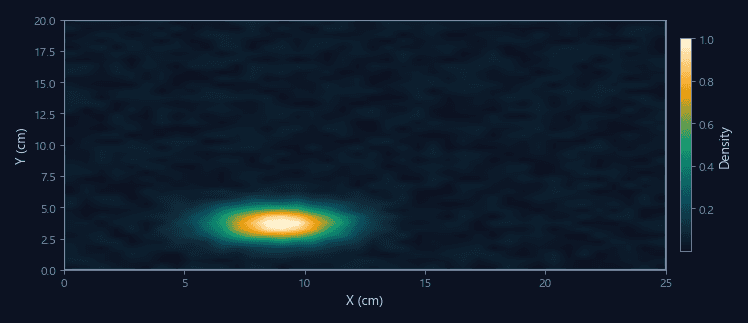
Segmentation mask
Per-frame binary mask of the animal body at pixel resolution. Enables custom downstream analysis of body shape features.
PNG seriesNPY
Pixel-precise animal detection through deep image segmentation
U-Net segmentation produces exact body contours regardless of arena contrast — no threshold tuning, no background calibration, no lost animals on dark bedding.
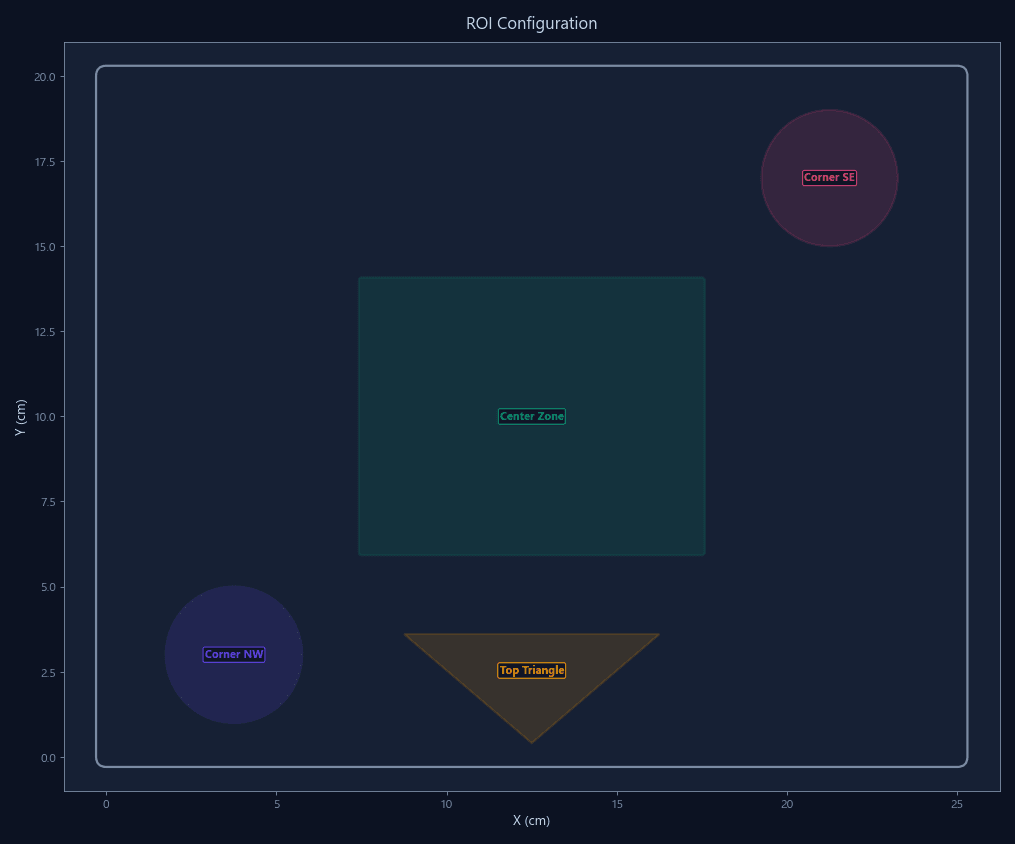
Traditional tracking relies on brightness thresholds to separate the animal from the background. When a dark animal walks on dark bedding, or a white animal is tested on a light surface, threshold detection fails — producing tracking dropouts, fragmented detections, and lost position data.
ConductVision uses a U-Net segmentation model trained on diverse animal/arena combinations. The model produces pixel-level animal masks regardless of contrast, providing exact body contour, area, elongation, and orientation.
Per-frame binary mask of the animal body at pixel resolution. Enables custom downstream analysis of body shape features.
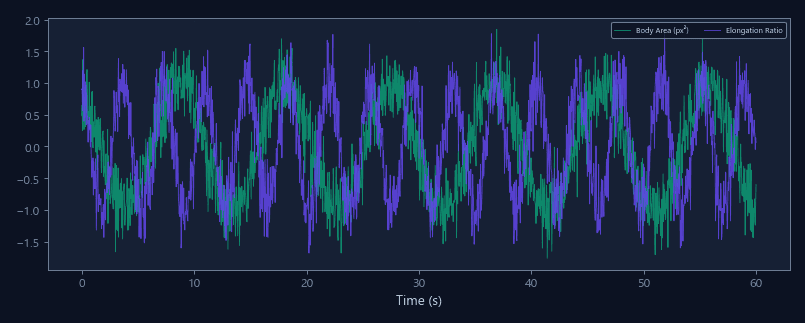
Body area, perimeter, elongation ratio, and major/minor axis lengths per frame — derived from mask geometry.
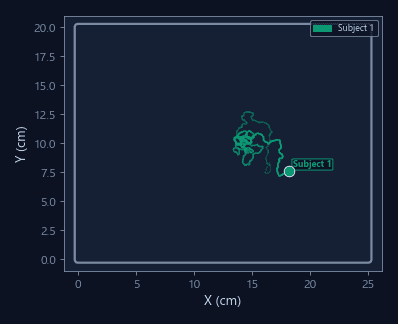
Centroid coordinates from segmentation mask center-of-mass — robust position tracking even in zero-contrast conditions.
Body area change between frames detects freezing more sensitively than centroid displacement — the animal can sway without locomoting.
Black mice on dark corn cob bedding — a common scenario that breaks threshold tracking. Segmentation maintains detection.
Body elongation ratio distinguishes stretched-attend posture from ball posture — an ethologically relevant anxiety indicator.
Individual animal masks enable identity maintenance through close interactions where bounding boxes merge.
| Feature | ConductVision | Typical systems |
|---|---|---|
| Low-contrast detection | Works at any contrast level | Requires contrast threshold tuning |
| Body shape data | Pixel-level contour | Bounding box only |
| Background calibration | Not required | Required before each session |
| Posture features | Elongation, area, orientation | Not available from detection |
| Inference speed | 30 fps real-time | Often post-hoc only |
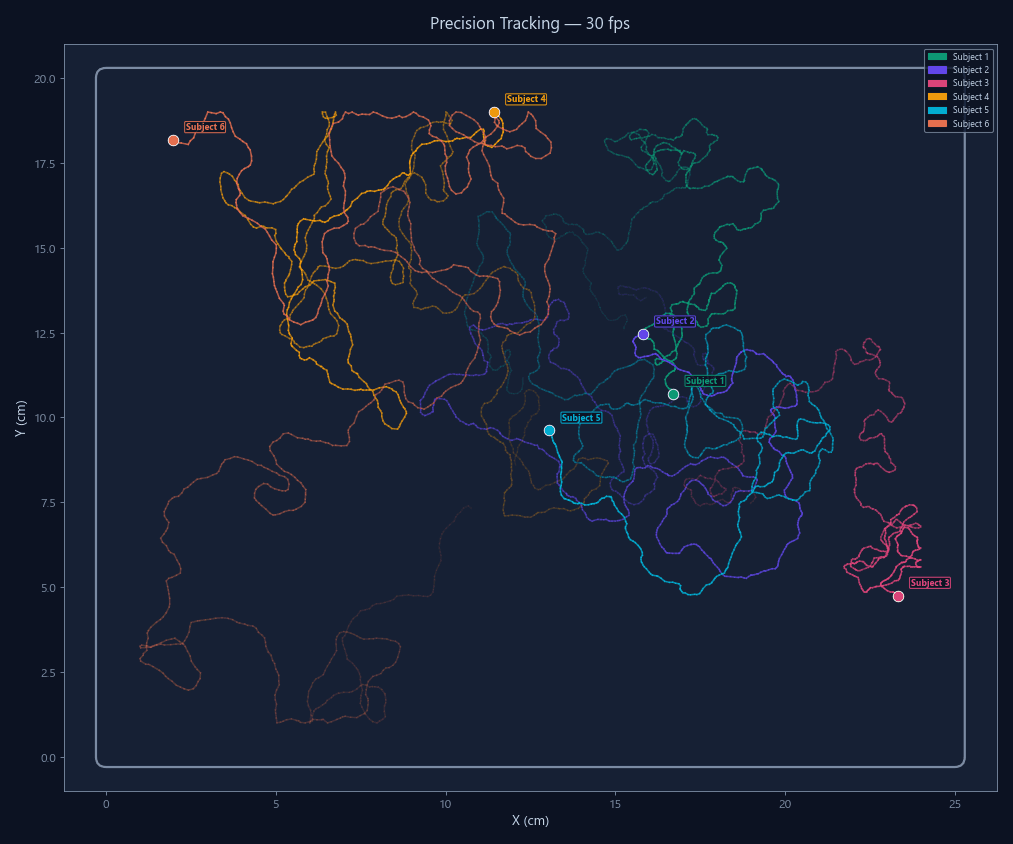
High-resolution 30 fps tracking that captures sub-second behavioral events conventional systems miss.
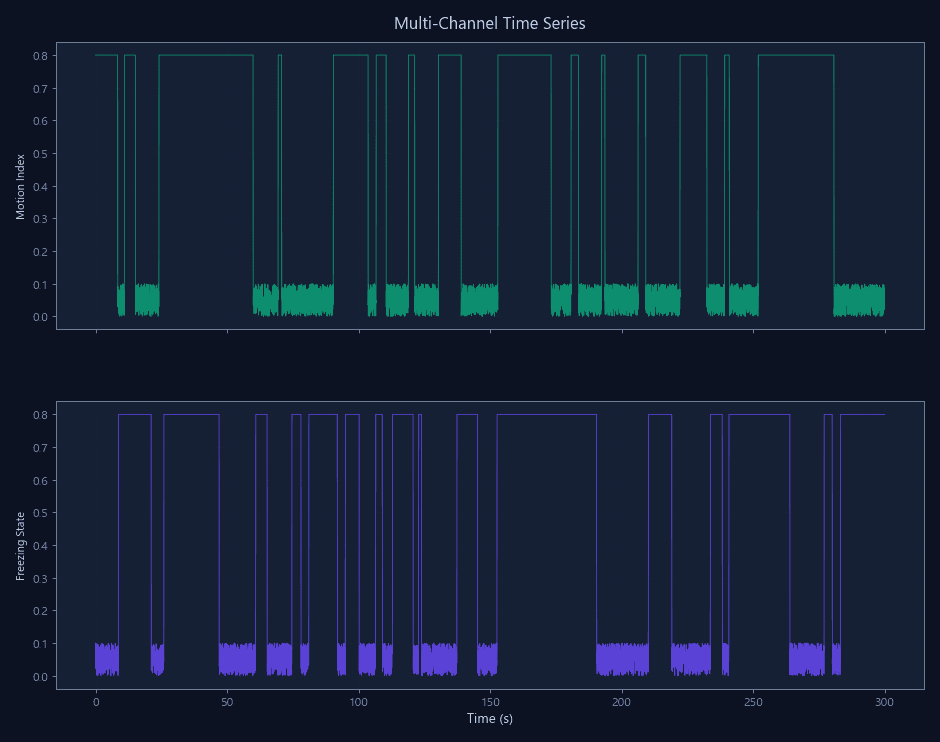
Dual-mode automated freezing scoring with TTL/serial apparatus integration for fear conditioning paradigms.
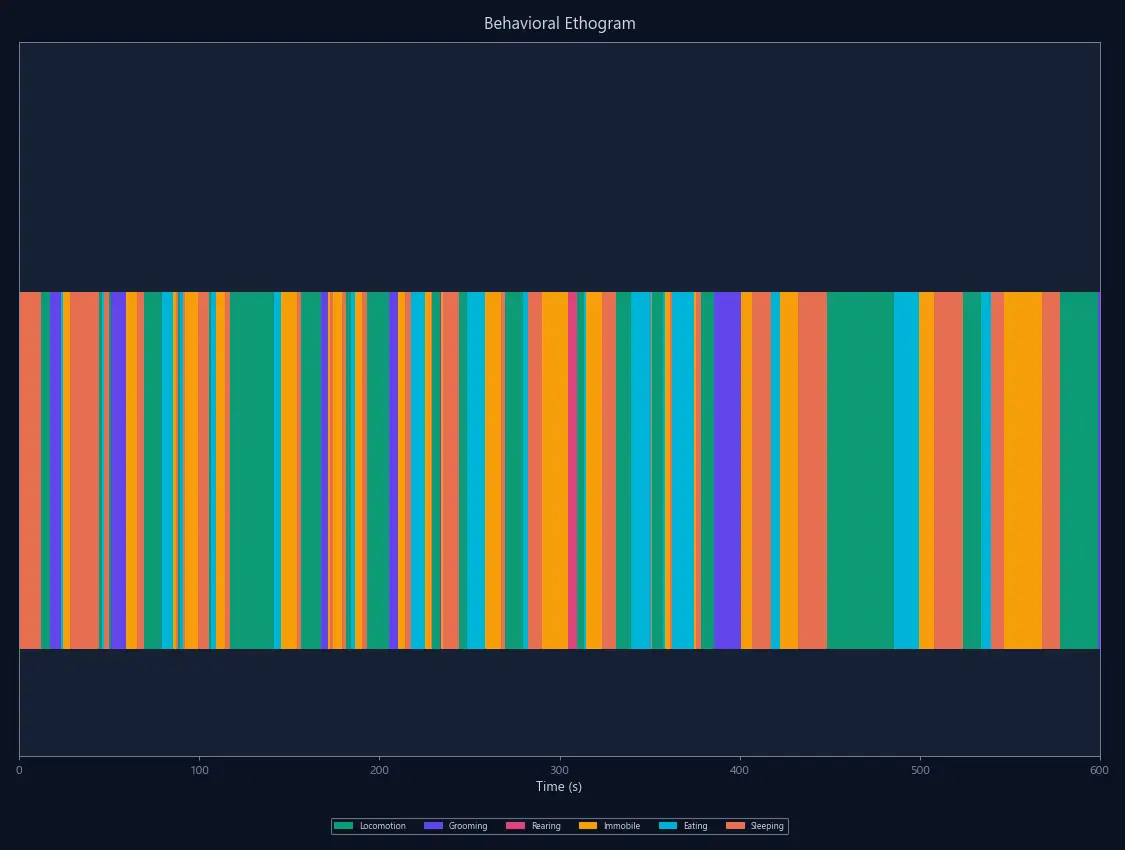
ML-powered frame-level behavioral classification with temporal smoothing and custom classifier training.
Upload a challenging video and see segmentation-based detection maintain tracking where thresholds fail.