Psychomotor slowing assessment from stimulus-response movement timing
Quantify movement timing after visual or auditory prompts for human-performance, fatigue, neurology, and cognitive research.
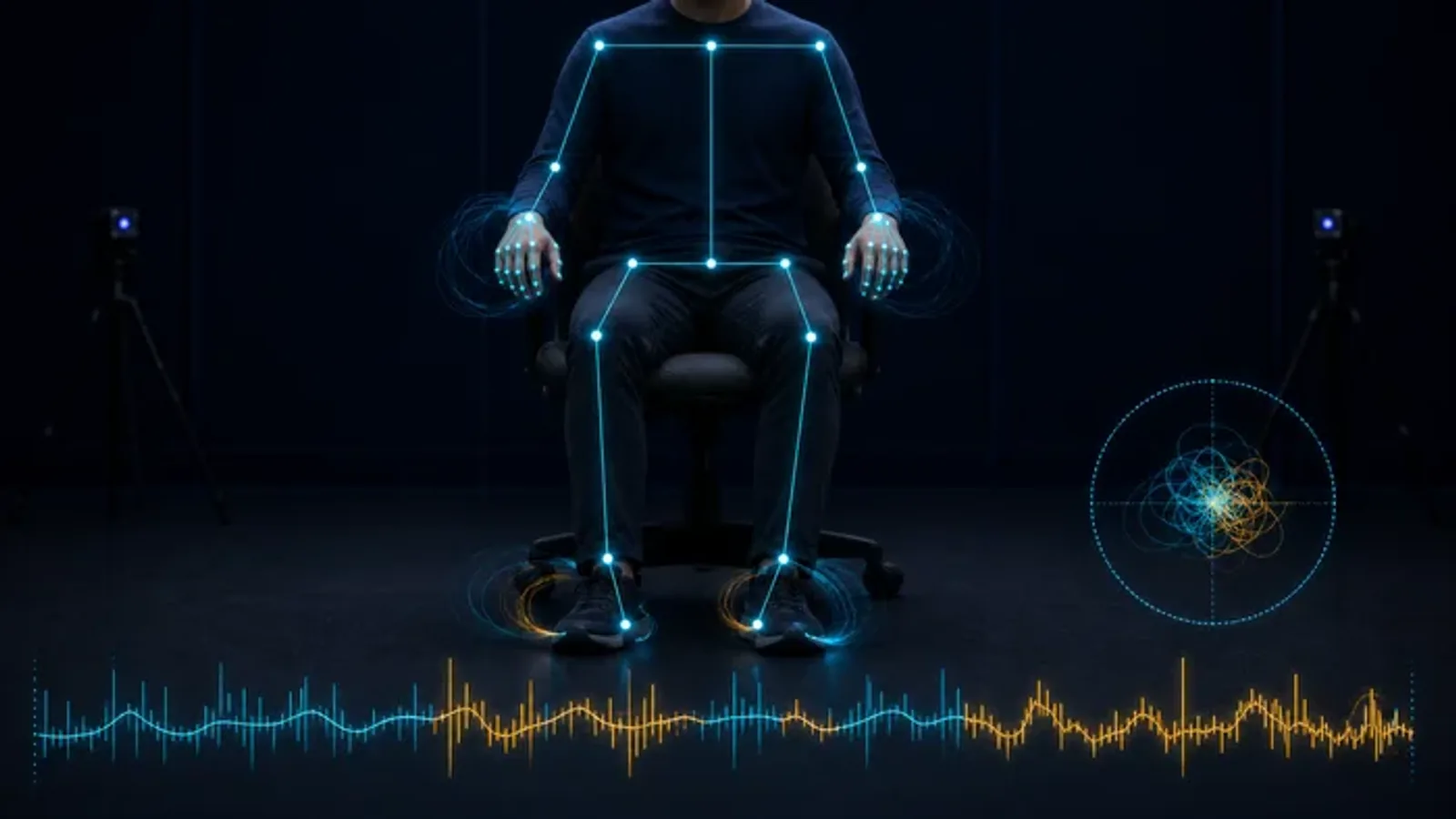
What the camera can measure
These outputs are designed for study comparison, rater review, and statistical analysis. They are not diagnostic claims.
Initiation latency
time from stimulus marker to first visible movement
Movement time
first movement to target contact or task completion
Response variability
trial-to-trial latency distribution
Missed or delayed response
no movement, late movement, or incorrect response event
Build the task around your protocol
ConductVision works best when the task, camera setup, annotations, and export fields are defined before the first participant visit.
Task presets
- simple reaction time
- choice response
- tap response
- go/no-go movement
- vigilance task
Researcher annotations
- stimulus time source
- task block
- sleep or fatigue condition
- medication timing
- missed response
Export fields
- initiation latency
- movement time
- response variability
- missed events
- block summaries
Camera setup
Camera view includes the responding hand or body movement and the stimulus marker or synchronized event log.
Metrics, video signals, and comparators
What is established
Reaction-time and psychomotor vigilance tasks are used in sleep, fatigue, neurocognitive, and human-performance studies.
What ConductVision quantifies
ConductVision measures visible initiation and movement completion, especially when studies need a video audit trail.
What still needs validation
Millisecond precision depends on stimulus synchronization, frame rate, and camera timing validation.
Reviewable data for analysis teams
Exports are built for study notebooks, statistical analysis, and rater review. The video remains available for audit when the protocol allows it.
Scientific context for the task family
These links point to the measurement areas researchers commonly use when validating a protocol.
Research-use measurement note
ConductVision outputs are research-use measurements unless a customer has completed their own clinical validation, regulatory review, and intended-use controls. The study team remains responsible for consent, privacy, camera calibration, rater review, and clinical interpretation.
Adjacent human movement pages
Sports concussion return-to-play
Measure balance, dual-task gait, head control, and landing symmetry during recovery protocols.
Open pageDigital biomarkers in clinical trials
Plan fit-for-purpose video outcomes for gait, tremor, range of motion, dexterity, and remote visits.
Open pageHand function and dexterity
Measure peg placement, finger tapping, reach-to-grasp, hand path, and object interaction timing.
Open pageSleep and circadian movement
Review sleep movement events, restlessness, limb motion, posture changes, and actigraphy context.
Open pageBring reaction time and psychomotor slowing into a real study protocol
Share the task, participant population, camera constraints, and outcomes you need to compare. We will help map what can be measured and what needs validation.