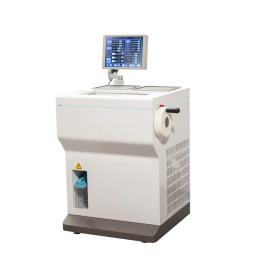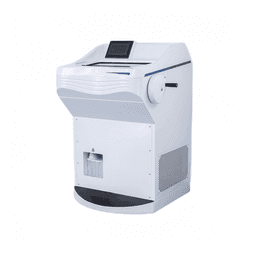
Cryostat Freezing Plus Microtome
$18,000.00
Research data · Pathology
The tissue named most often is brain or spinal cord, in 54% of the 53,978 papers from 2011 to 2025 whose Methods name a cryostat and a tissue.
Mice lead the species, named in 61% of the 55,970 papers that name a cryostat and a species.
Tissues and species in papers that name a cryostat
Each bar is a share of the papers that name a tissue, or of those that name a species. A paper can name more than one of each.
Tissues, of 53,978 papers
Species, of 55,970 papers
| Tissue | Papers | Share |
|---|---|---|
| Brain and spinal cord | 28,946 | 54% |
| Muscle | 4,190 | 8% |
| Eye | 3,265 | 6% |
| Tumors | 3,202 | 6% |
| Heart and vessels | 2,980 | 6% |
| Embryos and larvae | 2,658 | 5% |
| Liver | 2,450 | 5% |
| Nerves and ganglia | 1,953 | 4% |
| Skin | 1,933 | 4% |
| Gut | 1,647 | 3% |
| Bone and cartilage | 1,613 | 3% |
| Kidney | 1,490 | 3% |
| Lung | 1,475 | 3% |
| Lymphoid organs | 1,360 | 3% |
| Reproductive organs | 1,308 | 2% |
| Plant tissue | 938 | 2% |
| Pancreas | 501 | 1% |
| Fat | 316 | 1% |
| Teeth | 133 | under 1% |
| Bone marrow | 108 | under 1% |
| Species | Papers | Share |
|---|---|---|
| Mouse | 33,925 | 61% |
| Rat | 12,252 | 22% |
| Human | 5,628 | 10% |
| Plants | 1,038 | 2% |
| Pig | 827 | 1% |
| Birds | 808 | 1% |
| Other mammals | 802 | 1% |
| Zebrafish | 777 | 1% |
| Rabbit | 511 | 1% |
| Monkey | 453 | 1% |
| Sheep and goats | 433 | 1% |
| Cattle | 295 | 1% |
| Other fish | 251 | under 1% |
| Frogs and amphibians | 214 | under 1% |
| Dog | 162 | under 1% |
| Flies | 147 | under 1% |
63,887 papers from 2011 to 2025 name a cryostat. In 2011 to 2015, 155.6 of every 10,000 research articles named one. In 2021 to 2025, 108.8 did.
Papers that name a cryostat, per 10,000 research articles
Per 10,000 research articles with a Methods section in PubMed Central's open-access set, each counted once.
| Year | Papers that name a cryostat | Research articles read | Per 10,000 |
|---|---|---|---|
| 2011 | 2,148 | 118,435 | 181.4 |
| 2012 | 2,498 | 144,042 | 173.4 |
| 2013 | 2,764 | 173,400 | 159.4 |
| 2014 | 2,751 | 193,750 | 142.0 |
| 2015 | 2,997 | 216,043 | 138.7 |
| 2016 | 3,415 | 239,533 | 142.6 |
| 2017 | 3,768 | 261,864 | 143.9 |
| 2018 | 3,896 | 284,305 | 137.0 |
| 2019 | 4,136 | 324,746 | 127.4 |
| 2020 | 4,921 | 416,410 | 118.2 |
| 2021 | 5,698 | 511,108 | 111.5 |
| 2022 | 5,796 | 578,059 | 100.3 |
| 2023 | 5,815 | 525,881 | 110.6 |
| 2024 | 6,075 | 554,710 | 109.5 |
| 2025 | 7,209 | 642,986 | 112.1 |
63,605 open-access papers from 2011 to 2025 give a cryostat section thickness, whether or not they name a tissue. Of these, 23% report 10 µm, 14% report 20 µm and 9% report 30 µm. The median section thickness is 12 µm.
The chart shows single values, leaving out 3,595 section thicknesses given as a range.
| Section thickness | Papers | Share of papers |
|---|---|---|
| 10 µm | 14,856 | 23% |
| 20 µm | 8,849 | 14% |
| 30 µm | 5,830 | 9% |
| 40 µm | 4,557 | 7% |
| 5 µm | 4,380 | 7% |
| 8 µm | 3,939 | 6% |
| 12 µm | 3,867 | 6% |
| 7 µm | 2,731 | 4% |
| 14 µm | 2,528 | 4% |
| 50 µm | 2,231 | 4% |
A rule-based text search took each thickness from the Methods sentence saying the sections were cut on a cryostat. It left out sections thicker than 100 µm. A paper that names the same section thickness more than once counts once. To check the search, we picked 200 section thicknesses at random, each from a different paper, half cut on cryostats and half on microtomes. An AI model (Claude Opus 5.5) checked these section thicknesses against the sentences they came from, in two separate runs in November 2026. A value counted as right only when its number, unit and instrument all matched its source sentence. Counting cryostat and microtome values together, each run found 197 of the 200 section thicknesses right.
Its listed section thickness range, 0 µm to 999.9 µm, covers every section thickness counted here, since the count stops at 100 µm.
5,210 open-access papers from 2011 to 2025 give a cryostat cutting temperature, whether or not they name a tissue. Of these, 60% report −20 °C, 8% report −25 °C and 5% report −18 °C. The median cutting temperature is also −20 °C.
The chart shows single values, leaving out 208 cutting temperatures given as a range.
| Cutting temperature | Papers | Share of papers |
|---|---|---|
| −20 °C | 3,104 | 60% |
| −25 °C | 411 | 8% |
| −18 °C | 276 | 5% |
| −22 °C | 201 | 4% |
| −15 °C | 184 | 4% |
| −21 °C | 144 | 3% |
| −30 °C | 123 | 2% |
| −24 °C | 105 | 2% |
| −23 °C | 105 | 2% |
| −16 °C | 93 | 2% |
A rule-based text search took each temperature from the Methods sentence saying the cryostat cut sections at that temperature. It left out temperatures for storing, freezing, embedding or fixing tissue. The search does not separate chamber temperature from specimen temperature. A paper that names the same cutting temperature more than once counts once. To check the search, we picked 200 cutting temperatures at random, each from a different paper. An AI model (Claude Opus 5.5) checked these cutting temperatures against the sentences they came from, in two separate runs in November 2026. A value counted as right only when its number and unit matched its source sentence. Each run found 197 of the 200 cutting temperatures right.
Its listed chamber temperature range, −30 °C to 20 °C, covers more than 99% of the cutting temperatures counted here.
Its listed chamber temperature range, −50 °C to 10 °C, covers every cutting temperature counted here.
FDA puts cryostats in Class I and exempts them from 510(k) premarket notification (21 CFR 864.3010, tissue processing equipment).
FDA holds 40 reports about cryostats received from 2000 to 2026. In 21 of them (53%), a person was cut.
These counts reflect how often makers and users file reports, not how often instruments fail.
US federal labs paid a median of $33,407 for a cryostat. Across 187 purchases in the fiscal years 2016 to 2026, the middle half of purchases ran from $27,565 to $47,502 a unit. The Department of Veterans Affairs made 64% of the purchases of cryostats. Our listed prices for a cryostat run from $17,550 to $18,000, up to each product’s most expensive option. Federal labs also bought 62 service contracts on cryostats, at a median of $9,900 each.