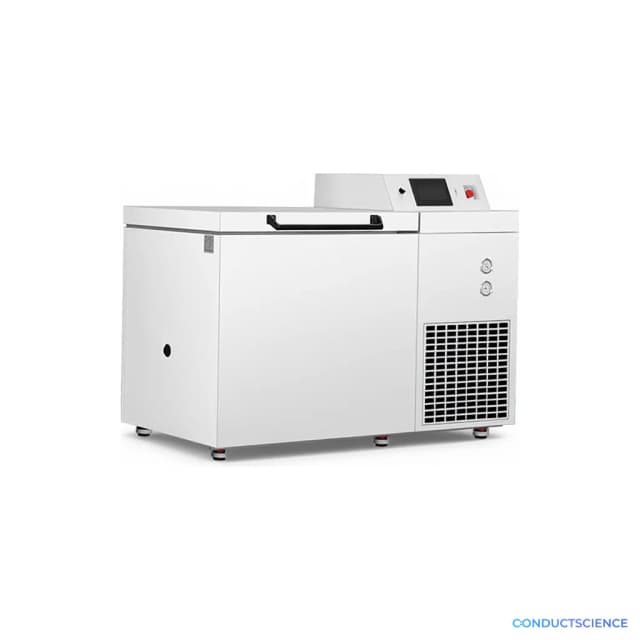
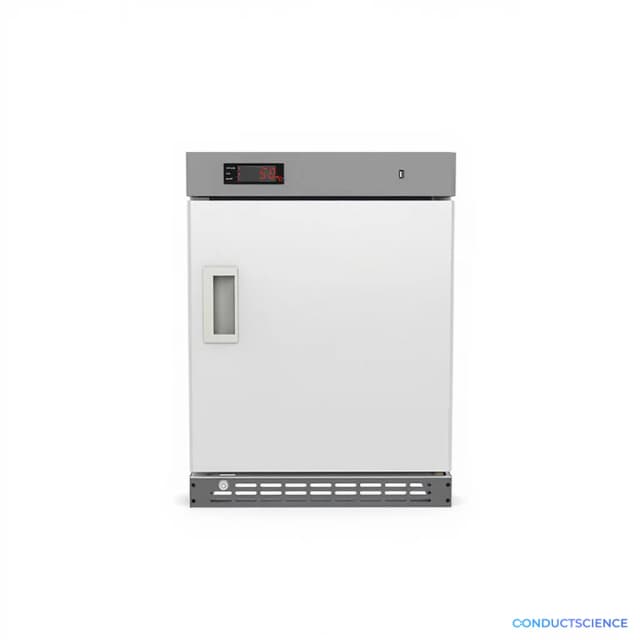
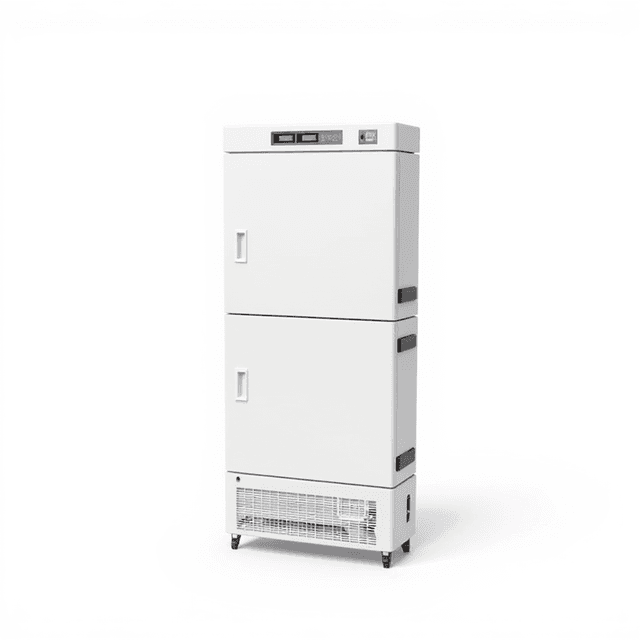
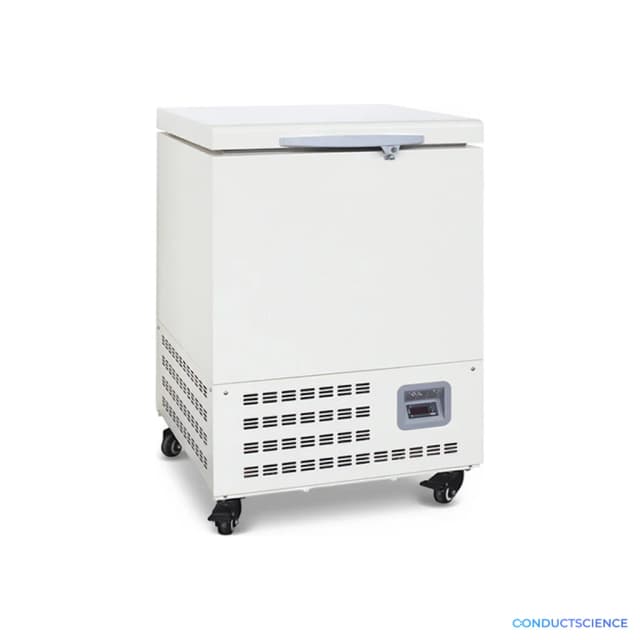
150℃ Freezer 138L 226L
Ultra-low temperature freezer offering -150°C storage capability in 138L or 226L capacity configurations for reliable preservation of biological samples and temperature-sensitive materials.
| Automation Level | manual |

The 150°C Freezer provides ultra-low temperature storage for biological samples, reagents, and materials requiring preservation at temperatures down to -150°C. This compact unit offers dual capacity options of 138L or 226L storage volume, designed for laboratory environments where space efficiency and reliable temperature control are essential. The freezer utilizes advanced cooling technology to maintain consistent ultra-low temperatures, preventing thermal fluctuations that can compromise sample integrity.
Constructed with laboratory-grade materials and insulation, this unit supports long-term storage protocols for biospecimens, cell cultures, enzymes, and other temperature-sensitive materials. The compact footprint (50 x 63 x 44 cm) allows placement in standard laboratory spaces while providing sufficient capacity for routine research operations. Temperature uniformity and stability characteristics support applications requiring strict temperature maintenance over extended storage periods.
How It Works
Ultra-low temperature freezers operate through multi-stage refrigeration systems that achieve temperatures significantly below conventional freezing points. The cooling mechanism typically employs cascade refrigeration or specialized refrigerants capable of reaching -150°C operating temperatures. Thermal insulation systems minimize heat transfer from ambient conditions, while temperature control systems maintain precise thermal regulation within the storage chamber.
The freezing process at ultra-low temperatures causes rapid crystallization of water within biological samples, forming smaller ice crystals that cause less cellular damage compared to slower freezing methods. At -150°C, molecular motion is significantly reduced, effectively halting enzymatic activity and chemical reactions that could degrade stored materials. The controlled cooling rate and stable temperature maintenance prevent thermal cycling that can compromise sample integrity through repeated freeze-thaw effects.
Features & Benefits
Automation Level
- manual
Research Domain
- Analytical Chemistry
- Cell Biology
- Clinical Diagnostics
- Environmental Monitoring
- Microbiology
- Pharmaceutical QC
Weight
- 190.0 kg
Dimensions
- L: 50.0 mm
- W: 63.0 mm
- H: 44.0 mm
Comparison Guide
| Feature | This Product | Typical Alternative | Advantage |
|---|---|---|---|
| Temperature Range | Operates down to -150°C | Standard ultra-low freezers typically operate to -80°C to -120°C | Enables storage of materials requiring temperatures below conventional ultra-low freezer capabilities |
| Storage Capacity Options | Available in 138L and 226L configurations | Entry-level models often offer single capacity options | Provides flexibility to match storage volume to laboratory space and throughput requirements |
| Footprint Efficiency | Compact 50 x 63 x 44 cm dimensions | Larger units may require more floor space for equivalent capacity | Maximizes storage capacity per square foot of laboratory space |
| Construction Weight | 190 kg robust construction | Lighter units may have less thermal stability | Substantial thermal mass contributes to temperature stability and reduced fluctuations |
This freezer offers ultra-low temperature capability down to -150°C in a compact design with dual capacity options. The robust construction and efficient footprint provide reliable ultra-low temperature storage for space-constrained laboratory environments.
Practical Tips
Verify temperature accuracy using multiple calibrated temperature probes placed throughout the storage volume.
Why: Ensures uniform temperature distribution and validates storage conditions for regulatory documentation.
Clean condenser coils monthly and check door seal integrity during routine maintenance cycles.
Why: Prevents reduced cooling efficiency and temperature instability from accumulated debris or air leaks.
Pre-cool storage containers to ultra-low temperatures before sample loading to minimize thermal load.
Why: Reduces temperature recovery time and prevents thermal stress on previously stored samples.
Use appropriate personal protective equipment when handling materials at ultra-low temperatures.
Why: Prevents cold burns and frostbite injuries from direct contact with ultra-low temperature surfaces or samples.
Maintain continuous temperature logs and document any temperature excursions for sample integrity assessment.
Why: Provides traceability for regulatory compliance and enables evaluation of sample quality following temperature events.
Monitor power consumption patterns to identify potential refrigeration system performance issues.
Why: Early detection of cooling system problems prevents sample loss from temperature failure.
Organize samples with clear labeling system and inventory management to minimize door opening time.
Why: Reduces thermal load and maintains stable storage conditions for all samples in the unit.
Setup Guide
What’s in the Box
- Main freezer unit
- Power cable
- User manual and documentation
- Storage shelves/racks (typical)
- Temperature monitoring accessories (typical)
- Warranty documentation
Warranty
ConductScience provides a standard one-year manufacturer warranty covering defects in materials and workmanship, with technical support available for troubleshooting and operational guidance.
Compliance
References
Background reading relevant to this product:
What is the temperature uniformity throughout the storage chamber?
Consult product datasheet for specific temperature uniformity specifications across the storage volume, as this varies with chamber design and insulation configuration.
How long does initial cooldown take to reach -150°C?
Cooldown time depends on ambient conditions and thermal load. Consult product specifications for typical cooldown performance under standard laboratory conditions.
What type of storage containers are recommended for ultra-low temperatures?
Use containers specifically rated for ultra-low temperature applications, such as polypropylene vials or specialized cryogenic storage tubes that maintain integrity at -150°C.
Can the unit recover temperature quickly after door opening?
Recovery time depends on chamber size, insulation efficiency, and thermal load. Minimize door opening duration to maintain temperature stability and consult specifications for recovery performance.
What monitoring options are available for temperature tracking?
Temperature monitoring capabilities vary by model configuration. Consult product specifications for built-in monitoring features, alarm systems, and data logging options.
How does this compare to liquid nitrogen storage systems?
Electric ultra-low freezers provide consistent temperature control without liquid nitrogen refilling requirements, offering more stable long-term storage with automated temperature maintenance.
What maintenance is required for optimal performance?
Regular maintenance includes cleaning condenser coils, checking door seals, calibrating temperature controls, and monitoring refrigeration system performance according to manufacturer guidelines.
Have a question about this product?
Accessories
Enhance your setup with compatible accessories
Upgrade Options