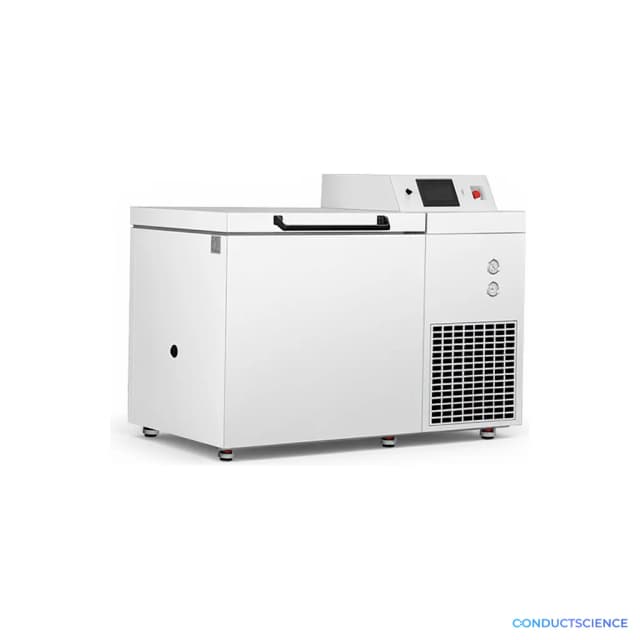
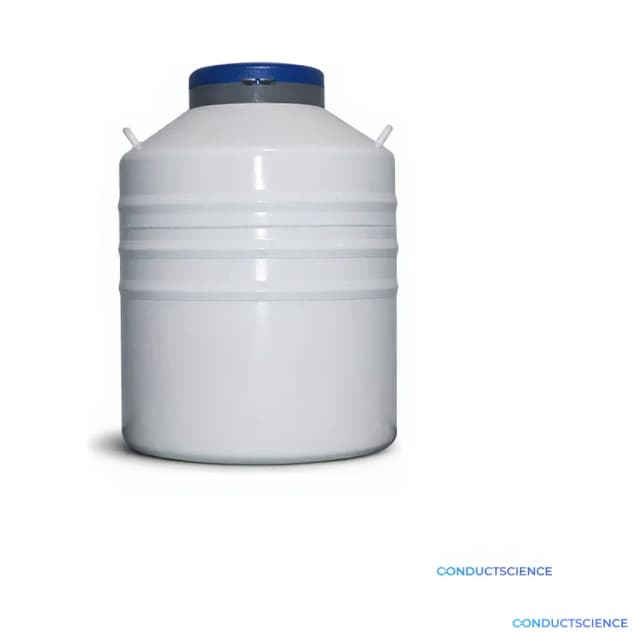
150℃ freezer 128L
Compact 128-liter laboratory freezer maintaining -150°C for ultra-low temperature storage of biological specimens, reagents, and temperature-sensitive research materials.

Louise Corscadden, PhD
Director of Science · ConductScience
Ask Louise about 150℃ freezer 128L fit, setup, configuration, or quote prep.
Already working with us? Sign in to connect this with My Scientist.
This 128-liter laboratory freezer provides controlled storage at -150°C for long-term preservation of biological specimens, reagents, and temperature-sensitive materials. The unit offers reliable ultra-low temperature maintenance essential for biobanking, sample archiving, and cryogenic storage applications where specimen integrity depends on consistent freezing conditions.
With compact dimensions of 57.8 × 50.0 × 45.0 cm, the freezer fits standard laboratory bench configurations while providing sufficient capacity for routine sample storage workflows. The system supports research protocols requiring stable cryogenic temperatures for extended periods, making it suitable for laboratories conducting biospecimen collection, molecular biology sample preparation, and long-term storage studies.
How It Works
Ultra-low temperature freezers operate through a cascade refrigeration system utilizing specialized refrigerants and insulation materials to achieve and maintain temperatures of -150°C. The system employs multiple cooling stages where each stage progressively reduces temperature, with the final stage reaching the target cryogenic temperature through expansion of refrigerant gases.
Temperature stability is maintained through electronic temperature controllers that monitor internal conditions and adjust compressor operation to compensate for thermal loads introduced during door openings or sample placement. The freezer cabinet utilizes vacuum-insulated panels or high-density foam insulation to minimize heat transfer from the external environment.
The storage chamber provides uniform temperature distribution through internal air circulation systems, ensuring consistent cooling across all storage positions. Temperature monitoring systems continuously track internal conditions and provide alarms for temperature excursions that could compromise sample integrity.
Features & Benefits
Automation Level
- manual
Research Domain
- Analytical Chemistry
- Cancer Research
- Cell Biology
- Clinical Diagnostics
- Immunology
- Microbiology
- Molecular Biology
- Pharmaceutical QC
Weight
- 245.0 kg
Dimensions
- L: 57.8 mm
- W: 50.0 mm
- H: 45.0 mm
| Feature | This Product | Typical Alternative | Advantage |
|---|---|---|---|
| Operating Temperature | -150°C ultra-low temperature capability | Entry-level models often operate at -80°C to -130°C | Lower temperatures provide enhanced sample stability for extended storage periods and specialized cryopreservation protocols. |
| Storage Capacity | 128-liter internal volume | Compact models typically offer 50-100 liters | Larger capacity accommodates extensive sample collections while maintaining benchtop compatibility. |
| Physical Footprint | Compact 57.8 × 50.0 × 45.0 cm dimensions | Similar capacity units often require larger floor space | Space-efficient design fits standard laboratory configurations without dedicated equipment areas. |
| Construction Weight | 245 kg robust construction | Lighter units may compromise insulation performance | Heavy-duty construction indicates superior insulation and thermal stability for consistent performance. |
This freezer combines ultra-low temperature capability with compact laboratory-friendly dimensions and substantial storage capacity. The robust construction and -150°C operating temperature support demanding cryopreservation applications where sample integrity is critical.
Practical Tips
Verify temperature accuracy using multiple calibrated temperature probes placed in different storage positions within the chamber.
Why: Temperature uniformity verification ensures consistent sample storage conditions throughout the storage volume.
Clean condenser coils monthly and inspect door gaskets regularly for proper sealing to maintain efficient operation.
Why: Proper maintenance prevents thermal loss and reduces energy consumption while extending equipment lifespan.
Pre-cool storage containers and minimize door opening time to reduce thermal load on the refrigeration system.
Why: Minimizing thermal disruption maintains stable storage conditions and prevents temperature excursions that could affect sample integrity.
Install proper ventilation around the unit and ensure electrical connections are grounded according to laboratory safety standards.
Why: Adequate ventilation prevents heat buildup and proper grounding protects against electrical hazards in laboratory environments.
Implement continuous temperature monitoring with data logging capabilities for sample storage documentation.
Why: Temperature records provide traceability for regulatory compliance and sample quality assurance in research applications.
Monitor cooldown performance during initial startup to identify potential refrigeration system issues early.
Why: Early detection of performance problems prevents sample loss and allows for timely maintenance or repair interventions.
Setup Guide
What’s in the Box
- Ultra-low temperature freezer unit
- Power cable (typical)
- User manual and documentation (typical)
- Warranty registration materials (typical)
- Storage accessories (typical)
Warranty
ConductScience provides standard manufacturer warranty coverage for this ultra-low temperature freezer, typically including one year of parts and labor protection with technical support for proper operation and maintenance.
Compliance
References
Background reading relevant to this product:
What is the temperature uniformity throughout the storage chamber?
Consult product datasheet for specific temperature uniformity specifications. Ultra-low freezers typically maintain temperature variations within ±2-3°C across the storage volume.
How long does initial cooldown take to reach -150°C?
Initial cooldown time depends on ambient conditions and thermal load. Consult product specifications for cooldown performance data under standard laboratory conditions.
What type of refrigeration system is used?
Consult technical documentation for specific refrigeration system details including compressor type, refrigerants used, and cooling mechanism specifications.
Is temperature monitoring and alarming included?
Consult product specifications for built-in monitoring capabilities. External temperature monitoring systems may be required for comprehensive sample protection.
What are the power requirements and energy consumption?
Consult product datasheet for electrical specifications including voltage, current draw, and power consumption during normal operation and cooldown cycles.
How does this compare to liquid nitrogen storage systems?
Electric ultra-low freezers provide consistent temperature without liquid nitrogen replenishment requirements, though may not achieve the extremely low temperatures possible with LN2 systems.
What maintenance procedures are required?
Regular maintenance typically includes cleaning condenser coils, checking door seals, and verifying temperature calibration. Consult user manual for specific maintenance schedules and procedures.
Have a question about this product?
Accessories
Enhance your setup with compatible accessories
Upgrade Options