30L Vertical Autoclave
30L gravity displacement steam autoclave with pre-programmed cycles for laboratory sterilization of instruments, media, and materials at temperatures up to 136°C with 0.1°C precision monitoring.
| door_structure | Flip-open door structure with spring booster |
| sealing_system | Radial self-expanding silicone rubber seals |
| sterilization_programs | Fixed programs for dressings, unwrapped and wrapped equipment, rubber, and liquid |
| safety_interlock | Mechanical safety interlock feature |
| external_coating | Anti-bacteria powder coating |
| optional_accessories | Printer for recording sterilization data, Stainless steel bucket |

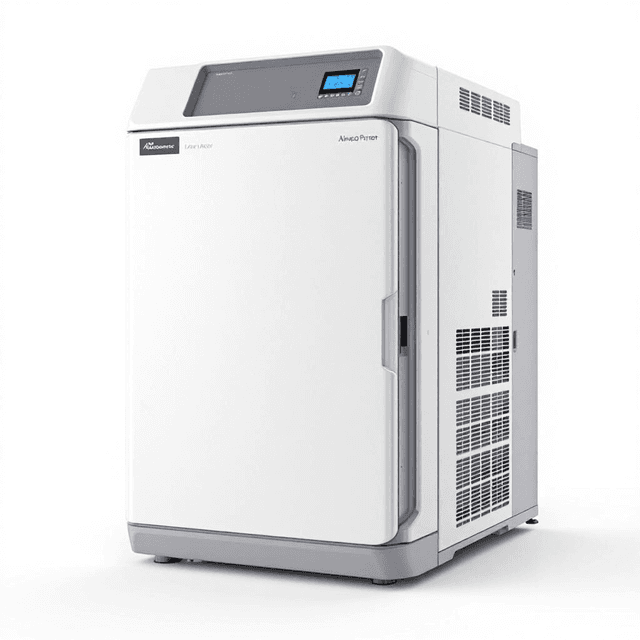
The 30L Vertical Autoclave is a gravity displacement steam sterilizer engineered for laboratory and clinical applications requiring reliable sterilization of instruments, media, and laboratory materials. Operating at a working pressure of 0.23 MPa with temperatures ranging from 105°C to 136°C, this unit delivers effective sterilization through saturated steam under pressure using cold-rolled steel construction with anti-bacterial powder coating.
The autoclave accommodates a 30L chamber (φ386×490mm) with pre-programmed sterilization cycles for dressings, unwrapped equipment, wrapped instruments, rubber materials, and liquid media. The flip-open door design with spring booster mechanism facilitates loading and unloading, while radial self-expanding silicone rubber seals ensure reliable steam containment. LED display provides real-time monitoring of chamber temperature with 0.1°C precision, cycle timing, and system status codes for operational control.
How It Works
The autoclave operates on the principle of moist heat sterilization using saturated steam under pressure. Steam at 0.23 MPa working pressure penetrates materials and coagulates microbial proteins, achieving sterilization temperatures between 105°C and 136°C. The gravity displacement mechanism relies on steam entering the chamber and displacing cooler air through a drain at the bottom, creating uniform temperature distribution.
The sterilization process begins with air removal from the chamber, followed by steam injection to achieve the preset temperature and pressure. The radial self-expanding silicone rubber seals maintain pressure integrity while the LED display monitors chamber temperature with 0.1°C precision. Pre-programmed cycles adjust time and temperature parameters based on load type - dressings, wrapped or unwrapped instruments, rubber materials, or liquid media - ensuring appropriate sterilization conditions for different material properties.
The automatic exhausting steam function facilitates proper drying after sterilization, while the mechanical safety interlock feature prevents door opening during pressurized operation. The anti-bacterial powder coating on the cold-rolled steel construction provides additional contamination resistance during routine laboratory use.
Features & Benefits
door_structure
- Flip-open door structure with spring booster
sealing_system
- Radial self-expanding silicone rubber seals
sterilization_programs
- Fixed programs for dressings, unwrapped and wrapped equipment, rubber, and liquid
safety_interlock
- Mechanical safety interlock feature
external_coating
- Anti-bacteria powder coating
optional_accessories
- Printer for recording sterilization data, Stainless steel bucket
steam_function
- Automatic exhausting steam function
door_cover
- Completely wrapped door cover for scald prevention
Capacity
- 30L
- 50L
- 75L
- 100L
Automation Level
- semi-automated
Designed Pressure
- 0.28MPa
Working Pressure
- 0.23MPa
Designed Temperature
- 150°C
Working Temperature
- 105~136°C
Temperature Precision
- 0.1°C
Chamber Size
- φ386×490mm
Material
- Cold rolled steel
- silicone rubber
Display Type
- LED
Research Domain
- Cell Biology
- Clinical Diagnostics
- Food Science
- Histopathology
- Microbiology
- Pharmaceutical QC
Power/Voltage
- AC220V, 50/60Hz
Weight
- 127.0 kg
Dimensions
- L: 45.0 mm
- W: 39.8 mm
- H: 44.8 mm
Comparison Guide
| Feature | This Product | Typical Alternative | Advantage |
|---|---|---|---|
| Chamber Capacity | 30L with φ386×490mm dimensions | Entry-level models often offer 16-25L capacity | Larger capacity reduces number of sterilization cycles needed for batch processing. |
| Temperature Precision | 0.1°C precision monitoring | Basic models typically offer ±2°C accuracy | Precise temperature control enables validation documentation and ensures reproducible sterilization conditions. |
| Sterilization Programs | Pre-programmed cycles for dressings, wrapped/unwrapped instruments, rubber, and liquids | Manual parameter setting common in basic units | Eliminates operator error in cycle selection and ensures appropriate sterilization parameters for different materials. |
| Safety Features | Mechanical safety interlock, pressure relief valves, over-temperature protection, anti-dry heating prevention | Basic models may have limited safety systems | Comprehensive safety systems protect operators and prevent equipment damage during unattended operation. |
| Door Design | Flip-open door with spring booster mechanism and scald prevention cover | Standard hinged doors without assistance mechanisms | Ergonomic design reduces operator fatigue and injury risk during frequent loading/unloading cycles. |
| Display System | LED display with real-time temperature, timing, and status monitoring | Analog gauges or basic digital displays | Clear digital monitoring enables precise process control and documentation for validation requirements. |
This autoclave offers laboratory-focused features including precise temperature monitoring, comprehensive safety systems, and optimized sterilization programs. The 30L capacity and vertical design provide efficient space utilization while the pre-programmed cycles ensure appropriate sterilization parameters for diverse laboratory materials.
Practical Tips
Verify temperature accuracy quarterly using calibrated temperature probes placed in multiple chamber locations during empty cycles.
Why: Temperature uniformity validation ensures consistent sterilization throughout the chamber volume.
Clean door seals weekly with mild detergent and inspect for cracks or wear that could compromise pressure integrity.
Why: Damaged seals lead to pressure loss and sterilization failure.
Allow adequate spacing between items and avoid overloading to ensure steam circulation reaches all surfaces.
Why: Steam penetration is critical for effective sterilization - blocked circulation creates cold spots.
Use distilled water only to prevent mineral buildup in the chamber and heating elements.
Why: Mineral deposits reduce heat transfer efficiency and create maintenance issues.
If chamber fails to reach temperature, check water level and verify heating elements are not scaled with mineral deposits.
Why: Insufficient water or scaled elements prevent proper steam generation.
Consider the optional printer accessory to automatically document sterilization parameters for validation records.
Why: Automated record keeping eliminates transcription errors and provides audit trail for quality systems.
Always allow pressure to return to atmospheric before attempting to open the door, even if the safety interlock permits opening.
Why: Residual pressure can cause sudden steam release and potential scalding injury.
Test pressure relief valves monthly by manually activating them during cool-down phase.
Why: Relief valve function is critical for preventing over-pressurization and ensuring operator safety.
Setup Guide
What’s in the Box
- 30L Vertical Autoclave main unit
- Power cord and electrical connections
- User manual and operation guide
- Stainless steel loading trays (typical)
- Steam exhaust tubing (typical)
- Calibration certificate (typical)
Warranty
ConductScience provides standard one-year manufacturer warranty covering parts and technical support, with extended service options available for high-usage laboratory environments.
Compliance
References
Background reading relevant to this product:
What sterilization cycles are pre-programmed and how do I select the appropriate one?
The autoclave includes fixed programs for dressings, unwrapped equipment, wrapped instruments, rubber materials, and liquid media. Each program has optimized time-temperature profiles. Select based on your load composition using the LED display controls - wrapped instruments require longer exposure times than unwrapped items, while liquids need gentler temperature ramping to prevent boiling over.
How do I validate sterilization effectiveness for quality assurance?
Use biological indicators (spore strips) placed in the most challenging locations within your load. Monitor the 0.1°C temperature precision display to document actual sterilization conditions. Consider optional printer accessory for automatic record keeping of sterilization parameters and cycle completion times.
What maintenance is required to ensure consistent performance?
Regular maintenance includes daily water level checks, weekly drain cleaning, and periodic pressure relief valve testing. Replace door seals when wear is evident, and perform annual calibration verification of temperature and pressure sensors for continued accuracy.
Can this autoclave handle different container materials simultaneously?
Yes, but use appropriate cycle selection. The pre-programmed cycles accommodate mixed loads of compatible materials - for example, glassware and wrapped instruments can be processed together on the wrapped instrument cycle, which provides adequate sterilization for both.
How does chamber size affect loading capacity for different laboratory items?
The φ386×490mm chamber accommodates standard laboratory glassware including 1L media bottles, instrument trays up to 35cm length, and multiple layers of petri dishes. Plan loading to allow steam circulation - avoid overpack that restricts steam penetration.
What electrical requirements are needed for laboratory installation?
The unit requires AC220V, 50/60Hz electrical supply with 5.5KW capacity. Ensure adequate electrical service and consider dedicated circuit installation to prevent voltage fluctuations during heating cycles that could affect temperature precision.
How does this compare to larger capacity autoclaves for throughput?
The 30L capacity suits small to medium laboratories with moderate sterilization volumes. Larger 50L, 75L, or 100L models from the same series offer greater throughput for high-volume facilities, while this size provides faster cycle times and reduced energy consumption for routine laboratory needs.
Have a question about this product?