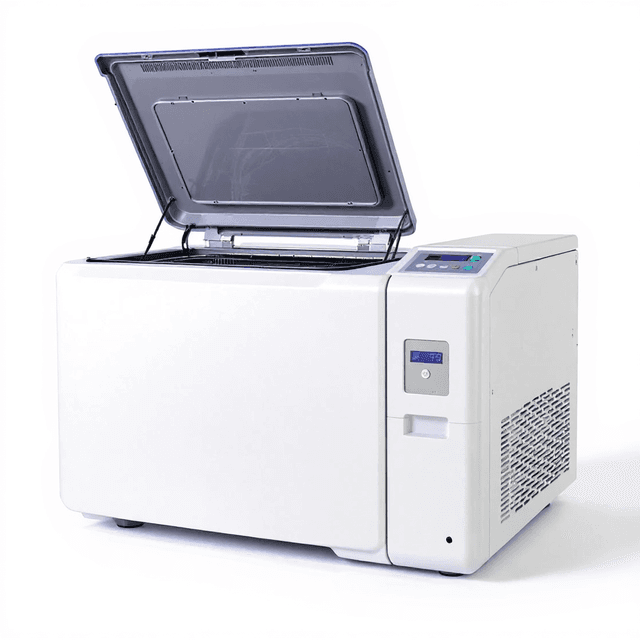
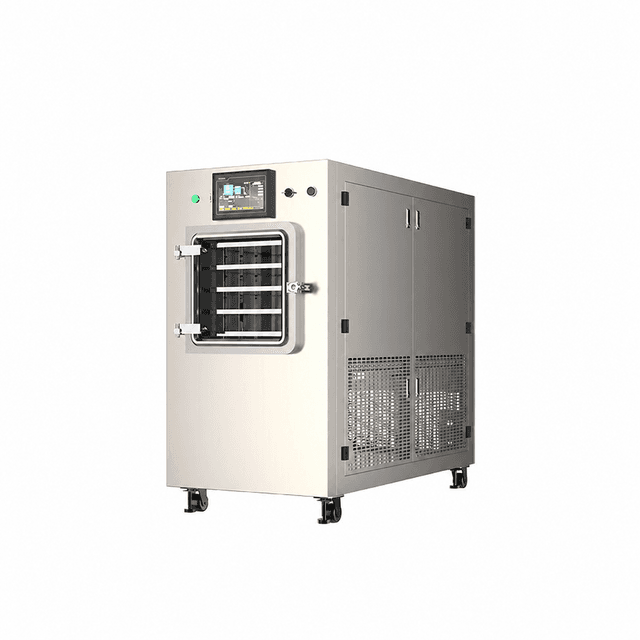
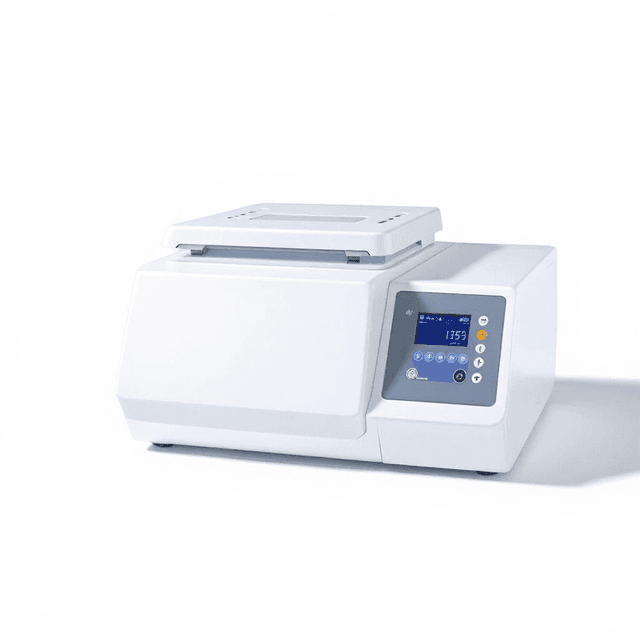
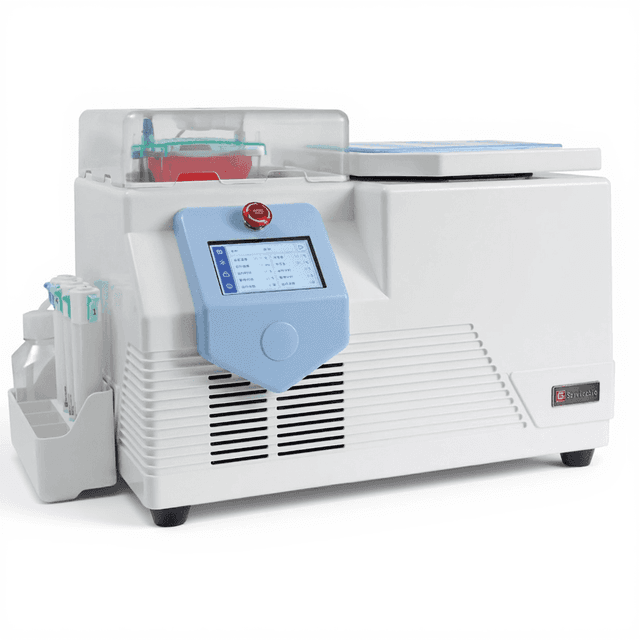
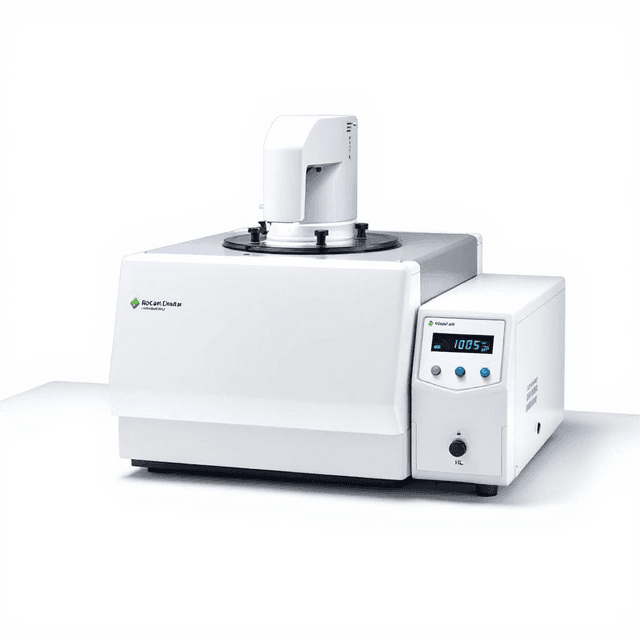
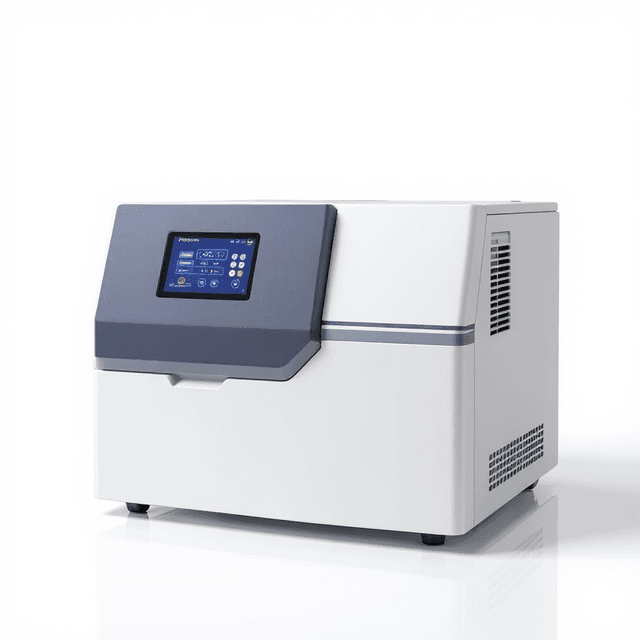
Vertical Freeze Dryer - Large Capacity
Large-capacity vertical freeze dryer with multi-shelf system and programmable curves for pilot-scale lyophilization of pharmaceuticals and biological samples.

Louise Corscadden, PhD
Director of Science · ConductScience
Ask Louise about Vertical Freeze Dryer - Large Capacity fit, setup, configuration, or quote prep.
Already working with us? Sign in to connect this with My Scientist.
Key Specifications
Full details →- Model fit
- Configured during quote
- SKU family
- BIO-FD-18S
- Shipping box
- 42.0 x 43.6 x 38.0 cm
- Ordering
- Online checkout and quote request available
- Category
- Benchtop Instruments
- Build notes
- Confirm accessories, station layout, and support needs before purchase
The Vertical Freeze Dryer - Large Capacity is a pilot-scale lyophilization system designed for research laboratories requiring high-throughput sample processing. This vertical configuration freeze dryer features a multi-shelf stainless steel chamber optimized for pharmaceutical and biological sample preservation through sublimation drying. The system incorporates programmable freeze-drying curves allowing researchers to optimize protocols for different sample types and volumes.
The instrument provides data logging capability for comprehensive process documentation and reproducibility. The stainless steel construction ensures chemical compatibility and ease of cleaning between sample batches. This large-capacity design accommodates multiple samples simultaneously, making it suitable for pilot-scale studies and high-throughput research applications requiring lyophilized samples.
How It Works
Freeze-drying operates through sublimation, the direct transition of ice from solid to vapor phase under vacuum conditions. The process begins with freezing samples to temperatures below their eutectic point, typically -40°C to -80°C, ensuring complete solidification of water content. The frozen samples are then placed under high vacuum conditions while controlled heat is applied to the shelves.
During primary drying, ice crystals sublime directly into water vapor, which is removed by the vacuum system and condensed on refrigerated coils. This phase removes approximately 95% of the water content. Secondary drying follows, where bound water molecules are desorbed from the sample matrix through continued heating under vacuum. The multi-shelf design allows simultaneous processing of multiple samples while maintaining uniform temperature distribution.
The programmable freeze-drying curves enable researchers to optimize the heating rate, vacuum level, and time parameters for specific sample types. Data logging throughout the process provides temperature, pressure, and time profiles for process validation and reproducibility studies.
Features & Benefits
Automation Level
- semi-automated
Research Domain
- Analytical Chemistry
- Cell Biology
- Food Science
- Materials Science
- Pharmaceutical QC
Shipping weight
- 165.96 lb
Shipping box
- L: 42.0 cm
- W: 43.6 cm
- H: 38.0 cm
| Feature | This Product | Typical Alternative | Advantage |
|---|---|---|---|
| Chamber Configuration | Multi-shelf vertical design with stainless steel construction | Basic models often feature single-shelf or manifold designs with limited capacity | Enables simultaneous processing of multiple sample batches while maintaining uniform heat transfer across shelf levels. |
| Process Control | Programmable freeze-drying curves with customizable parameters | Entry-level systems typically offer fixed parameters or limited programming options | Allows optimization of heating rates and vacuum conditions for different sample types and research protocols. |
| Data Documentation | Integrated data logging system for temperature, pressure, and time parameters | Basic units often lack comprehensive data recording capabilities | Provides complete process documentation for validation studies and protocol reproducibility requirements. |
| Sample Capacity | Large-capacity multi-shelf system for pilot-scale applications | Smaller benchtop units typically accommodate fewer samples per cycle | Supports high-throughput research workflows and larger sample volumes for comprehensive studies. |
This freeze dryer combines large-capacity multi-shelf processing with programmable control and comprehensive data logging capabilities. The vertical design maximizes sample throughput while the stainless steel construction ensures compatibility with pharmaceutical and biological applications.
Practical Tips
Verify temperature sensor accuracy quarterly using calibrated thermocouples placed on each shelf level during empty chamber testing.
Why: Ensures uniform temperature control across all shelf positions for consistent sample processing.
Clean condenser coils monthly and check vacuum pump oil levels regularly to maintain optimal sublimation efficiency.
Why: Prevents ice buildup that reduces vacuum performance and extends pump service life.
Pre-freeze samples to at least -40°C before loading to ensure complete ice crystal formation and optimal lyophilization.
Why: Improves sublimation efficiency and prevents sample collapse during the drying process.
Monitor chamber pressure throughout the cycle as pressure increases may indicate incomplete sublimation or vacuum system issues.
Why: Early detection of process deviations allows for corrective action before sample quality is compromised.
Always verify vacuum pump operation and condenser temperature before starting cycles to prevent pressure vessel hazards.
Why: Ensures proper system function and prevents dangerous pressure conditions during operation.
If samples show poor cake structure, reduce the heating rate in your programmed cycle to allow gentler sublimation.
Why: Slower sublimation prevents puffing and maintains sample morphology for better reconstitution properties.
Setup Guide
What’s in the Box
- Vertical freeze dryer main unit (typical)
- Multi-level stainless steel shelves (typical)
- Vacuum pump connection hardware (typical)
- Temperature and pressure sensors (typical)
- Control interface and programming software (typical)
- Data logging cable and software (typical)
- User manual and installation guide (typical)
- Calibration certificate (typical)
Warranty
ConductScience provides a standard one-year manufacturer warranty covering defects in materials and workmanship, with comprehensive technical support for installation, calibration, and troubleshooting assistance.
Compliance
What sample volumes and container types are compatible with the multi-shelf system?
The multi-shelf design accommodates various vial sizes and sample containers. Consult product datasheet for specific shelf dimensions and maximum sample height clearances to determine compatibility with your container types.
How precise is the temperature control across different shelf levels?
The system maintains uniform temperature distribution across shelves through controlled heating elements. Temperature uniformity specifications and sensor accuracy values are available in the technical documentation.
What data formats are available from the logging system?
The data logging system captures temperature, pressure, and time parameters throughout the freeze-drying cycle. Consult product specifications for available data export formats and software compatibility.
How long does a typical freeze-drying cycle take?
Cycle time depends on sample type, volume, and container configuration. Typical pharmaceutical samples require 24-48 hours for complete lyophilization, but programmable curves allow optimization for specific applications.
What vacuum levels can the system achieve?
The system operates under high vacuum conditions necessary for efficient sublimation. Consult technical specifications for ultimate vacuum levels and pump capacity requirements.
Can the system handle organic solvents or only aqueous samples?
The stainless steel construction provides compatibility with most pharmaceutical and biological samples. Review chemical compatibility specifications for specific solvent systems used in your applications.
How do I validate the system for regulated pharmaceutical work?
The data logging capability provides documentation for validation protocols. Work with your quality assurance team to develop appropriate installation qualification (IQ), operational qualification (OQ), and performance qualification (PQ) procedures.
Have a question about this product?
Have a question? Just ask.
Send it over and we'll email you a personalized answer — no call, no scheduling.
Prefer to talk it through?
Accessories
Enhance your setup with compatible accessories