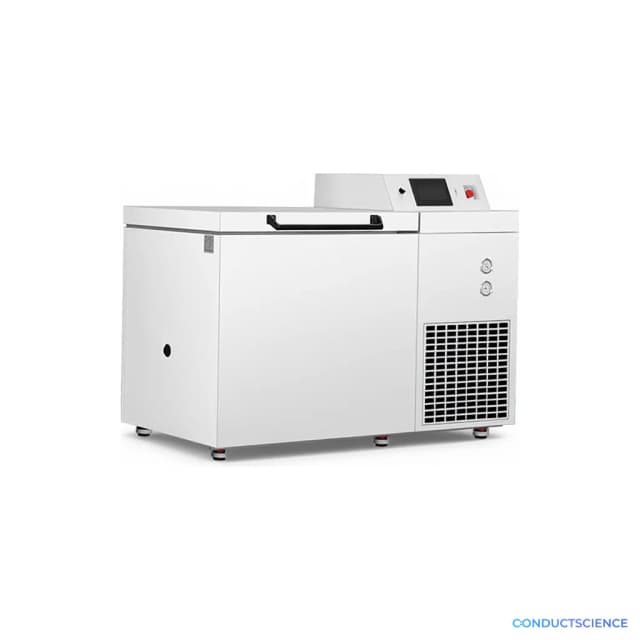
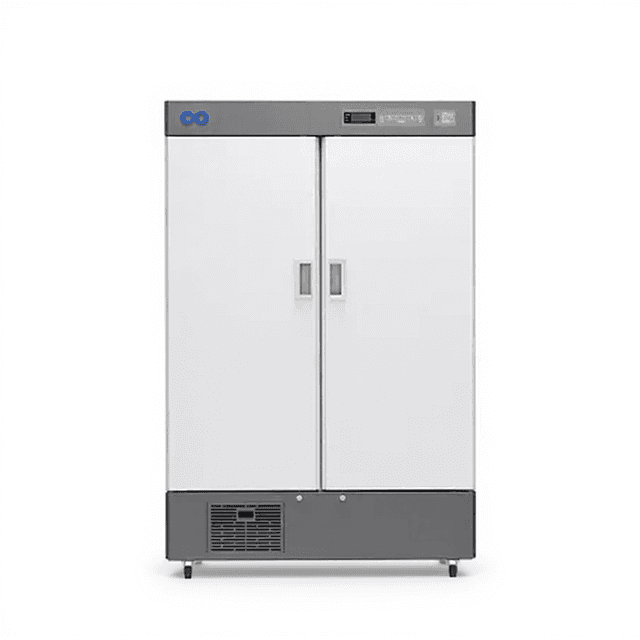
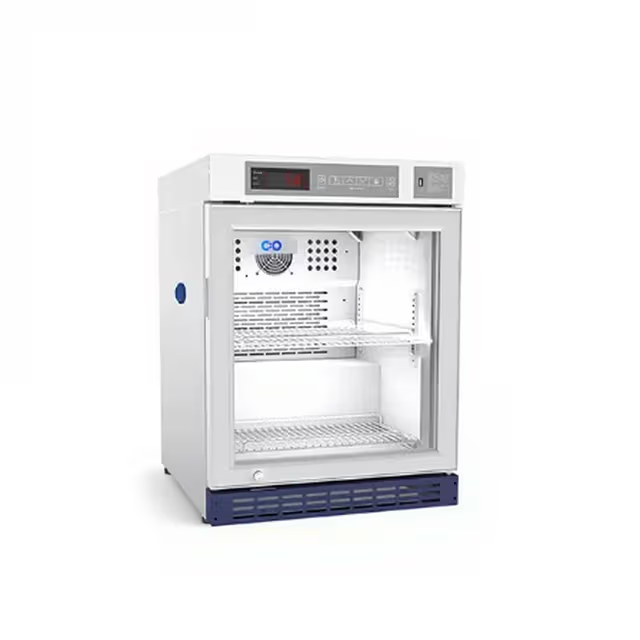
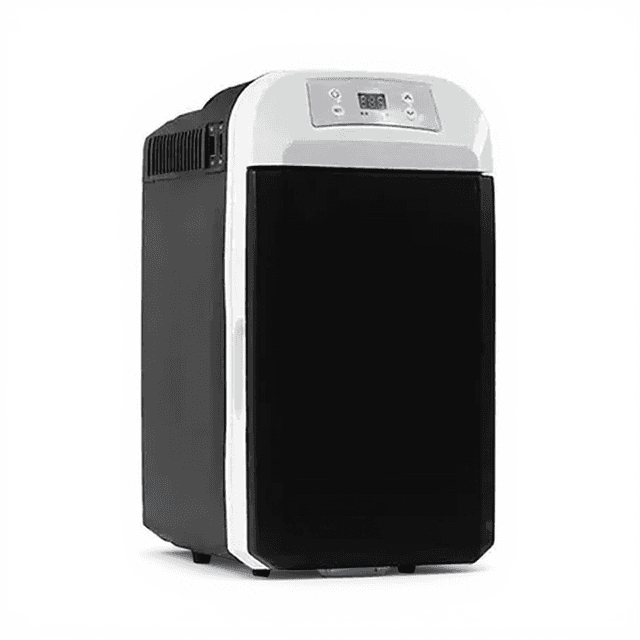
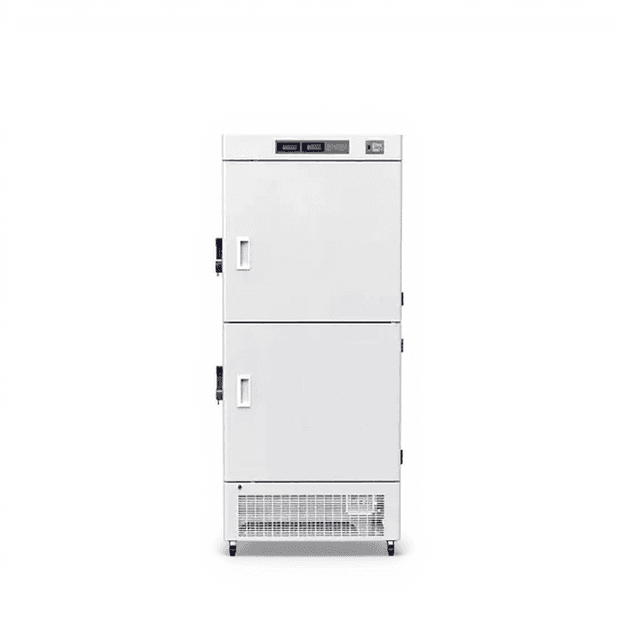
60℃ Horizontal Freezer 58L 120L 220L 320L 458L
Horizontal low-temperature freezers available in 58L to 458L capacities, maintaining -10°C to -60°C with ±2°C uniformity for biological sample storage and reagent preservation.
| Automation Level | semi-automated |
| BDF-60H118A | BDF-60H218 |
| BDF-60H318 | BDF-60H458 |
| 120L | 220L |
| 320L | 458L |
| Temp. Range | -10~-60°C |

The 60°C Horizontal Freezer series provides controlled low-temperature storage for biological samples, reagents, and temperature-sensitive materials in research environments. Available in five capacity configurations (58L, 120L, 220L, 320L, and 458L), these direct-cooling freezers maintain temperatures from -10°C to -60°C with microprocessor-based control and LED display interface.
The units feature ±2°C temperature uniformity and stability across the storage chamber, with 0.1°C temperature accuracy for consistent sample preservation. Integrated alarm systems monitor high and low temperature conditions as well as thermostat faults to protect valuable specimens. The horizontal configuration optimizes bench space utilization while providing easy access to stored materials.
How It Works
The freezer operates using direct-cooling refrigeration technology with R404A/R23 refrigerant to achieve and maintain temperatures between -10°C and -60°C. The microprocessor control system continuously monitors internal temperature through precision sensors, automatically adjusting compressor operation to maintain the set temperature within ±2°C stability limits.
Temperature uniformity across the storage chamber is maintained through optimized airflow patterns and thermal design, ensuring consistent conditions throughout the 58L to 458L storage volume. The LED display provides real-time temperature readout with 0.1°C accuracy, while integrated alarm systems continuously monitor for temperature excursions and system faults.
The horizontal configuration maximizes storage accessibility while minimizing bench space requirements. The direct-cooling system eliminates the need for forced air circulation, reducing temperature fluctuations and providing stable storage conditions for temperature-sensitive biological materials and chemical reagents.
Features & Benefits
Automation Level
- semi-automated
BDF-60H118A
- BDF-60H218
BDF-60H318
- BDF-60H458
120L
- 220L
320L
- 458L
Temp. Range
- -10~-60°C
Temp. Accuracy
- 0.1°C
Temp. Uniformity
- ±2°C
Temp. Stability
- ±2°C
Control System
- Microprocessor control
Alarm
- High and low temperature alarm, thermostat fault alarm
Refrigeration Type
- Direct-cooling
Refrigerant
- R404A/R23 160g
Brand
- ConductScience
Research Domain
- Analytical Chemistry
- Cell Biology
- Clinical Diagnostics
- Food Science
- Immunology
- Materials Science
- Microbiology
- Pharmaceutical QC
Capacity
- 58L
Display Type
- LED display
Weight
- 83.0 kg
Dimensions
- L: 38.5 mm
- W: 41.0 mm
- H: 41.0 mm
Comparison Guide
| Feature | This Product | Typical Alternative | Advantage |
|---|---|---|---|
| Temperature Range | -10°C to -60°C operating range | Many models offer narrower ranges or require -80°C operation | Provides optimal storage conditions for samples requiring moderate sub-zero temperatures without excessive energy consumption |
| Temperature Accuracy | 0.1°C precision with ±2°C uniformity | Entry-level models often provide ±1-3°C accuracy with less uniform distribution | Ensures consistent sample storage conditions critical for maintaining biological activity and chemical stability |
| Capacity Options | Five configurations from 58L to 458L | Most manufacturers offer fewer capacity choices | Allows laboratories to select optimal storage volume matching their specific sample throughput and space requirements |
| Control System | Microprocessor control with LED display | Basic models may use mechanical thermostats with analog displays | Provides precise temperature regulation and clear monitoring interface for reliable operation and documentation |
| Alarm Functions | High/low temperature and thermostat fault alarms | Some units lack comprehensive fault monitoring | Protects valuable samples through immediate notification of temperature excursions or system malfunctions |
| Configuration | Horizontal bench-top design | Many freezers use upright configurations requiring floor space | Maximizes laboratory bench utilization while providing convenient top-access sample loading and organization |
The 60°C Horizontal Freezer series offers precise temperature control across a wide operating range with multiple capacity options and comprehensive monitoring systems. The microprocessor-controlled operation with LED interface provides reliable performance for diverse laboratory storage applications requiring consistent sub-zero conditions.
Practical Tips
Perform temperature mapping using calibrated sensors at multiple chamber locations before initial use and annually thereafter.
Why: Ensures temperature uniformity meets specifications and provides documentation for quality systems
Clean condenser coils monthly and inspect door seals quarterly for optimal cooling efficiency.
Why: Prevents system strain and maintains temperature stability while extending equipment lifespan
Allow samples to pre-cool to 4°C before placing in the freezer to minimize temperature recovery time.
Why: Reduces thermal load on the system and prevents temperature fluctuations affecting other stored samples
If temperature alarms activate, check door closure and ambient conditions before contacting technical support.
Why: Many temperature issues result from environmental factors that can be quickly resolved without service calls
Record temperature readings and alarm events in logbooks for quality assurance documentation.
Why: Provides traceability for sample storage conditions and supports regulatory compliance requirements
Ensure adequate ventilation around the unit and avoid blocking air intake or exhaust areas.
Why: Prevents overheating of refrigeration components and maintains safe operating conditions
Organize samples with clear labeling and inventory systems to minimize door opening time during access.
Why: Reduces temperature fluctuations and maintains stable storage conditions for all samples
Use NIST-traceable temperature standards when validating freezer performance for critical applications.
Why: Ensures measurement accuracy meets regulatory requirements and laboratory quality standards
Setup Guide
What’s in the Box
- 60°C Horizontal Freezer unit
- Power cord
- User manual and documentation
- Temperature monitoring log sheets (typical)
- Warranty information
Warranty
ConductScience provides a standard one-year manufacturer warranty covering parts and technical support for the freezer unit and control systems.
Compliance
References
Background reading relevant to this product:
What is the temperature recovery time after door opening?
Recovery time depends on ambient conditions and door opening duration, but the microprocessor control system typically restores set temperature within 15-30 minutes for brief access periods.
Can the unit maintain temperature during power outages?
The freezer does not include backup power systems. For critical applications, external uninterruptible power supply (UPS) or generator backup should be considered.
How is temperature uniformity validated across different capacity models?
Temperature uniformity should be validated using multiple calibrated sensors placed throughout the storage volume, with mapping performed at operational temperature for each specific capacity configuration.
What maintenance is required for optimal performance?
Regular maintenance includes cleaning condenser coils, checking door seals, calibrating temperature sensors, and documenting temperature performance according to laboratory protocols.
Are there data logging capabilities for temperature monitoring?
The unit features LED display monitoring; external data logging systems can be integrated for continuous temperature recording and documentation requirements.
What is the typical lifespan of the refrigeration system?
With proper maintenance, the direct-cooling refrigeration system typically provides 10-15 years of reliable operation under normal laboratory conditions.
How does performance compare between capacity models?
All capacity models maintain the same temperature specifications (±2°C uniformity, 0.1°C accuracy) with similar cooling performance characteristics scaled for chamber volume.
Have a question about this product?