Aluminum Test Kit
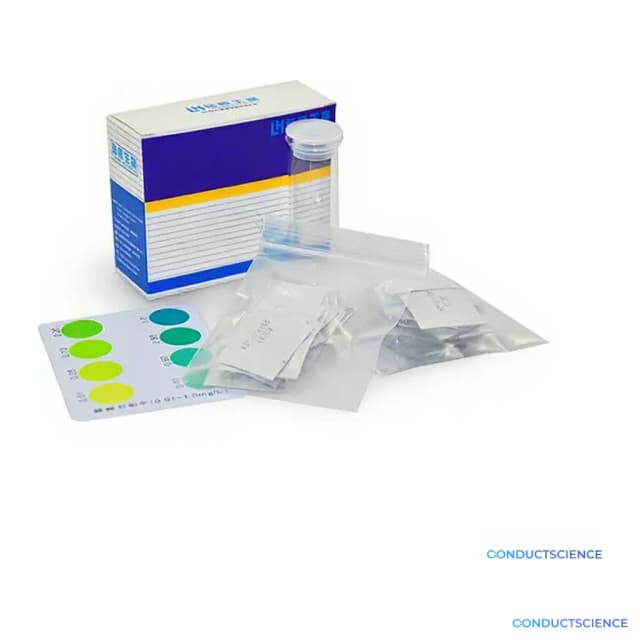
Colorimetric reagent kit for quantitative aluminum analysis in water samples, supporting both visual and spectrophotometric detection methods.
| Product name | Model No. |
| aluminum test kit | LH2024 |
| Automation Level | manual |
| Brand | ConductScience |

The Aluminum Test Kit (Model LH2024) provides laboratory-grade colorimetric analysis capabilities for quantitative aluminum determination in water samples. This reagent-based testing system enables researchers and quality control professionals to measure aluminum concentrations through standardized colorimetric methodology, producing measurable color changes proportional to aluminum ion content.
The kit supports aluminum detection across multiple sample matrices including drinking water, industrial process water, and environmental samples. Applications span water quality monitoring, contamination assessment, and regulatory testing workflows where aluminum quantification is required. The colorimetric approach provides visual and spectrophotometric analysis options suitable for both field screening and laboratory quantification protocols.
How It Works
The aluminum test kit operates through colorimetric complexation chemistry, where aluminum ions react with specific reagents to form colored complexes with measurable absorbance characteristics. The reaction typically involves chelating agents that selectively bind aluminum ions, producing color development proportional to aluminum concentration in the sample matrix.
Sample preparation involves pH adjustment and reagent addition according to standardized protocols. The resulting color development can be evaluated visually against color standards or measured spectrophotometrically at the appropriate wavelength. Interference control measures address common matrix effects from iron, fluoride, and other ions that may affect color development or aluminum availability.
Quantification relies on Beer-Lambert law principles, where absorbance intensity correlates linearly with aluminum concentration within the method's working range. Calibration standards establish the concentration-absorbance relationship, enabling accurate quantification of unknown samples through interpolation.
Features & Benefits
Product name
- Model No.
aluminum test kit
- LH2024
Automation Level
- manual
Brand
- ConductScience
Research Domain
- Analytical Chemistry
- Clinical Diagnostics
- Environmental Monitoring
- Food Science
- Industrial Hygiene
- Pharmaceutical QC
Weight
- 0.26 kg
Dimensions
- L: 30.0 mm
- W: 20.0 mm
- H: 10.0 mm
Comparison Guide
| Feature | This Product | Typical Alternative | Advantage |
|---|---|---|---|
| Detection Method | Colorimetric complexation with visual and spectrophotometric options | Many kits offer only single detection mode or require additional instrumentation | Provides flexibility for both field screening and laboratory quantification within a single analytical system. |
| Sample Matrix Compatibility | Multiple water types including drinking water, industrial, and environmental samples | Some kits are optimized for specific sample types only | Reduces inventory requirements and enables consistent methodology across diverse sample matrices. |
| Reagent Preparation | Ready-to-use reagent system | Entry-level kits may require complex reagent preparation steps | Minimizes preparation errors and reduces analysis time for routine aluminum testing protocols. |
| Interference Control | Includes protocols for managing common matrix effects | Basic kits often provide limited interference management guidance | Ensures accurate results in complex sample matrices where aluminum determination may be affected by competing ions. |
The LH2024 aluminum test kit combines colorimetric detection flexibility with comprehensive interference control measures, supporting aluminum analysis across multiple sample matrices. The ready-to-use reagent system reduces preparation complexity while maintaining analytical rigor for water quality applications.
Practical Tips
Prepare fresh calibration standards daily and verify linearity across the full working range.
Why: Aluminum standards can be affected by pH changes and container interactions over time.
Store reagents according to specified temperature conditions and monitor for color changes or precipitation.
Why: Reagent degradation directly affects color development consistency and analytical accuracy.
Include method blanks and duplicate analyses in each analytical batch to monitor for contamination and precision.
Why: Quality control measures ensure reliable results and identify systematic errors in aluminum determination.
If color development is weak or inconsistent, verify pH adjustment and reagent addition sequence.
Why: Optimal color formation requires precise pH control and proper reagent mixing order.
Measure samples within the specified time window after color development to ensure accurate results.
Why: Color intensity may change over time due to continued reactions or complex stability issues.
Use appropriate personal protective equipment and ensure adequate ventilation during reagent handling.
Why: Colorimetric reagents may contain acids or other chemicals requiring safe handling protocols.
Setup Guide
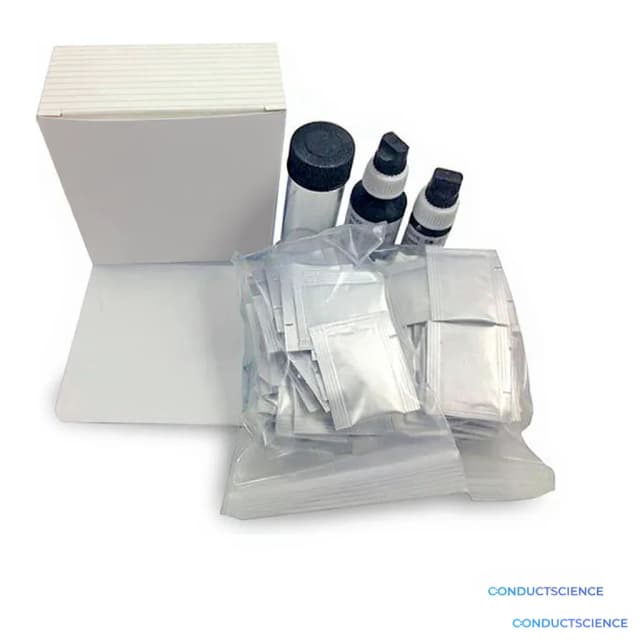
What’s in the Box
- Aluminum detection reagents (typical)
- Color comparison standards (typical)
- Sampling containers (typical)
- Analytical protocol instructions (typical)
- Quality control standards (typical)
Warranty
ConductScience provides standard manufacturer warranty coverage including technical support for analytical protocol optimization and troubleshooting.
Compliance
What is the detection range and precision for aluminum analysis with this kit?
Specific detection limits, working range, and precision parameters should be consulted from the product datasheet as these specifications depend on sample matrix and measurement approach used.
How do common water matrix interferences affect aluminum determination accuracy?
Iron, fluoride, and phosphate can interfere with aluminum detection. The kit includes protocols for managing these interferences through pH control, masking agents, or sample pretreatment procedures.
Can this kit be used for aluminum analysis in biological or food samples?
While designed for water analysis, the kit may be adaptable to other matrices following appropriate sample preparation and digestion protocols. Consult product documentation for validated sample types.
What spectrophotometric wavelength is used for aluminum measurement?
The optimal measurement wavelength depends on the specific colorimetric chemistry employed. Consult the analytical protocol for wavelength specifications and alternative measurement approaches.
How long do the reagents remain stable under laboratory storage conditions?
Reagent shelf life varies by component. Store according to manufacturer specifications and monitor for color changes or precipitation that may indicate reagent degradation.
What quality control measures are recommended for aluminum testing protocols?
Include method blanks, duplicate analyses, and certified reference materials in each analytical batch. Calibration verification should be performed regularly using independent aluminum standards.
Have a question about this product?
Accessories
Enhance your setup with compatible accessories
Frequently Bought Together