Angle Entrance Task
Behavioral maze apparatus with angled entry points for assessing spatial navigation, decision-making, and motor coordination in laboratory animals.
| Automation Level | manual |
| Species | Mouse, Rat |

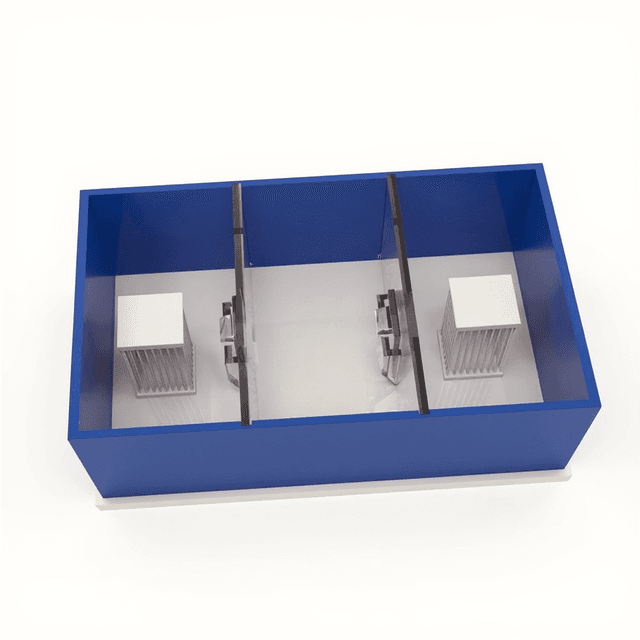
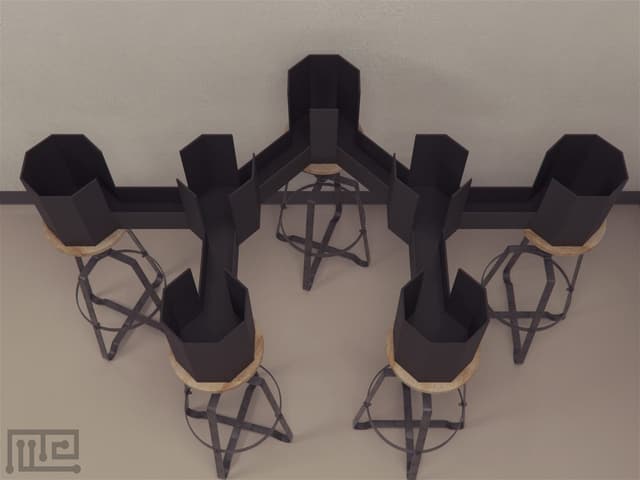
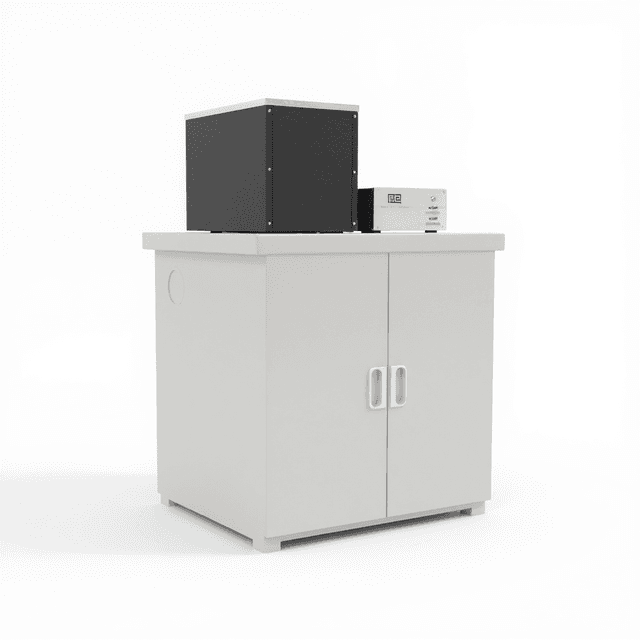
The Angle Entrance Task is a specialized behavioral assessment apparatus designed to evaluate spatial navigation, decision-making, and motor coordination in laboratory animals. This maze configuration features angled entry points that require subjects to make directional choices while navigating toward target locations, providing researchers with quantitative measures of cognitive performance and behavioral patterns.
The apparatus is commonly employed in neuroscience research to assess learning acquisition, memory retention, and spatial cognition capabilities. The angled entrance design introduces controlled complexity that challenges subjects' navigation strategies while maintaining standardized testing conditions across experimental sessions.
How It Works
The Angle Entrance Task operates on the principle of spatial choice discrimination, where subjects must navigate through angled entry points to reach designated target zones. The angular configuration creates a decision point that requires animals to integrate spatial cues and execute directional movements based on learned associations or spatial memory.
During testing sessions, animals are placed at the entrance and their navigation patterns are recorded, including choice latency, path efficiency, and error frequency. The angled design prevents simple linear approaches and encourages exploration of alternative navigation strategies.
Performance metrics are derived from tracking movement trajectories, measuring time-to-completion, and documenting choice accuracy across multiple trials, providing quantitative assessments of cognitive and motor capabilities.
Features & Benefits
Behavioral Construct
- Spatial Navigation
- Decision Making
- Motor Coordination
- Spatial Memory
- Learning Acquisition
Automation Level
- manual
Research Domain
- Aging Research
- Behavioral Pharmacology
- Learning and Memory
- Motor Function
- Neurodegeneration
- Neuroscience
Species
- Mouse
- Rat
Weight
- 6.06 kg
Dimensions
- L: 65.0 mm
- W: 36.0 mm
- H: 27.0 mm
Comparison Guide
| Feature | This Product | Typical Alternative | Advantage |
|---|---|---|---|
| Entrance Configuration | Angled entry points with customizable angles | Fixed 90-degree T-junction or straight corridor designs | Provides variable difficulty levels and more naturalistic navigation challenges for comprehensive cognitive assessment |
| Maze Complexity | Controlled decision points with spatial orientation requirements | Simple binary choice or multiple arm radial designs | Balances task complexity with clear performance metrics for robust statistical analysis |
| Tracking Capability | Open design compatible with overhead tracking systems | Enclosed mazes with limited visibility for movement analysis | Enables comprehensive behavioral tracking and detailed movement pattern analysis |
| Flexibility | Modular construction allowing configuration changes | Fixed maze structures with single testing paradigms | Supports multiple experimental protocols within a single apparatus investment |
The Angle Entrance Task provides a versatile behavioral assessment platform with controlled complexity levels and comprehensive tracking capabilities. The angled configuration offers advantages in spatial cognition testing while maintaining standardized conditions for reproducible research outcomes.
Practical Tips
Verify entrance angle measurements before each testing session using a digital protractor or angle gauge.
Why: Consistent angular configurations ensure reproducible task difficulty and valid comparisons across experimental sessions.
Clean all surfaces with 70% ethanol between subjects and allow complete drying before introducing the next animal.
Why: Eliminates olfactory cues that could influence navigation decisions and confound spatial memory assessments.
Conduct testing during the animal's active phase and maintain consistent environmental conditions throughout sessions.
Why: Circadian rhythm alignment and stable testing conditions optimize animal performance and reduce behavioral variability.
If subjects show preference bias for specific entrance angles, randomize starting positions and target locations across trials.
Why: Prevents development of non-spatial strategies that could mask true cognitive performance differences.
Record multiple behavioral parameters including choice latency, path efficiency, and exploration patterns for comprehensive analysis.
Why: Multiple metrics provide robust assessment of different cognitive domains and improve statistical power for detecting treatment effects.
Ensure all maze edges are smooth and free of sharp corners that could cause injury during rapid navigation movements.
Why: Animal welfare considerations require elimination of potential injury risks while maintaining experimental validity.
Setup Guide
What’s in the Box
- Maze apparatus components (typical)
- Assembly hardware and connectors (typical)
- Setup and operation manual (typical)
- Calibration guide and measurement tools (typical)
Warranty
ConductScience provides a one-year manufacturer warranty covering structural defects and construction materials, with technical support for setup optimization and protocol development.
Compliance
What spatial memory paradigms can be implemented with this apparatus?
The apparatus supports acquisition and retention testing, reversal learning protocols, and working memory assessments by varying target locations and entrance configurations across trials.
How should trial parameters be standardized for reproducible results?
Maintain consistent lighting conditions, inter-trial intervals, and habituation periods while controlling for olfactory cues through thorough cleaning between subjects and sessions.
What tracking systems are compatible with this maze design?
Overhead video tracking systems, automated behavior analysis software, and manual scoring methods can all be employed depending on the required measurement precision and analysis parameters.
How does entrance angle affect task difficulty?
Steeper angles increase decision-making complexity and require more precise spatial orientation, while shallower angles reduce cognitive load and emphasize motor coordination aspects.
What performance metrics should be collected during testing?
Primary measures include choice latency, path length, error frequency, and navigation efficiency, with secondary metrics covering exploration patterns and movement velocity profiles.
How long should habituation sessions last before data collection?
Typically 2-3 habituation sessions of 10-15 minutes each are sufficient for subjects to become familiar with the apparatus while maintaining motivation for subsequent testing.
Can this apparatus be used for both acquisition and probe trials?
Yes, the modular design allows removal of target cues or rewards for probe trials while maintaining the spatial configuration for memory retention assessment.
Have a question about this product?
Accessories
Enhance your setup with compatible accessories