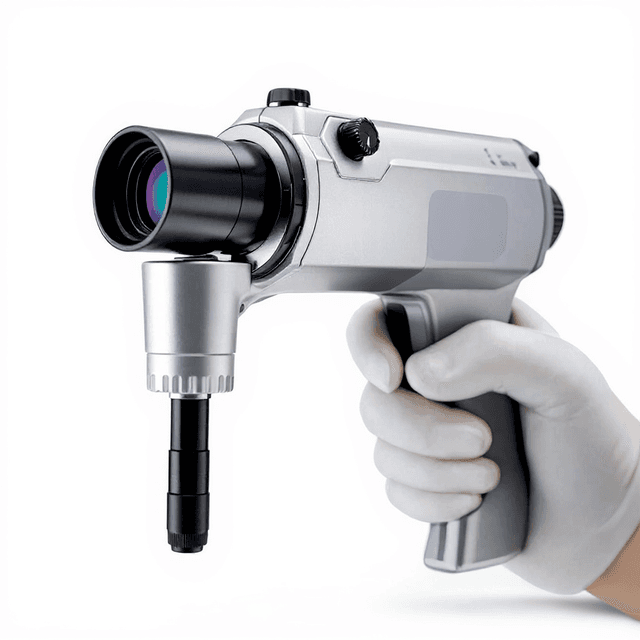
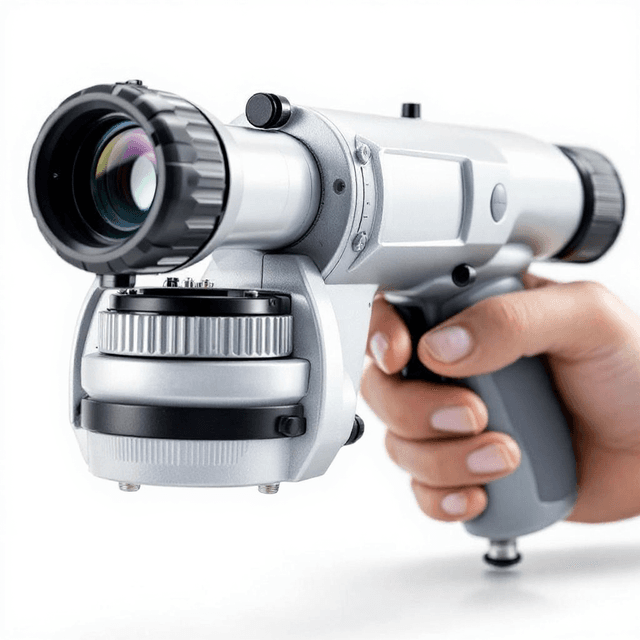
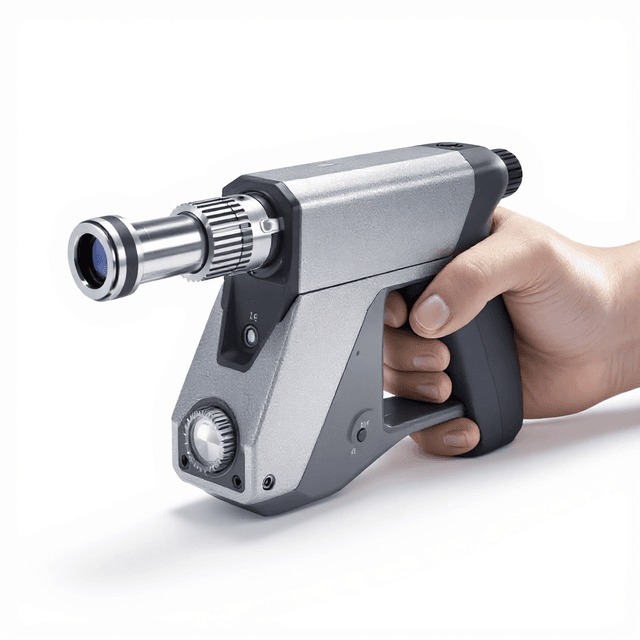
ATC Refractometer
Digital refractometer with automatic temperature compensation for precise Brix, salinity, and refractive index measurements in laboratory and field applications.
| Refractometer testCNY2 | BRIX |
| SALINITY | 0-28% |
| RI(nD) | 1.3330-1.3900 |
| Automation Level | manual |
| Brand | ConductScience |

The ATC Refractometer is a digital precision instrument designed for measuring refractive index and solution concentrations in laboratory and field applications. This compact refractometer features automatic temperature compensation (ATC) to maintain measurement accuracy across varying ambient conditions, eliminating the need for manual temperature corrections during analysis.
The instrument provides digital display output for Brix measurements from 0-35%, salinity measurements from 0-28%, and refractive index (nD) measurements from 1.3330-1.3900. The digital interface simplifies data recording and reduces operator error compared to traditional optical refractometers. Automatic shutdown functionality conserves battery life during intermittent use protocols.
How It Works
Refractometry measures the bending of light as it passes through a solution, quantified as the refractive index. When light travels from one medium to another with different optical densities, it changes direction at the interface according to Snell's law. The degree of refraction correlates directly with the concentration of dissolved substances in the sample.
The ATC Refractometer employs digital sensor technology to detect the critical angle of total internal reflection at the sample-prism interface. The instrument automatically compensates for temperature variations that affect refractive index measurements, using built-in temperature sensors and correction algorithms. This eliminates the systematic error introduced by thermal effects on both the sample and the optical components.
Digital processing converts the optical measurements into standardized units including Brix (percent sucrose), salinity (percent salt), and absolute refractive index values. The electronic display provides immediate readout without the need for manual scale interpretation or eyepiece adjustment.
Features & Benefits
Refractometer testCNY2
- BRIX
SALINITY
- 0-28%
RI(nD)
- 1.3330-1.3900
Automation Level
- manual
Brand
- ConductScience
Research Domain
- Analytical Chemistry
- Environmental Monitoring
- Food Science
- Industrial Hygiene
- Materials Science
- Pharmaceutical QC
Weight
- 0.26 kg
Dimensions
- L: 20.0 mm
- W: 10.0 mm
- H: 5.0 mm
Comparison Guide
| Feature | This Product | Typical Alternative | Advantage |
|---|---|---|---|
| Display Technology | Digital display with direct numerical readout | Manual optical systems require visual scale interpretation | Eliminates operator subjectivity and improves measurement reproducibility between users |
| Temperature Compensation | Automatic temperature compensation (ATC) | Manual temperature correction calculations required | Maintains accuracy across temperature variations without additional calculation steps |
| Measurement Range | Brix 0-35%, Salinity 0-28%, RI 1.3330-1.3900 | Single-scale instruments cover narrower ranges | Provides versatility for multiple sample types with one instrument |
| Power Management | Automatic shutdown function | Manual power control only | Extends battery life during intermittent use protocols |
| Portability | Compact, battery-powered design | Benchtop instruments require fixed installation | Enables field measurements and flexible laboratory placement |
This digital refractometer combines automatic temperature compensation with multi-scale measurement capability in a portable form factor. The digital display technology improves measurement consistency while the ATC function eliminates manual temperature correction requirements common with traditional optical refractometers.
Practical Tips
Perform zero calibration with distilled water at ambient temperature before each measurement session.
Why: Temperature and optical drift can affect baseline measurements over time.
Clean the prism surface immediately after each sample with distilled water and lint-free tissue.
Why: Residual sample can crystallize and affect subsequent measurements or damage the optical surface.
Allow samples to equilibrate to room temperature before measurement for optimal ATC performance.
Why: Extreme temperature differences can exceed compensation range and affect accuracy.
Take duplicate measurements and average results for critical applications.
Why: Reduces random error and improves confidence in measurement values.
If readings appear unstable, check for air bubbles under the daylight plate or incomplete prism coverage.
Why: Air bubbles and inadequate sample contact disrupt the optical interface and cause measurement drift.
Avoid applying excessive pressure to the daylight plate when closing over the sample.
Why: The prism surface is precision optical glass that can be damaged by mechanical stress.
Verify accuracy periodically using certified reference solutions with known refractive index values.
Why: Regular verification ensures measurement traceability and detects instrument drift.
Store the instrument in its protective case with desiccant to prevent moisture accumulation.
Why: Humidity can fog optical surfaces and affect long-term stability of electronic components.
Setup Guide
What’s in the Box
- ATC Digital Refractometer (main unit)
- Protective carrying case (typical)
- Calibration reference solutions (typical)
- Plastic sample dropper (typical)
- Cleaning cloths (typical)
- User manual and quick reference guide (typical)
- Battery (typical)
Warranty
ConductScience provides standard 1-year manufacturer warranty covering defects in materials and workmanship, with technical support available for calibration procedures and troubleshooting guidance.
Compliance
References
Background reading relevant to this product:
What is the measurement precision and accuracy of this refractometer?
Consult product datasheet for specific precision and accuracy specifications. Digital refractometers typically provide improved repeatability compared to manual optical instruments due to elimination of operator reading errors.
How frequently does the instrument require recalibration?
Perform zero calibration with distilled water at the start of each measurement session. Verify calibration with certified reference standards weekly or when measurement drift is suspected.
Can this refractometer measure samples with particles or turbidity?
Clear, homogeneous samples provide optimal results. Filter or centrifuge turbid samples prior to measurement to prevent interference with optical detection at the prism interface.
What is the minimum sample volume required for accurate measurement?
Consult product specifications for exact sample volume requirements. Generally, 2-3 drops are sufficient to cover the prism surface completely without air bubbles.
How does temperature affect measurements despite ATC compensation?
ATC compensates for temperature effects on refractive index, but samples should be within the instrument's specified temperature range. Allow thermal equilibration before measurement for optimal accuracy.
Is this instrument suitable for organic solvents and non-aqueous samples?
The refractive index range 1.3330-1.3900 accommodates many organic solvents. Check chemical compatibility with prism materials and verify the sample's refractive index falls within the instrument range.
How does this compare to traditional Abbe refractometers?
Digital refractometers eliminate subjective scale reading and provide direct numerical output, improving measurement consistency and data recording efficiency compared to manual optical systems.
Have a question about this product?
Upgrade Options