Automated T Maze
Computer-controlled T-maze system with millisecond-precision sensors for automated spatial memory and alternation behavior testing in mice and rats.
| detection_precision | millisecond precision |
| sensor_types | Infrared beam sensors, Capacitive touch sensors |
| software_integrations | Neuralynx, Ethovision Integration, SMS and Email integration |
| io_boxes_required | No I/O Boxes Required |
| architecture | Modular & Customizable Architecture |
| Automation Level | fully-automated |
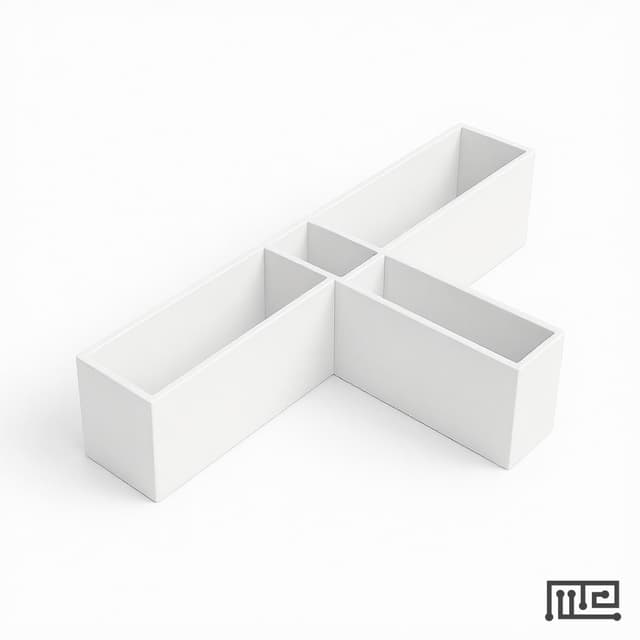
The Automated T Maze is a computer-controlled behavioral testing apparatus designed for spatial memory and decision-making studies in rodents. This modular system eliminates the need for external I/O boxes while providing millisecond-precision detection through integrated infrared beam and capacitive touch sensors. The apparatus supports both forced and spontaneous alternation protocols, making it suitable for working memory assessment, choice behavior paradigms, and cognitive flexibility testing.
Constructed from odor-free, non-reflective acrylic materials, the system features quiet door operation (<10dB) to minimize auditory interference during testing sessions. The automated design integrates directly with Neuralynx and Ethovision software platforms, enabling synchronized electrophysiological recordings and detailed behavioral tracking. SMS and email notifications provide real-time experimental status updates, supporting unattended operation during extended testing protocols.
How It Works
The T-maze operates on the principle of spontaneous alternation behavior, where rodents naturally tend to alternate between left and right arm choices when exploring a T-shaped apparatus. This innate tendency reflects the animal's working memory system, as it must remember which arm was previously visited to make an optimal choice. The automated system tracks entry and exit patterns using strategically positioned infrared beam sensors that detect animal movement with millisecond precision.
Capacitive touch sensors integrated into reward delivery zones provide additional behavioral data by registering when animals interact with food or water dispensers. The modular architecture allows researchers to customize maze dimensions, sensor placement, and reward protocols to match specific experimental requirements. Door mechanisms operate below 10dB to prevent acoustic startle responses that could confound behavioral measurements.
Real-time data acquisition occurs through direct software integration, eliminating manual scoring and reducing human observer bias. The system automatically logs entry times, arm choices, latency measures, and reward collection events, generating comprehensive datasets for statistical analysis of alternation rates, response patterns, and cognitive performance metrics.
Features & Benefits
Adapter software
- No Software
- Software
detection_precision
- millisecond precision
sensor_types
- Infrared beam sensors, Capacitive touch sensors
software_integrations
- Neuralynx, Ethovision Integration, SMS and Email integration
io_boxes_required
- No I/O Boxes Required
architecture
- Modular & Customizable Architecture
Behavioral Construct
- spatial memory
- working memory
- alternation behavior
- decision-making
- cognitive flexibility
- choice behavior
Automation Level
- fully-automated
Research Domain
- Addiction Research
- Aging Research
- Behavioral Pharmacology
- Learning and Memory
- Neurodegeneration
- Neuroscience
Species
- Mouse
- Rat
Weight
- 21.0 kg
Dimensions
- L: 43.2 mm
- W: 38.0 mm
- H: 27.9 mm
Comparison Guide
| Feature | This Product | Typical Alternative | Advantage |
|---|---|---|---|
| Detection Precision | Millisecond precision with dual sensor technology | Video-based systems often limited to frame rate resolution (33ms) | Captures rapid behavioral transitions and precise decision timing critical for cognitive analysis. |
| Integration Capabilities | Native Neuralynx and Ethovision integration | Third-party systems may require custom interface development | Enables immediate synchronized electrophysiology recordings without additional programming. |
| Hardware Dependencies | No external I/O boxes required | Many systems require separate interface hardware | Reduces setup complexity and eliminates potential failure points in the experimental chain. |
| Noise Control | Sub-10dB door operation | Manual systems produce variable acoustic interference | Prevents auditory startle responses that could confound cognitive assessment results. |
| Remote Monitoring | SMS and email notification system | Basic systems require constant operator presence | Allows unattended operation during extended protocols or overnight experimental sessions. |
This automated T-maze combines millisecond-precision detection with seamless software integration and quiet operation. The system's modular design and comprehensive sensor array provide reliable behavioral measurement capabilities while eliminating common sources of experimental variability found in manual testing protocols.
Practical Tips
Run sensor calibration at the beginning of each experimental session to account for ambient light changes and temperature variations.
Why: Environmental factors can shift sensor baselines and affect detection accuracy.
Clean sensor surfaces with lint-free cloths and isopropanol weekly to remove dust accumulation.
Why: Particulate buildup on infrared sensors can cause false triggers or missed detections.
Allow animals 5-10 minutes of habituation in the maze before beginning formal testing trials.
Why: Initial exploration reduces anxiety-related behaviors that could mask cognitive performance.
Monitor alternation patterns for ceiling effects in high-performing animals by adjusting delay intervals.
Why: Animals performing at maximum levels provide limited data for detecting subtle treatment effects.
Check sensor alignment if the system reports intermittent detection failures during trials.
Why: Mechanical vibration or settling can shift sensor positions slightly over time.
Verify all electrical connections are secure before introducing animals to prevent contact with exposed conductors.
Why: Animal safety requires proper grounding and insulation of all electronic components.
Randomize arm reward assignments across subjects to prevent spatial bias in experimental results.
Why: Consistent reward placement can lead to place preference rather than true alternation behavior.
Setup Guide
What’s in the Box
- T-maze acrylic assembly components
- Infrared beam sensor array
- Capacitive touch sensor modules
- Central control unit
- Power adapter and cables
- USB communication cable
- Conductor Science Software license
- Installation and operation manual
- Sensor calibration tools (typical)
- Hardware assembly kit (typical)
Warranty
ConductScience provides a one-year manufacturer warranty covering electronic components and sensor modules, with ongoing technical support for software integration and experimental protocol optimization.
Compliance
References
Background reading relevant to this product:
What is the detection sensitivity of the infrared beam sensors?
The system provides millisecond precision detection; consult product datasheet for specific beam break threshold specifications.
Can the maze dimensions be customized for different species?
Yes, the modular architecture allows customization of arm length, width, and height to accommodate both mice and rats as well as specific experimental requirements.
How does the system integrate with existing electrophysiology setups?
Direct Neuralynx integration provides TTL output synchronization for aligning behavioral events with neural recordings without additional interface hardware.
What data parameters are automatically recorded during testing?
The system logs arm entry times, choice sequences, latency measures, reward collection events, and movement patterns with millisecond timestamps.
How is between-subject contamination prevented?
The odor-free acrylic construction allows thorough cleaning with 70% ethanol between subjects to eliminate olfactory cues from previous animals.
Can multiple mazes be operated simultaneously?
The Conductor Science Software supports multi-maze operation; consult technical specifications for maximum concurrent units per computer system.
What maintenance is required for the sensor systems?
Regular sensor calibration and cleaning of detection zones with approved solvents; specific maintenance intervals depend on usage frequency and environmental conditions.
Have a question about this product?
Accessories
Enhance your setup with compatible accessories

Frequently Bought Together

Upgrade Options